Filter changes that actually help (and the ones that don't)
MERV ratings are a marketing minefield. We use MERV 11 or 13, and one marker habit prevents 80% of the call-backs we see.
- Author
- Maya R.
- Role
- Service tech
- Updated
- August 23, 2026
- Reading time
- 6 min
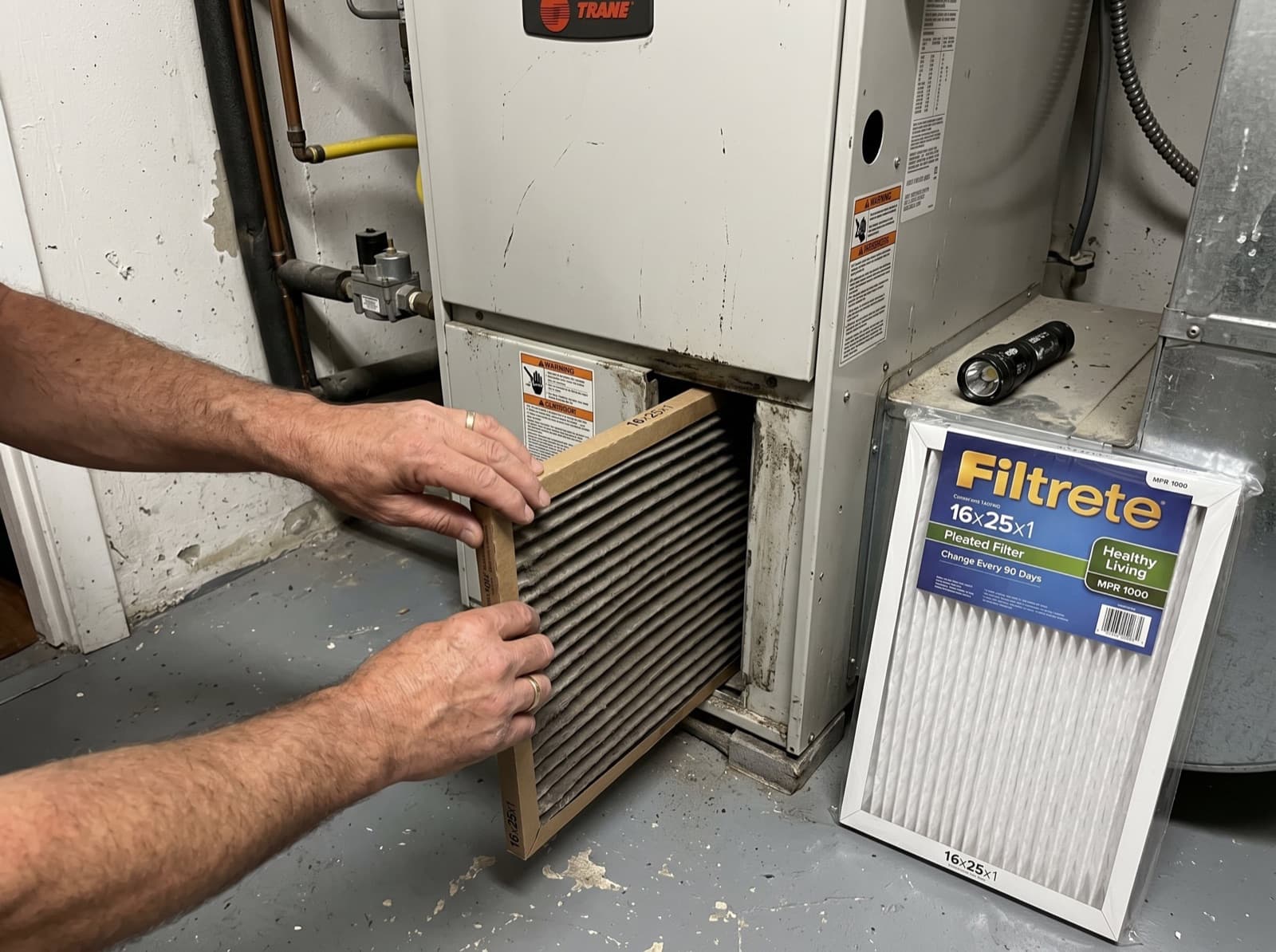
Write the date on the filter. That one habit prevents 80% of the filter call-backs we see. Everything else is secondary.
The MERV trap
Higher MERV is not always better. A MERV 16 filter in a system designed around MERV 8 will choke airflow, freeze your AC coil in summer, and overheat your heat exchanger in winter. We see this every season.
Our default
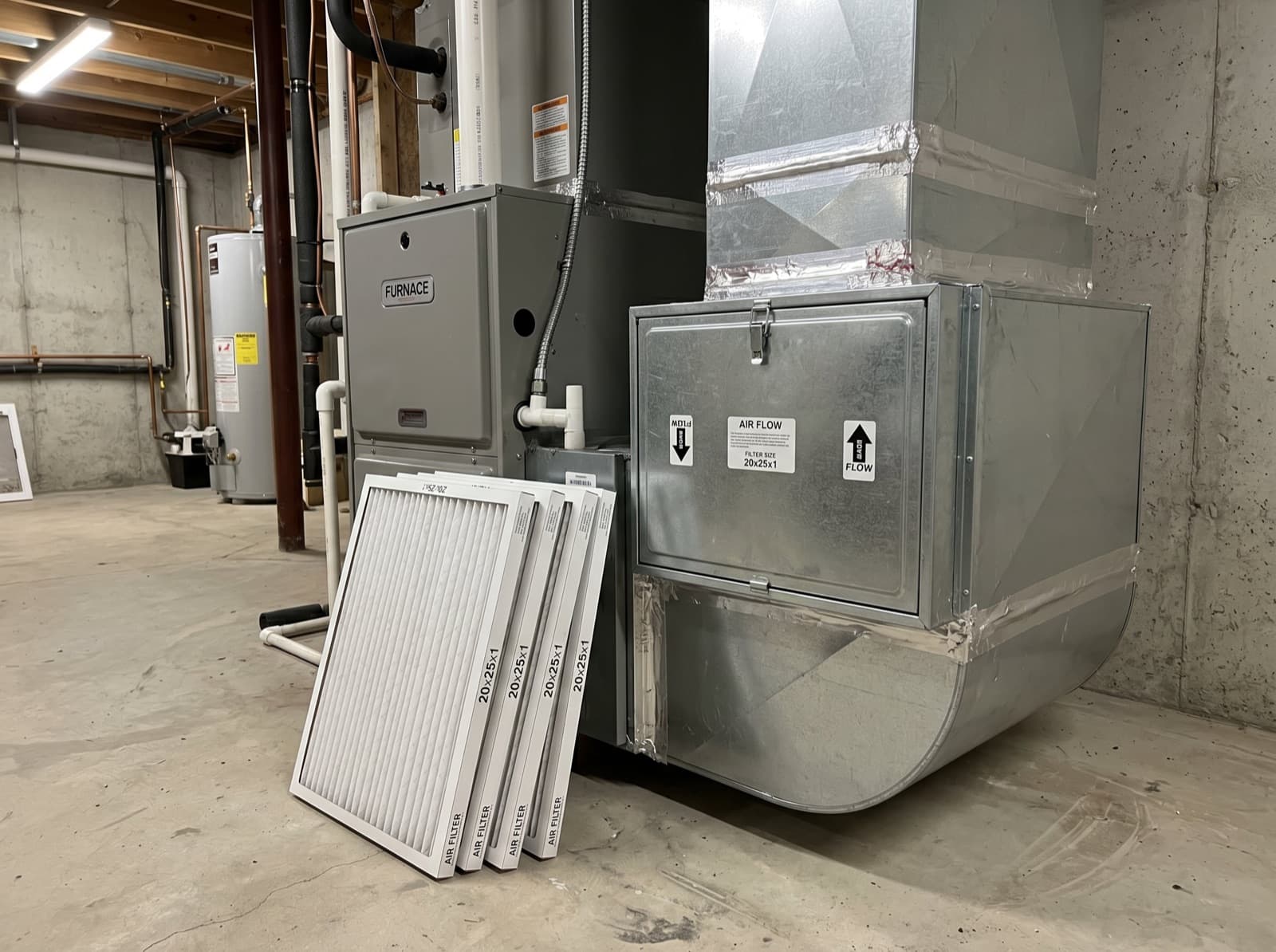
- 1" filters: MERV 11, swapped every 60 days
- 4" media filters: MERV 13, swapped every 6 months
- Pet households: shorten by 30 days
- Recent renovation dust: shorten to 30 days for 4 months, then return to baseline
The habit that prevents the most damage
Write the install date on the filter with a marker. That's the entire trick. Pet hair builds up faster than you think — we've pulled 1" filters that were technically rated for 90 days but were 70% blocked at 45 days because the dog was shedding for spring.
Washable filters are false economy
We do not install washable electrostatic filters in whole-home systems. They look thrifty. They are not. We have replaced too many heat exchangers behind years of "never had to change the filter." Use a disposable filter. Date it. Change it.
Dispatch notes, minus the fluff.
One useful home-comfort note. No campaigns. No coupon theatre.
Still not comfortable? Stop guessing.
Call dispatch. We'll tell you what to check, what to ignore, and when it needs a truck.