At ten in the morning I could work in the spare room wearing a cardigan. At four I moved my laptop to the dining table. The thermostat downstairs still showed the same temperature, which made my complaint sound unreliable.
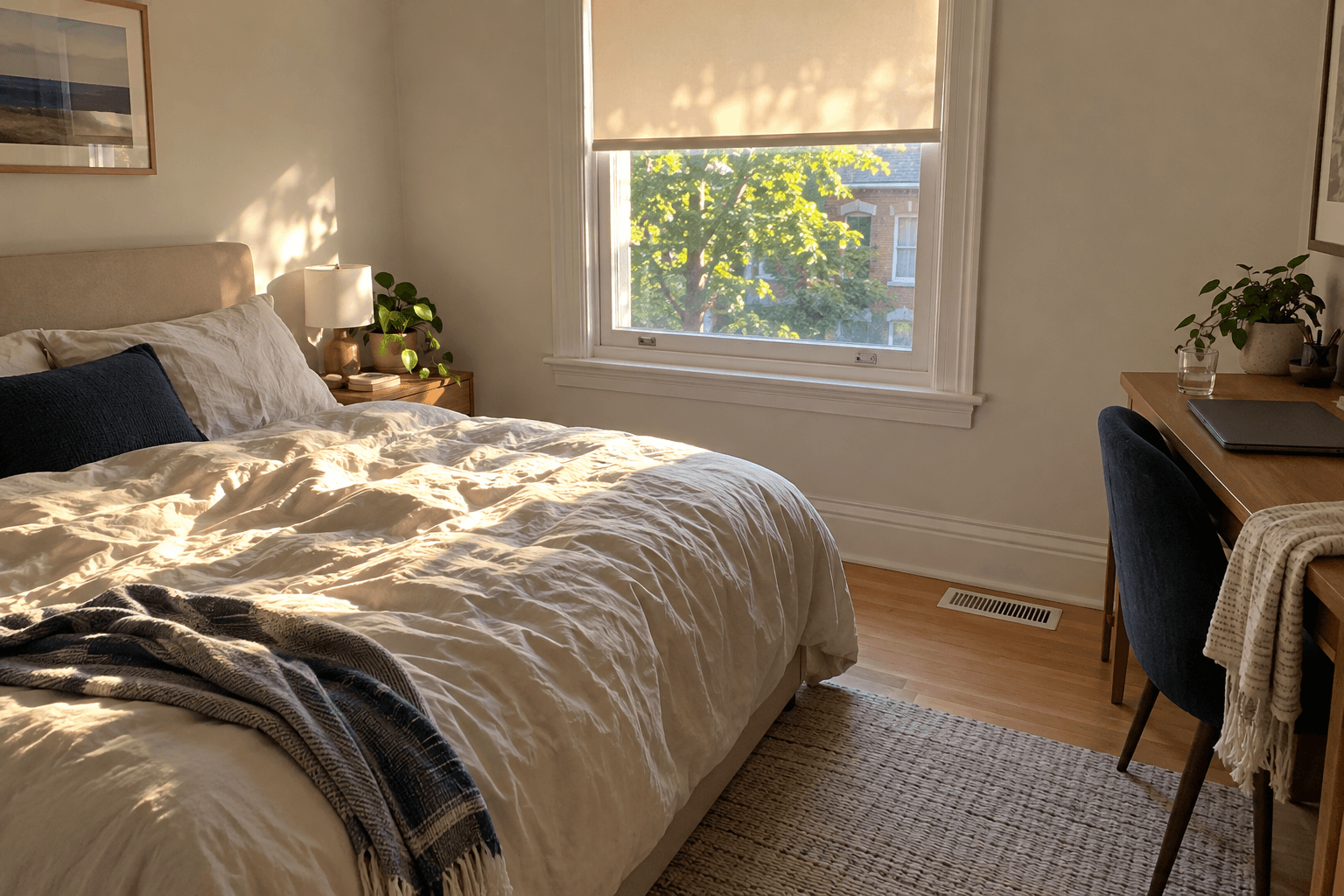
For three days I wrote down the time I abandoned the desk. The pattern was embarrassingly clear. The sun came through the west window, spread across the bed and reached my chair just before my last meeting.
Reduce the heat arriving at the window
Shading is one of the basic cooling measures in the Department of Energy's home cooling guide. I lowered the existing blind before the afternoon sun arrived, rather than waiting until the room was already uncomfortable. It was a simple, reversible thing to try.
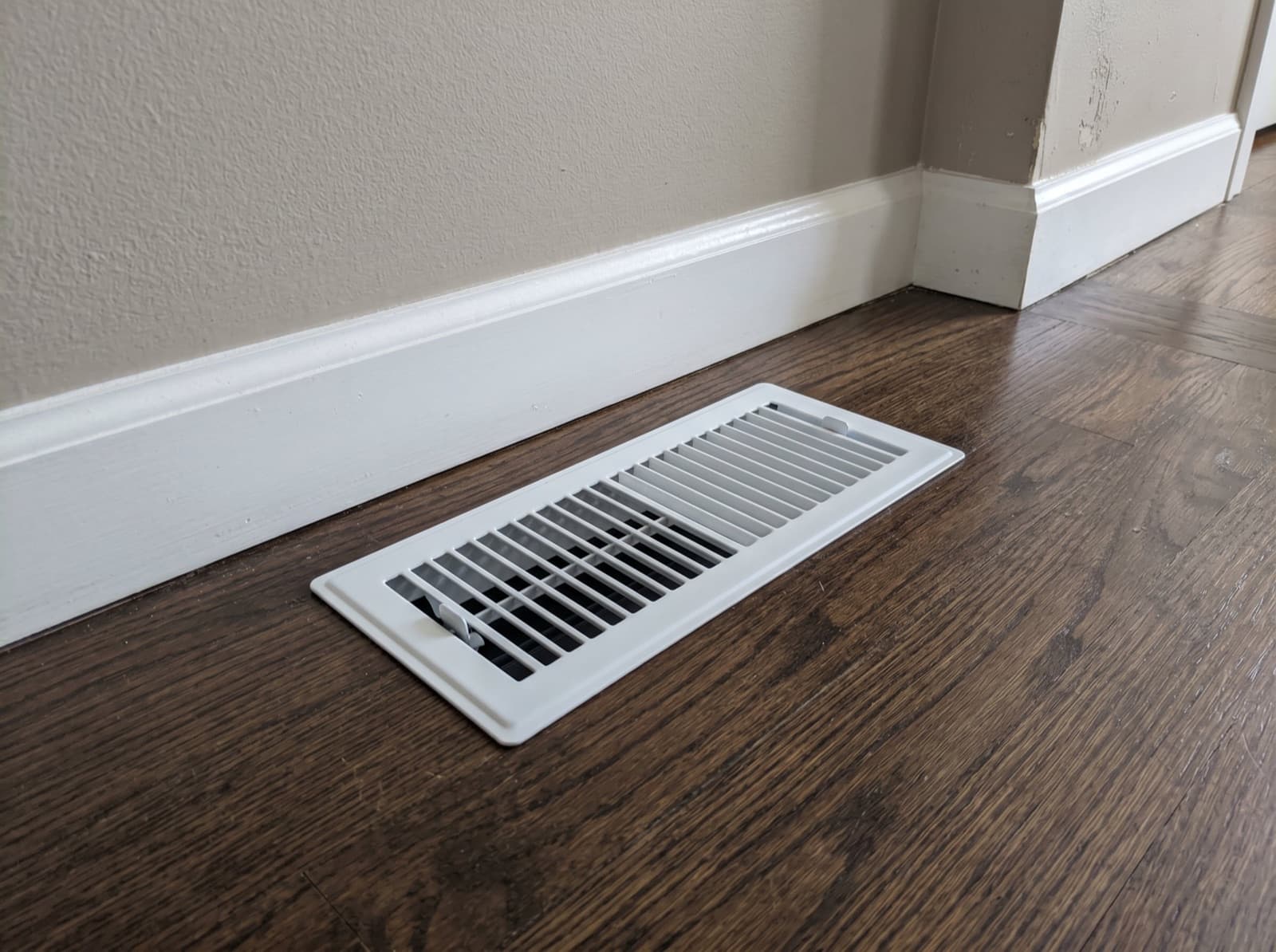
I also moved the folded quilt off the floor register. I had put it there while changing the bed and then mentally edited it out of the room. The supply opening and the return-air route both needed space.
A room can have its own schedule
NRCan notes that a central system's main-floor thermostat does not represent every room's cooling needs. Window exposure, the building envelope and air distribution all matter. Turning the whole house colder can leave the dining room unpleasant while the sunny bedroom remains the difficult room.
I kept the notes for an assessment: time of day, blind position, door position and whether other upstairs rooms behaved the same way. I wanted the room's load and airflow considered together before anyone suggested bigger equipment.
The blind helped, but I kept my afternoon option downstairs on the hottest days. There was no need to invent a single cause before an inspection. I had enough evidence to describe the problem accurately, and enough shade to finish most meetings where I started them.