No heat? Do these five things in the next 30 minutes
This five-step checklist resolves 35% of our no-heat calls without a truck. If it fails, you are ready for dispatch.
- Author
- Daniel B.
- Role
- Owner & TSSA G2
- Updated
- August 23, 2026
- Reading time
- 5 min
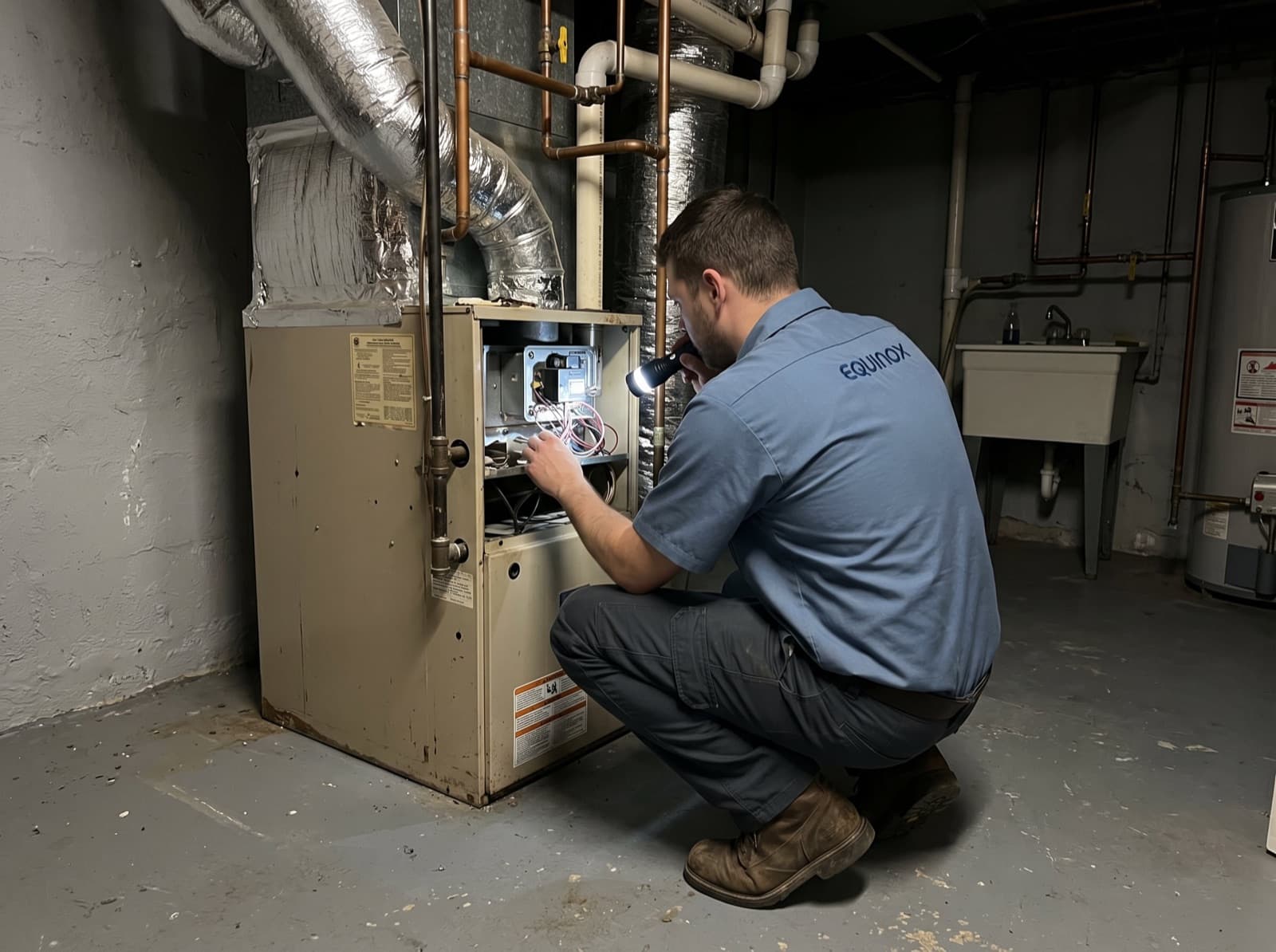
It's 9 PM, -14 °C, and your furnace just stopped. Here's what to do — and not do — for the next half hour.
The five checks
- 1Confirm the thermostat. Battery-powered? Replace it. Display showing setpoint above current temp? Good — keep going.
- 2Check the furnace breaker. Reset it once. Trips again? Stop. That is not a nuisance trip.
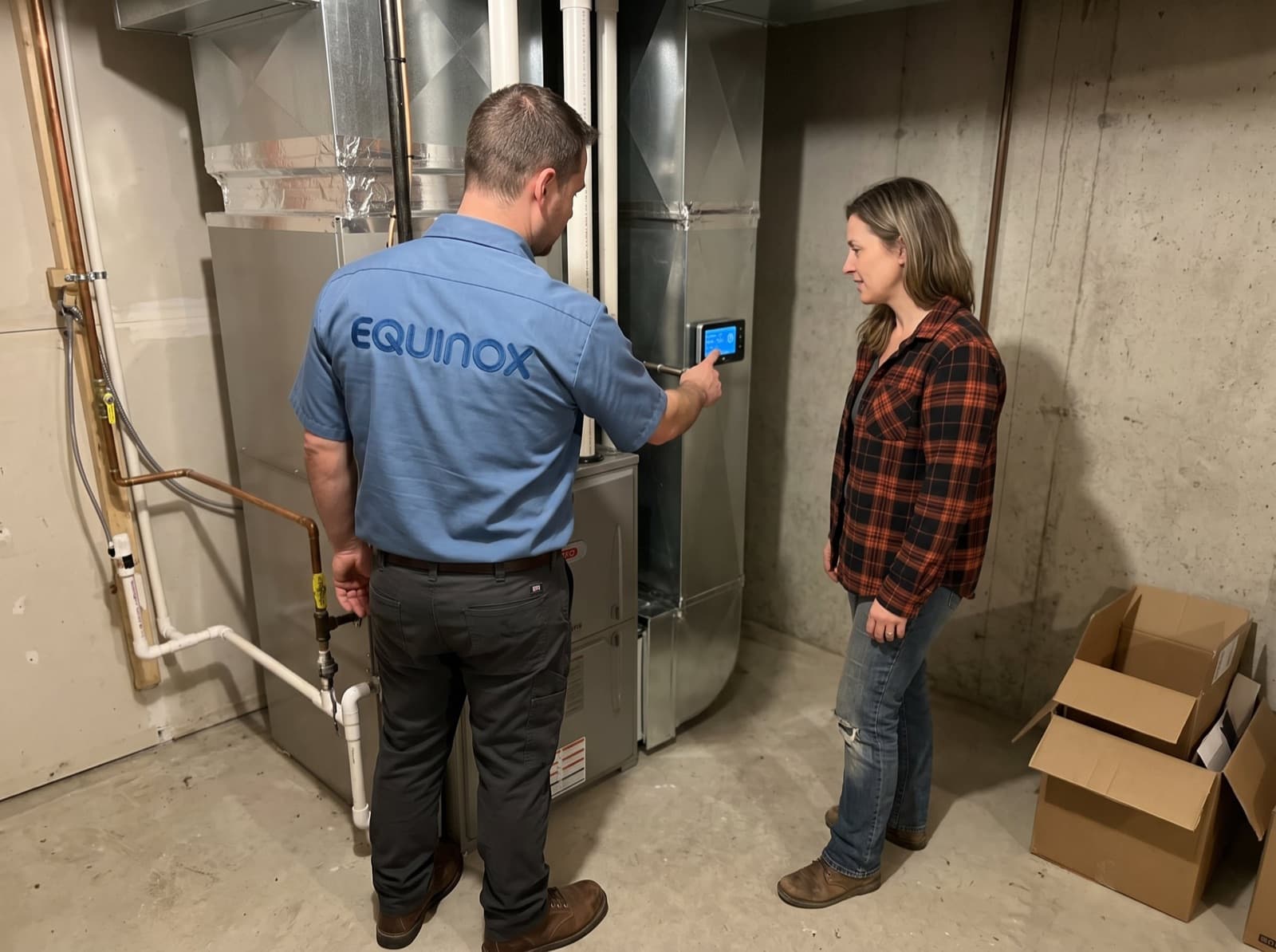
- 3Look at the furnace switch. There's usually a light switch on the side of the unit or upstairs at the top of the basement stairs. It looks like a regular wall switch and it's often turned off by accident.
- 4Check the filter. Black and blocked? Pull it. Run the furnace for 30 minutes, then put a clean filter back in. A clogged filter trips the high-limit switch and kills the heat.
- 5Look at the front panel for blink codes. Most furnaces flash a code through a small window — write down the pattern (e.g., 3 short, 1 long).
When this stops being DIY
Anything you can't fix with the steps above. We answer 24/7 from November to March, prioritize seniors and households with young children, and bill the diagnostic fee against the repair. There's no premium for late-night calls — emergency rates are the same as daytime rates.
If you have a maintenance plan with us, you're at the front of the queue automatically. If you don't, we'll still come — but plan customers move first.
The 30-minute hold
No gas oven. No barbecue. Close the exterior doors and move everyone into one interior room. Space heaters go straight into the wall and stay one metre from anything that burns. Dispatch will give you the real arrival window when the call is assigned.
Dispatch notes, minus the fluff.
One useful home-comfort note. No campaigns. No coupon theatre.
Still not comfortable? Stop guessing.
Call dispatch. We'll tell you what to check, what to ignore, and when it needs a truck.