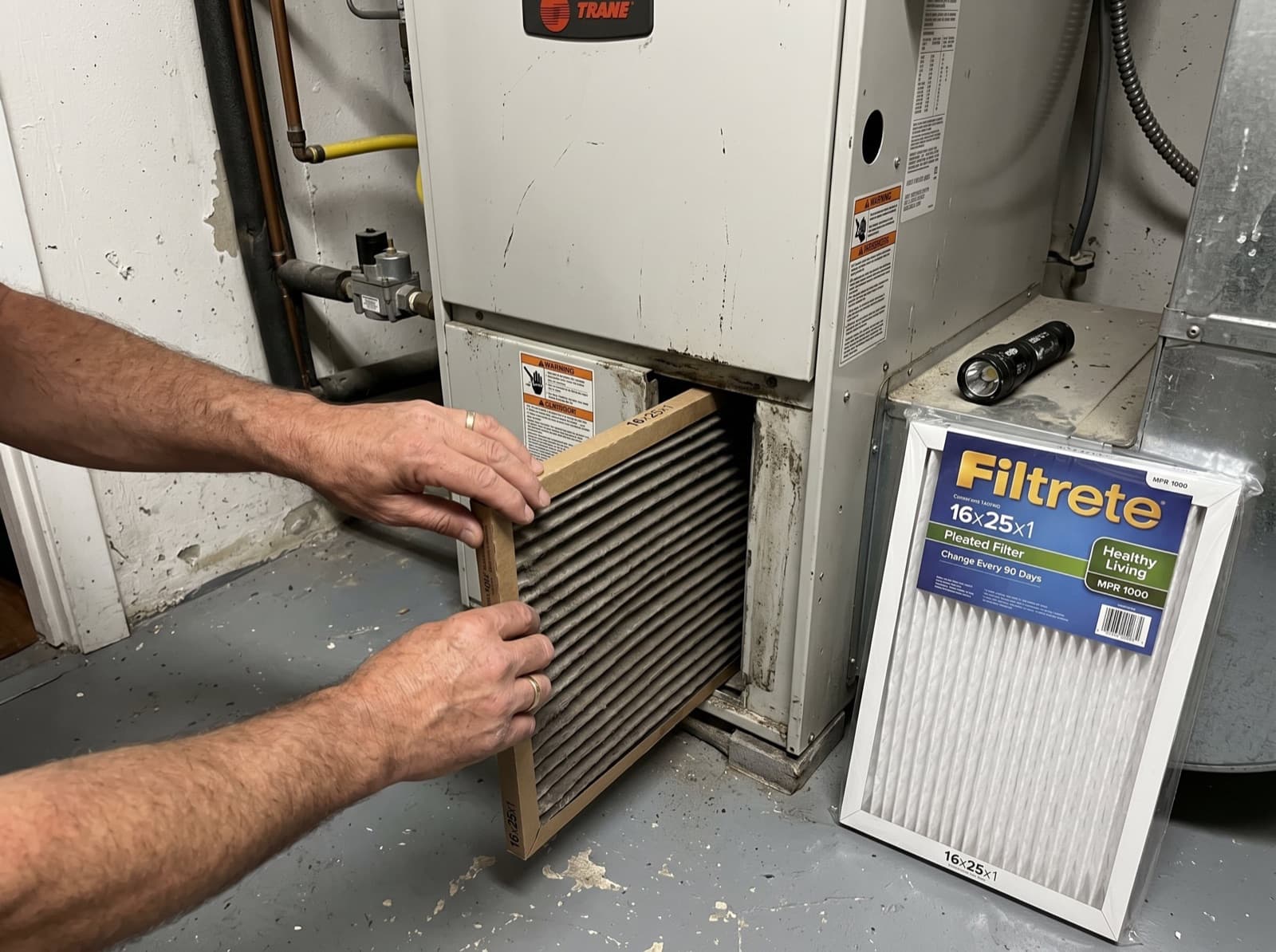
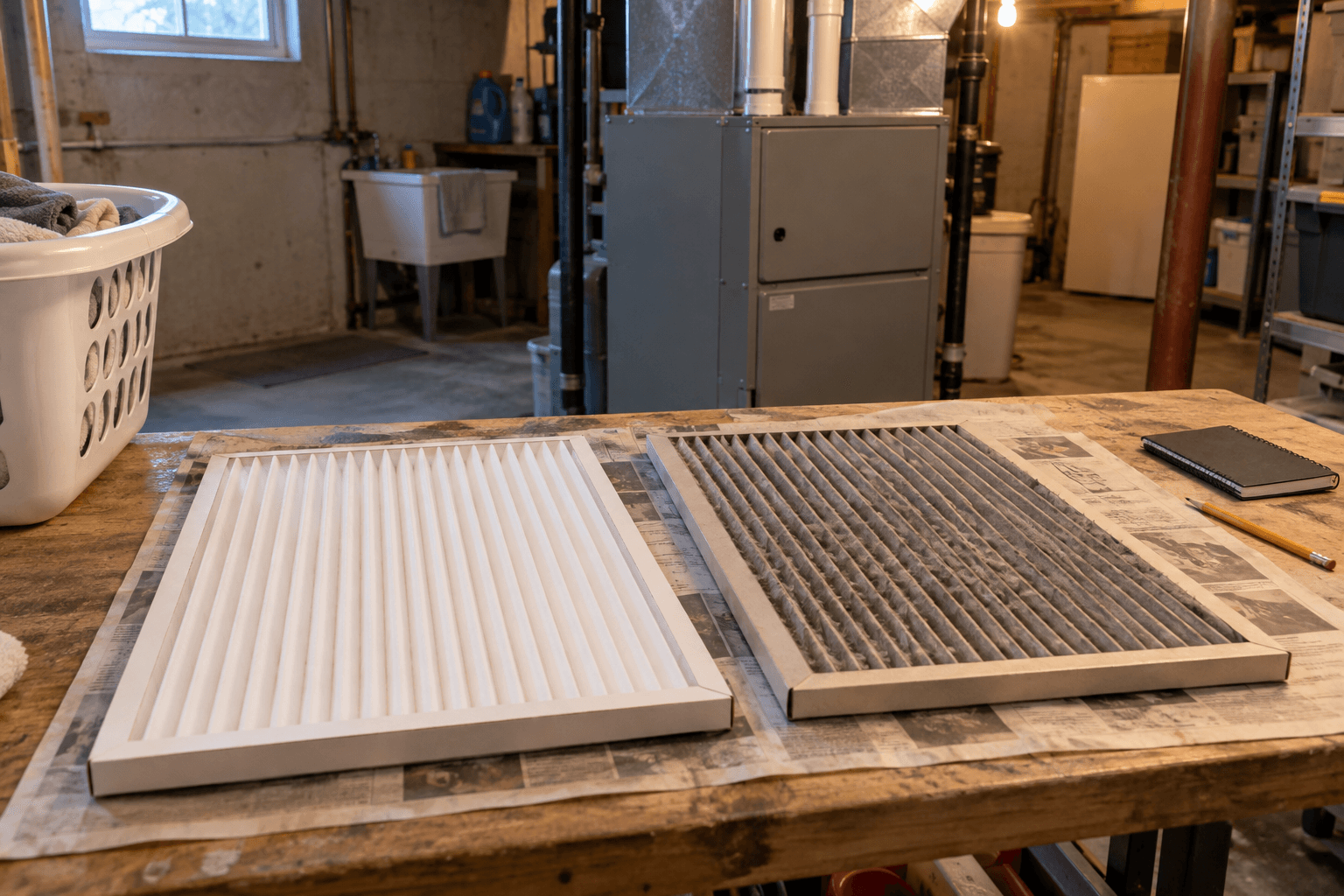
I bought three filters because they were on sale. At home, the first one slid into the rack with an alarming amount of freedom. I had remembered the big printed size and forgotten to photograph anything else.
The old filter was still beside the laundry basket. Its small-print dimensions were different from the new one's. I took a picture of both labels, then found the furnace and filter-cabinet instructions. That was less satisfying than opening the remaining boxes, but considerably more useful.
Air needs to go through the filter
Source: US EPA: air cleaners, HVAC filters and respiratory viruses
The EPA advises checking filter fit to reduce air bypass. A filter's efficiency rating describes the material's performance under test; it does not make an open gap around the frame disappear. The correct replacement must also suit the fan and filter cabinet.
Nominal sizes are product labels, so I now compare the listed actual dimensions and the cabinet's requirements before buying. I don't force a thick filter into a shallow slot or pack gaps with loose scraps. A damaged rack or uncertain fit is a reason to ask the technician for the correct part.
The photograph that lives on my phone
My shopping note now has the approved size, depth, product type and a photograph of the cabinet label. I check the airflow direction in the instructions when fitting a replacement, with the system off as directed. The cabinet cover goes back properly afterward.
I also ask before moving to a substantially different filter rating. Higher filtration and suitable airflow need to work together.
The unopened boxes went back to the shop. The useful saving turned out to be avoiding a cupboard full of nearly-right filters. I kept the receipt, which is a habit I wish I had developed before buying the three of them.