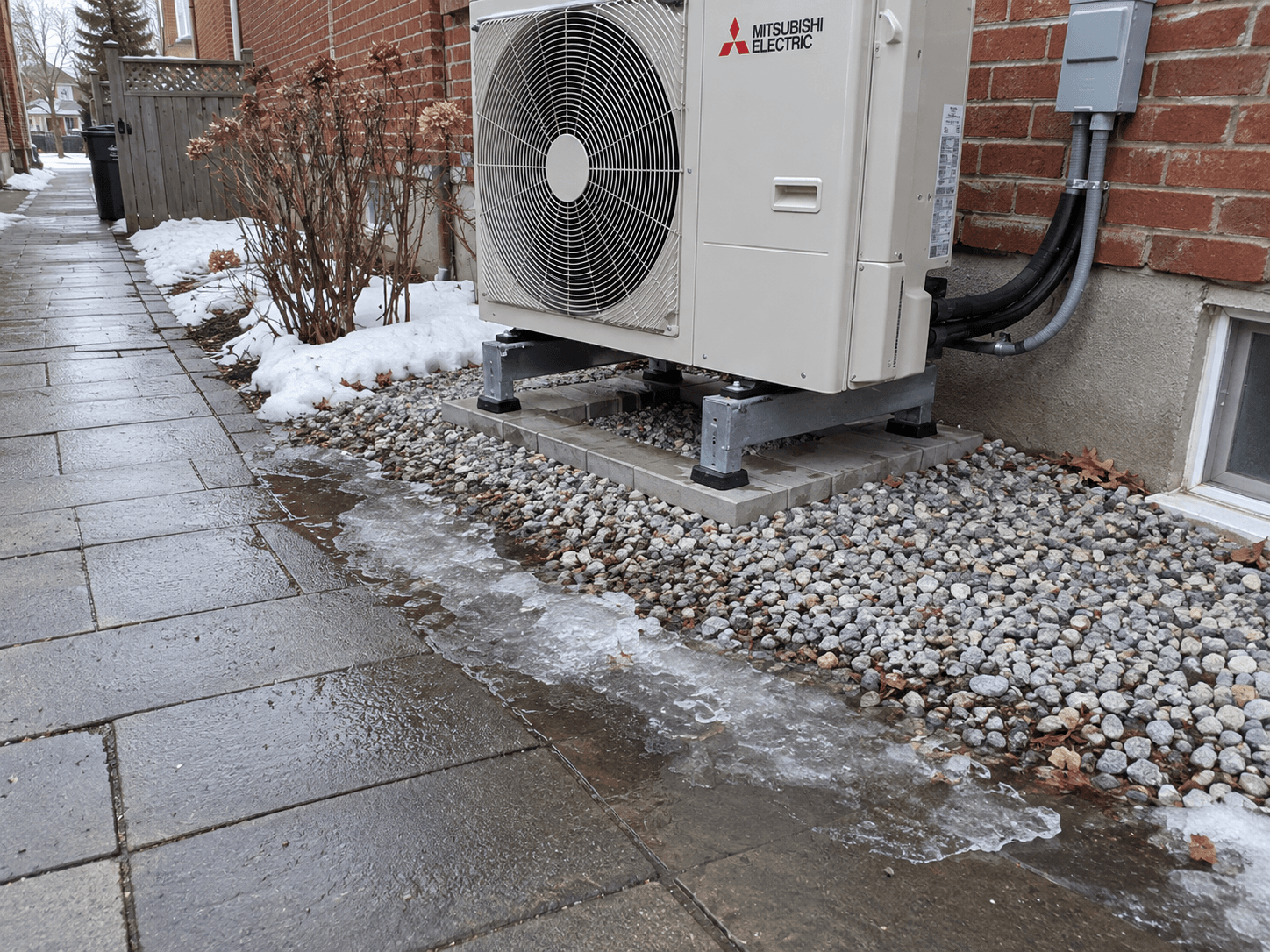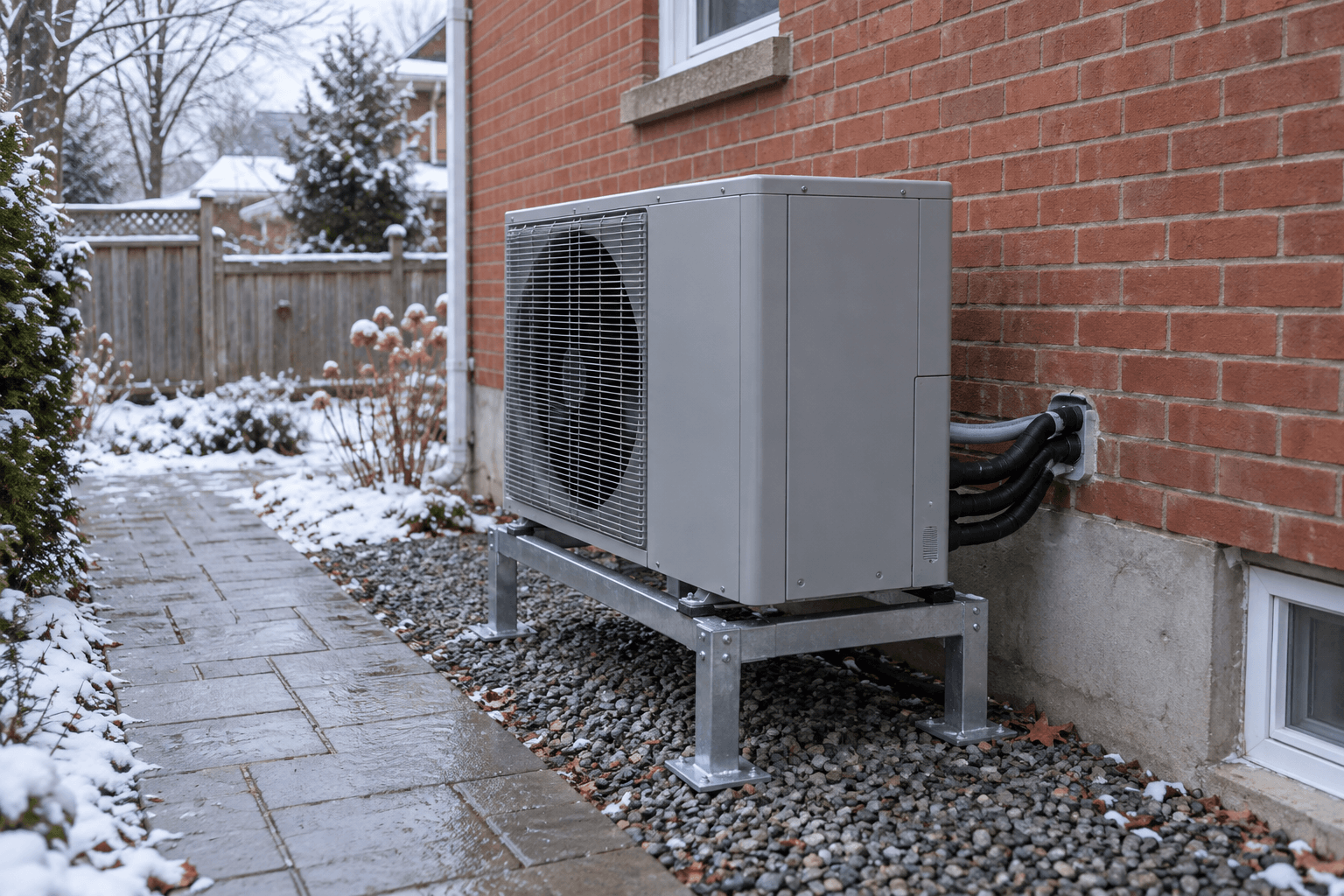
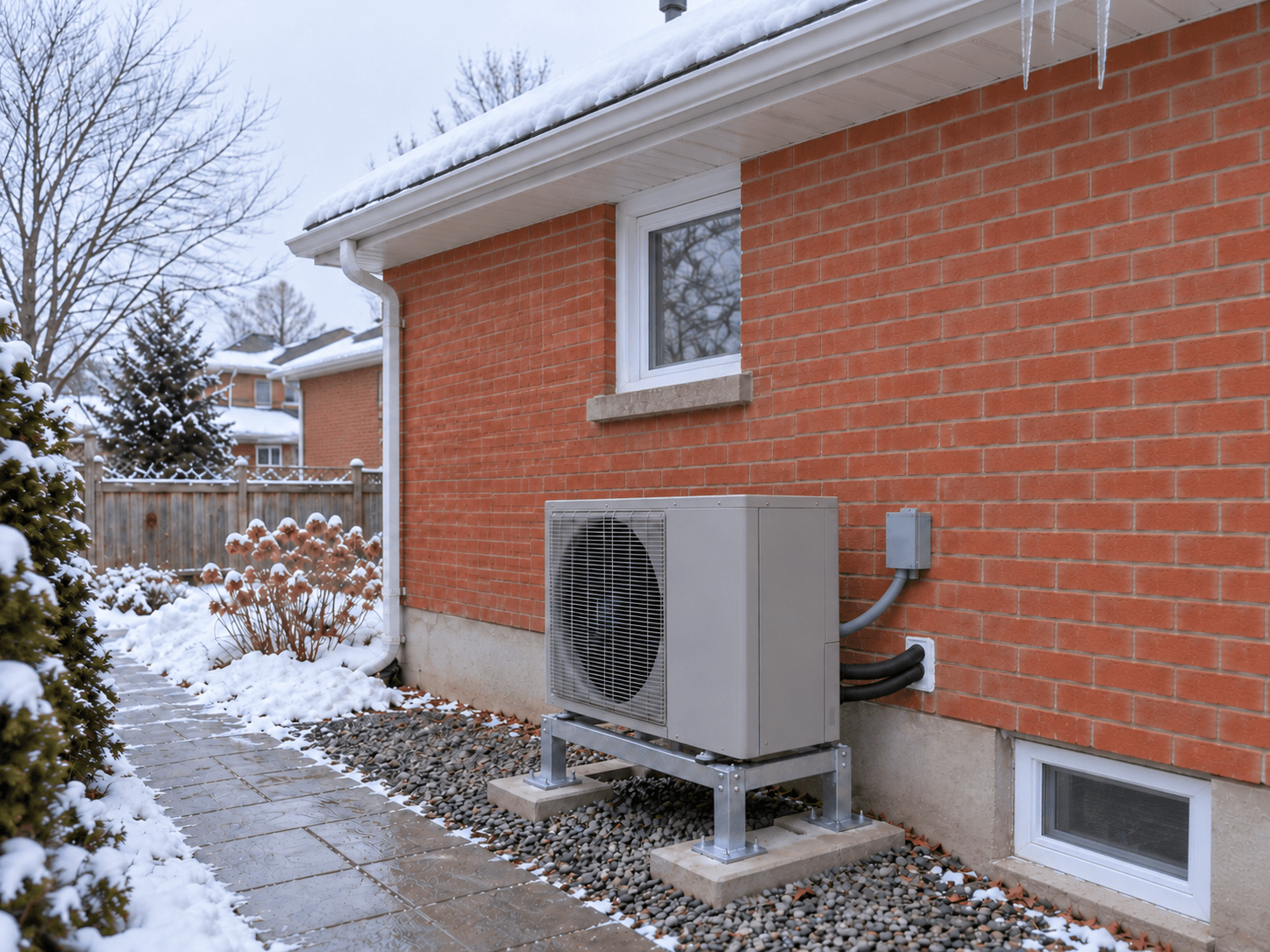
I was checking the clear space around the heat pump when a lump of snow landed farther along the side path. I looked up at the roof. The space around the fan was only part of the winter picture.
From a safe position across the yard, I took a photograph that included the roof edge, gutter, unit and path. A close-up of the grey cabinet would have left out the reason I was asking about protection.
Find out what is reaching the equipment
Loose snowfall, a roof shedding snow, a gutter drip and defrost water are different problems. I noted where water or snow came from and when it appeared. I did not stand under an overhang to investigate falling ice.
The Mitsubishi GS-series installation instructions call for a location protected from problematic snowfall and blowing snow, with model-appropriate measures where needed. They also require suitable airflow and support. The useful starting point was our model's installation instructions and the actual site.
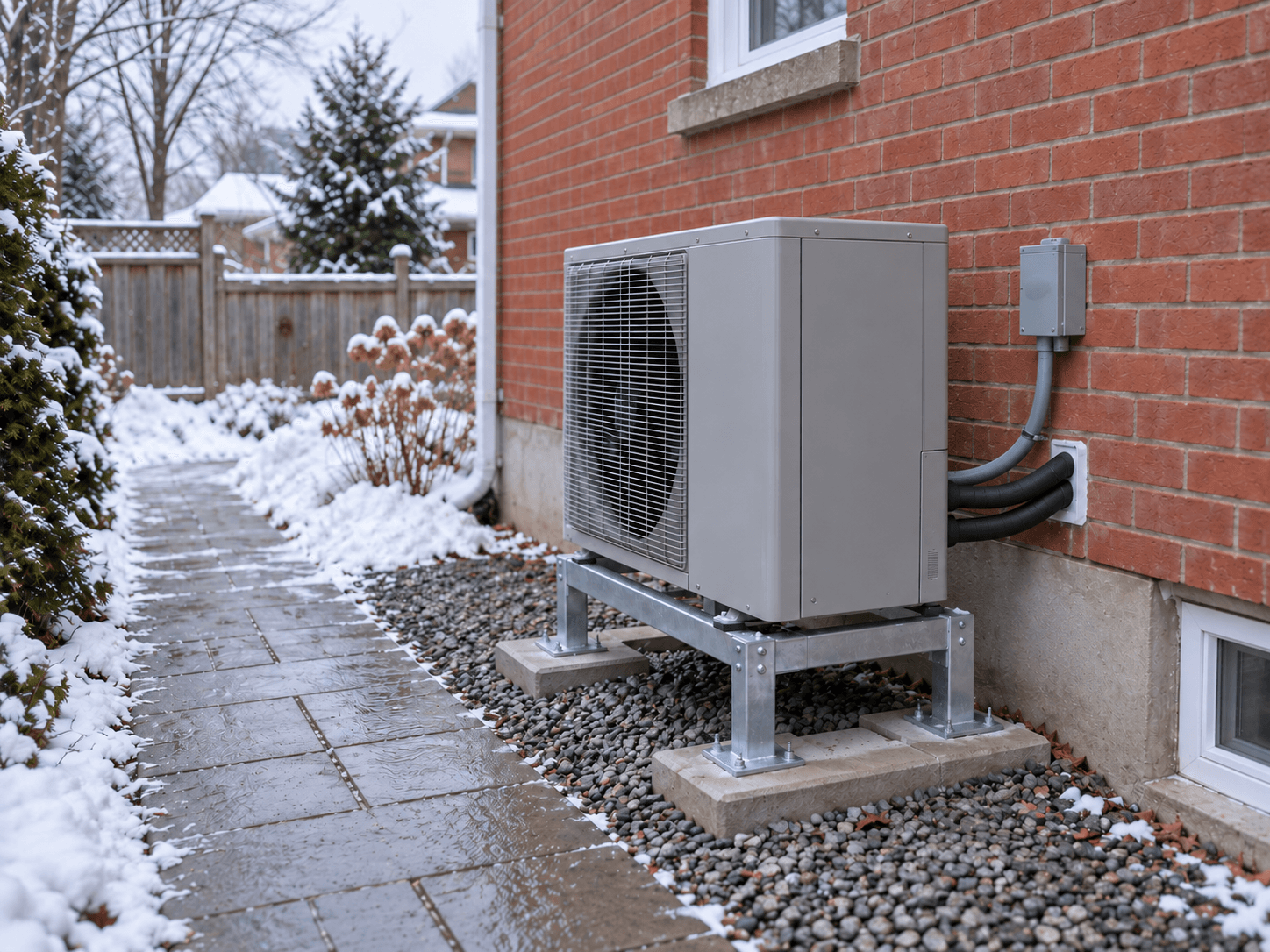
An overhead structure must leave the unit able to work
Source: Trane: winter equipment protection and operating heat pumps
A suitable canopy or guard may be part of an installer's solution. Its height, projection, supports and snow-load suitability cannot be chosen from a decorative shelter photograph. The arrangement also has to leave the manufacturer's intake, discharge and service spaces clear.
I asked where snow and water leaving the proposed protection would go. Moving the problem onto the path or back toward the equipment would not be much of an improvement.
- Would a different location avoid the roof-shedding zone?
- Is a manufacturer-approved accessory appropriate for this model?
- How will the structure be supported and kept clear of the equipment?
- Will drainage, service access and nearby walking routes remain usable?
An operating heat pump must not be wrapped in a solid winter cover. Trane's homeowner guidance makes that distinction and points owners toward suitable protection for the equipment. A loose board on top was not my substitute for a designed solution.
Treat damage or obstructed operation as a service problem
I would not knock roof ice onto the unit, chip the coil or climb onto a slippery roof. Severe icing, impact damage or unusual operating noise needs qualified assessment; the owner instructions govern stopping the equipment if necessary.
The photo gave Jo a much better starting point than my original request for 'something over it'. We could discuss the roof and unit together. I left the cover in the shopping basket until that conversation was finished.