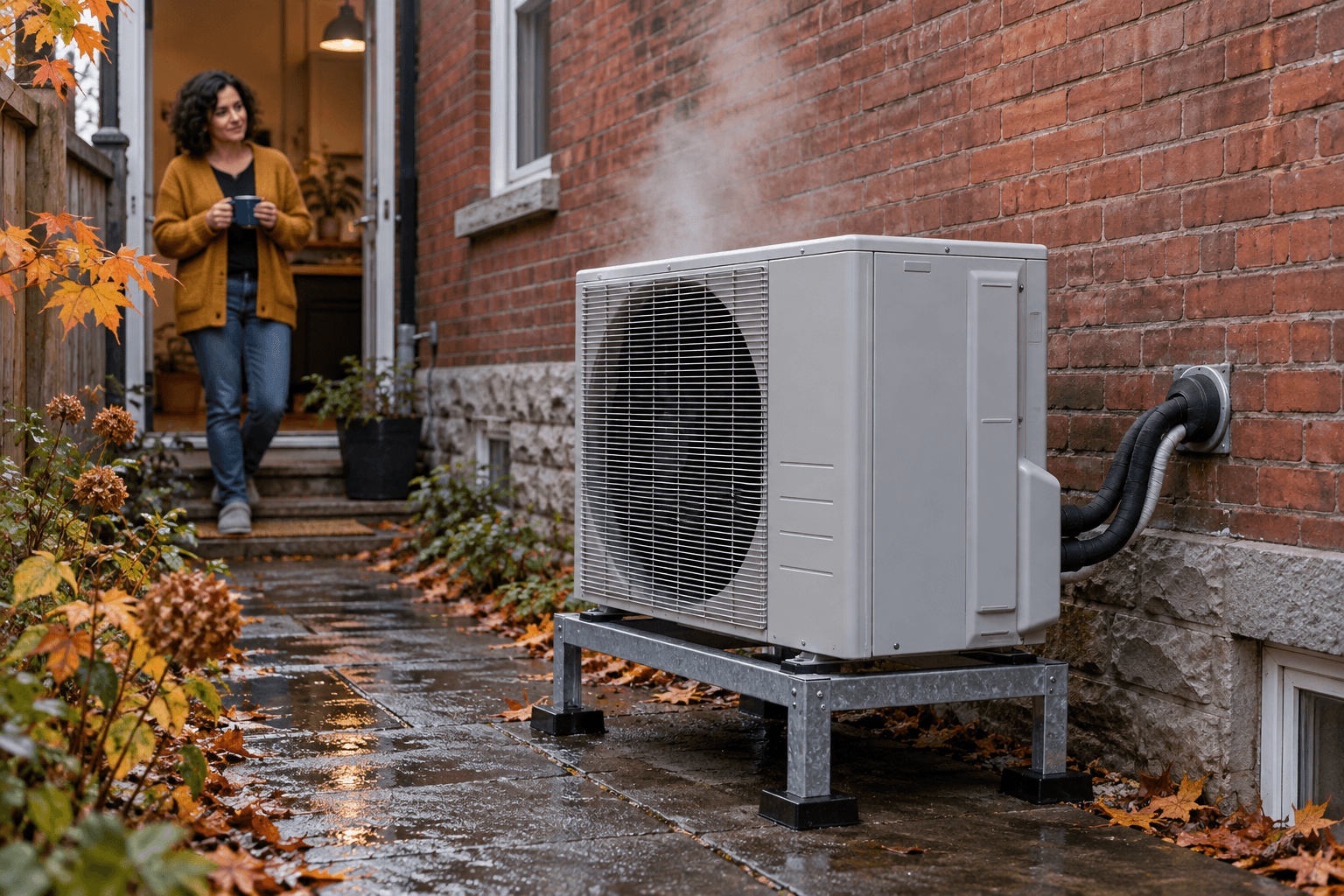
I had learned to leave the brief cloud of heat-pump vapour alone. The next thing I noticed was at ground level: a wet strip crossing the route to the bins. On a colder morning, that strip could become a very different walk.
I took a photograph from the kitchen doorway with the whole path in view. Jo needed to see where the water went, not just the underside of the machine.
Defrost leaves water behind
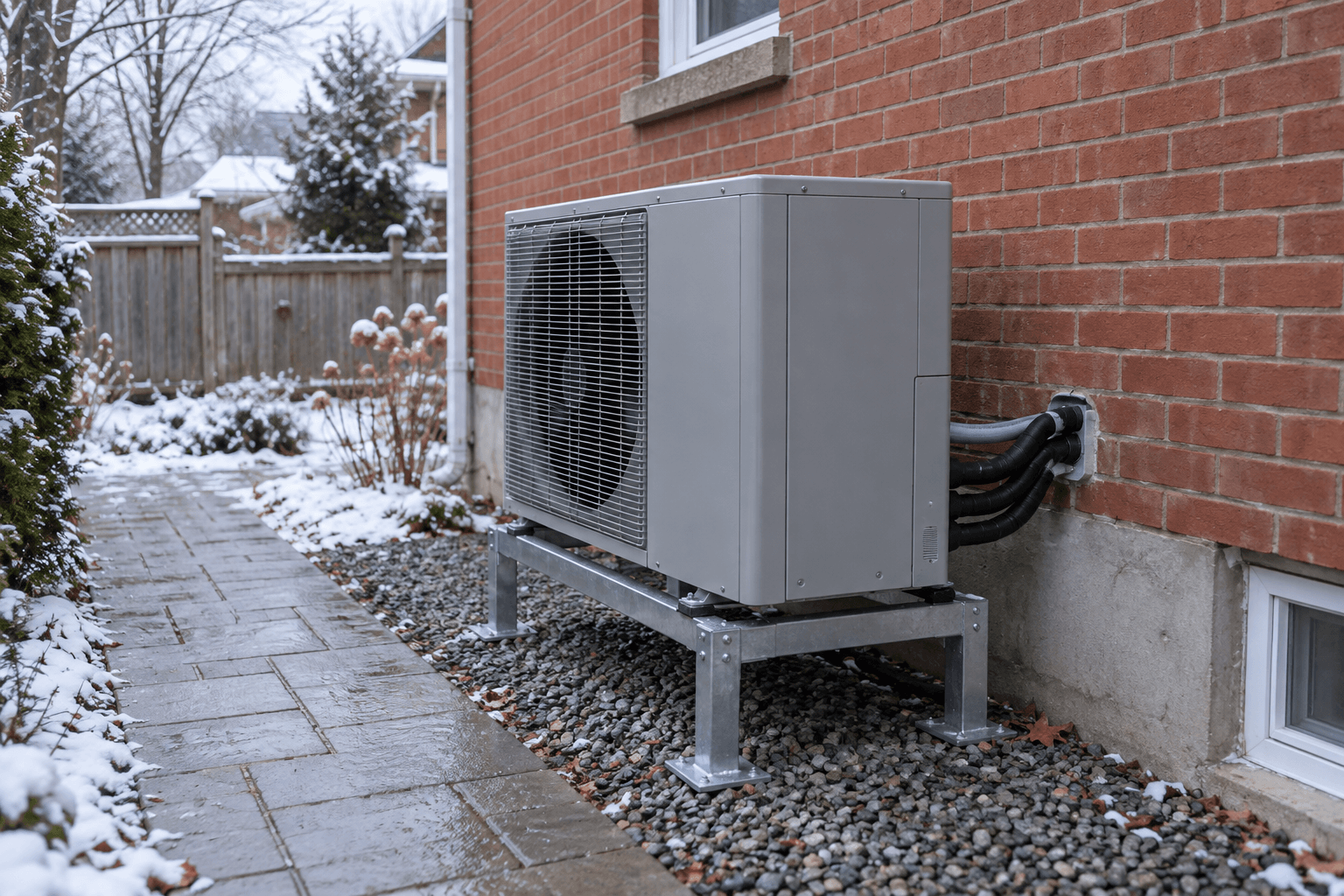
Defrost warms the outdoor coil to clear frost, and the resulting water must drain. That is normal operation. Water repeatedly collecting where people walk, or ice building around the equipment, is a siting and drainage question worth raising with the installer.
I also looked for water coming from above. A gutter drip can create ice near a heat pump without the machine being the original source. I noted what happened after rain as well as after defrost.
Ask about the whole winter arrangement
Source: Natural Resources Canada: choosing and living with a heat pump
NRCan recommends discussing installation and maintenance needs with the contractor. For our side yard, that conversation included the manufacturer's drainage requirements, the stand, snow conditions, service access and the route people actually used. There is no universal stand height or drain-hose arrangement that suits every model and site.
I did not attach a hose, chip ice off the coil or pour hot water through the unit. I kept away from the slippery area and arranged an assessment. Altering the equipment's drainage can create a new problem if it freezes.
The photo was more useful than my original complaint that the path was 'a bit wet'. It showed the gate, the paving and the direction of the runoff. Jo could work with that. I used the other route to the bins until we had a proper plan.