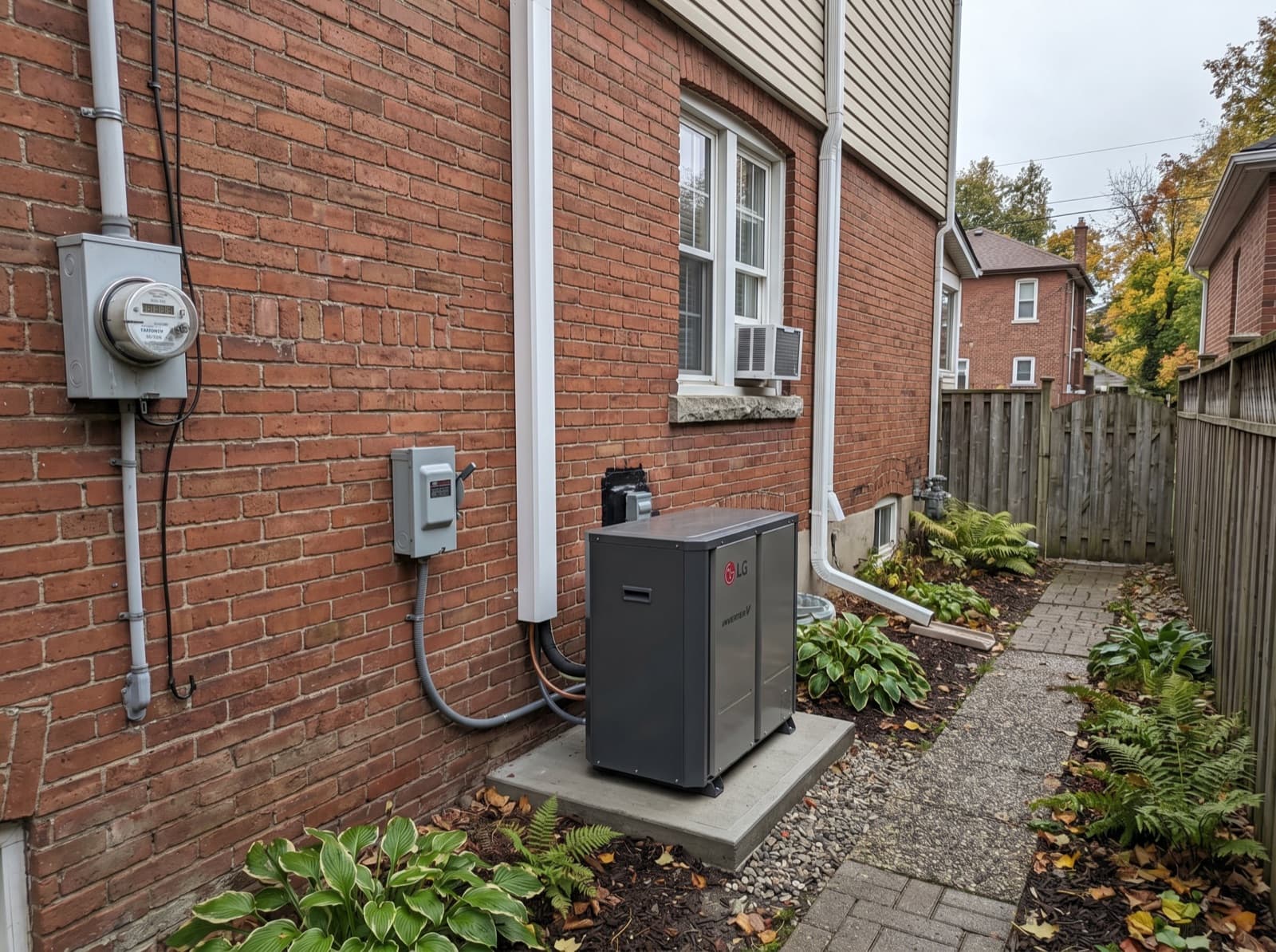
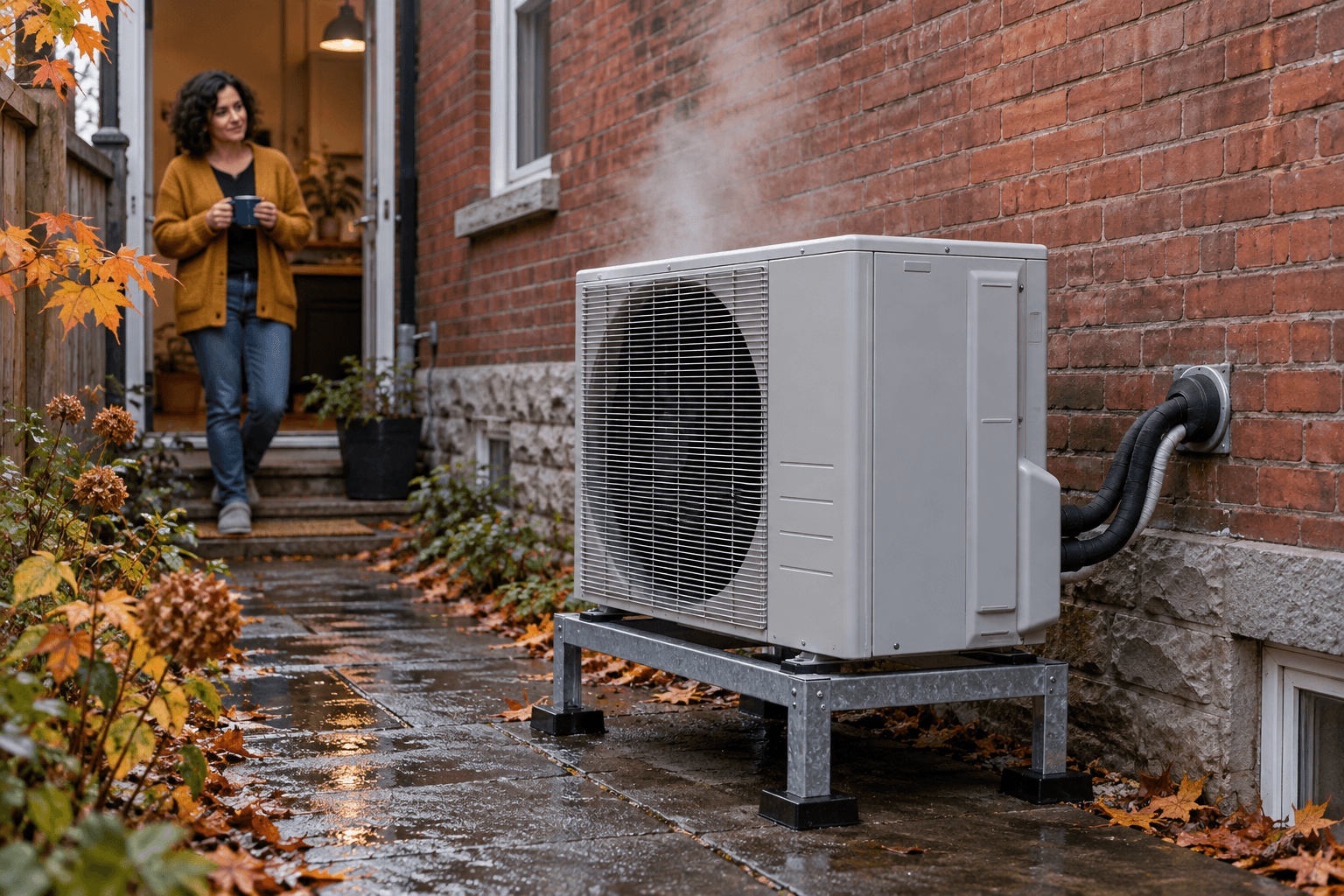
I was halfway through my first coffee when a pale cloud rose beside the kitchen window. The heat pump had been in the side yard for six weeks. I had already decided it was expensive. Now I was deciding it was dramatic.
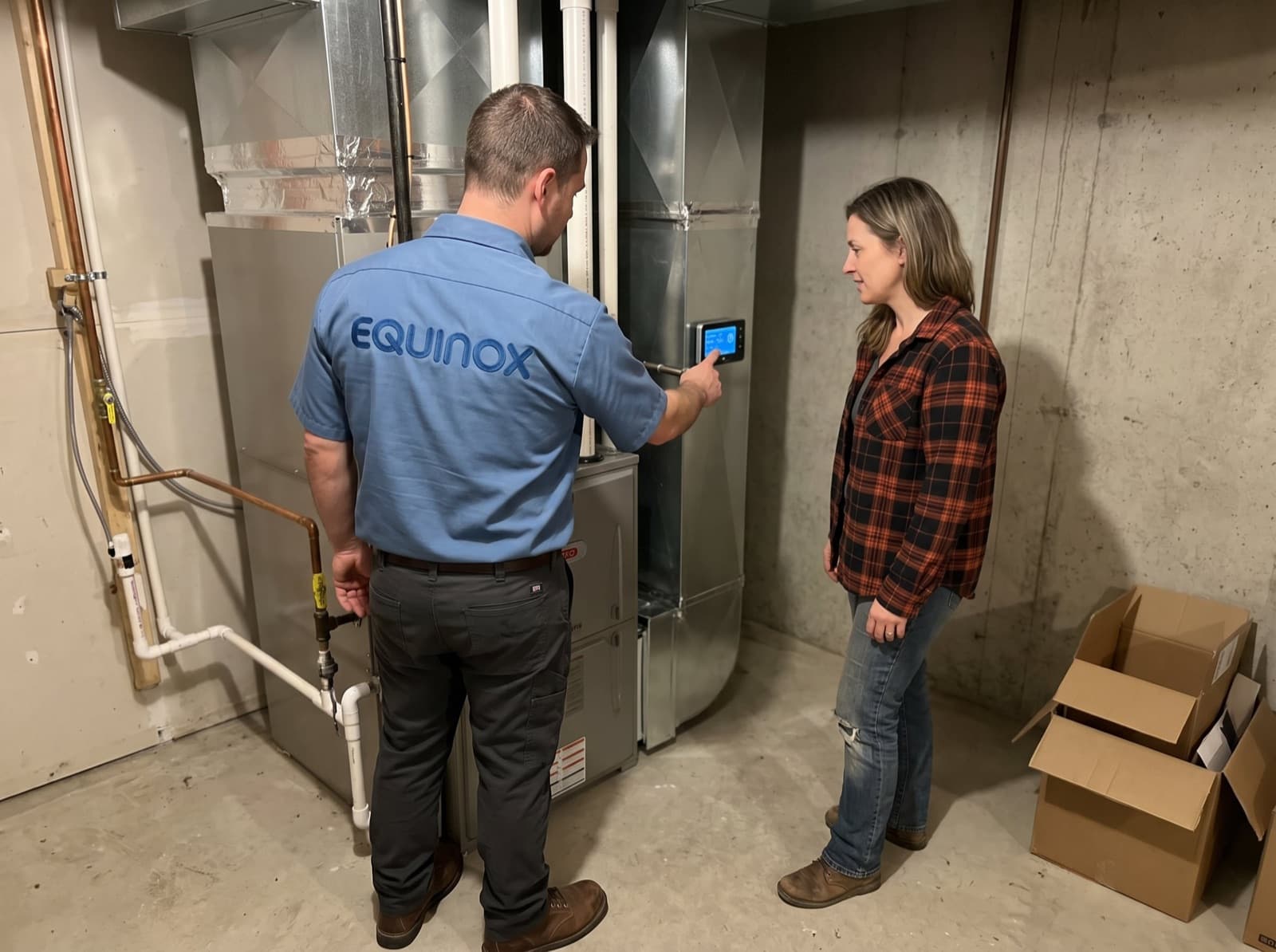
It was one of those damp November mornings when the fallen leaves stick to everything. I stood in the doorway in slippers, holding the blue mug with the chipped rim, and watched the cloud disappear. Then I called Jo, the technician who had walked me through the controls.
'I think the outdoor unit is smoking.' Jo asked what I could actually see. No flames. No dark smoke. No burning smell. Just a brief white mist, and a machine that sounded different from the one I had heard yesterday. My original report had omitted all of that.
A heat pump has to clear its own frost
In heating mode, the outdoor coil takes heat from outside air. Moisture can freeze on that cold coil. Defrost briefly changes the system's operation to warm the coil and clear the frost, then heating resumes. A passing cloud of water vapour can be part of that sequence.
Jo asked me to look at the owner's guide rather than audition the machine for a disaster film. Depending on the equipment, the outdoor fan may pause and the sound may change during defrost. The useful question is whether the cycle finishes and the system returns to heating.
I had assumed that a machine working properly would always look exactly the same. This was a poor theory. My dishwasher spends half its life making noises I cannot explain, and I have never stood beside it in slippers preparing a witness statement.
The useful things to write down
- What was the weather doing: damp, frosty, snowing, or raining?
- Was there a passing mist, or ice still covering the coil after the cycle?
- Did the house keep its temperature, or was it getting colder?
- Was a fault message visible on the controller? A photo is more useful than trying to remember it.
I wrote those questions on the back of an envelope. Then I took a short video from the path, without approaching the fan. By the time I finished, the mist had gone and the normal sound was back. My coffee had not recovered.
Ice that stays is a different conversation
Source: Carrier Canada: frozen outdoor units and defrost faults
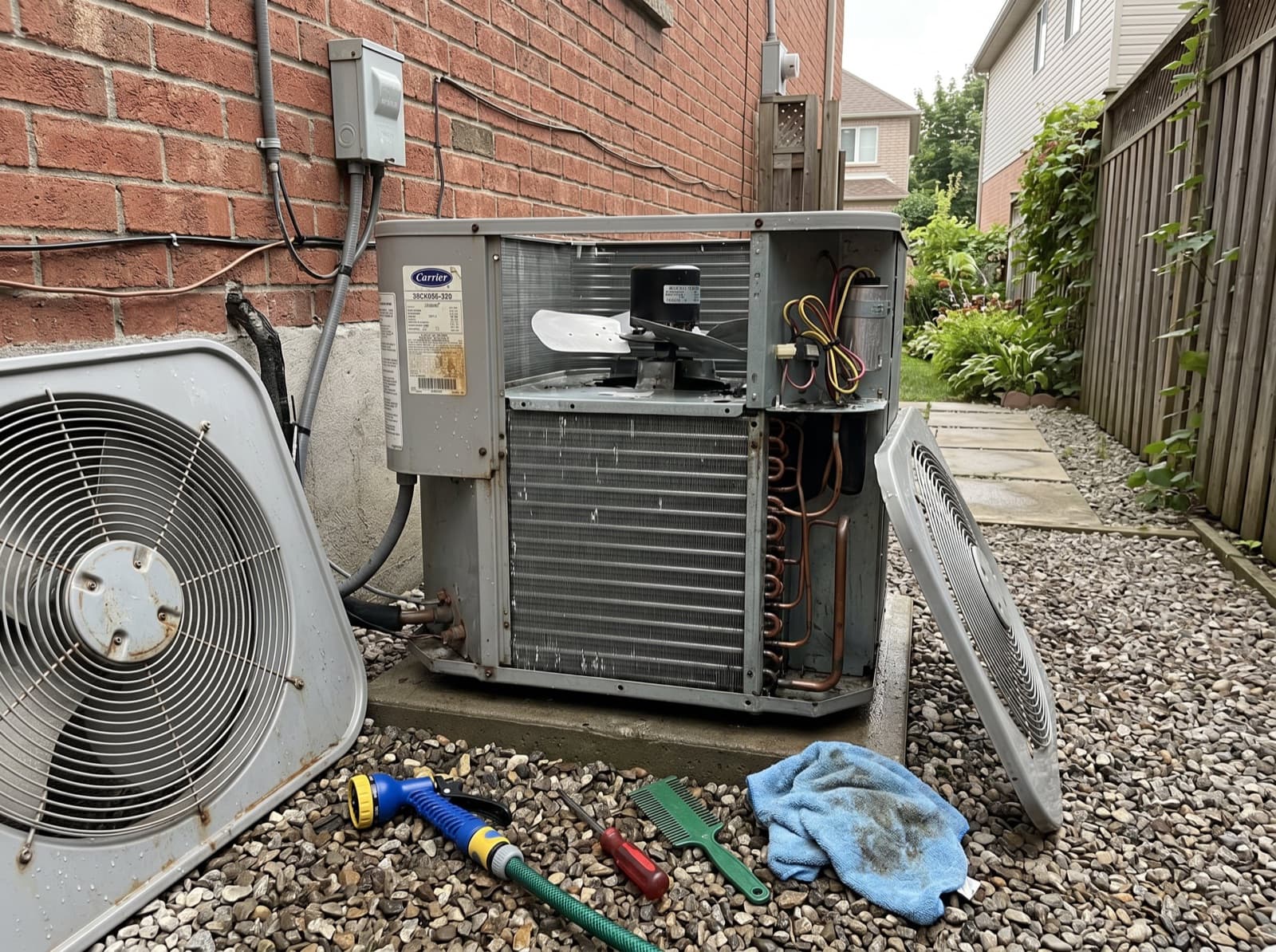
A brief defrost is one thing. Ice that keeps building, a fan striking ice, repeated fault messages, or a house losing heat needs a service call. Water dripping from a gutter can also freeze around equipment. A technician needs the actual model and symptoms to separate a siting problem from a control or equipment fault.
Do not chip the coil, pour hot water into the unit, or open its panels to help it along. Keep the specified clearances open and follow the owner's snow-clearance instructions. A heat pump operating through winter needs airflow; a winter cover belongs nowhere near a running unit.
Back to breakfast
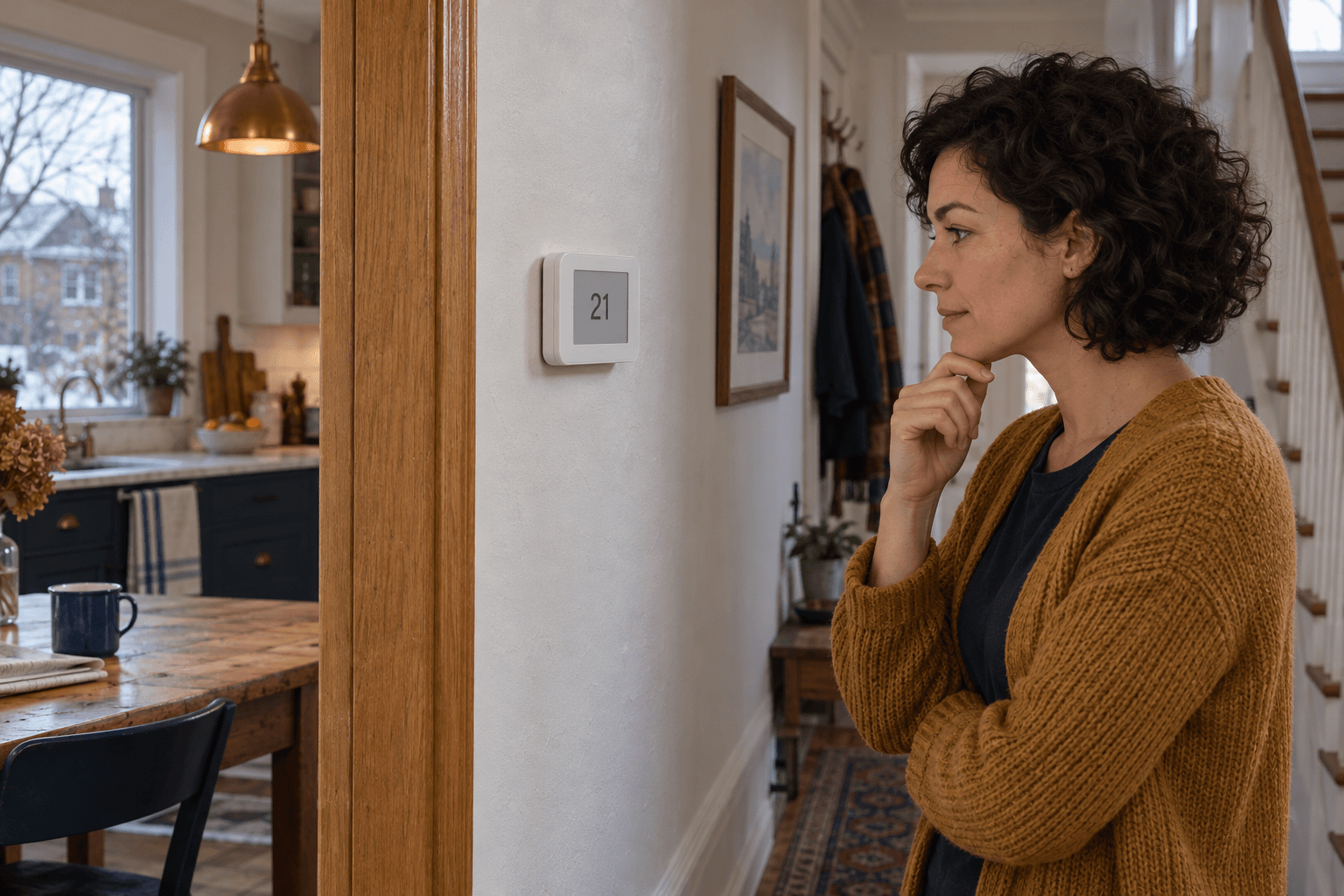
Jo's last question was whether I knew which heating mode the thermostat was in. I said yes with the confidence of a person who had changed three settings the night before. That became our next conversation.
For now, the outdoor unit had finished its business. I shut the kitchen door, found my other slipper under the radiator bench, and made a fresh coffee. The heat pump was allowed to continue being a heat pump.