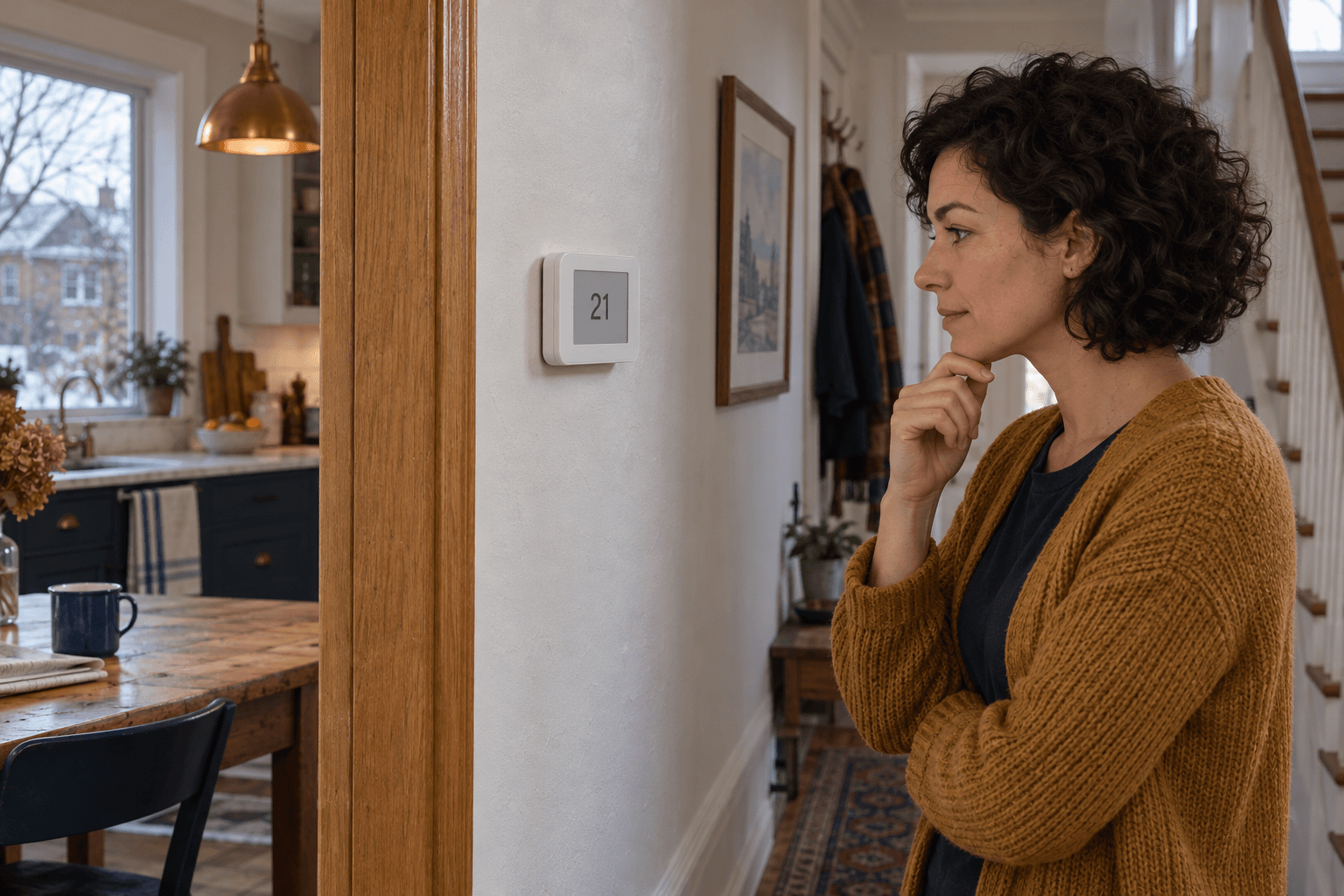
I wanted the kitchen warm at seven. So I told the thermostat to start warming it at seven. This distinction escaped me until I was eating toast in a cardigan.
When the heat pump went in, I copied the old furnace schedule without much thought. A deep overnight drop, then a sharp jump for breakfast. It felt organised. There were little coloured blocks in the app. I trust little coloured blocks more than I should.
The morning after my side-yard defrost investigation, Jo asked about those blocks. I explained that I had also nudged the temperature up because the kitchen felt slow. Then nudged it again. 'How many changes?' she asked. I decided that 'a couple' was still technically available to me.
Your old furnace schedule is not sacred
Source: NRCan: heating and cooling with a heat pump, operation considerations
A large setback leaves more temperature to recover in the morning. Depending on the heat pump, controls and weather, the system may need a longer run or supplemental heat to get there. That changes the value of an overnight setback compared with the old system.
NRCan recommends moderated heat-pump setbacks of no more than 2 C, or a suitable smart thermostat that starts recovery early. That is a useful starting point to discuss with the installer. The equipment's own controls and the needs of the household still matter.
Jo asked when I wanted the room comfortable, when I actually left the house, and whether anyone was home in the afternoon. I knew the first two. The third required a brief discussion about my partner's idea of 'going into the office'. We had programmed an imaginary household.
AUX is information, not a verdict
Auxiliary heat means a secondary heat source is being called. It can help during cold weather, a defrost cycle or recovery from a big temperature change. Some systems use electric resistance backup; hybrid arrangements may use a furnace. There is no universal outdoor temperature at which every system should switch.
Emergency heat is a separate control mode on systems that provide it. It can stop normal heat-pump operation and rely on the backup. It is not a faster breakfast button. Follow your equipment instructions and get advice if the heat pump is malfunctioning.
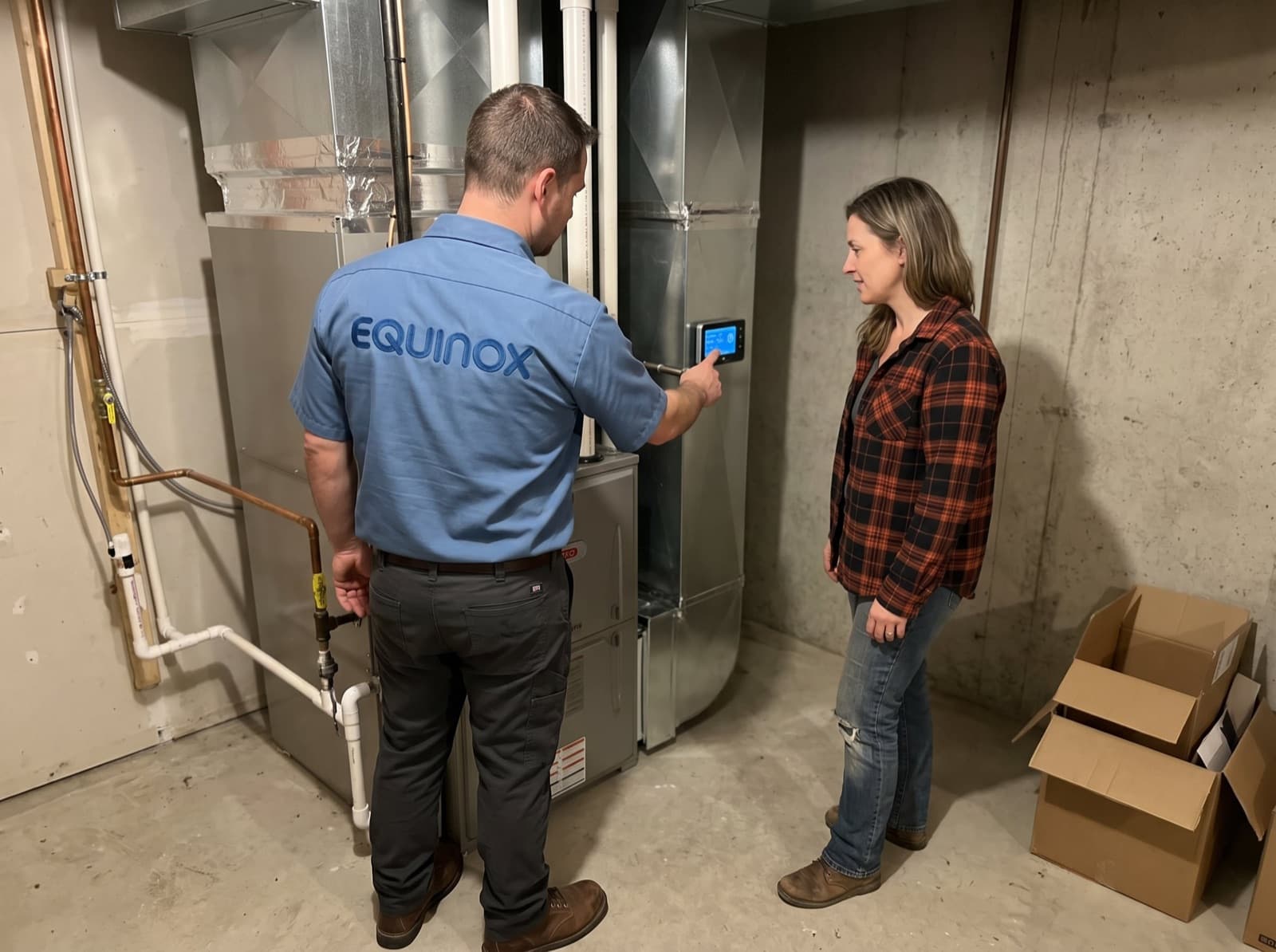
Jo looked at my normal schedule with me. Installer settings, staging and backup lockouts were her territory. I had found a discussion online about changing them. She asked whether the stranger in that discussion had the same equipment, house and backup heat. I had to concede that I did not even know which country he lived in.
Give one schedule a fair try
- 1Write down when the house needs to be comfortable, including work-from-home days.
- 2Ask whether your controller supports early or adaptive recovery with your installed system.
- 3Agree on a modest overnight change or a steady setting, then stop overriding it every morning.
- 4Record comfort, outdoor weather and any backup-heat indications over several comparable days.
- 5Call if the house cannot reach its setting, errors repeat, or backup use seems unexplained. Keep the notes for that conversation.
A week's impression is not proof of a cheaper heating season. Weather, electricity rates, gas charges and household routines all affect the bill. I wanted a schedule that worked before claiming I had discovered an energy-saving trick.
Seven means breakfast, eventually
We left the normal heating mode alone and made one schedule change. I put the phone down. The next morning, instead of raising the target again, I checked the clock and let the plan run.
The little coloured blocks were less exciting now. They also described people who actually lived in this house. I poured coffee into the blue mug and left the thermostat alone long enough to eat the toast.