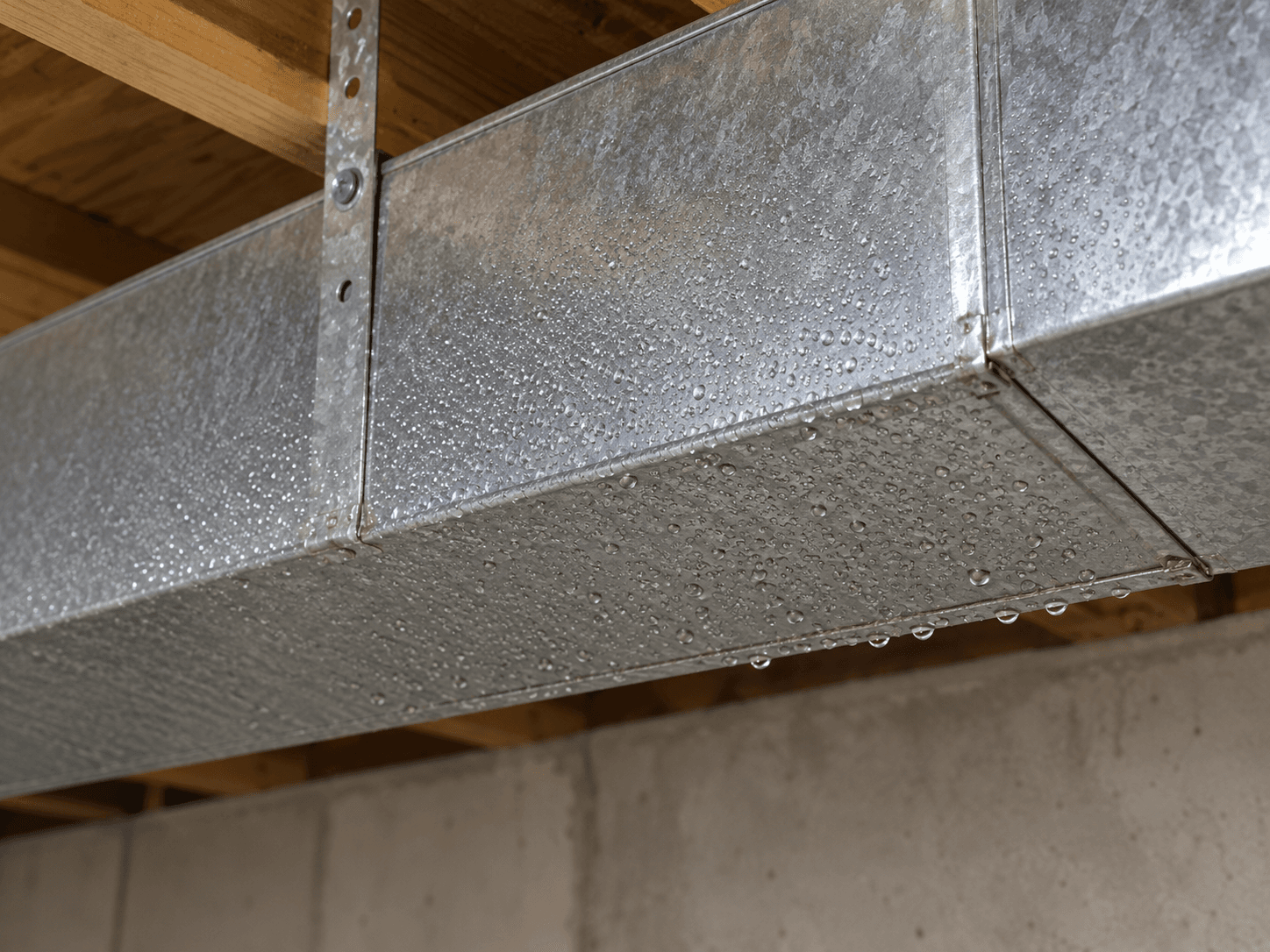
Water appears beneath the duct while the air conditioner runs. It may be moisture condensing on cold metal, but a nearby pipe, drain or wet insulation can also send water to that spot. Start by recording where the first droplets appear.
Look at the surface and the timing
Source: US Department of Energy: sealing and insulating metal ducts
When a duct's outer surface is cold enough, moisture in the surrounding air can collect on it. This is more likely where humid air reaches cold, uninsulated metal. The US Department of Energy describes insulation with a suitable vapour barrier as part of preventing this condensation.
Droplets spread across a cold surface suggest a different pattern from water emerging at one joint or running down from above. Neither observation proves the cause alone. Look from a safe accessible position without removing wet insulation or opening equipment.
Note whether the water starts during cooling, after a shower or laundry session, during rain, or even when the system is off. Photograph the first wet location as well as the place where water finally lands.
A loose wrap can hide the problem
Source: NRCan: sealing and insulating ducts in unheated spaces
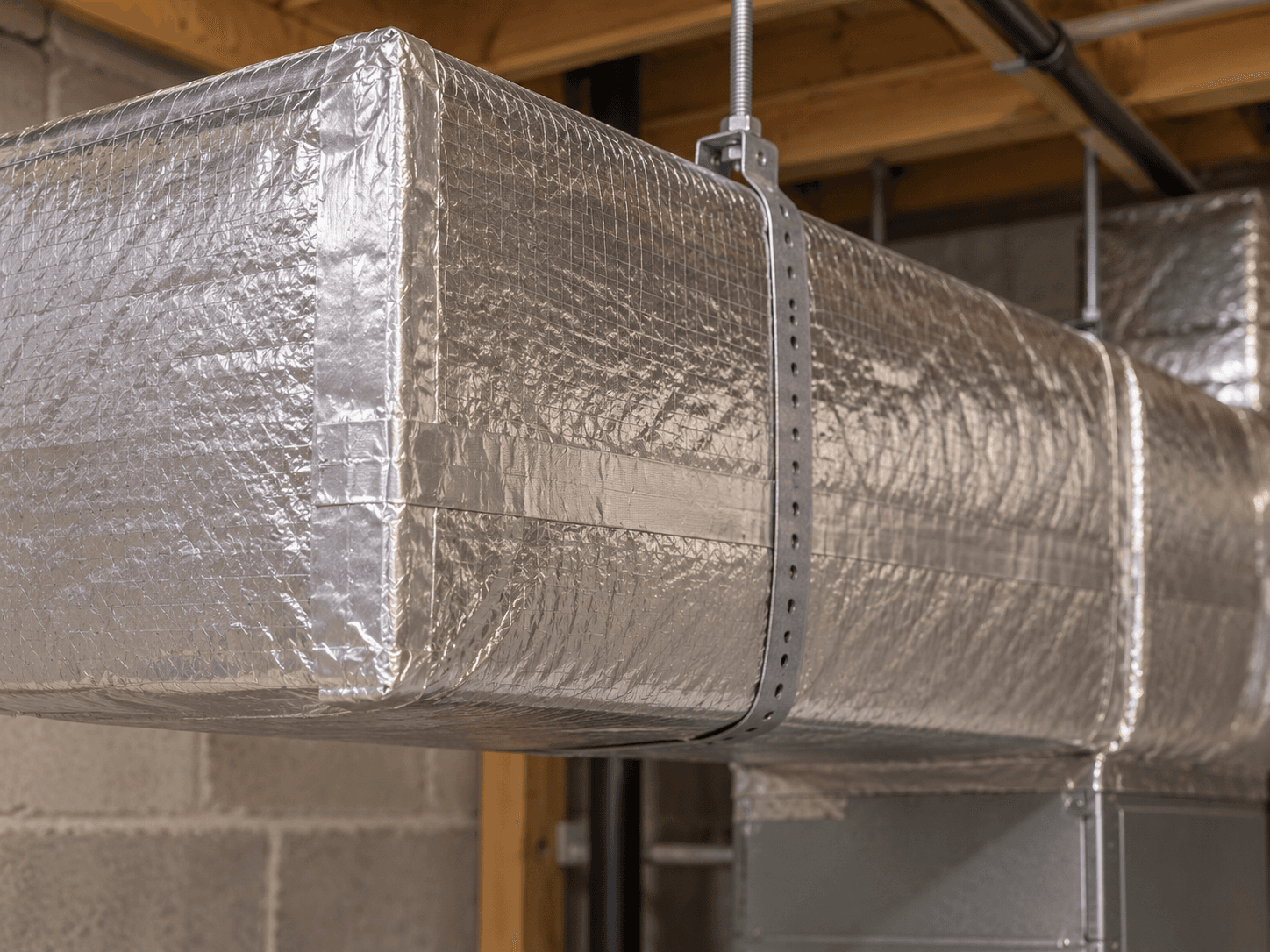
The appropriate repair may involve controlling surrounding humidity, correcting an air leak, repairing the duct insulation or fixing a separate pipe or drain. NRCan recommends that ducts running through unheated spaces be properly sealed and insulated.
Ask the contractor to assess the insulation and vapour-control layer as a continuous assembly, including fittings and seams. A gap can leave a cold surface exposed even when most of the run looks covered.
Do not add an improvised layer over wet material and assume the job is finished. Wet or damaged insulation and nearby finishes need assessment, drying or replacement as appropriate after the source is addressed.
Bring useful observations to the visit
- Where does water first appear, and where does it drip?
- What was the cooling system doing at that time?
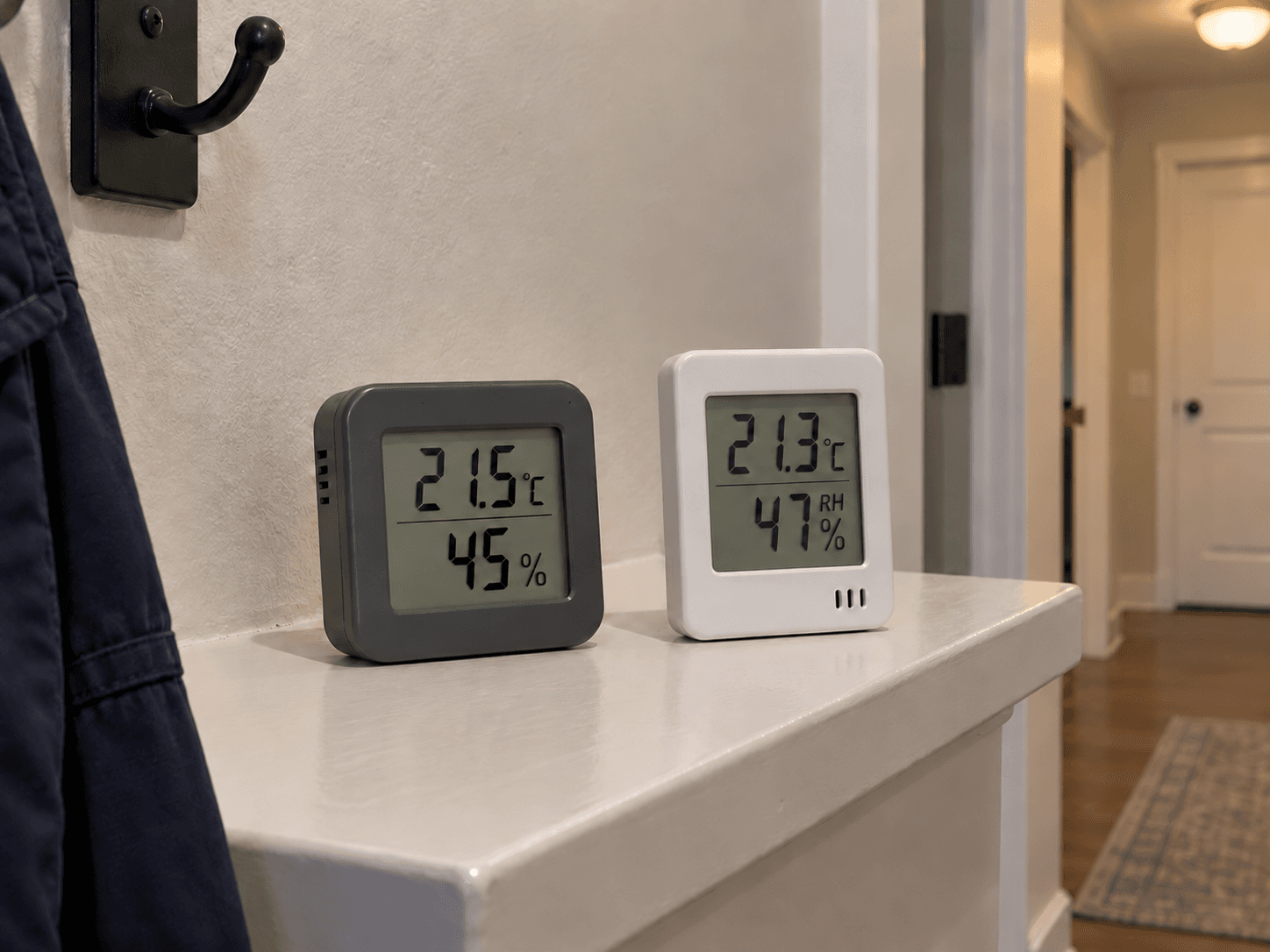
- What are the room's temperature and humidity?
- Is the insulation missing, damaged or already wet?
Water near electrical equipment or a sagging wet ceiling needs prompt qualified help. Stay clear rather than reaching through the wet area to reset something.
After the repair, check the same accessible location during cooling and humid weather. The aim is a dry surface and dry surrounding materials, not simply a larger container under the drip.