
The bedroom was warm and the air at the register had weakened. Outside, I noticed frost where I had expected a perfectly ordinary summer pipe. It was tempting to interpret ice as proof that the air conditioner was working exceptionally hard.
I took a photograph from a safe position and stopped the cooling through the thermostat. I did not peel insulation away to improve the picture.
Ice during cooling needs attention
Carrier identifies restricted airflow and refrigerant problems among the causes of a frozen evaporator coil. Continuing to run cooling can damage equipment. The ice needs to thaw safely, and the cause needs diagnosis; melting alone is not a repair.
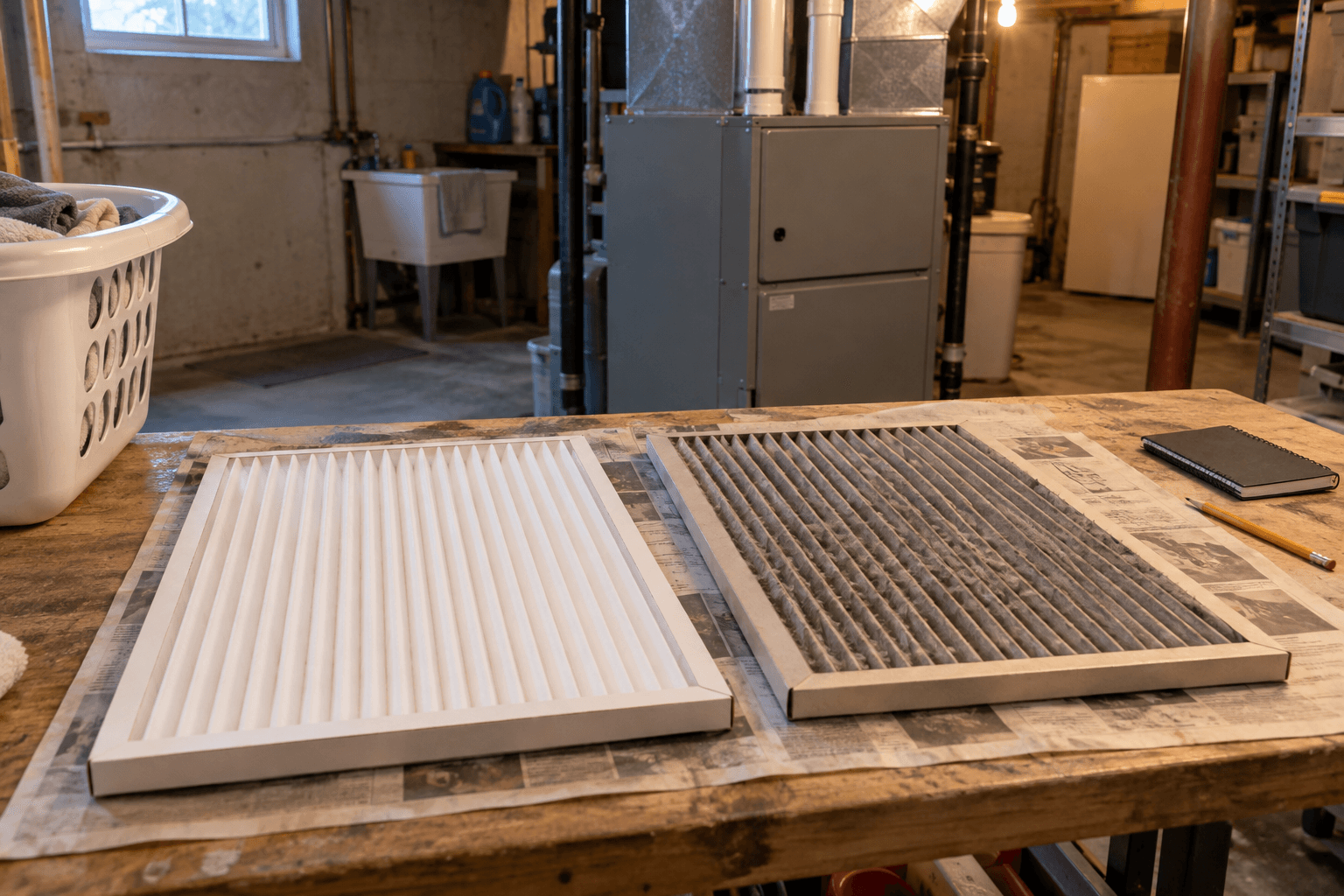
I checked the owner-accessible filter as the manual allowed, with the equipment off, and looked for blocked registers. I left the coil cabinet closed and contacted the service company for the next steps. I did not use a hairdryer, boiling water or a tool to remove ice.
Remember where the meltwater can go
I mentioned the possibility of thawing water when I called. Any water near electrical equipment required keeping clear. I wasn't going to keep restarting cooling to see whether the frost returned while the floor became wet.
For the appointment, I recorded when cooling weakened, whether the filter had recently changed and which rooms were affected. I did not order a refrigerant top-up based on the ice. That would skip the question of why the system was freezing.
We used a cooler part of the house and had another place to go if indoor heat became unsafe. July had produced something that looked wintry, but the sensible response was a summer service call, not a defrost experiment.