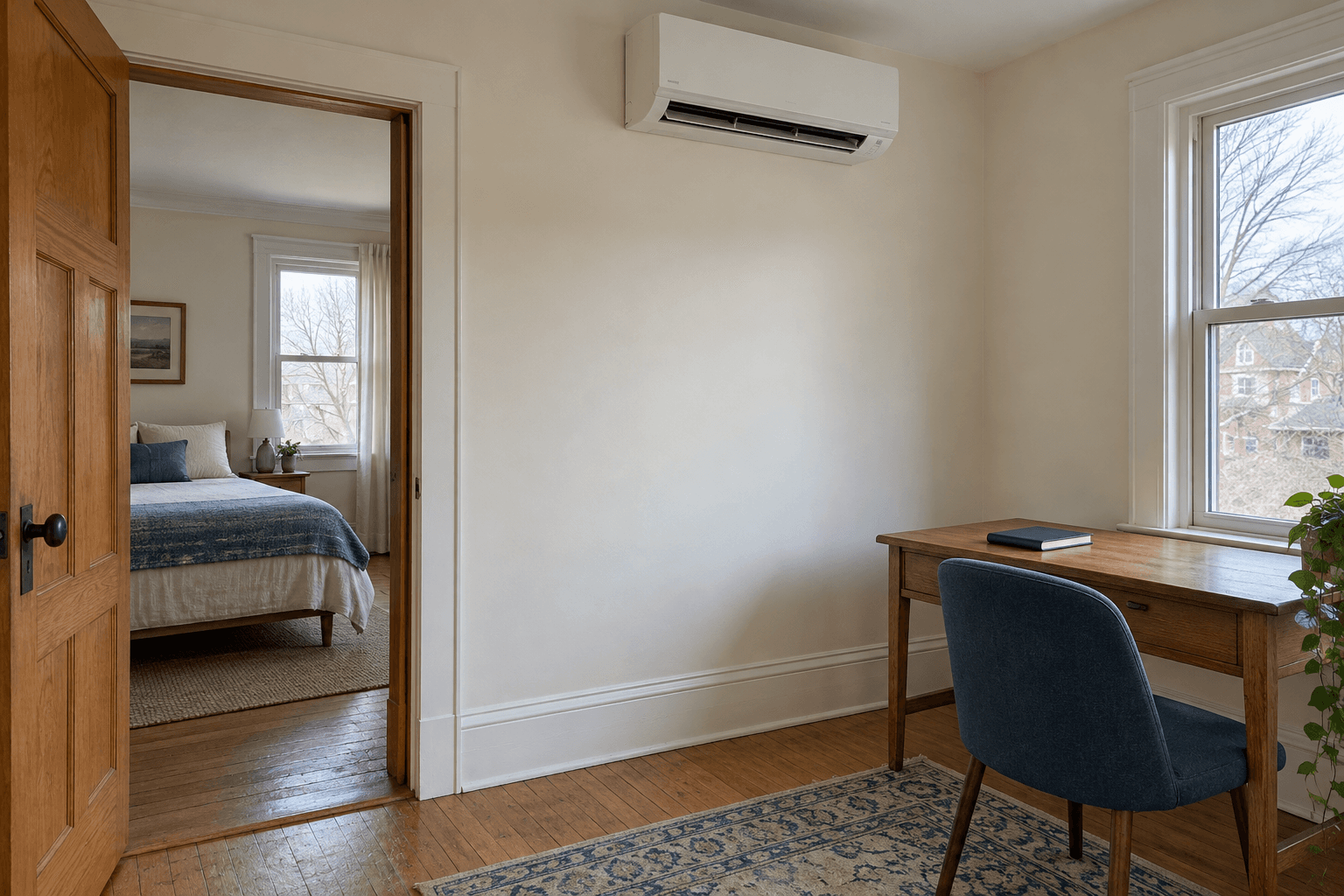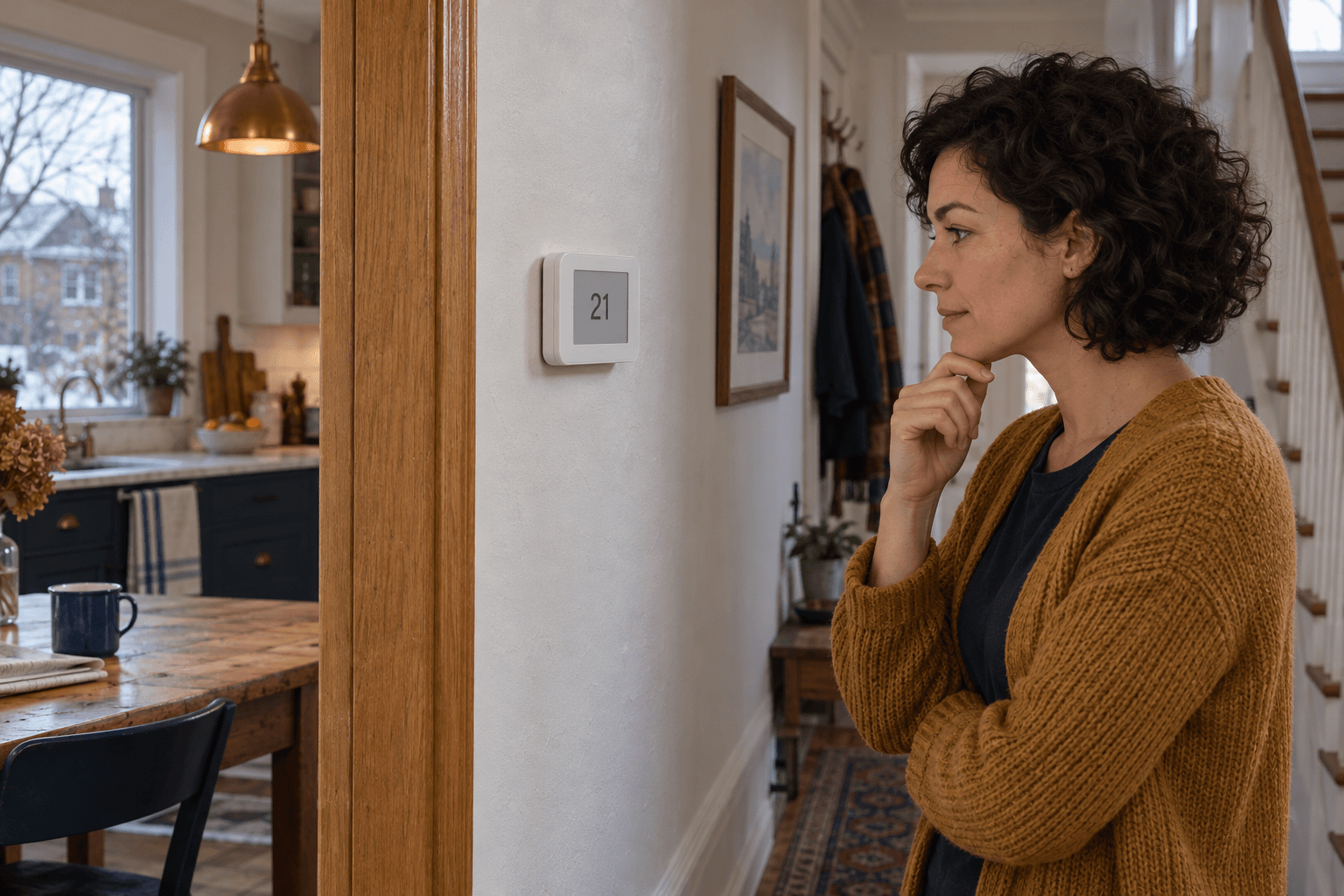

I lowered the number on the remote and waited for the bedroom to cool. The number changed immediately. The air did not. Eventually I noticed the little sun symbol, which had apparently survived the entire winter without attracting my attention.
Our heat pump was still in heating mode. I found the guide, selected the correct cooling mode and gave the system the normal time its instructions required. Turning the number down repeatedly had not changed the kind of work I was asking it to do.
Check the command and the air path
Source: Carrier Canada: heat pump heating and cooling problems
Carrier's heat-pump guidance starts with thermostat settings and basic operating checks. Cooling problems can also involve filters, airflow, controls or refrigerant faults, so a correct mode does not guarantee that everything else is healthy.
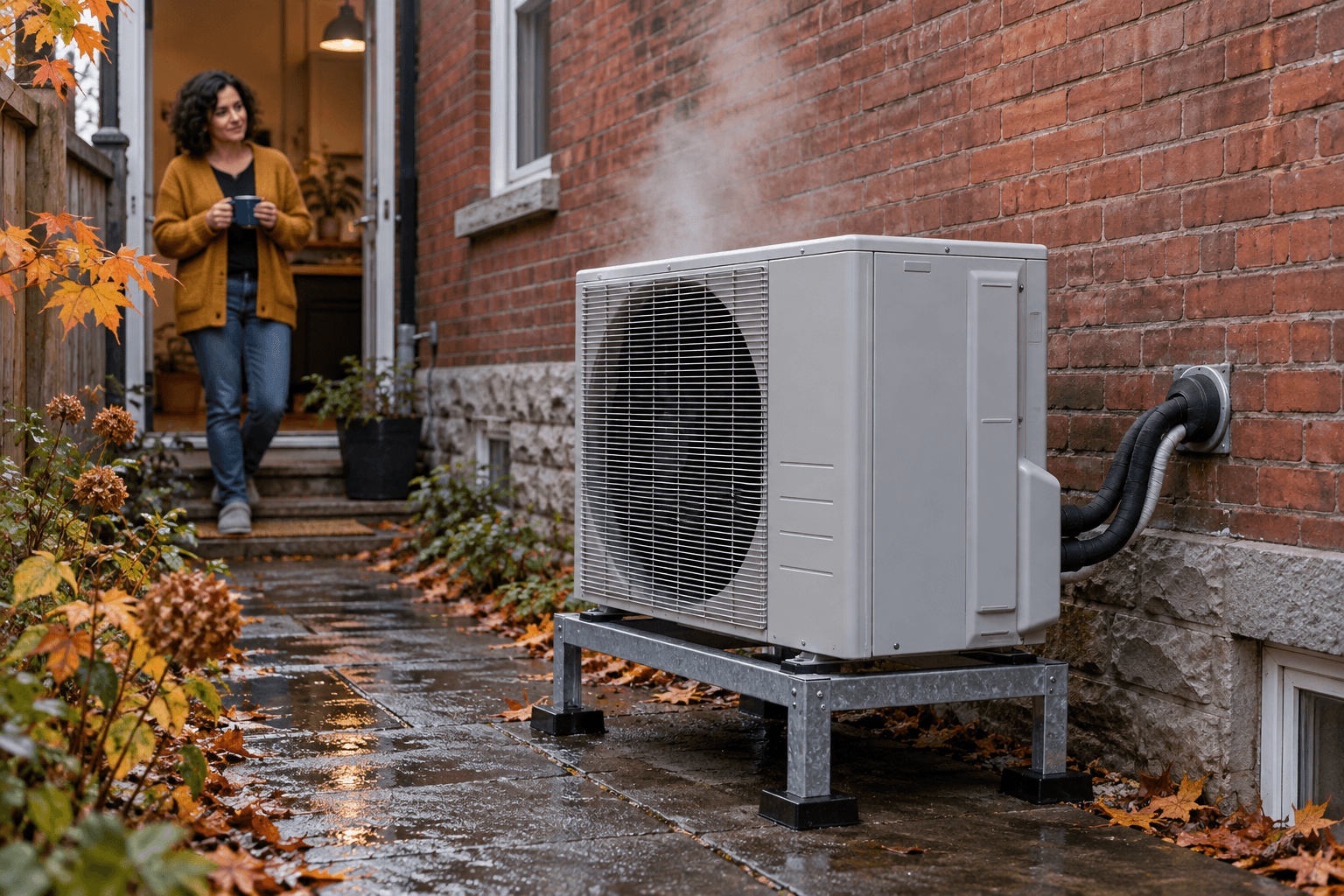
I checked the owner-serviceable filter and clear openings as instructed. I looked at the outdoor unit from a safe position for obvious obstruction. I didn't remove panels, inspect wiring or touch refrigerant connections.
Give the next person a useful account
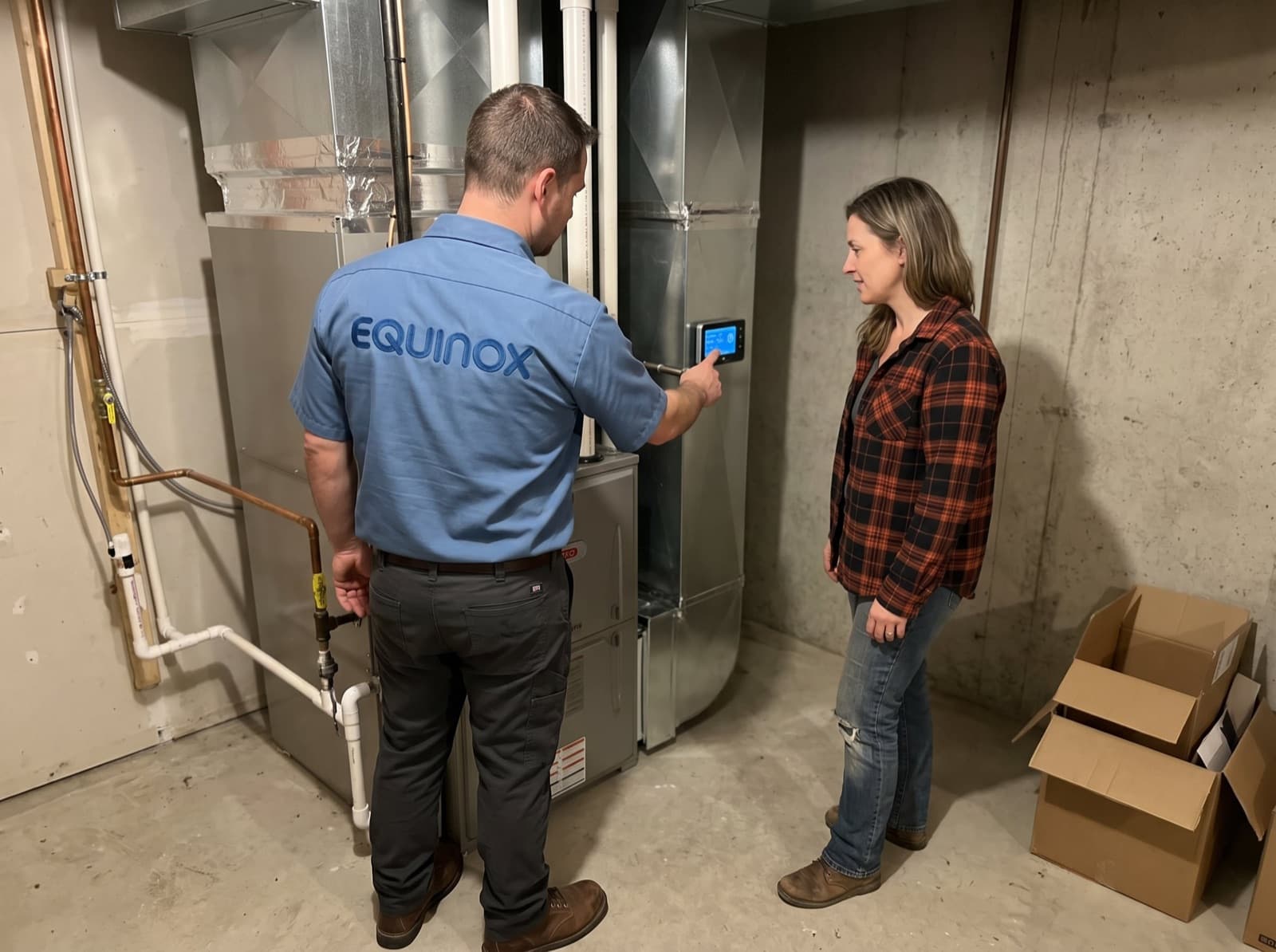
If cooling still fails, note the room temperature, target, mode and whether indoor and outdoor units appear to operate. Include visible fault messages, unusual noise, ice or water leakage. Those details help a technician separate a control misunderstanding from a fault.
On a multi-split, check the other room controllers too. A shared system may not accept simultaneous heating and cooling requests.
Our problem was simple that day, but I kept the guide near the remote afterward. The useful discovery was not that every cooling fault is a wrong button. It was that the displayed temperature and the operating mode are two separate instructions, and I had been looking at only one of them.