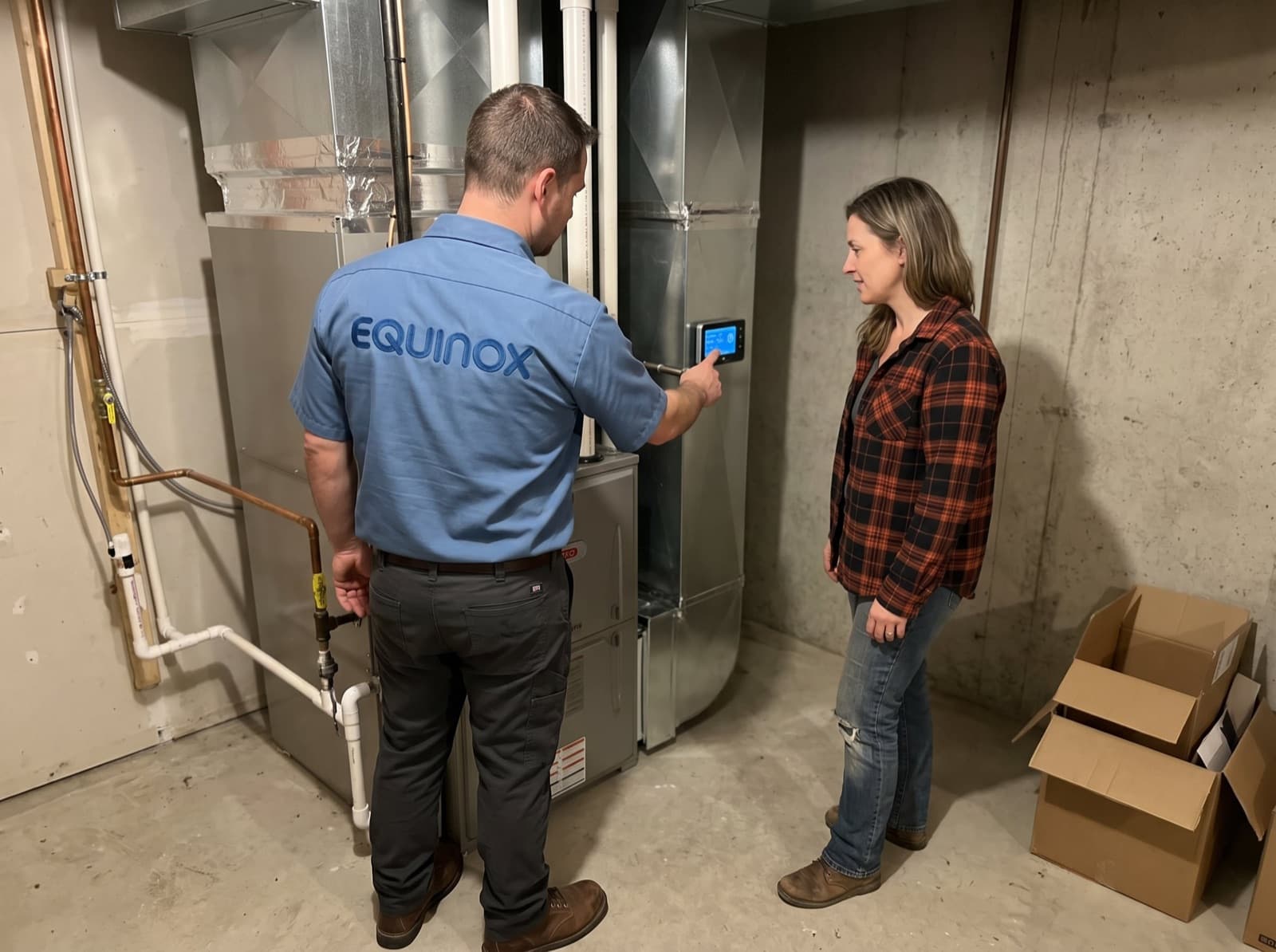

I could hear air moving, which was reassuring until I looked at the room temperature. It had climbed through the afternoon. The system sounded busy enough, but the house was not getting the result I wanted.
I started by reading the entire thermostat display. Cooling mode, target temperature and fan setting were separate pieces of information. A circulating fan alone did not prove that cooling was happening.
A short set of safe observations
Carrier lists incorrect settings, dirty filters and outdoor obstructions among common reasons for poor cooling. I checked the owner-serviceable filter according to its instructions and made sure furniture was clear of the supply and return grilles.
Outside, I looked from the path for obvious blockage and noted whether the unit appeared to be operating. I did not open electrical covers, push the fan or touch refrigerant lines. Those actions would not turn a useful observation into a safe diagnosis.
Ice, unusual noise, leaking water or a repeated breaker trip changed the situation. I would stop using the affected equipment safely and arrange qualified help, rather than keep resetting it.
Tell the technician what changed
I noted whether every room was warm or just the sunny bedroom, when the problem began and whether the system had previously kept up in similar weather. I included recent work and filter changes. That was more helpful than saying it probably needed refrigerant.
We also made a plan to stay somewhere cooler if the house became unsafe during the heat. Waiting for a repair did not require waiting in the hottest room.
The service request ended up shorter than my first complaint: correct mode, rising room temperature, clear grilles, no visible ice. It gave someone a place to start.