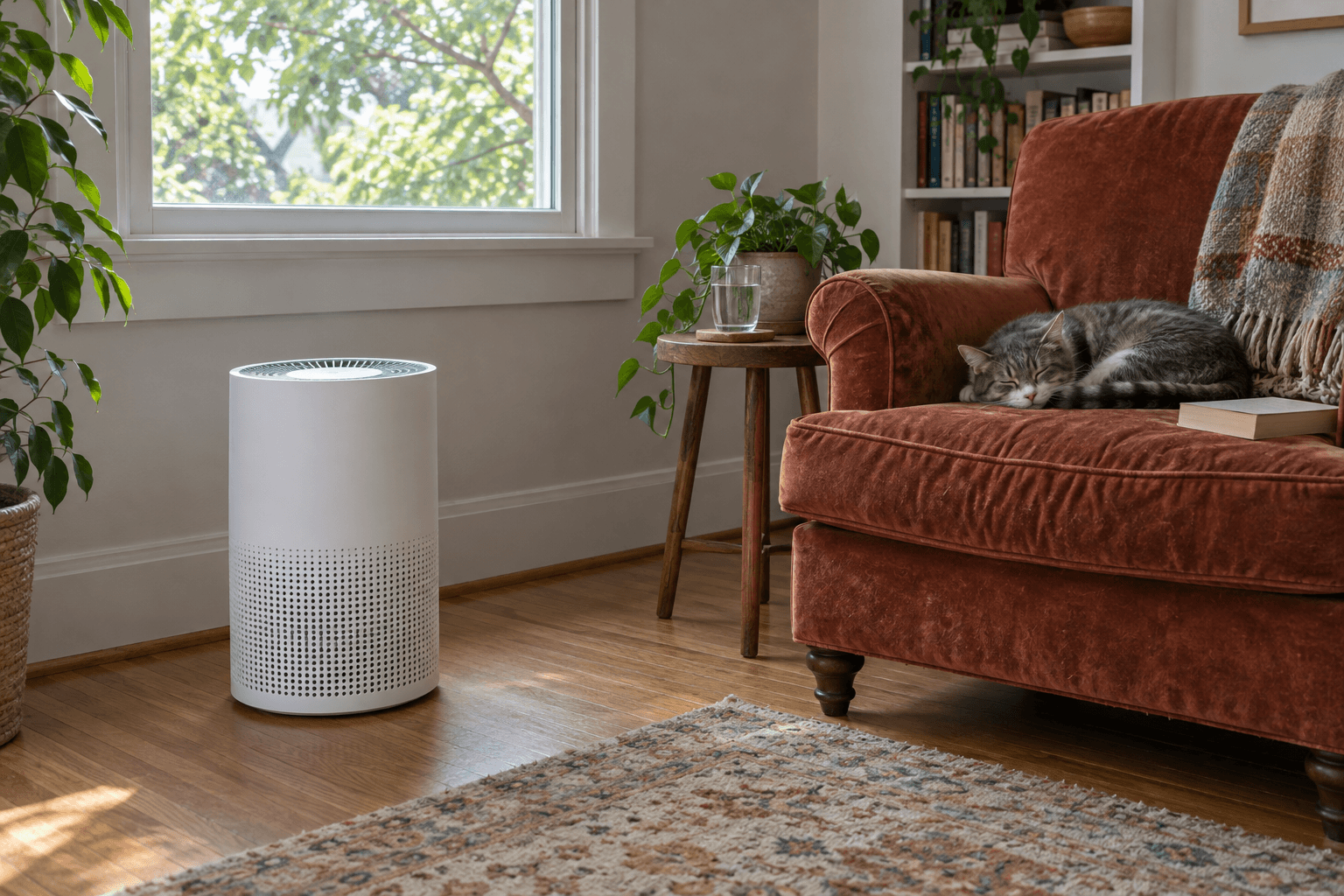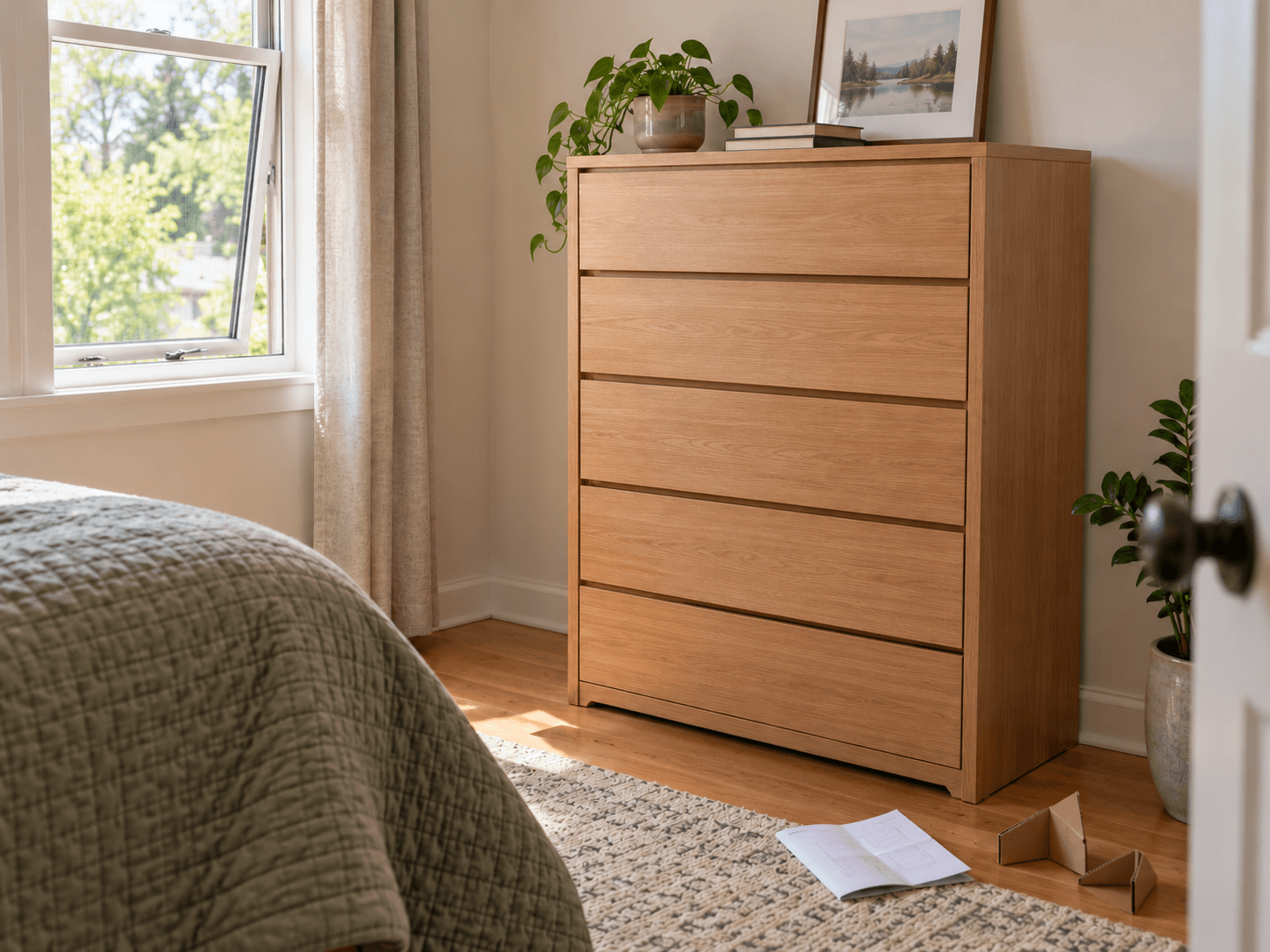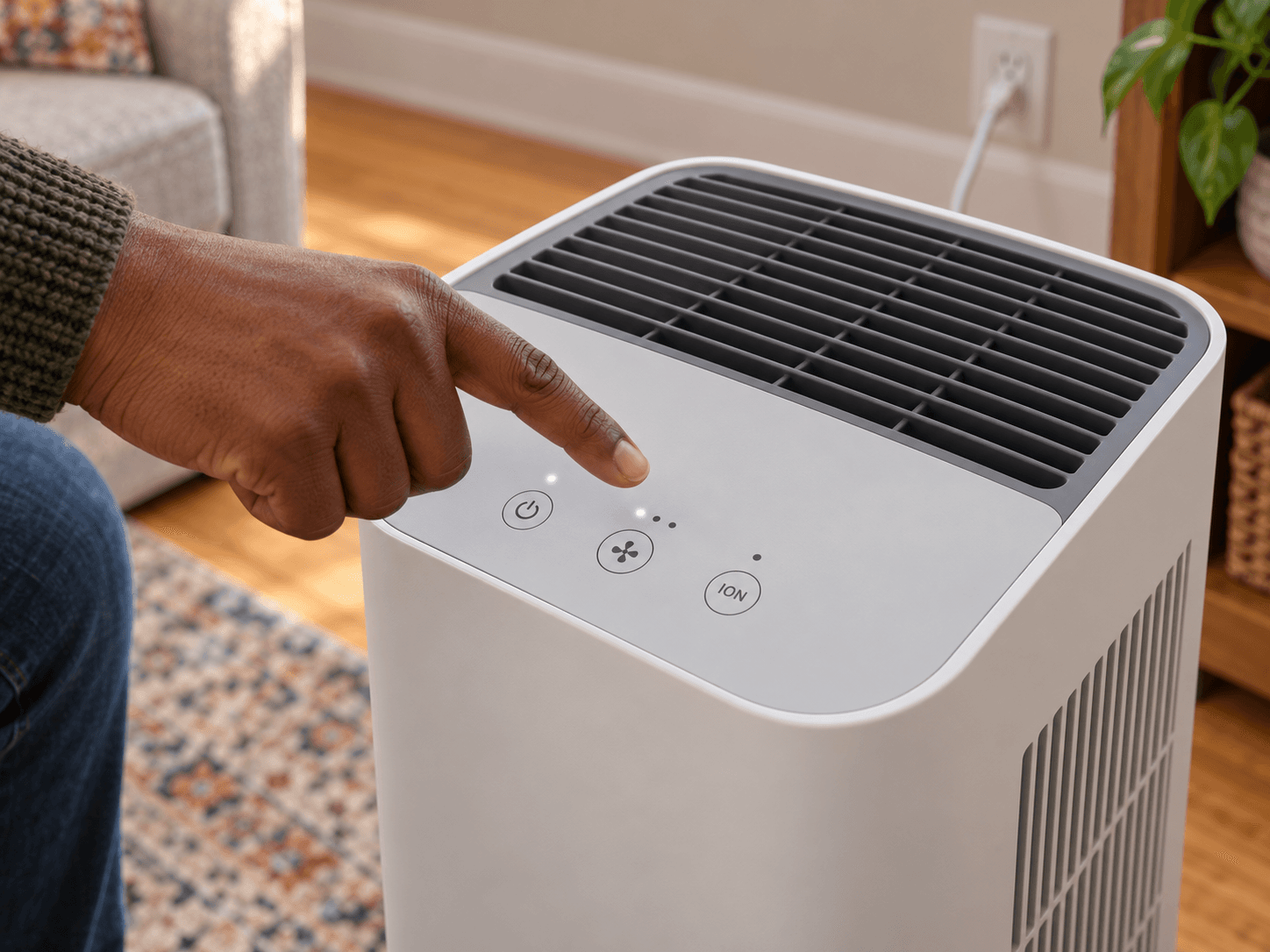
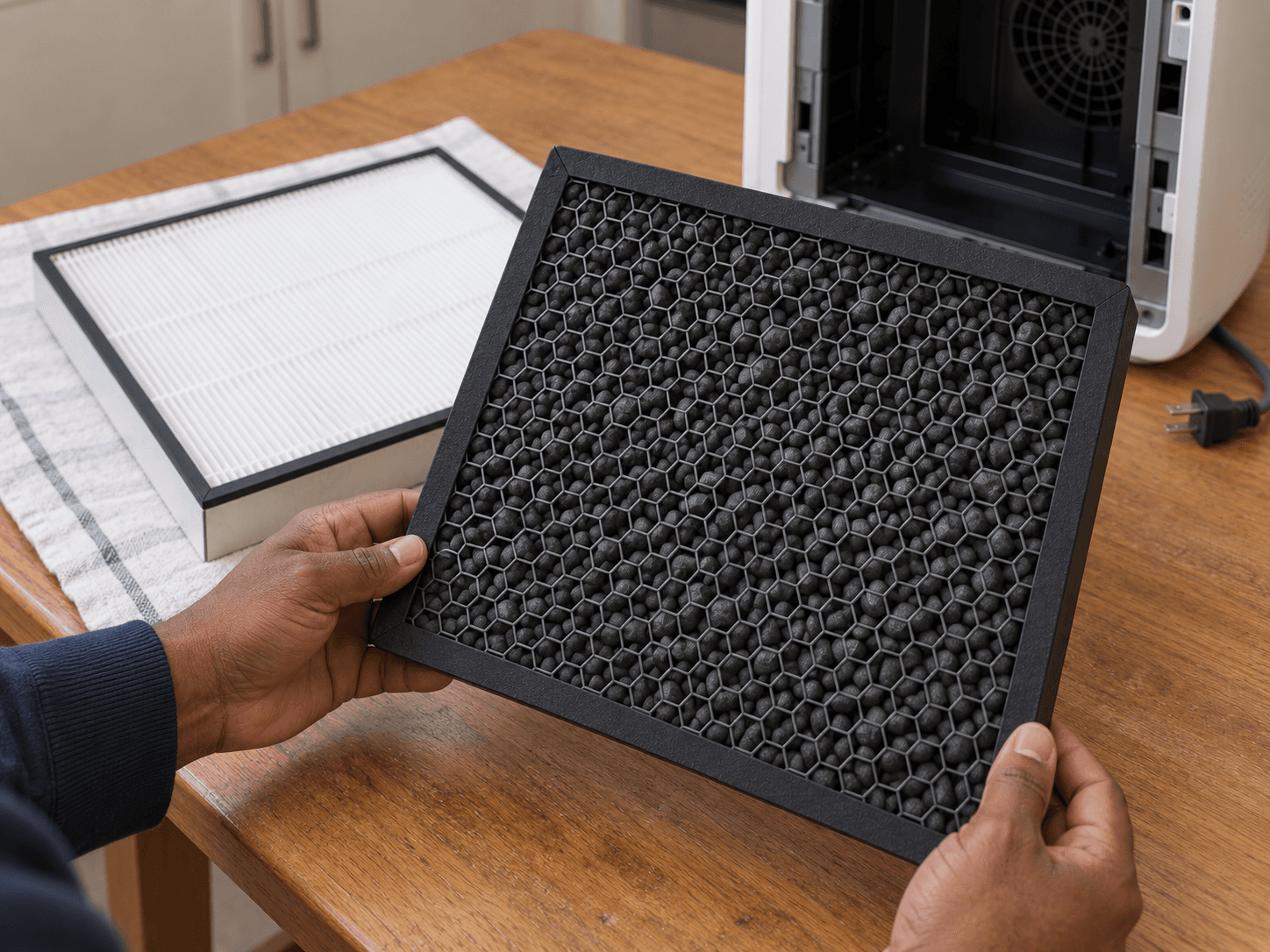
A purifier can collect airborne particles while a new-cabinet smell remains. That does not necessarily mean its particle filter has failed. Odours often involve gases, and the white pleated filter and black carbon layer have different jobs.
Check which problem the product is designed to address
HEPA filtration captures particles moving through the filter. Activated carbon and other gas-removal media can capture certain gases, including some volatile organic compounds. No ordinary portable purifier removes every indoor pollutant.
Health Canada notes that widely used gas-removal performance ratings are lacking. A strong clean air delivery rate, or CADR, is useful for particle sizing. It does not tell you how long a carbon filter will control a particular furniture or cooking odour.
Look beyond the black layer in the product photo
The EPA notes that activated-carbon filters need a substantial amount of material to be effective. A thin dark sheet and a deeper media cartridge should not be assumed to offer equivalent gas capacity simply because both are called carbon.
Ask the manufacturer which gases the filter is intended to address, what testing supports that claim and how much media it contains. Check the exact replacement part and its price before committing to the appliance.
Also check whether the replacement combines particle and gas media into one cartridge. That affects what you must replace when only one part has reached the end of its useful life.
Replace the media and address the source
Follow the model's maintenance instructions. Do not wash, bake or refill a carbon cartridge unless its manufacturer expressly provides that procedure. A filter reminder may track operating time; it is not necessarily a direct measurement of remaining gas capacity.
When an odour returns, consider both the filter and the source. A damp cupboard, stored solvent or recurring cooking spill calls for different action from a filter that has been used for months.
Write down where the smell is strongest and when it appears. Check whether a recent product, furnishing or activity explains it. Removing or reducing an identifiable source is usually more direct than asking a small appliance to keep up indefinitely.
A suspected fuel-gas smell or CO alarm is an emergency response issue, not a carbon-filter purchasing problem. Leave and follow the applicable emergency instructions. For persistent non-emergency odours, investigate the cause rather than relying on fragrance or a reassuring purifier display.
Buy carbon media for a defined job with a realistic replacement plan. Continue to choose the particle capacity, noise level and placement for the room where the purifier will actually run.