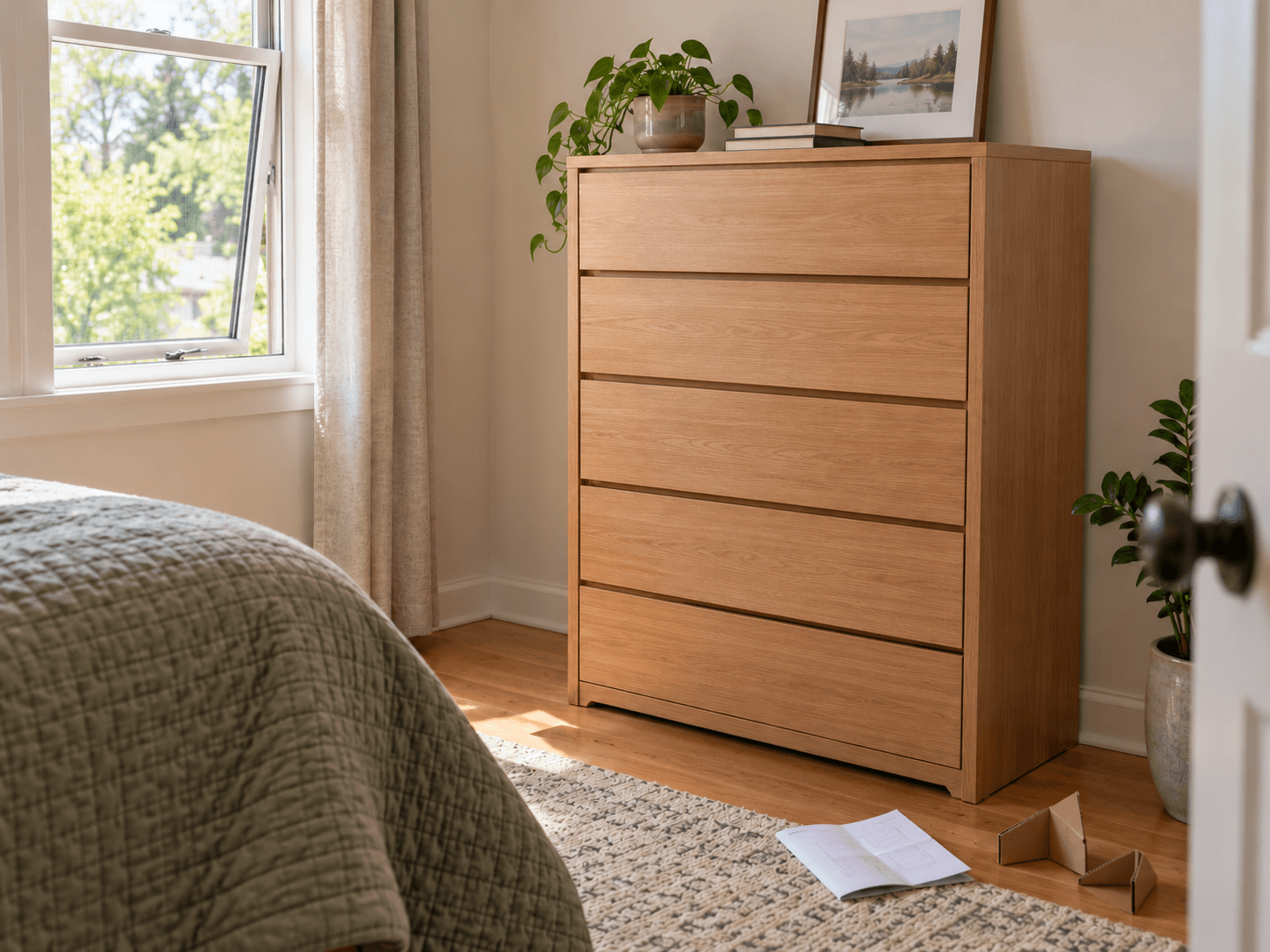
The dresser is assembled, the packaging is gone and the bedroom still smells new. Start with the product information and the room's ventilation. There is no single airing-out period that fits every material, finish and home.
Ask what the furniture is made from
Health Canada identifies furniture and composite wood among possible sources of formaldehyde, a volatile organic compound. Other materials and finishes can release other compounds. The strength of an odour alone does not identify a chemical or its concentration.
Contact the seller or manufacturer for material information, emissions documentation and any unpacking or airing instructions. Keep the model number, purchase record and a photo of the product label.
For a future purchase, ask what a low-emission claim covers and whether it applies to the actual finished item. A statement about one board or coating may not describe every component in the furniture.
Manage the source and the occupied space
Follow the product instructions and increase ventilation with suitable outdoor air. Check outdoor conditions first, particularly during smoke events. Use the home's ventilation system as designed rather than assuming the furnace fan alone brings in fresh air.
Avoid deliberately overheating the room to force the smell out. Health Canada notes that warmer and more humid conditions can increase formaldehyde release from some products. Keep ordinary comfortable conditions and address excessive humidity.
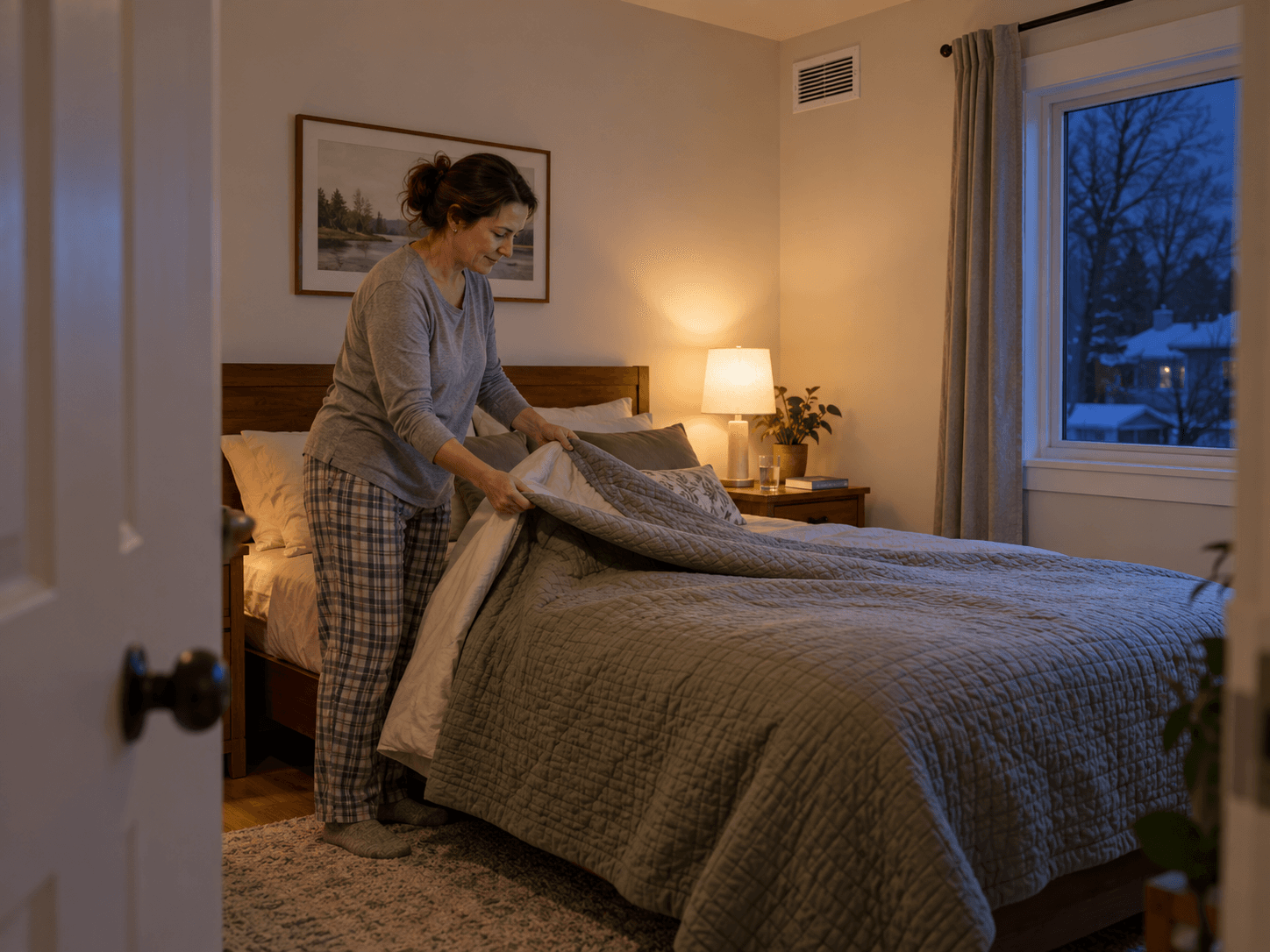
If a newly furnished bedroom remains unpleasant, consider delaying its use while you investigate and speak with the supplier. Do not promise yourself that one weekend with a window open has completed a process you cannot measure by smell alone.
Keep furniture stable and installed as instructed, including required anti-tip anchoring. Ventilation plans should not involve unsafe open drawers, obstructed exits or a window opening that creates a fall risk.
Do not cover the smell with another product
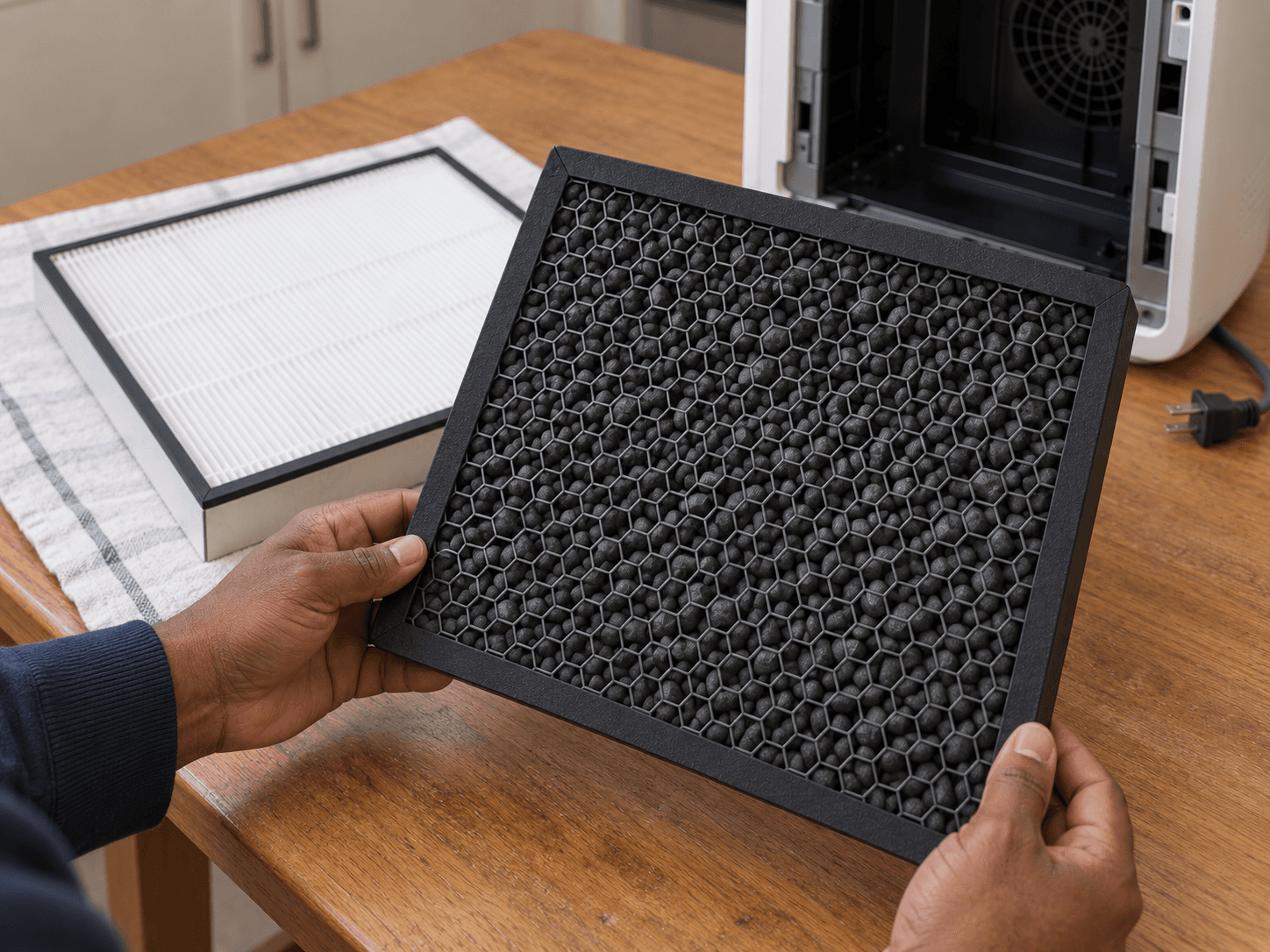
Candles, incense and fragrance sprays add their own sources. A particle filter may collect dust while doing little for gases. If considering gas-removal media, check the targeted compounds, media quantity and replacement guidance.
Tell the supplier if the odour is persistent or unexpected and ask what remedies are available for the exact product. Return or replacement questions are easier to resolve with the original documentation.
If anyone develops symptoms, stop the exposure where practical and seek appropriate medical advice. A consumer particle monitor or a room that smells better cannot provide a complete health assessment.
The useful next step is specific: identify the item, obtain its guidance, improve suitable ventilation and decide whether it belongs in that occupied room.