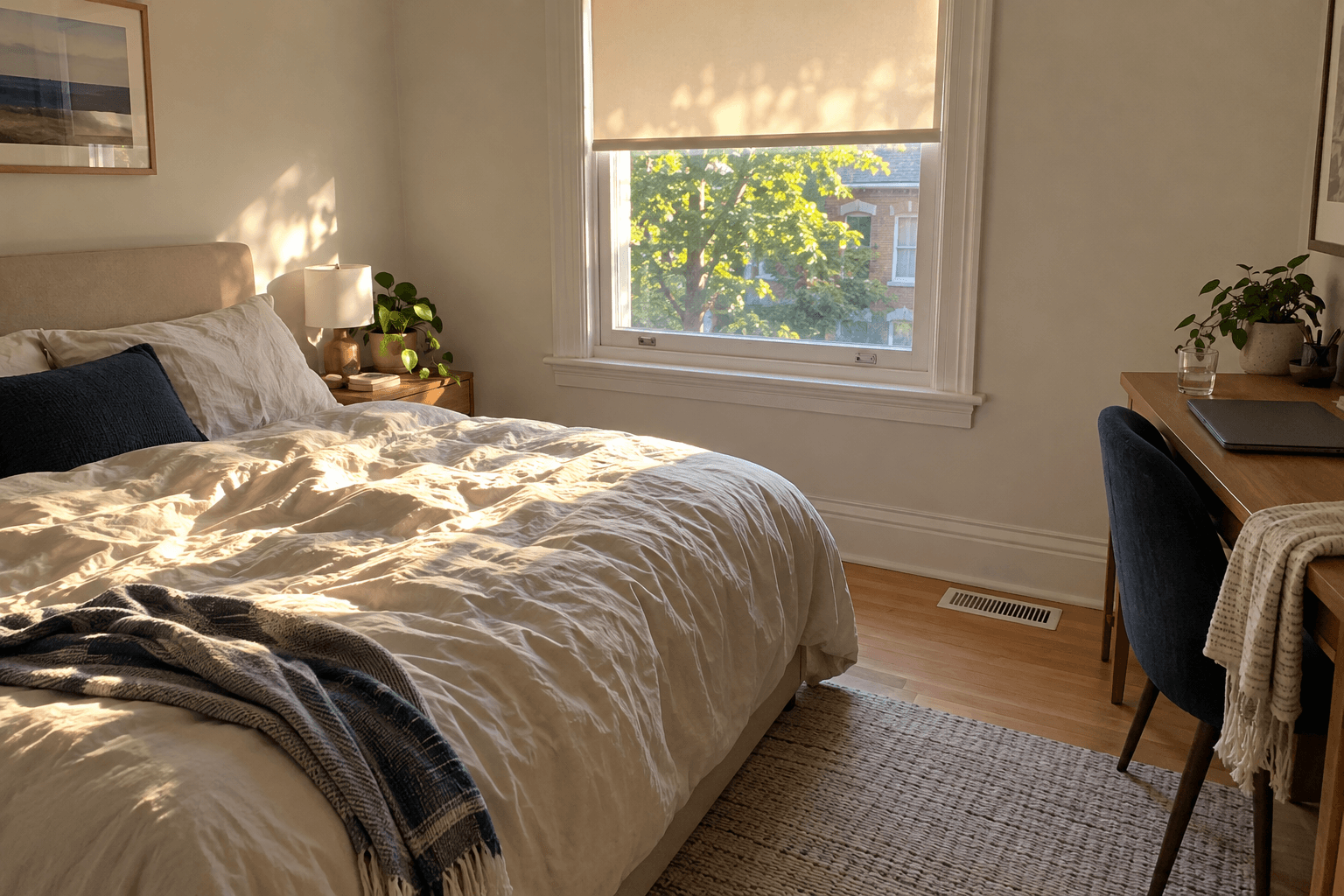
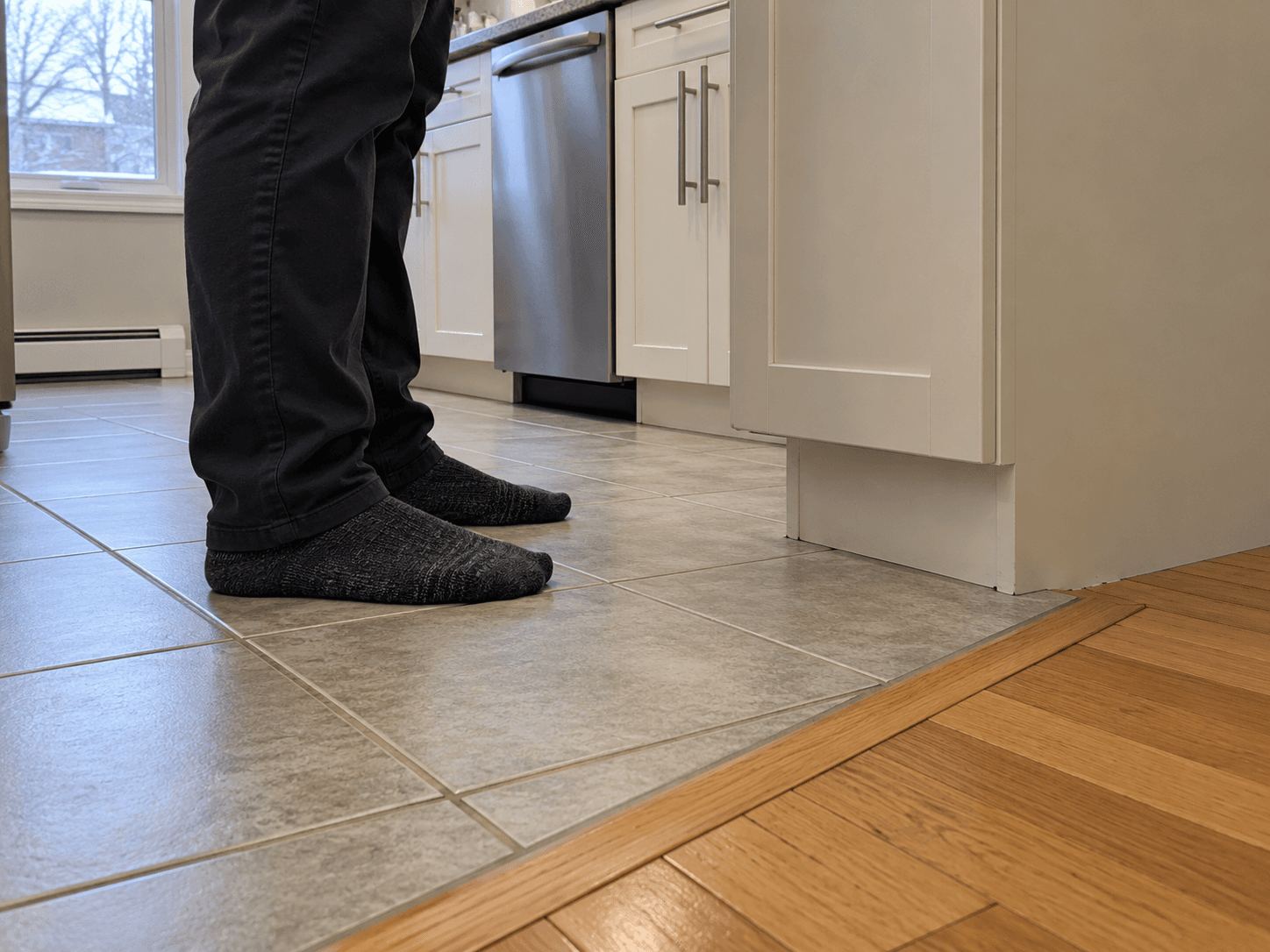
The thermostat has reached its setting, yet standing at the kitchen counter is uncomfortable. You may have a cold surface without an obvious draught. Raising the air temperature can warm the room while leaving the underlying floor problem poorly understood.
Your feet and the thermostat measure different things
Source: US Department of Energy: surface temperatures and radiant comfort
The thermostat senses air near its location. Your comfort also depends on nearby surface temperatures and heat exchange with those surfaces. The US Department of Energy describes how cold surrounding surfaces can make someone feel cooler even at a reasonable indoor air temperature.
Direct contact matters too: tile and a rug can feel different underfoot without proving that their temperatures differ by the same amount. The material's feel alone cannot tell you whether insulation is missing.
Note the pattern. Is the entire floor uncomfortable, one strip near the outside wall, or only the part over an unheated space? Does it change with windy weather, or remain similar on a calm cold day?
Look at the assembly beneath the room
Source: NRCan: floors over basements, crawl spaces and open foundations
A floor over a crawl space, garage or exposed overhang has a different boundary from a floor over a heated room. NRCan's guidance treats these situations separately, including insulation, air sealing, moisture and protection of pipes.
Gather plans and renovation records if available. Ask an assessor to identify the insulation and air-barrier arrangement rather than opening a finished ceiling or entering a difficult crawl space to look for yourself.
If an infrared camera or surface thermometer is used, have the readings interpreted with the material, conditions and instrument limits in mind. One colourful image does not establish the complete repair scope.
Separate comfort measures from building repairs
Slippers or a suitable mat can make a work area more comfortable while the cause is investigated. Keep registers and heaters clear, avoid trip edges and follow any heated-floor limits for rugs and underlays.
An air leak needs an appropriate sealing detail. Missing or poorly fitted insulation needs a suitable assembly. Heating distribution may also need checking if the room air itself is below the intended temperature.
Describe which of those problems was found and how the proposed work addresses it. A cold floor does not automatically call for a larger furnace, and a higher thermostat setting does not confirm that the floor boundary is sound.