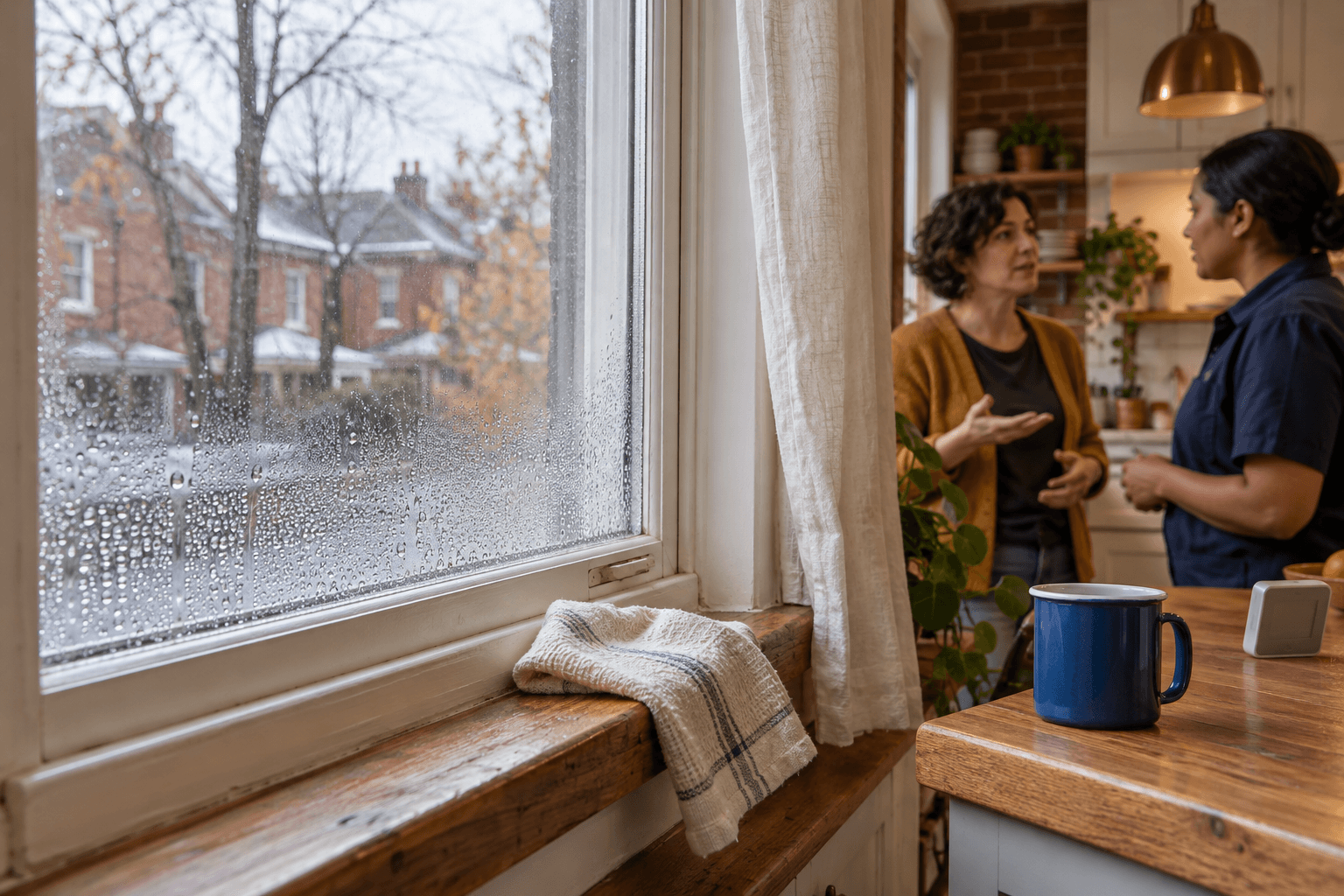
My usual chair was comfortable until the wind picked up. Then I reached for a blanket and raised the thermostat, which made the kitchen warmer without making the chair a better place to sit.
I started noting the weather and where I felt the moving air. The pattern was clearer than a general complaint that the heating was weak.
Find the path before choosing the repair
Natural Resources Canada's air-leakage guidance describes how gaps in a home's envelope affect comfort and heat loss. A professional assessment can locate paths that are not obvious from the place where a draft is felt.
I checked accessible weatherstripping and whether the window latched properly. I did not use a flame to look for leaks or seal openings whose purpose I did not understand.
Cold surfaces can also make a nearby seat uncomfortable without a large air leak. That is another reason to assess the room rather than assuming every cold feeling requires more warm supply air.
Seal deliberately, then consider ventilation
For a larger project, we asked about a home energy evaluation and a coordinated air-sealing plan. Ventilation and combustion safety need consideration when changing how air moves through a house.
I wanted proposed work identified by location and material, with access and finishing explained. 'Seal the house' was too broad to compare with another quote.
We kept intentional vents and appliance air supplies clear. A gap around a window trim and a designed ventilation opening are not interchangeable repair targets.
The chair moved temporarily while the cause was assessed. That made the room usable without pretending that a furniture move had repaired the building.
Our notes gave the assessor a useful clue: the discomfort followed wind from one direction. The thermostat setting alone had never captured that detail.