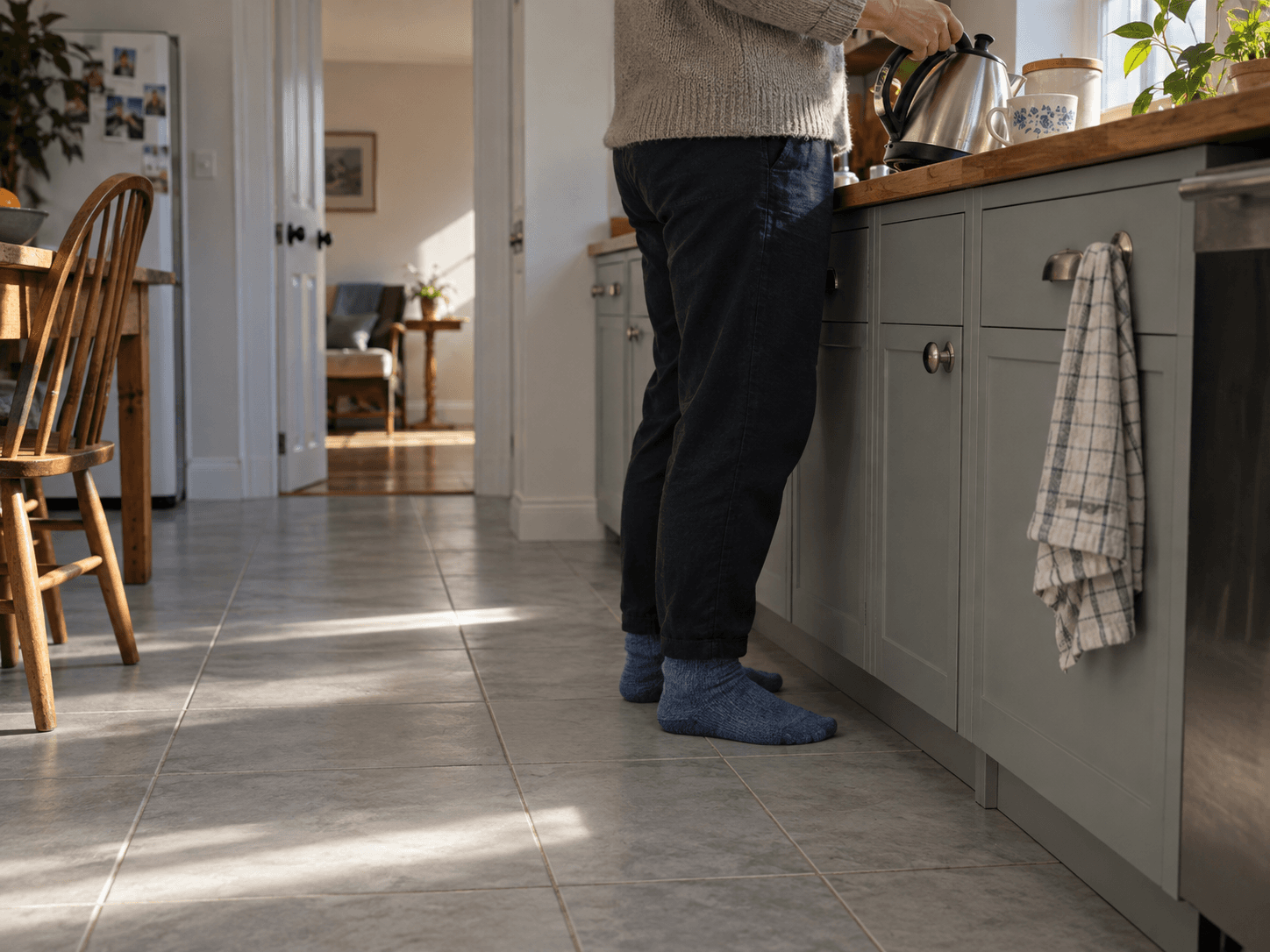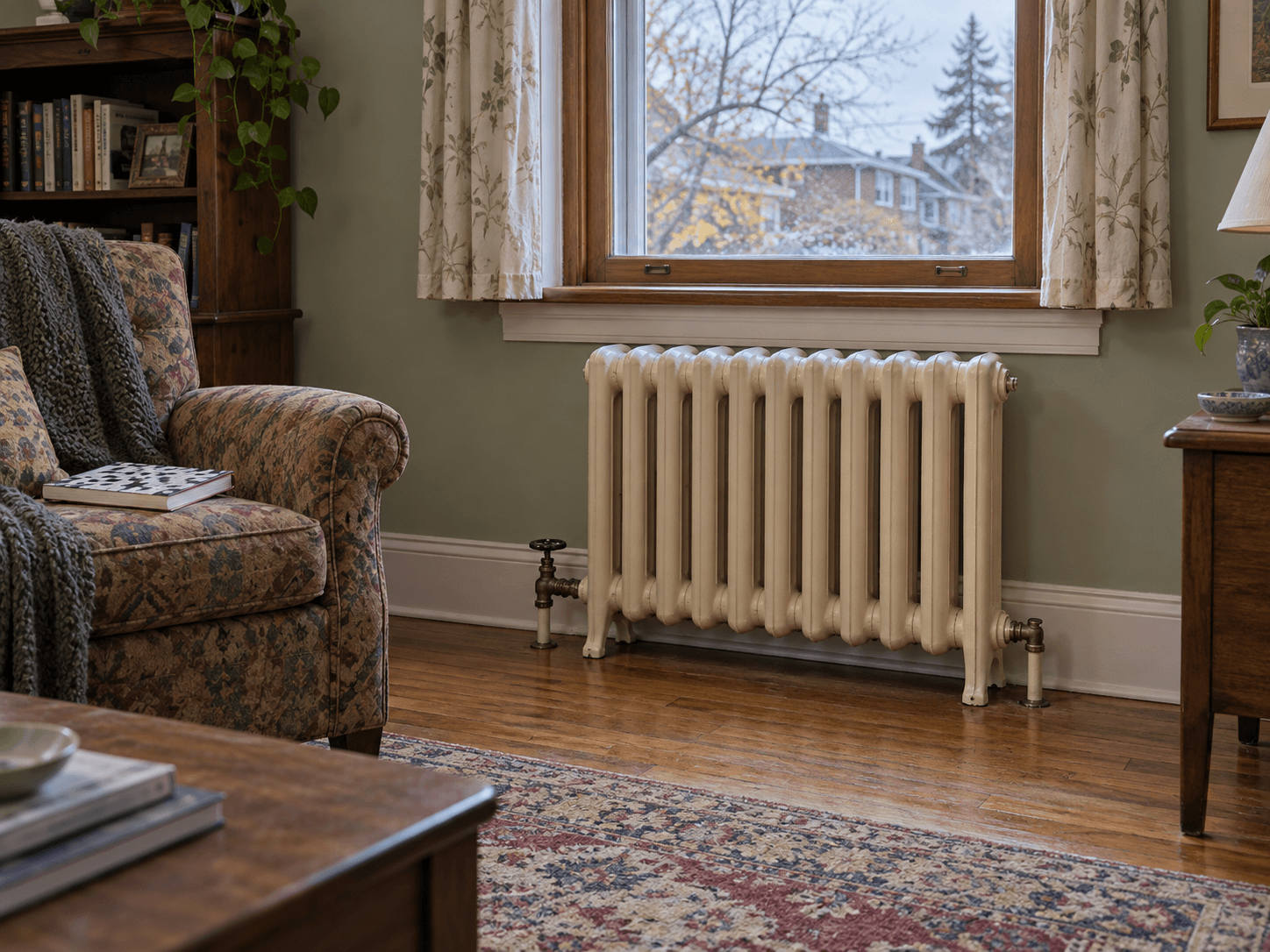
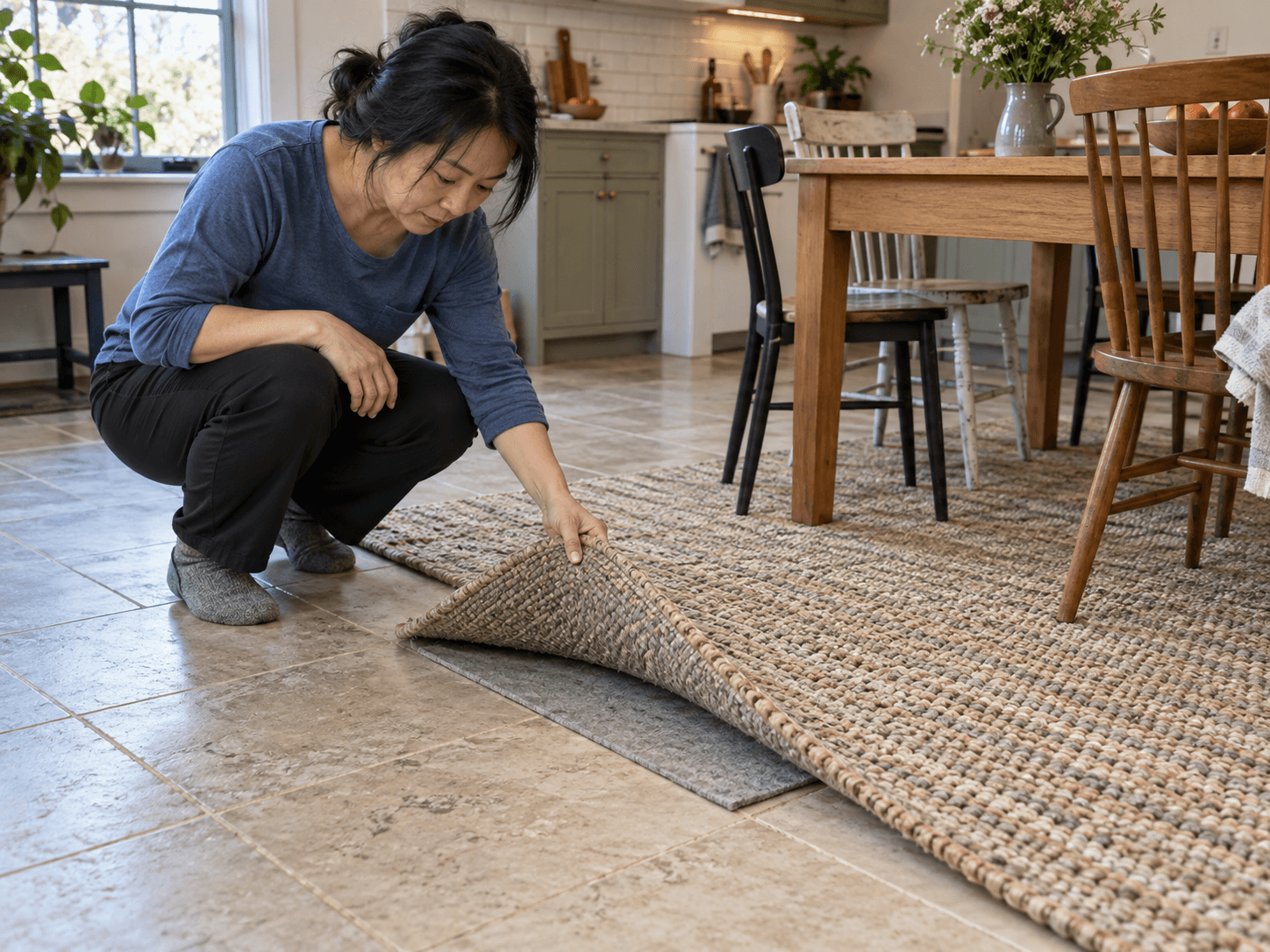
A thick rug can make a room feel inviting while making it harder for a heated floor to deliver heat. That does not mean every rug is forbidden. It means the rug, its pad and the floor finish need to be considered together before the furniture arrives.
Picture replacing a small flat weave with a deep-pile rug and a generous felt underlay. The thermostat has not moved and the heating equipment has not changed, but a substantial part of the heated surface now has extra resistance above it. Turning the water temperature up is not a sensible first response.
Heat has to pass through the finish
Radiant-floor heating warms the floor assembly, which then transfers heat into the room. Materials above the heat source affect that transfer. Tile, timber, carpet, underlay and an added rug have different thermal properties, and thickness matters alongside material.
Manufacturer guidance considers the complete build-up. A flooring product described as suitable for underfloor heating may still have conditions on underlay, installation method and maximum temperature. Adding a rug does not erase those conditions. A carpet-and-pad combination should be checked as a combination.
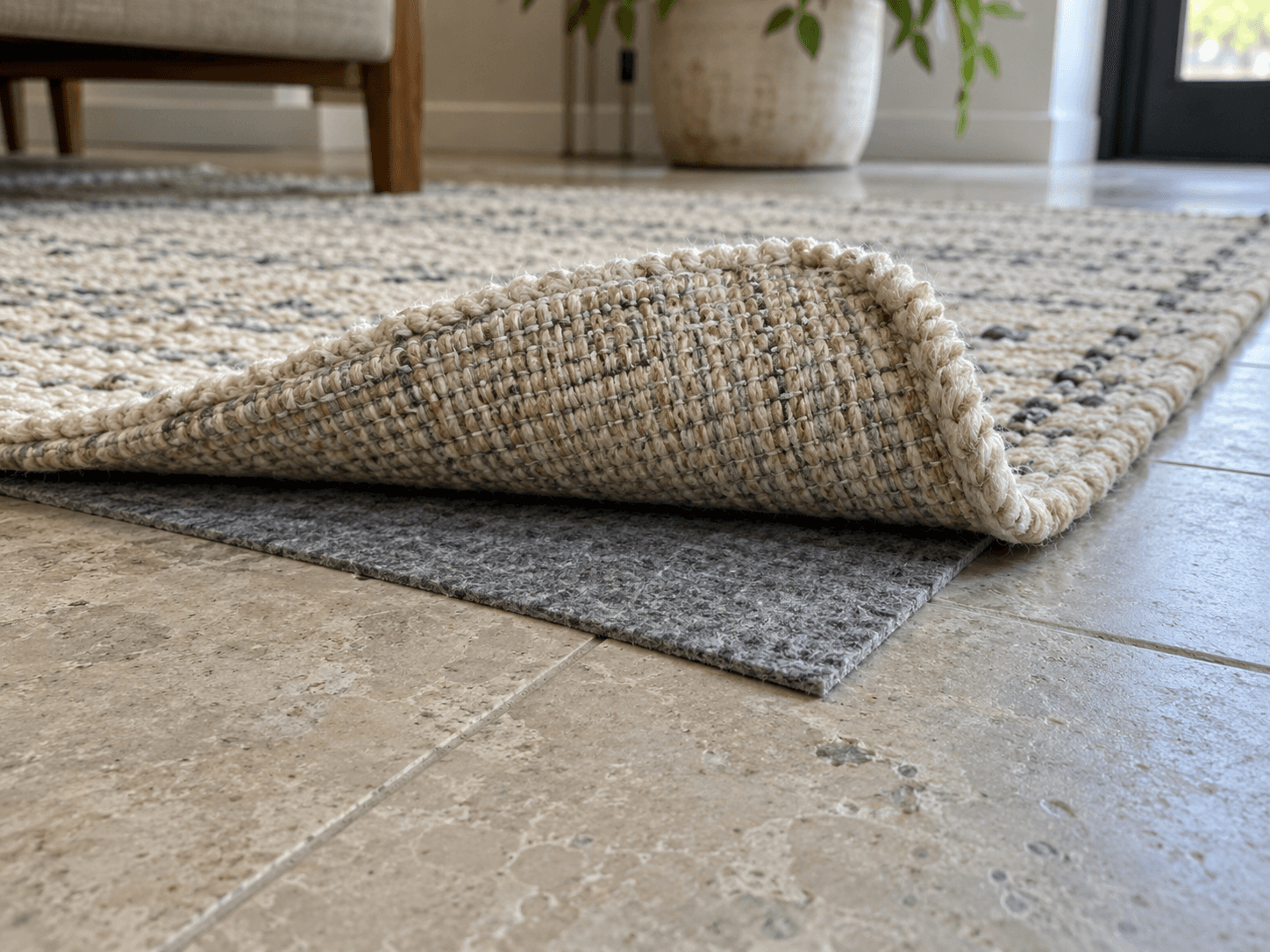
Bring the product details to the decision
Source: Uponor: planning information for floor finishes and rugs
- Identify whether the installed system is hydronic or electric, and find its owner and flooring requirements.
- Get the exact floor, rug and pad product names, thicknesses and stated thermal-resistance information.
- Ask the flooring supplier about temperature limits, compatible underlay and any restrictions on rugs or furniture.
- Tell the heating designer how much of the room will be covered, especially where the floor supplies most of the room's heat.
- Keep written compatibility advice and warranty conditions with the product receipts.
For a small accent rug, the question may be straightforward. For wall-to-wall carpet or a large rug covering much of a main living area, have the available heating output checked against the room's needs. A finish that works in a sheltered bedroom may be a poor choice in a room with large windows and a higher winter load.
Ask for the units when comparing specifications. A thermal-resistance value is not the same thing as a thickness measurement or a marketing description such as 'warm and luxurious'. Do not copy a numerical limit from an overseas guide into a Canadian installation without checking the actual system and product requirements.
Preserve the floor's temperature protection
Some controls use a floor sensor as well as a room-air sensor. A maximum floor setting may protect the finish even while the room calls for more heat. That limit belongs to the installed system and flooring specification. Increasing or disabling it to compensate for a rug can create a new problem.
If comfort changes after a new rug or floor goes down, note when it happened, which area is affected and what the controls show. Have the installer review the finish and control arrangement before making equipment changes. Never drill or screw into a heated floor without verified information about the concealed heating elements and pipes.
The best time for this conversation is while the rug is still returnable. Bring a sample and the pad specification to the supplier or heating contractor. You can choose a room you like looking at and a floor that can still do its job.