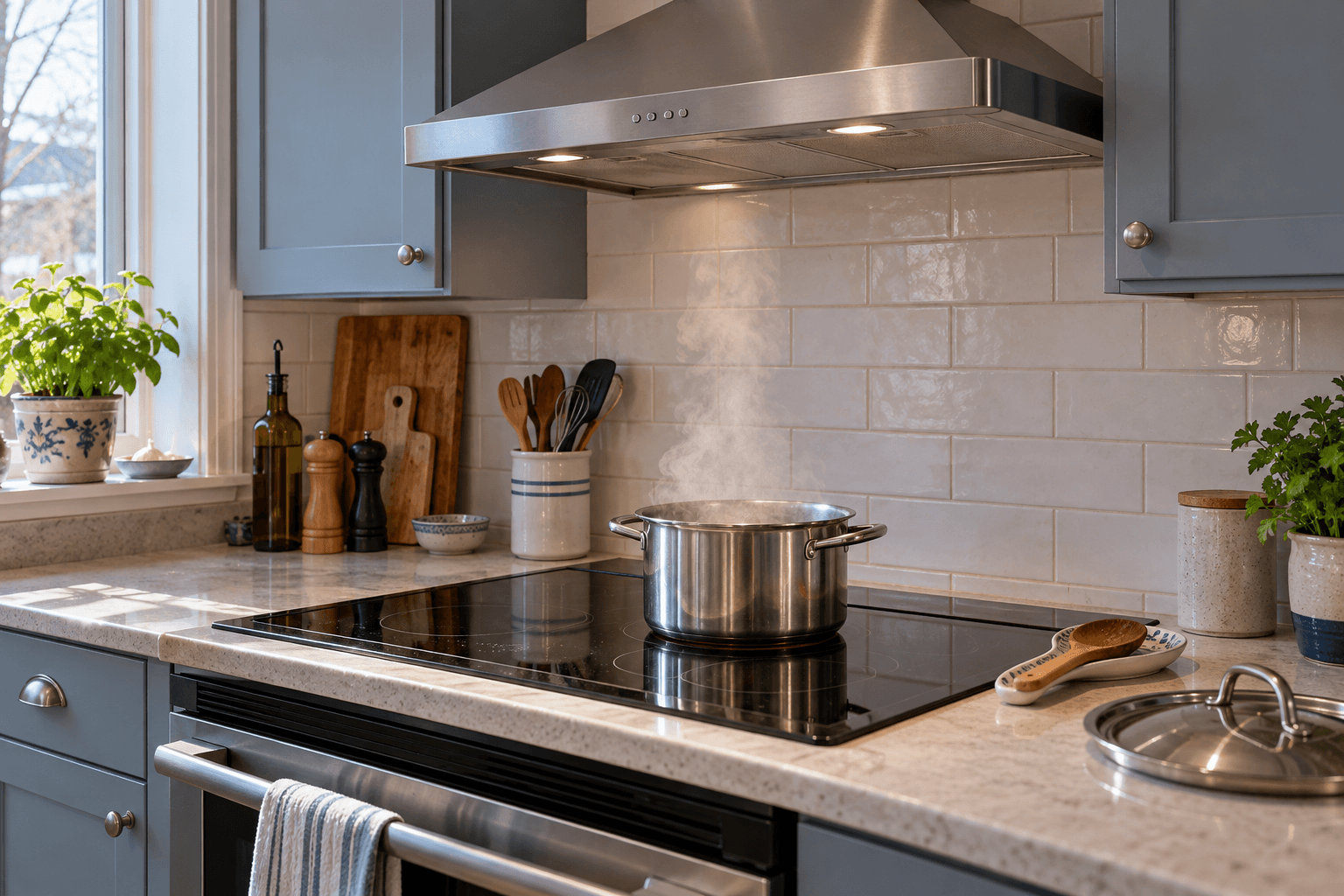
The range hood used to come on only when dinner announced itself from the hallway. By then the onions were browning, the pasta water was boiling and I had turned the radio up to compete with the fan.
I began switching it on at the start instead. It was a small change, but one I could repeat without buying anything or remembering a complicated routine.
Use the hood while the source is active
Health Canada's cooking guidance recommends using an exhaust hood that discharges outdoors. Cooking on electric equipment still produces particles; changing the fuel does not remove the need for ventilation. Using rear burners, when practical, can improve capture under the hood.
I checked our manual's fan settings and filter-care instructions. A greasy filter deserved cleaning by the approved method. The hood's noise alone couldn't confirm that air reached the outdoors, so I included the discharge route in our next ventilation check.
For ordinary cooking, I keep lids handy and avoid leaving a pan overheating while I prepare something else. Those habits make the meal easier as well as reducing avoidable steam and smoke.
Make it usable at dinner time
The quieter setting had tempted us to leave the hood there regardless of what was on the stove. Now we choose the setting for the cooking and move the radio instead. We let the fan continue afterward as the hood instructions recommend.
A replacement hood is a design question too. Before buying a much larger exhaust fan, ask about the duct route, noise, outdoor termination and replacement air. A larger advertised airflow is not a complete installation plan.
Our kitchen still smells like dinner. The useful change is that the exhaust starts with the cooking, while there is something directly underneath it to capture.