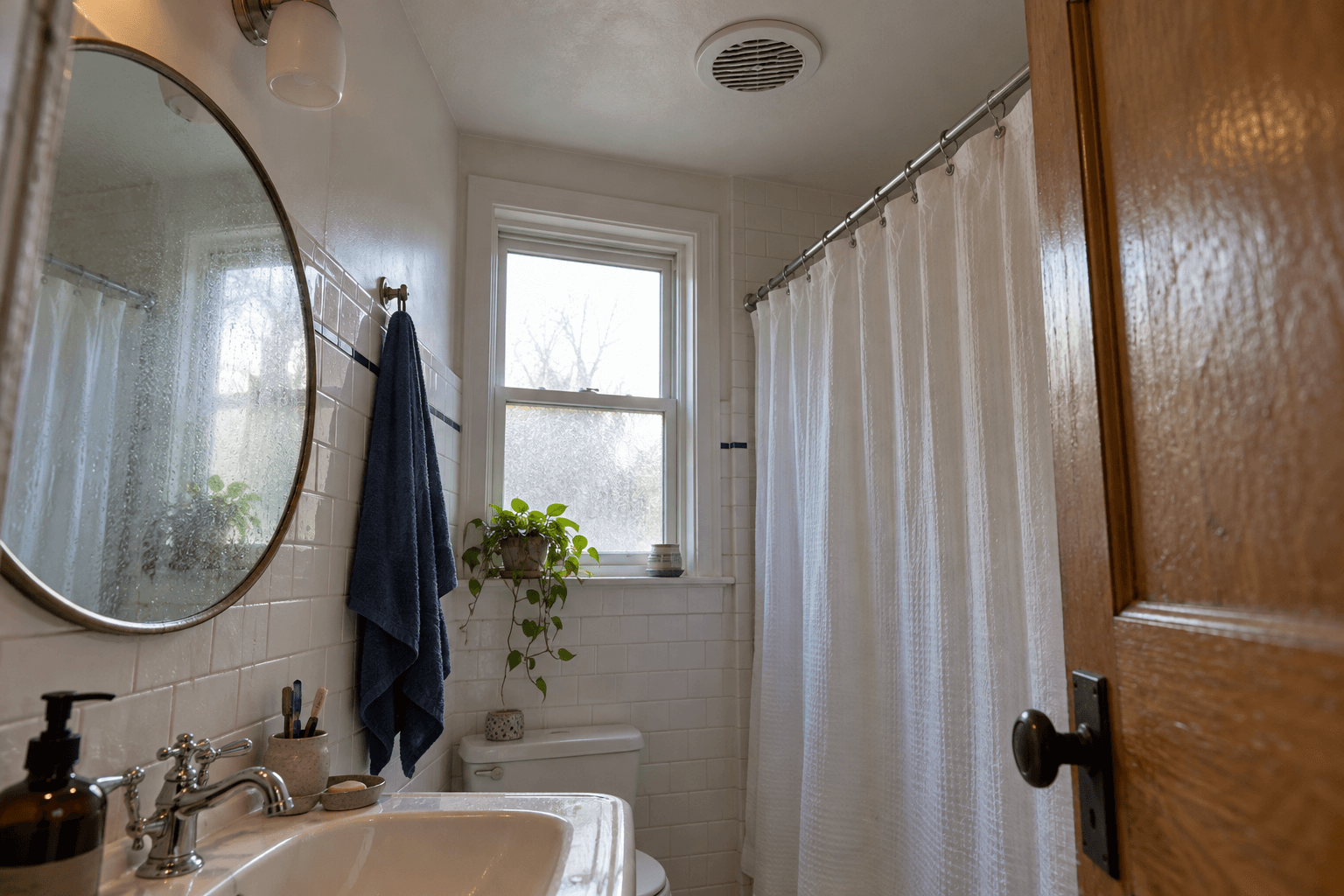
By the time I returned from walking the dog, the bathroom mirror was still foggy at the edges. The fan had been running since my shower. It made plenty of noise, which I had been accepting as proof of work.
The towel against the door was damp too. I moved it to the rail and looked at the ceiling grille. Dust had collected around the openings. Cleaning that safely, following the fan instructions and with power isolated as directed, was a reasonable job. Taking the motor apart while balancing on the bath was not.
The route matters as much as the switch
Source: Health Canada: ventilation and the indoor environment
Health Canada's ventilation guidance distinguishes local exhaust from simply moving room air. A bathroom exhaust system needs to remove moisture outdoors. A loud motor cannot tell you whether the duct is disconnected, obstructed or poorly arranged.
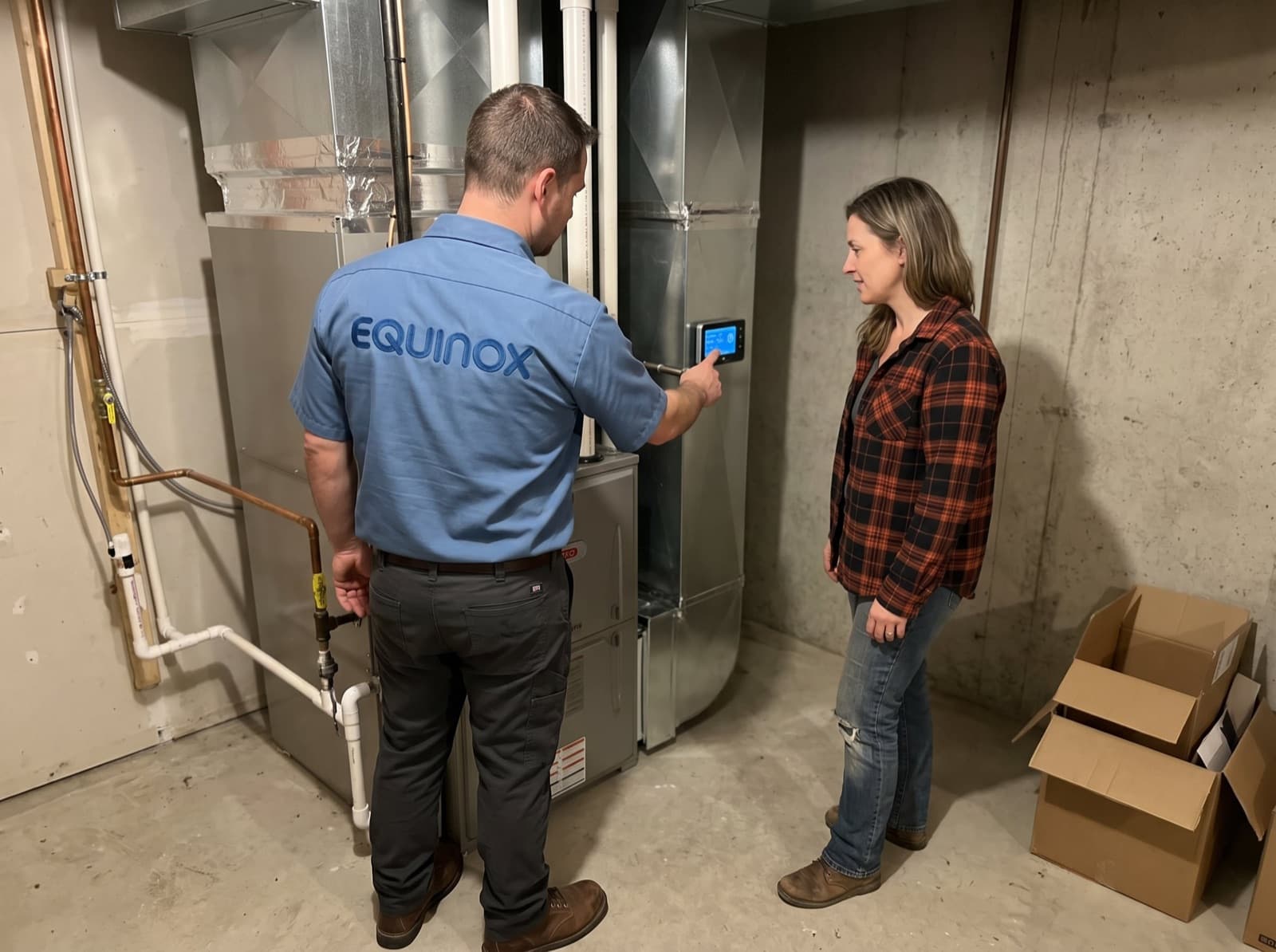
I could see our exterior outlet from the garden, but I couldn't inspect the whole route. I booked a ventilation check and described the lingering moisture, the room's layout and the fan we had. I asked for the actual extraction and discharge route to be checked, rather than requesting a bigger fan by default.
A routine I could actually keep
Source: Health Canada: addressing moisture and mould indoors
We began using the fan during showers and leaving it running afterward according to the control instructions. We wiped standing water from the shower and spread towels where they could dry. Health Canada recommends managing moisture sources as well as ventilation; persistent wet surfaces deserve attention.
I watched how quickly the room dried over several ordinary mornings. I wasn't trying to make a bathroom immune to steam. I wanted it to dry reliably between uses. The small change in my question helped: instead of 'Is the fan on?', I started asking 'Is the moisture leaving?'