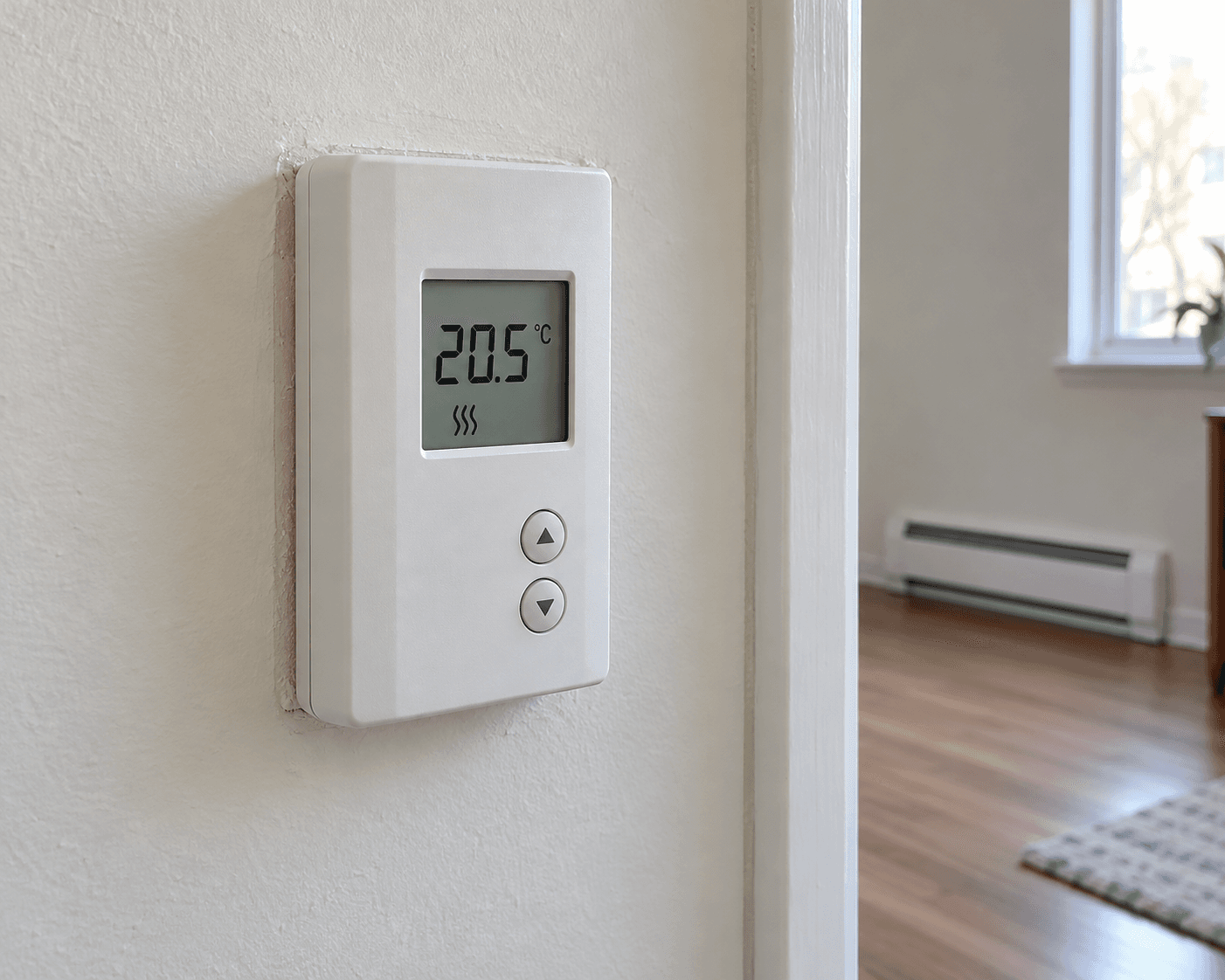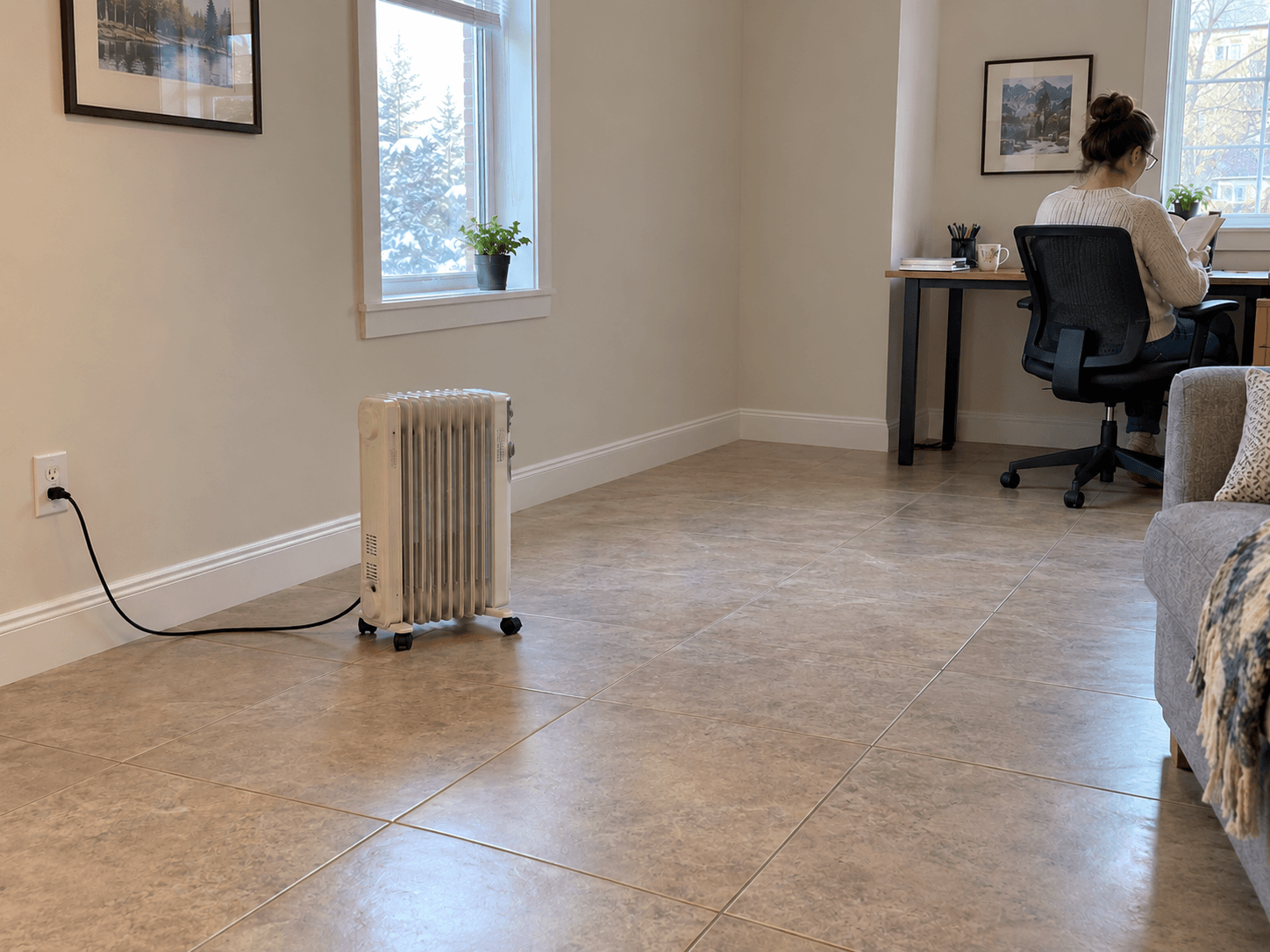
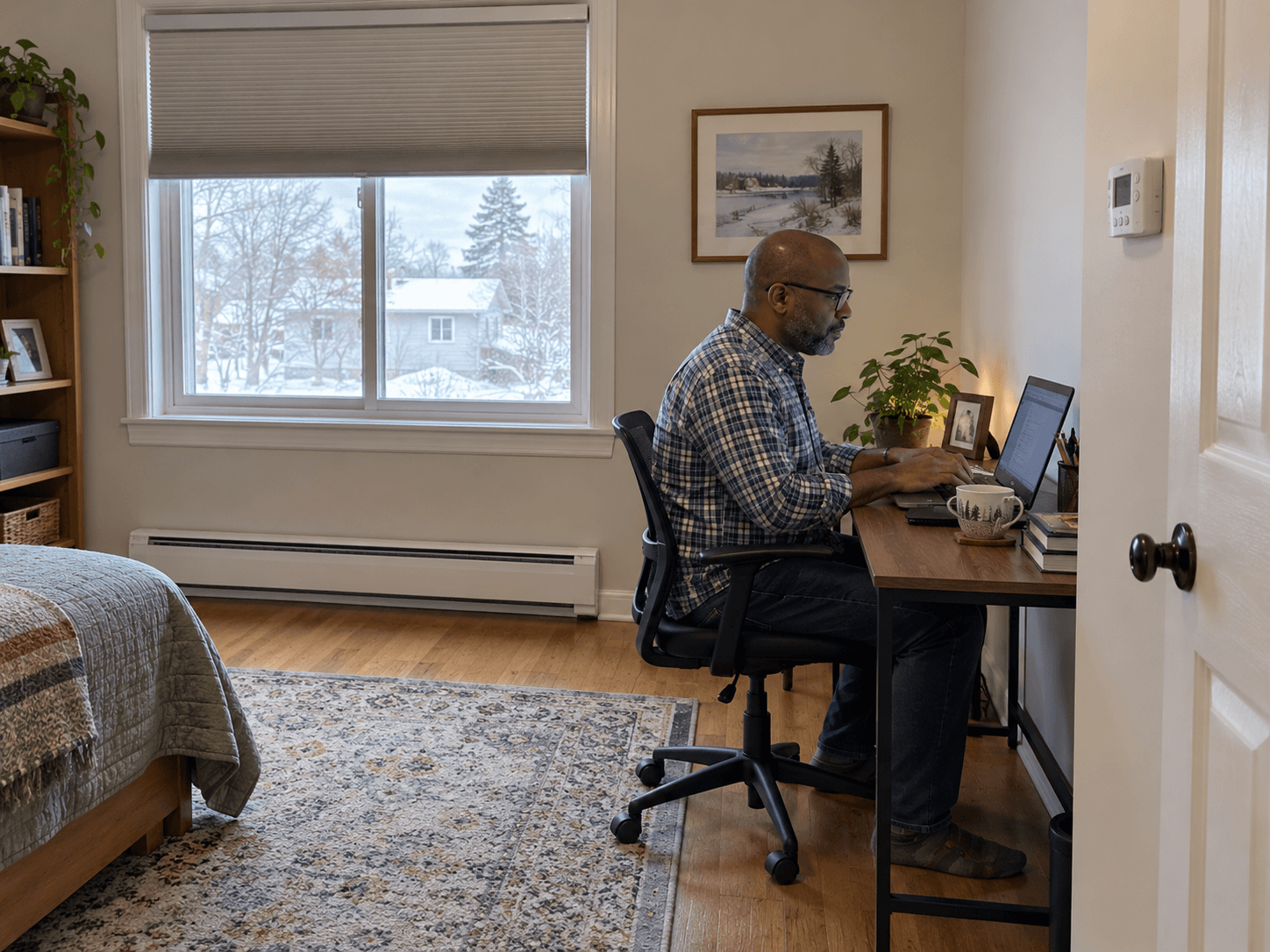
The office feels chilly during the first video call and stuffy by lunch. Turning the dial up and down keeps you busy, but tells you little. Before replacing the heater, compare what is happening at the control, around the heater and where you sit.
Give the room a fair comparison
Choose an ordinary working morning. Record the starting room temperature, the thermostat setting and any scheduled change. Note whether the door stays open, when sunlight reaches the room and when the computer starts running. Keep the chosen setting steady long enough to observe the response instead of making several changes in ten minutes.
A separate room thermometer can help, placed in a representative occupied area away from direct sun, the heater and electronics. Its reading does not have to match the wall display exactly: position, response time and instrument accuracy differ. Look for a repeated pattern rather than treating a small difference as proof of a faulty control.
BC Hydro notes that turning a baseboard thermostat far above the temperature you want does not make the room reach that temperature faster. It can leave the heater running past the point you intended. Use the normal target and allow recovery time after a scheduled setback.
Look at what the thermostat experiences
A control in sun or near another heat source may be satisfied while the desk remains cool. A draft near the control can have the opposite effect. The installed model's placement instructions matter; an electrician can assess a poor location without you opening the case.
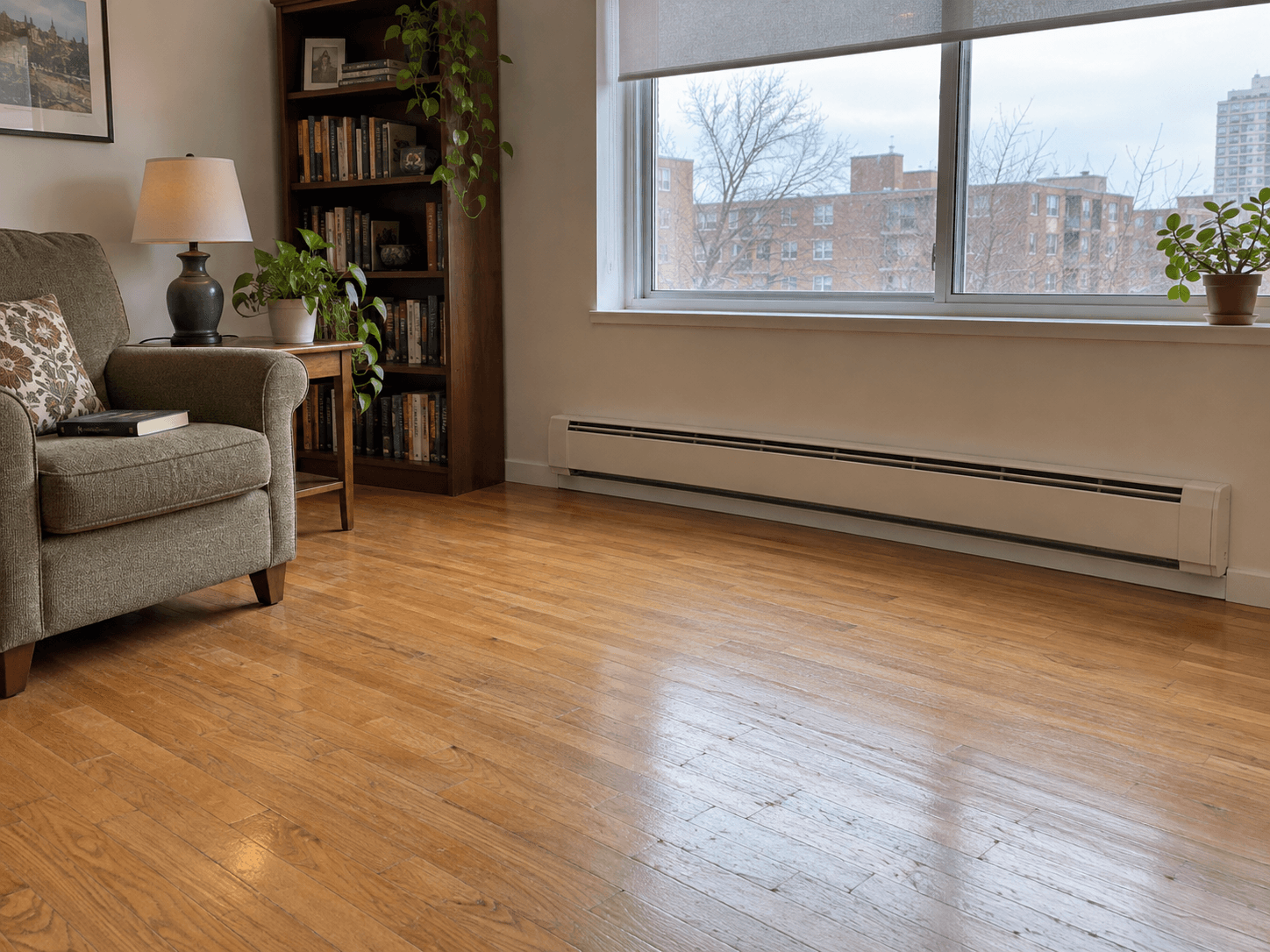
Also establish which heaters that control actually operates. A large room may have more than one baseboard, or an adjoining space may have a separate control. Write down the arrangement. 'The left heater never responds, while the right one does' is a much clearer report than 'the room thermostat is bad'.
Separate comfort clues from electrical faults
Check the clearances in the heater manual and look for blocked openings. Stelpro's troubleshooting guidance includes airflow obstruction among possible causes of interrupted heating. That is a reason to inspect the room arrangement, not a reason to bypass a thermal protection device.
- The room reaches its target but the chair remains uncomfortable: investigate local drafts, cold window surfaces and furniture placement.
- The entire room stays below target while heating is requested: ask about heater operation, available output and room heat loss.
- Heat continues unexpectedly, a breaker trips, or there is scorching, damage or an electrical smell: stop using the affected equipment and arrange qualified electrical help.
Take the observations, thermostat model and heater model to the electrician or building manager. Keep electrical covers closed. A control change may help, but a new display cannot repair a damaged heater, compensate for every draft or add missing heating capacity.