
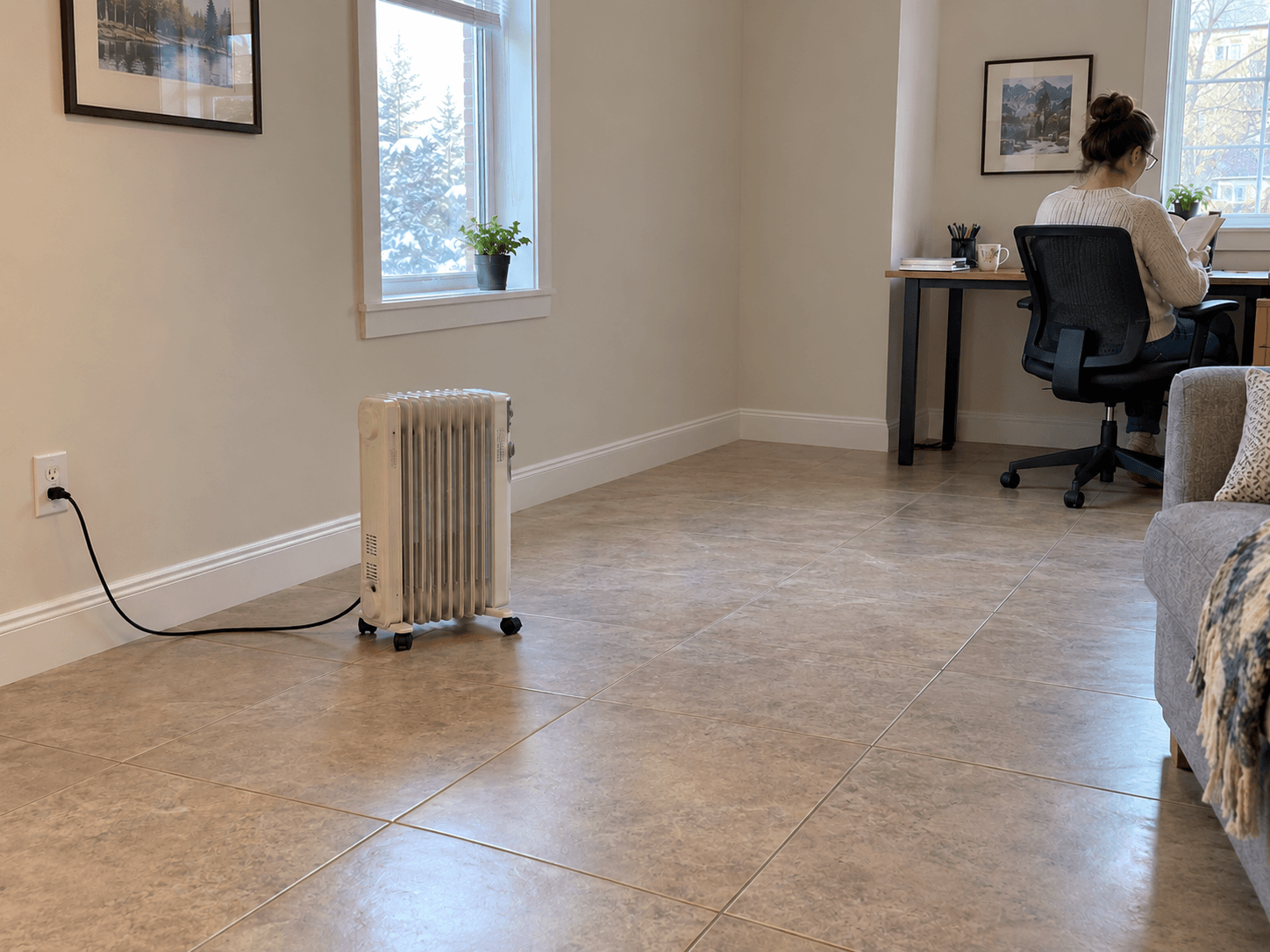
A compact heater can draw a substantial amount of electricity. To estimate its use, start with the wattage on the product label, the time it actually heats and the applicable electricity price. 'Small', 'ceramic' and 'eco' are not units on your electricity bill.
Turn watts and hours into energy
A kilowatt is 1,000 watts. Multiply kilowatts by hours of operation to get kilowatt-hours, or kWh. For a heater drawing 1,500 watts continuously for four hours, the calculation is 1.5 kW x 4 hours = 6 kWh.
At a hypothetical energy rate of $0.15 per kWh, that would be $0.90 for those four hours. This is an arithmetic example, not a current Ontario or British Columbia rate. It excludes fixed charges, taxes and any other bill components. Use your own utility's current rate structure for a useful estimate.
If the same example ran every day for 30 days, it would use 180 kWh. The point of the monthly version is to make a small daily habit visible. Change the hours or wattage to match the proposed use before deciding whether the comfort is worth the added energy.
Four hours in the room is not always four hours heating
A thermostat may cycle the element off after the room warms. A heater with power levels may also draw less on a lower setting. The maximum label wattage multiplied by the whole occupied period can therefore overestimate use when the heater spends part of that time off.
For a second illustrative calculation, if the 1,500-watt element were on for half of a four-hour period, it would use about 3 kWh. That 50% figure is an assumption, not a typical duty cycle. A cold, drafty room could keep it on much longer.
Use utility interval data to look for broad changes, remembering that it includes other appliances. Do not insert an ordinary smart plug or improvised meter into the heater connection to test this. Follow the heater's electrical-use instructions; safe operation comes before a more precise estimate.
Count what the extra heater replaces
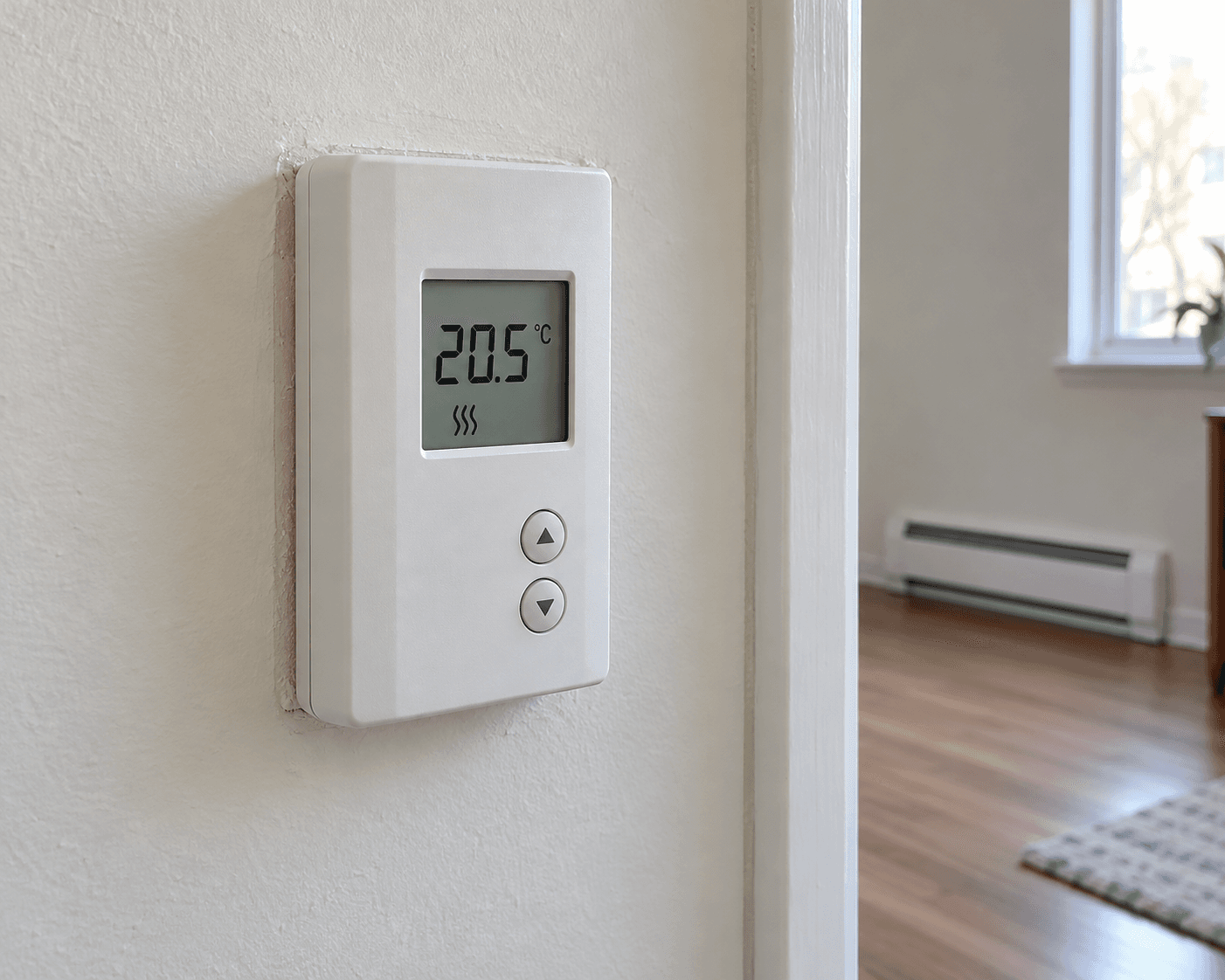
If the central heating schedule stays exactly the same, the portable heater adds electricity use. If you reduce other heating while occupying one room, compare the reduction with the extra use. The result depends on the main system, energy prices, room temperatures and how long each operates.
An oil-filled electric radiator uses electricity to heat its internal fluid; it does not burn heating oil. Its quiet operation and retained warmth may suit a reading room, but those features do not establish a lower bill than another resistance heater delivering the same heat.
A useful trial has a defined purpose: comfortable desk work for two hours, with safe placement and shutdown afterward. Keep the comparison tied to that routine instead of treating a small appliance as an automatic whole-house saving.