Find out what the control operates
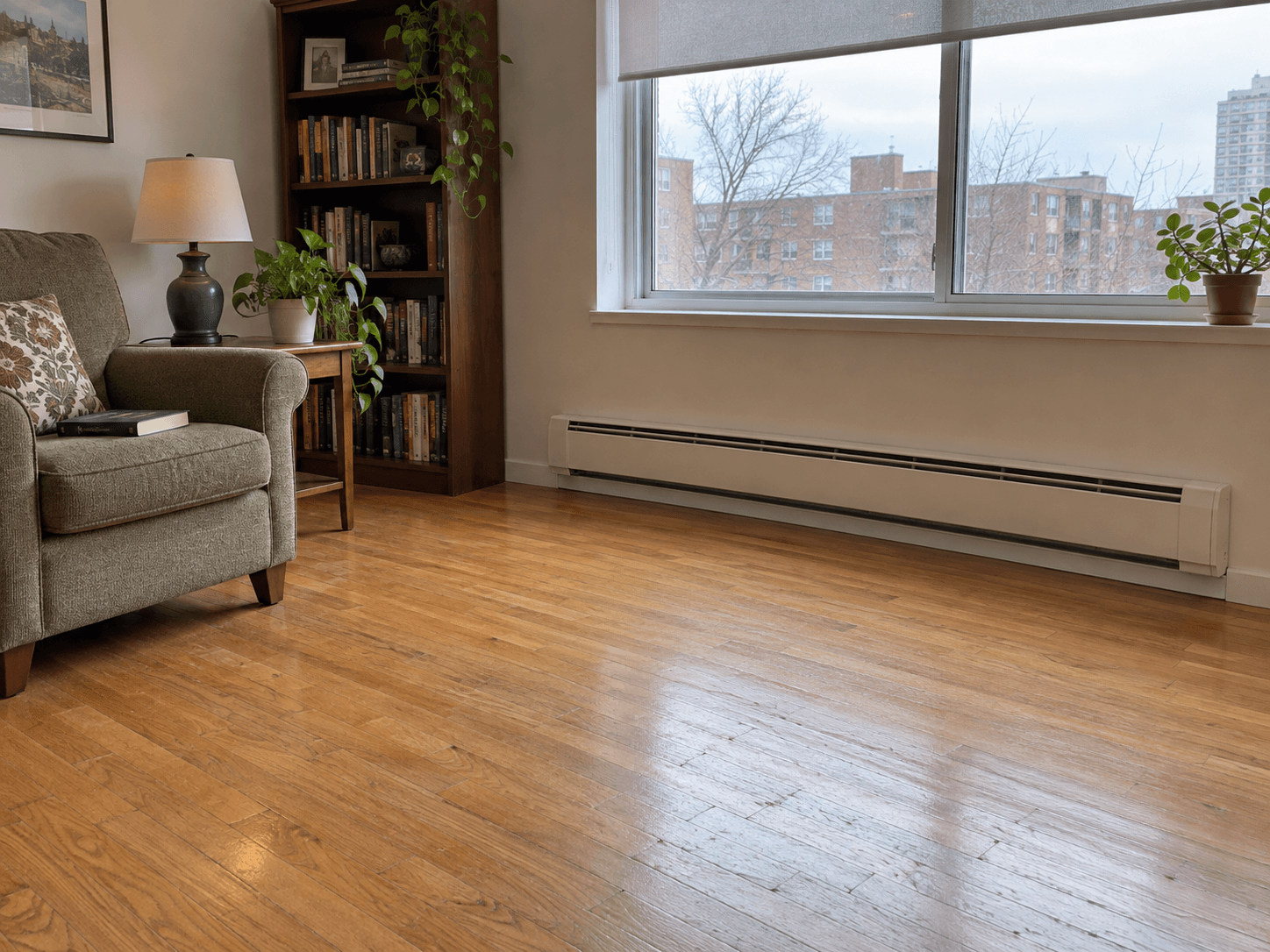
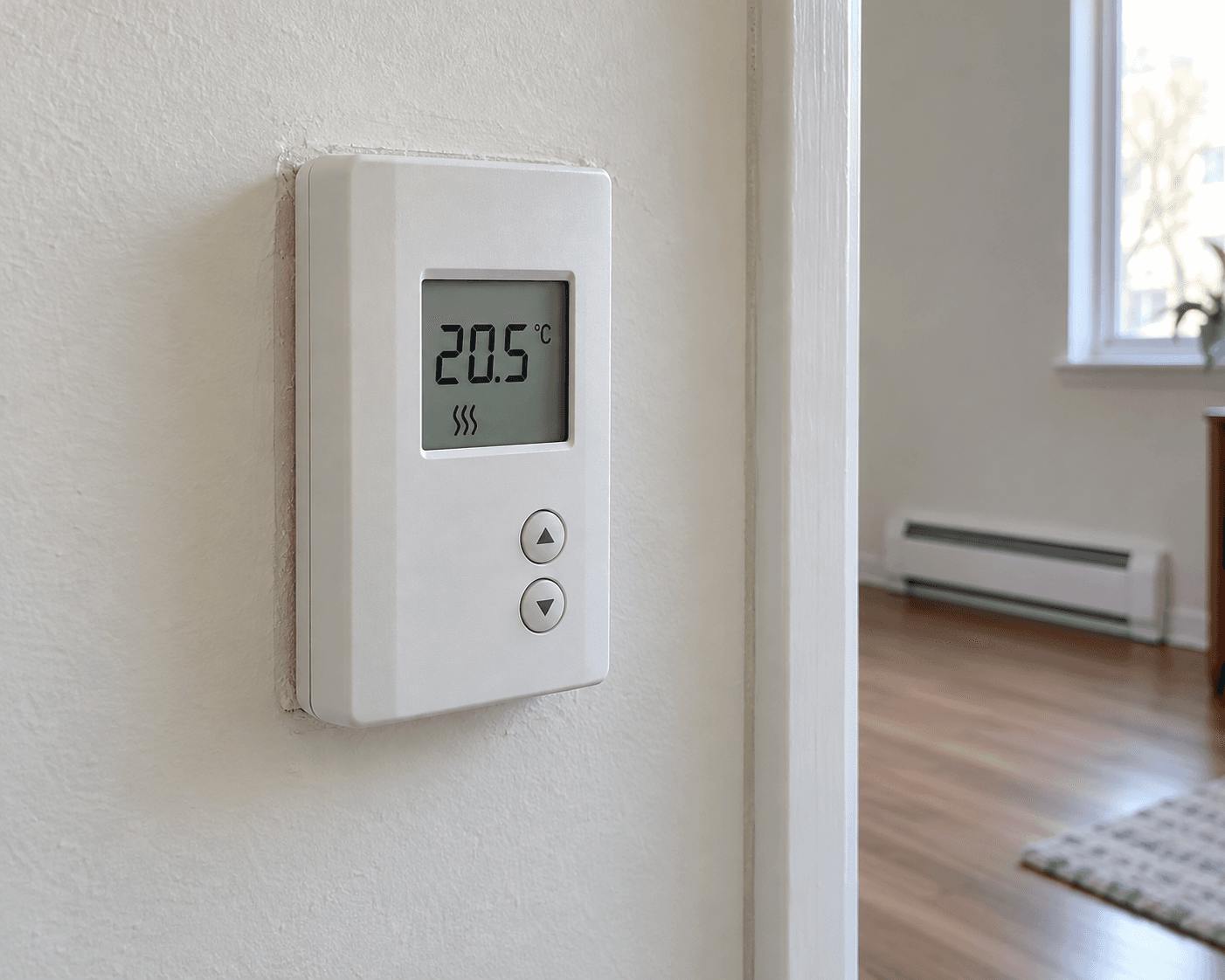
In a common furnace arrangement, a thermostat sends a request to the heating equipment through a low-voltage circuit. A line-voltage thermostat may directly control power to a resistance heater. The voltage, connected load and type of equipment must all suit the replacement.
BC Hydro's electric-heating guidance makes the same distinction when discussing smart thermostats: products intended for electric baseboards are a specific category. Heated floors and other electric heaters may need their own compatible controls and sensors. Some systems use relays or other arrangements, so identifying the actual installation matters more than guessing from the room.
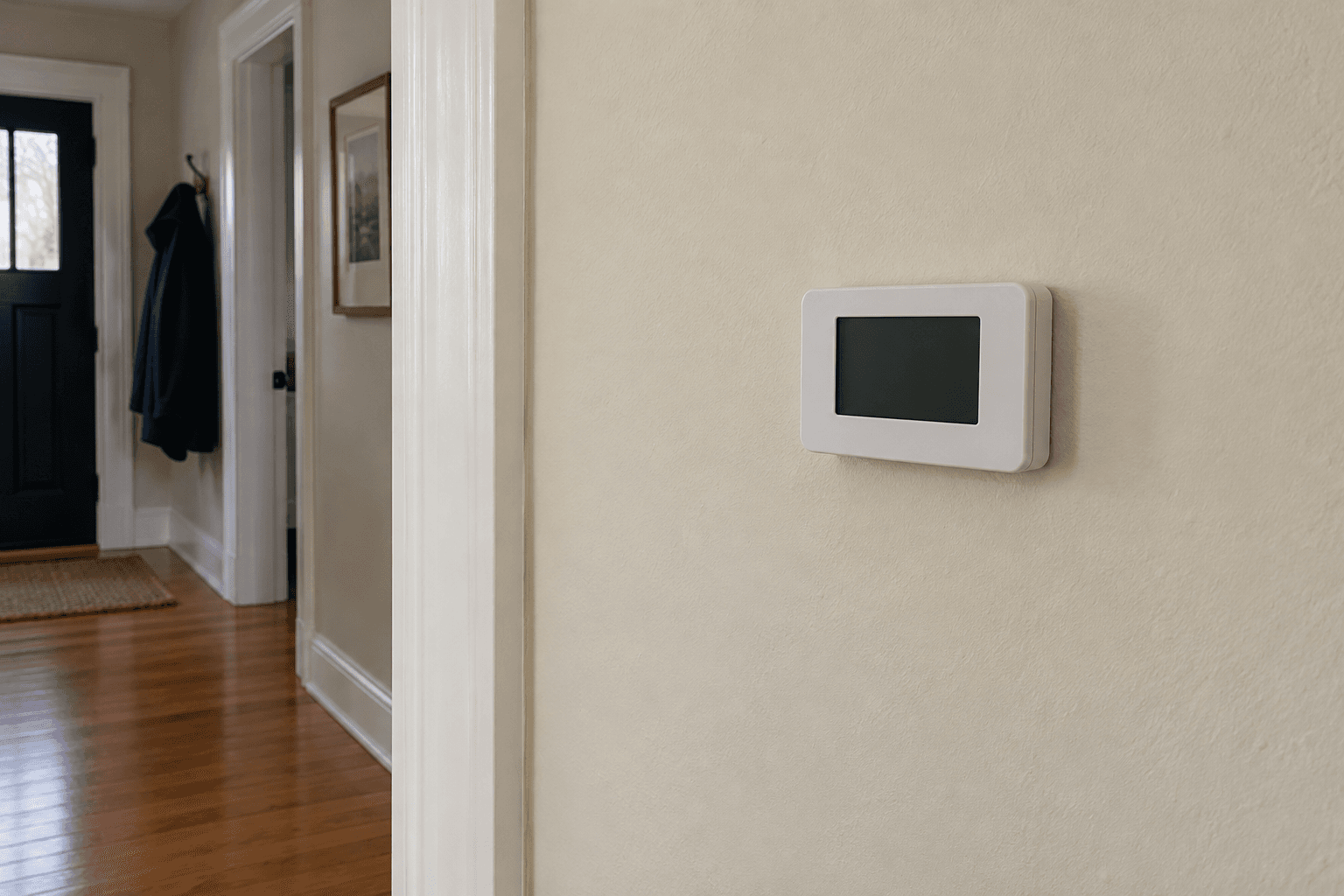
Begin with the model number in your records or on an externally accessible label. Photograph the closed control and the heaters it operates. Do not pull the thermostat off the wall to count wires or use a screwdriver to discover whether it is live.
Ask for more than a voltage match
| Control | What must match |
|---|---|
| Low-voltage control | Commonly a 24 V signalling circuit for a furnace or heat pump. The equipment stages, accessories and power arrangement must match. It does not directly switch a 120 or 240 V baseboard circuit. |
| Line-voltage control | Switches the heater supply in many electric-heating installations. Match voltage, minimum and maximum load, heater type and the manufacturer's wiring requirements. |
| Relay or floor-heating system | Identify the complete arrangement, including any relay or floor sensor. The heater in the room alone does not establish which thermostat is suitable. |
- What is the supply voltage, and what total heater load will this control switch?
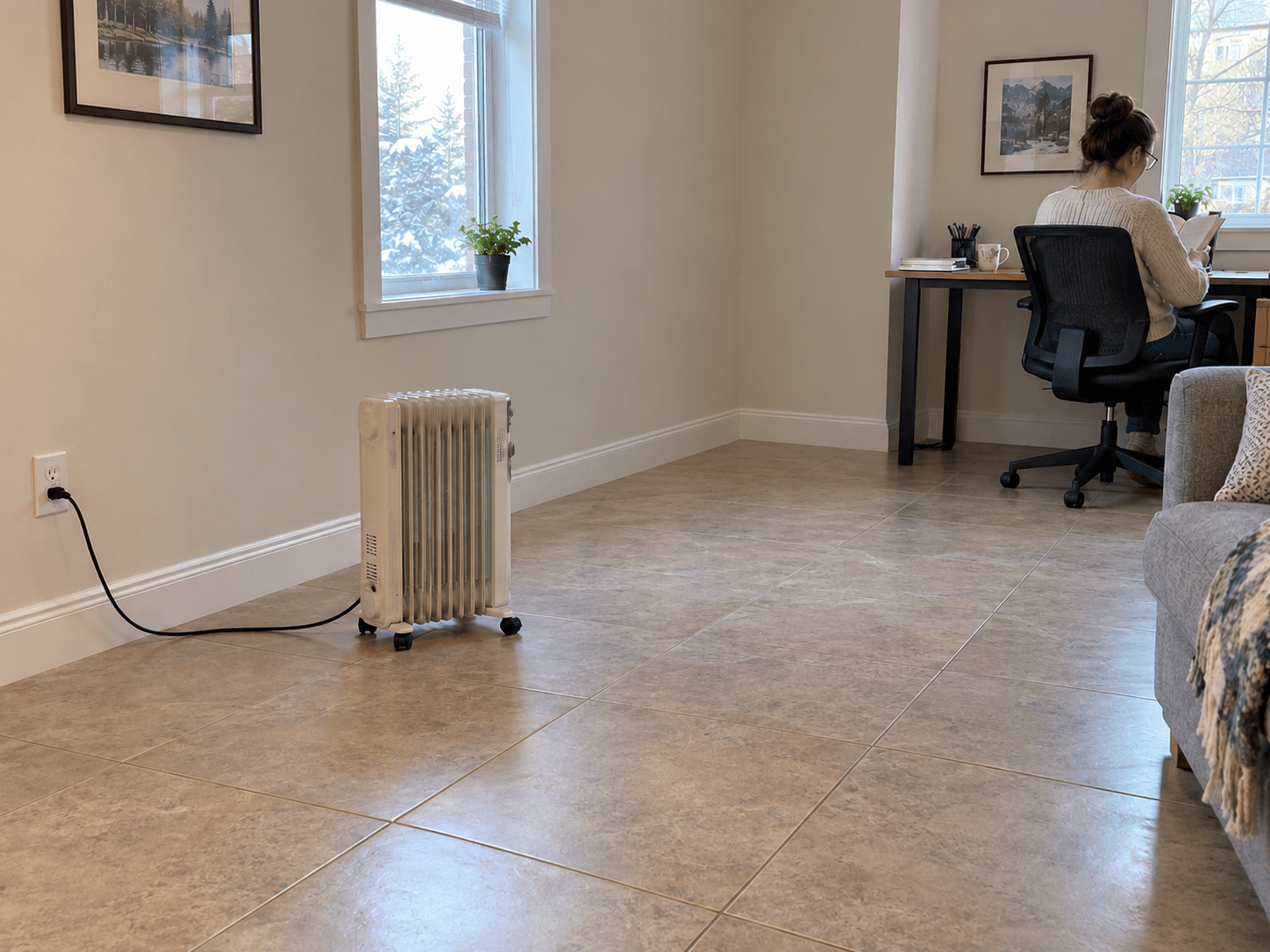
- Is the proposed control approved for these baseboards, fan heaters or floor-heating equipment?
- Does it have both a minimum and maximum connected-load requirement?
- Does the existing wiring and electrical box suit this particular product?
- Will any floor sensor, relay or other required part also need attention?
Manufacturer specifications can differ within one product family. Stelpro's ST252NPFF and ST402NPFF instructions, for example, give different maximum loads and identify acceptable heater types. A product with the right voltage but an unsuitable load rating is still the wrong product.
Add the heaters, not the rooms
Suppose two heaters on one control are rated 1,500 W and 1,000 W at the actual 240 V supply. Their combined rated load is 2,500 W, even if one is in a room you seldom use. Occupancy does not reduce the load the thermostat must be suitable to switch.
| Proposed connected load | ST252NPFF | ST402NPFF |
|---|---|---|
| 250 W | Below the published 300 W minimum | Below the published 300 W minimum |
| 2,500 W | At the published maximum | Within the published load range |
| 3,000 W | Above the published maximum | Within the published load range |
These are Stelpro T07 manual limits for the named controls at 240 V, not a general baseboard rule or an installation approval. At 120 V the published limits differ. Voltage, heater type, wiring and product instructions must still match, and the electrical contractor must confirm the actual connected load.

Then decide what you want it to do
For a regularly occupied office, a clear weekly schedule may be more useful than an app you rarely open. For a guest room, easy manual adjustment and an understandable temporary override may matter most. Check how the control behaves after a power interruption and how to cancel an accidental hold.
Have a qualified electrical contractor confirm the installation and complete the work. In Ontario, use ESA's licensed electrical contractor guidance when hiring. Keep the installed model number and instructions with your home records so the next person does not have to identify the system from its appearance.
A better control can make a room easier to manage. It does not change the heater's rated output or fix an obstructed air path. Resolve those questions separately, then buy the features you will actually use.