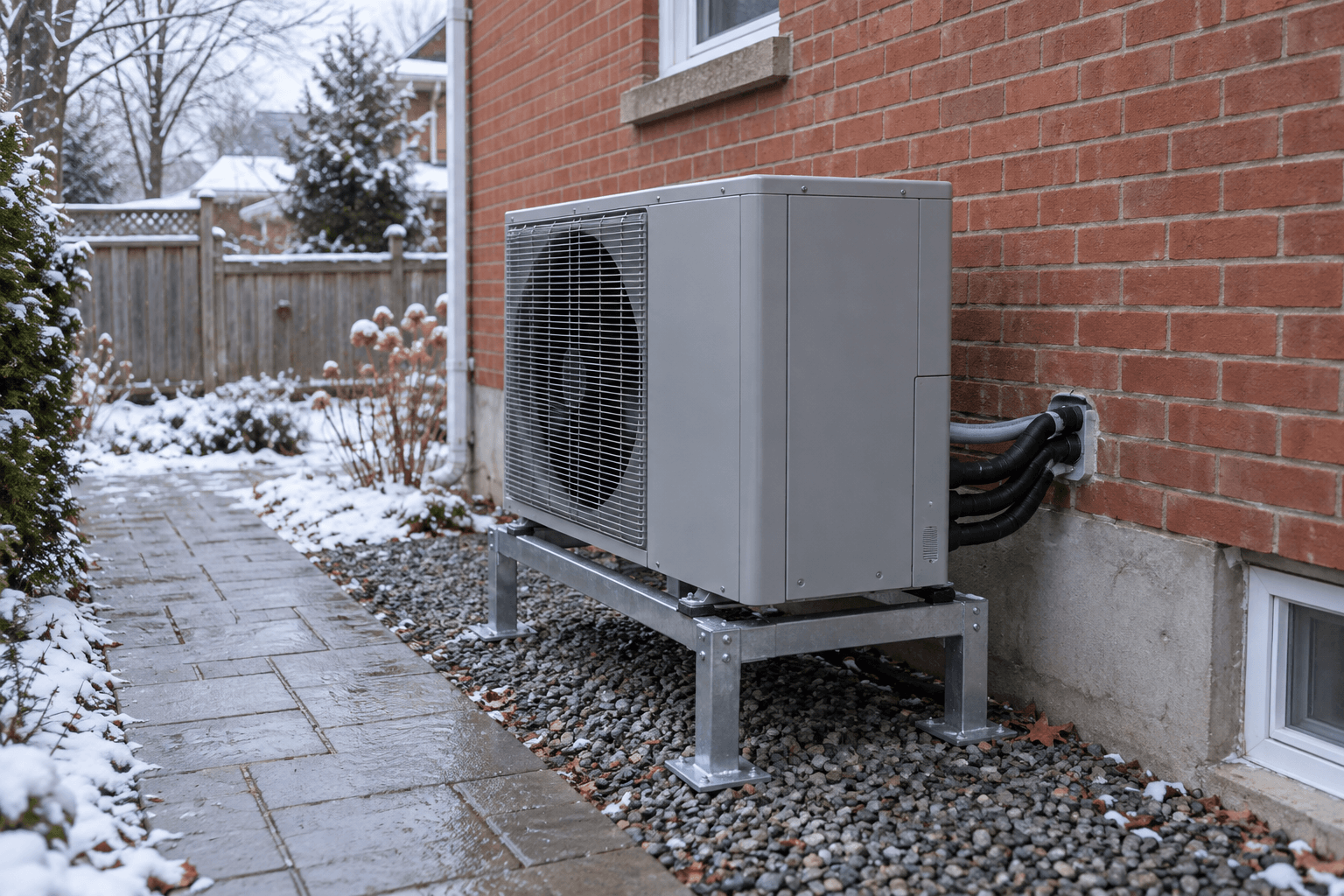
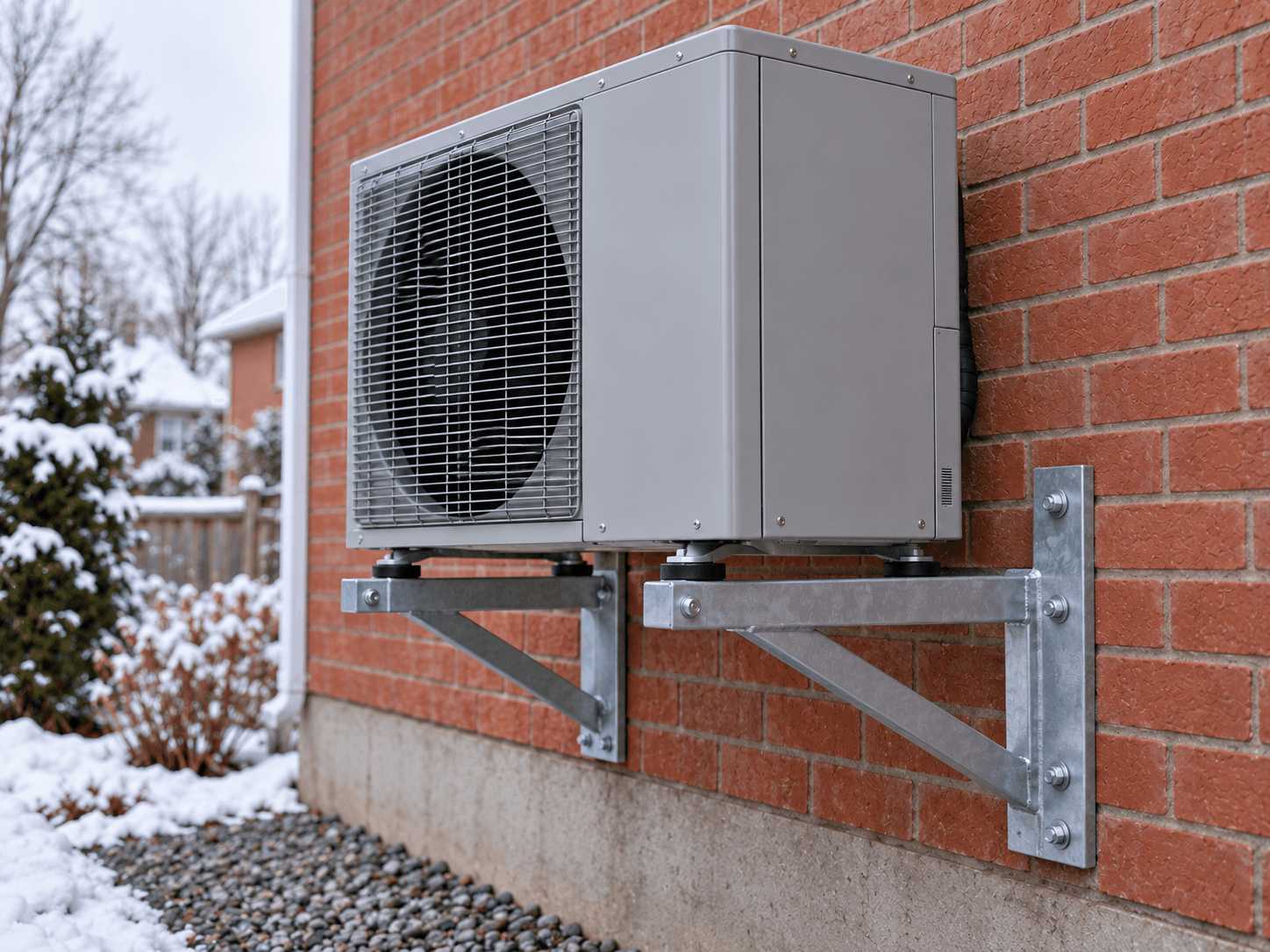
From the path, the heat pump sounded fairly ordinary. Inside the bedroom, there was a low hum near the outside wall. Walking between the two places did not make me an acoustics expert, but it made the problem easier to describe.
I stopped calling it 'loud outside'. The sound that bothered me was indoors, in one part of the house, and it changed as the system ran.
Sound through air and vibration through the building
Source: Mitsubishi Electric Canada: rigid support and vibration considerations
A unit can send sound through the air and vibration through connected materials. Wall brackets, supports and service connections are possible transmission paths. The outdoor sound rating does not, by itself, describe what a particular bedroom will hear.
Mitsubishi's residential installation guidance calls for rigid support to avoid increased operating sound or vibration. That does not mean a stiffer bracket alone will cure every indoor hum. The unit, wall, mounts and connections need to be considered together.
Describe the pattern without trying to restrain the unit
Source: Carrier Canada: unusual heat-pump noise and professional checks

I made a short recording from the room and noted the time, weather, operating mode and whether the sound changed during a heating cycle. I also noted which rooms were affected. The phone could help reproduce the complaint even if it could not measure low-frequency sound reliably.
- Was the hum present from installation, or did it begin later?
- Does it change with operating speed or briefly during defrost?
- Is there visible damage, a new rattle or harsh striking sound?
- Can the installer hear the indoor symptom while the system is running?
I did not lean on the cabinet, wedge foam behind it, loosen fasteners or slip rubber under the feet. The bracket carries equipment, and improvised changes can affect support, alignment and connections.
Ask for an assessment of the transmission path
Source: Mitsubishi Electric: vibration transmission through walls and floors
The installer can check the support and attachments, equipment mounts, condition of the unit, and contact or tension at pipes and other connections. Manufacturer guidance on vibration isolation is specific to equipment and installation; a pad shown in another system's manual is not a universal repair part.
If a mounting change is proposed, I want to understand how it preserves structural support, required clearances, drainage and service access. Moving to a ground-supported arrangement may be an option at some sites, but it needs an assessment rather than a promise.
New grinding, striking or severe vibration needs prompt service attention. For the persistent bedroom hum, the most useful thing I could offer was a repeatable observation. I asked for the next visit to include the room where I actually heard it.