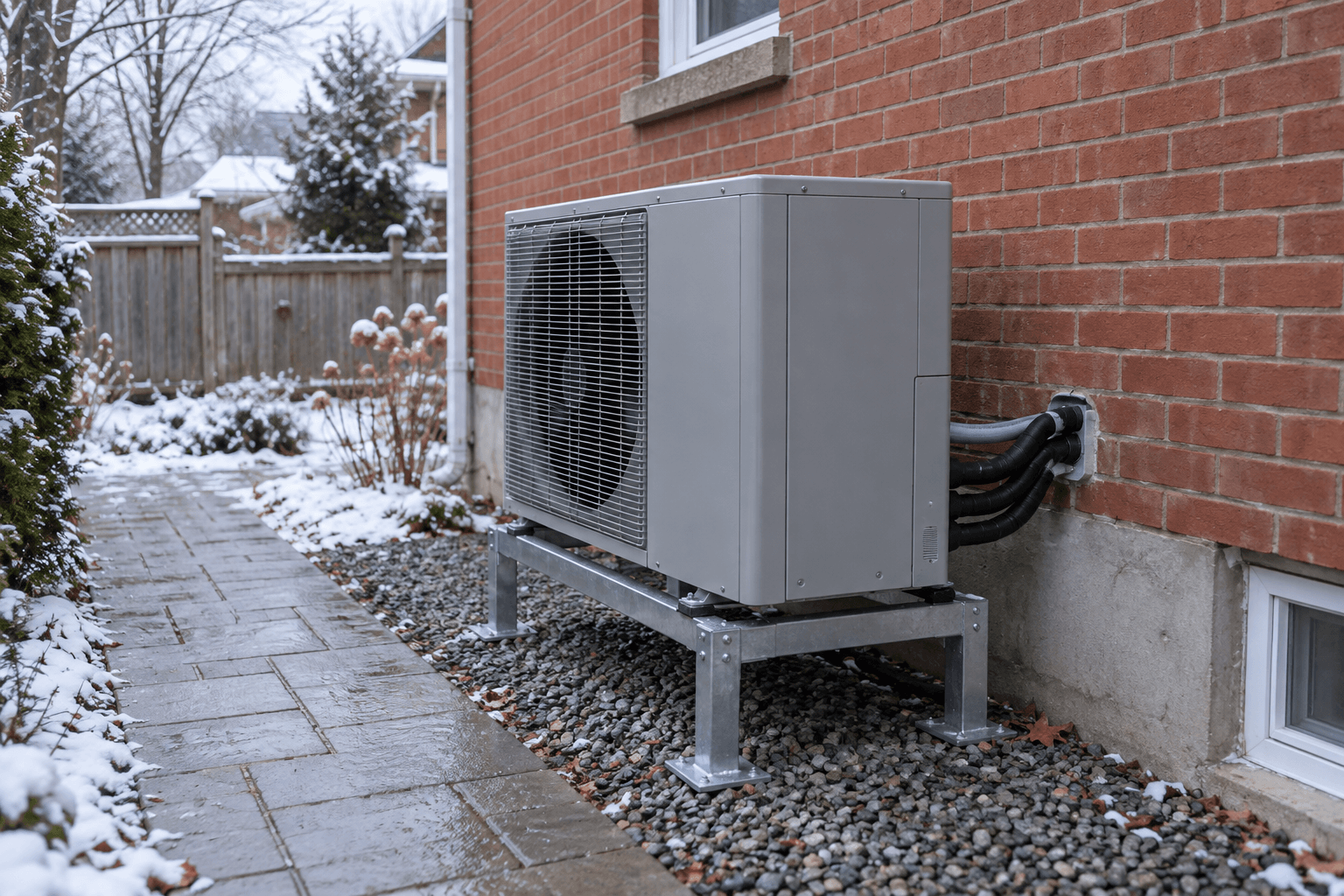
The first proposed location hid the outdoor unit neatly from the garden. It also put it near the window beside my pillow. I only noticed when I walked upstairs with the site sketch still in my hand.
I went back outside and looked at our neighbour's windows too. The gap between the houses was narrow and hard-sided. 'Quiet model' was a useful starting point, but it was not a complete placement decision.
Discuss sound in the actual space
Source: City of Toronto: air-source heat pumps for homes and small buildings
Toronto's heat-pump guidance includes noise among the installation considerations. Ask how the proposed position, mounting and nearby surfaces affect sound and vibration, and how the installation will satisfy applicable local requirements. A brochure sound figure is measured under defined conditions; it is not a promise of what you will hear through a bedroom wall.
I marked sleeping areas, sitting areas, gates and access routes on the sketch. We discussed alternatives before anyone drilled a mounting hole. I also asked whether wall mounting could transmit vibration in our particular building.
A sound screen is still an obstruction if badly placed
Airflow and service clearances have to survive any landscaping or screening plan. I did not order an enclosure just because a photograph online made it look attractive. The installer needed to approve an arrangement compatible with the actual unit.
If a new sound develops after installation, a short recording and a description of when it happens can help a service visit. A phone sound-meter app alone cannot certify compliance or diagnose a mechanical fault.
We chose the location after considering the bedrooms as carefully as the garden view. I was glad to have walked upstairs during the planning stage. Moving a pencil mark was pleasantly easy.