One small humidity meter said the room was comfortable. The other seemed less convinced. I moved them together onto a shelf, then immediately picked one up to inspect it. My attempt to compare them had already changed the conditions around one sensor.
I put both down and read their instructions, including the time they needed to settle after being moved. It was a less exciting experiment, but a more useful one.
Choose a representative spot
Source: Natural Resources Canada: how your house handles heat, air and moisture
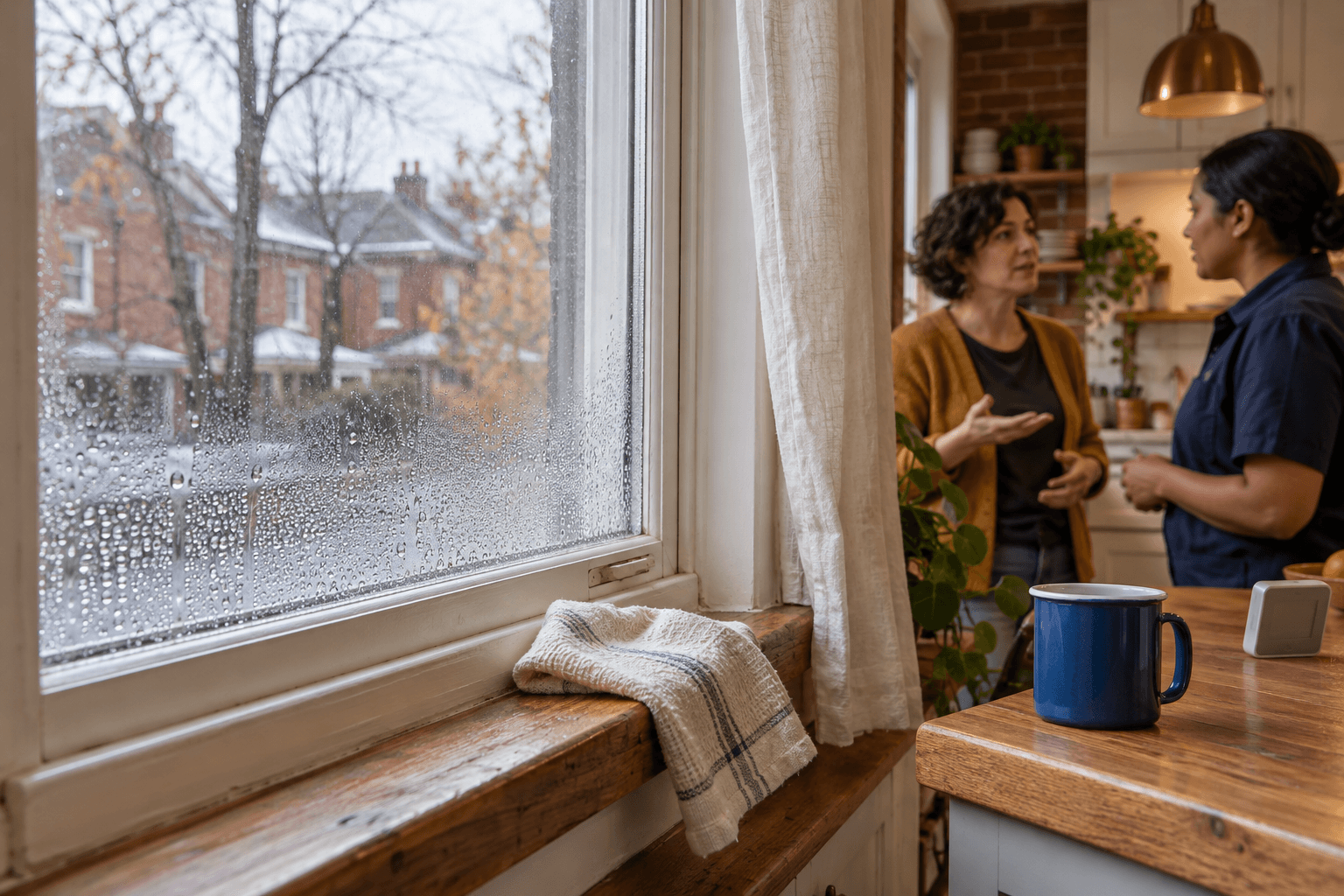
Relative humidity depends on temperature as well as moisture. Natural Resources Canada's explanation of household moisture is a useful reminder that a cold window corner and the middle of a warm room need not give the same reading.
Follow the meter's placement instructions. For a room record, avoid the immediate plume from a humidifier, shower or cooking pot, direct sun and supply-air jets. A reading taken there may describe that local condition rather than the room you are trying to understand.
I left the meters side by side long enough to stabilize and checked their stated accuracy. A small disagreement did not justify declaring one broken. If the difference was large or persistent, I would use the maker's check or calibration procedure.
Record conditions, not just numbers
I wrote down the room, time, temperature, humidity and what had recently happened. Morning readings after showers belonged beside a note about the showers. A cold-weather window check included the outdoor conditions.
For a second room, I kept a separate series rather than mixing locations in one column. That let me see whether an adjustment helped where we actually had the problem.
A hygrometer cannot identify a leak or certify that hidden materials are dry. Our record was useful because it helped describe a pattern. It gave the ventilation technician a clearer starting point than my original complaint that two small screens disagreed.