
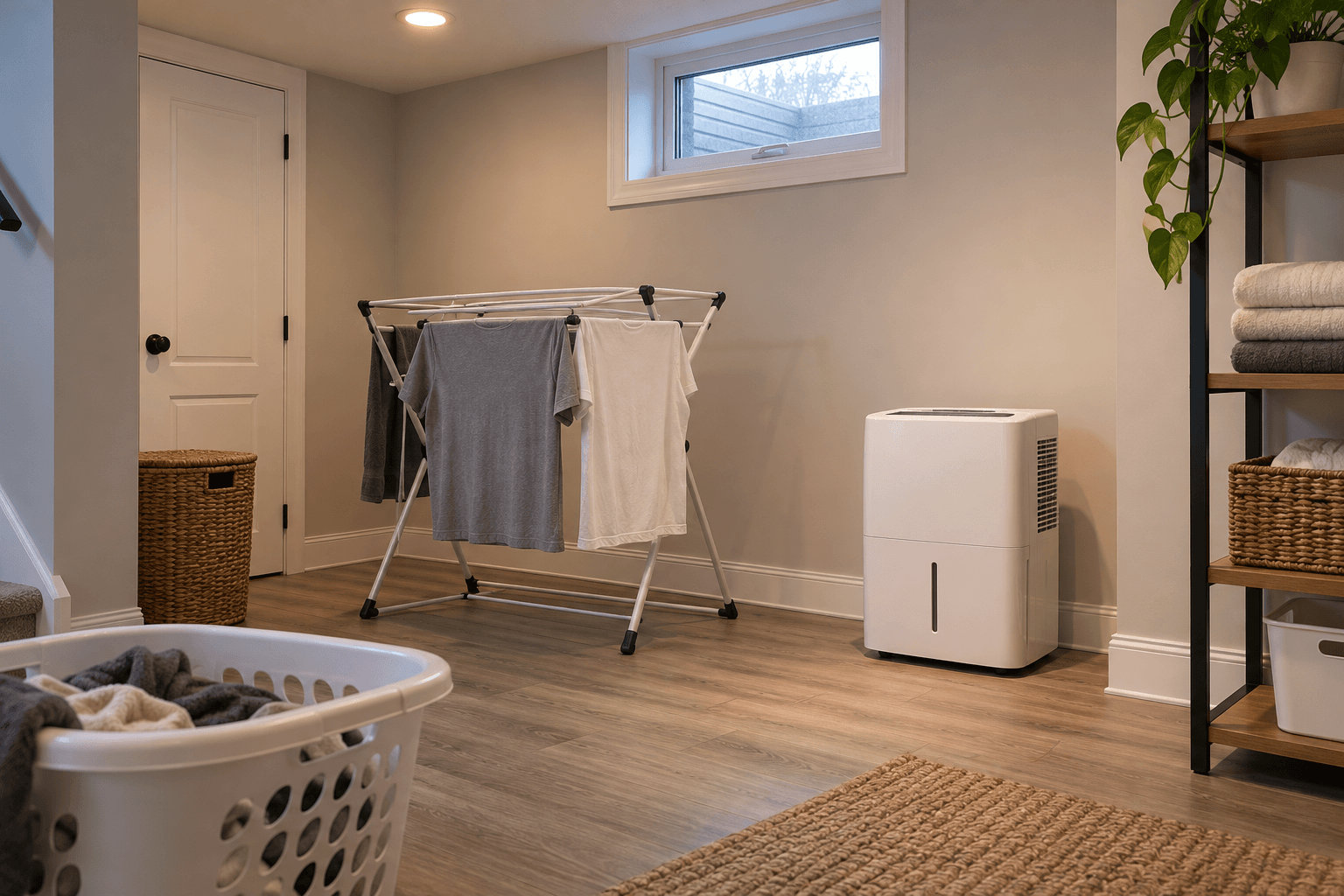
The dehumidifier filled its bucket every day. I took that as evidence that it was solving the basement problem, until a dark patch returned at the base of the wall after heavy rain.
The machine was collecting water from the air. It had no way to repair whatever was making that particular patch wet. I stopped treating an empty bucket and a dry wall as the same result.
Find out whether water is entering
Source: Natural Resources Canada: basement moisture and insulation
Natural Resources Canada's basement guidance says moisture problems need to be addressed before insulating and finishing. Covering a damp wall can conceal a problem while leaving its source active.
I photographed the patch with dates and noted the weather. From safe ground-level access, we checked for obvious overflowing gutters and water collecting beside the house. We arranged an assessment of the damp area instead of starting with paint, new drywall or a larger appliance.
A dehumidifier may still help control airborne humidity. It needs a suitable operating temperature, clear airflow and safe drainage according to its manual. It cannot establish why a foundation, pipe or window is leaking.
Useful details to bring to the assessment
- Does the dampness follow rain, thawing snow, plumbing use or no clear pattern?
- Is it one patch or a general feeling throughout the basement?
- What are the room's temperature and humidity readings?
- Does the appliance stop because its bucket is full or because it reaches its setting?
We moved stored cardboard away from the affected area and kept the space accessible. Standing water near electrical equipment needs professional help; it is not a place to set up an extension cord and another fan.
The photographs made the appointment more useful. They showed when the patch changed, even though the wall happened to look better on the day someone came to inspect it.