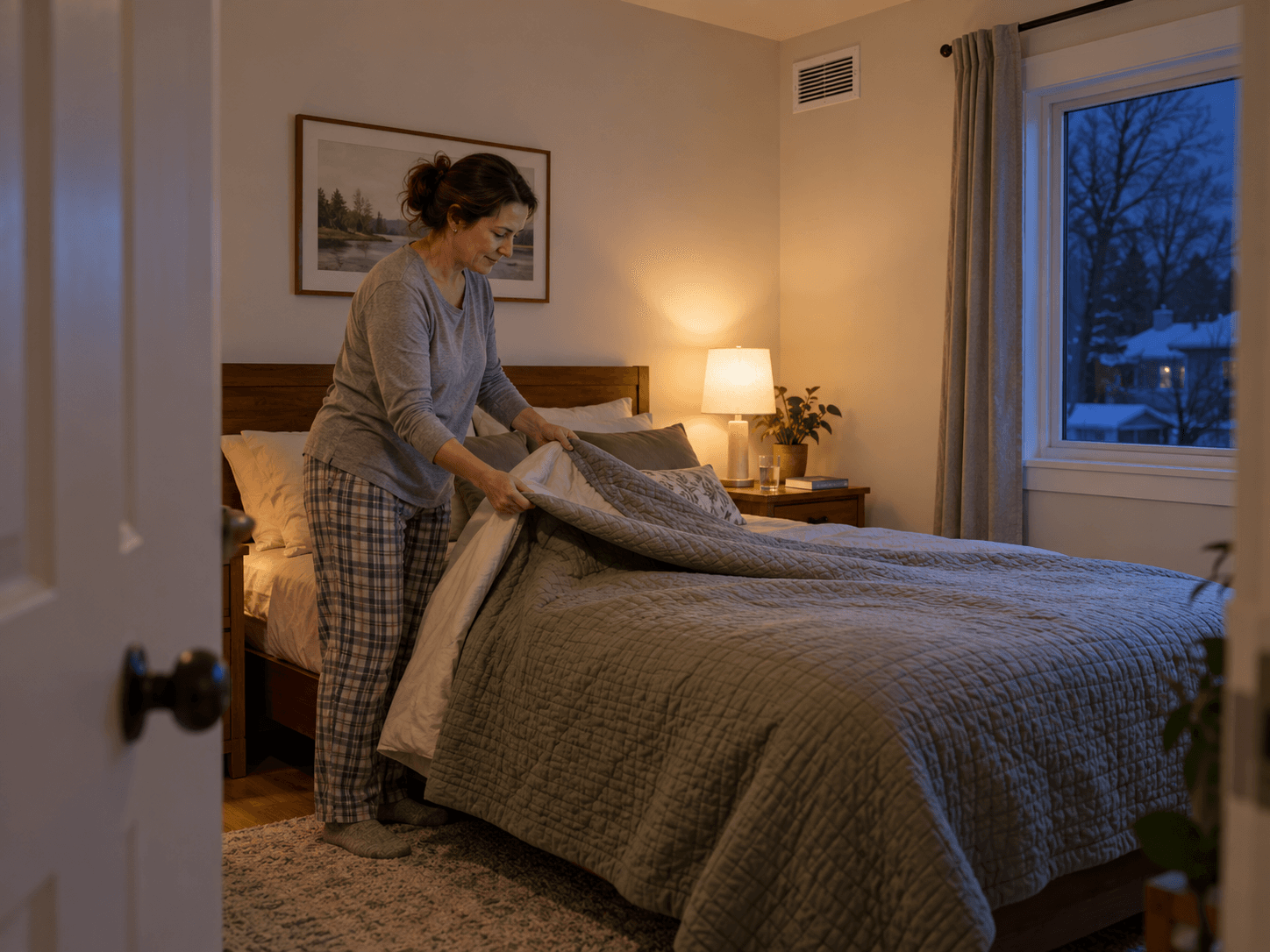
A bedroom can feel different after two people spend the night in it with the window shut. Before buying another device, find out how outdoor air reaches that room and how air leaves it under the conditions you actually sleep in.
A running fan is only one part of the answer
Source: Health Canada: room ventilation and overnight occupancy
Health Canada notes that outdoor air entering elsewhere in a house may not reach a closed bedroom adequately. Occupants also add carbon dioxide and moisture overnight. The room's ventilation needs attention even when its temperature is comfortable.
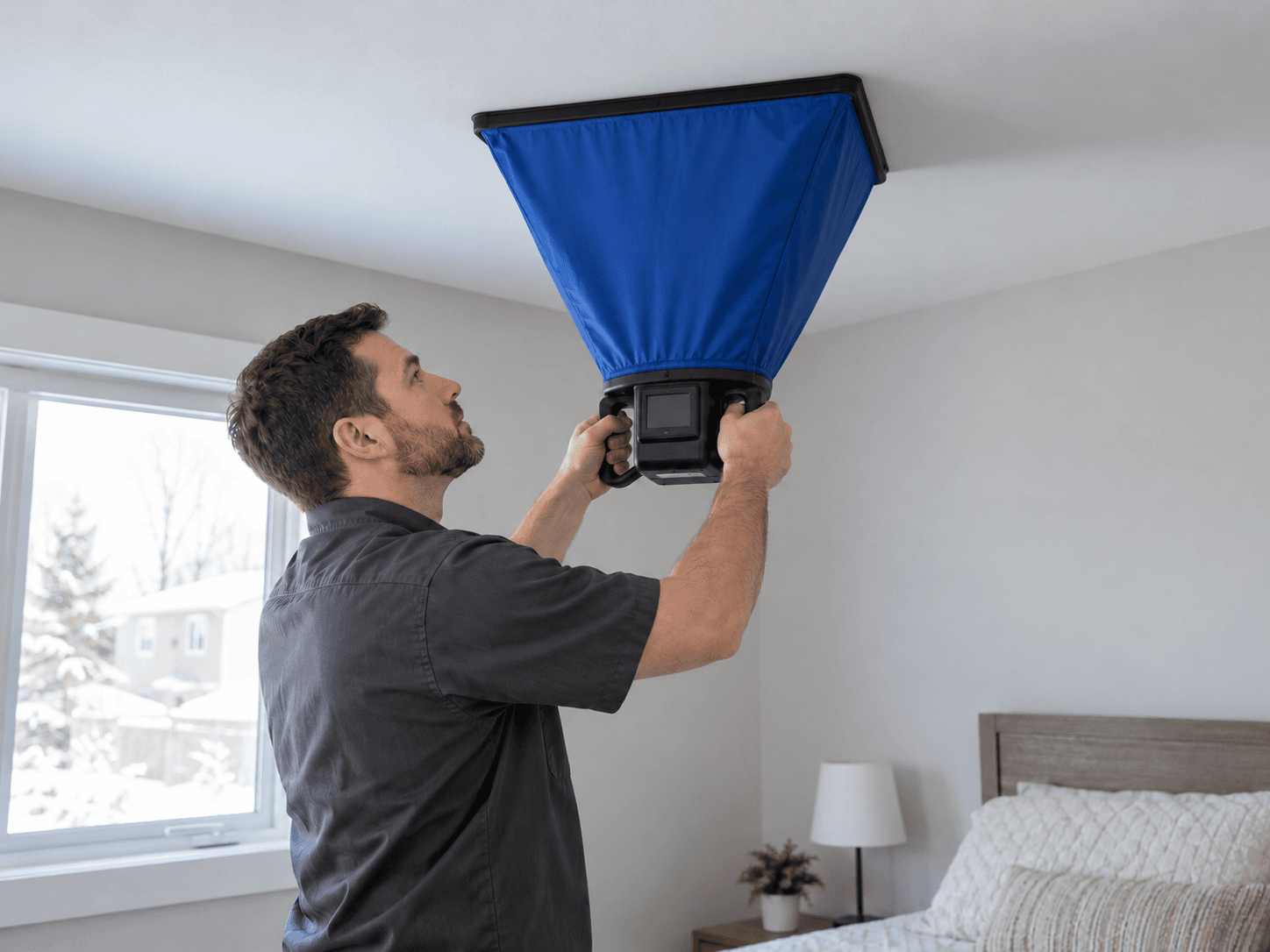
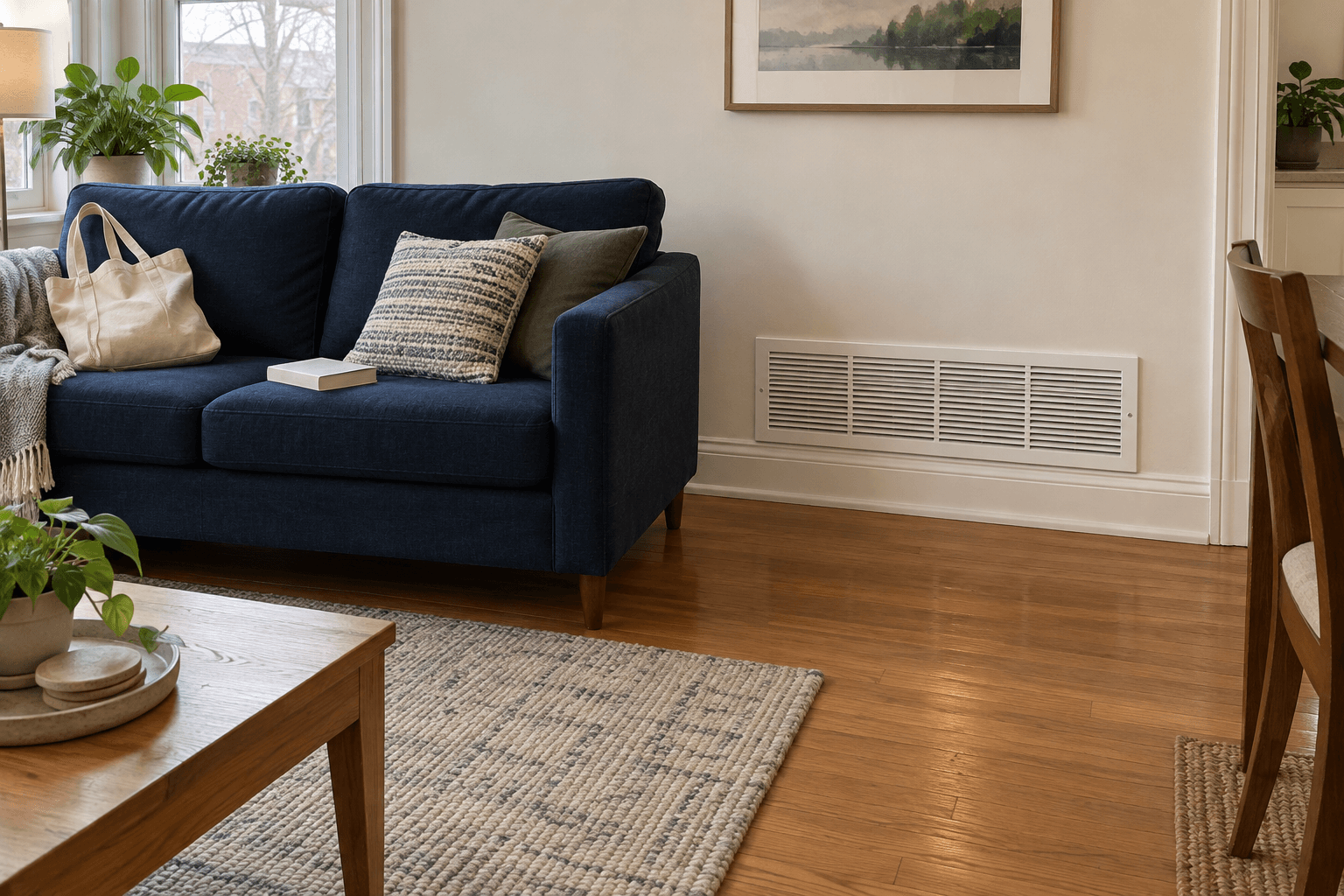
Identify any dedicated ventilation supply and keep it clear of curtains or furniture. A heating register may distribute ventilation air in some systems, but the presence of a register alone does not establish an outdoor-air supply.
Ask how the bedroom connects to the rest of the ventilation arrangement when its door is closed. There may be an intentional transfer route or a design that needs review. Do not cut the door, add a grille or alter a fire-rated assembly based on a generic suggestion.
Use the household's real operating conditions
Source: Natural Resources Canada: distributing ventilation air through the home
- How many people normally sleep in the room?
- Are the door and window closed, and are they closed for noise, privacy or another reason?
- What ventilation mode runs overnight?
- Does the system depend on the furnace or air-handler fan for distribution?
- Did the problem begin after a renovation, air sealing or control change?
NRCan's ventilation guidance emphasizes distribution to rooms, including bedrooms with closed doors. Bring the actual nighttime arrangement to a ventilation review. A test performed with every interior door open may not answer the question you are asking.
Opening a window can help when outdoor air, weather and security conditions allow. It is not an all-season answer for every household. Keep wildfire smoke, outdoor pollution and heat or cold in the decision.
Look at the pattern, not just the morning peak
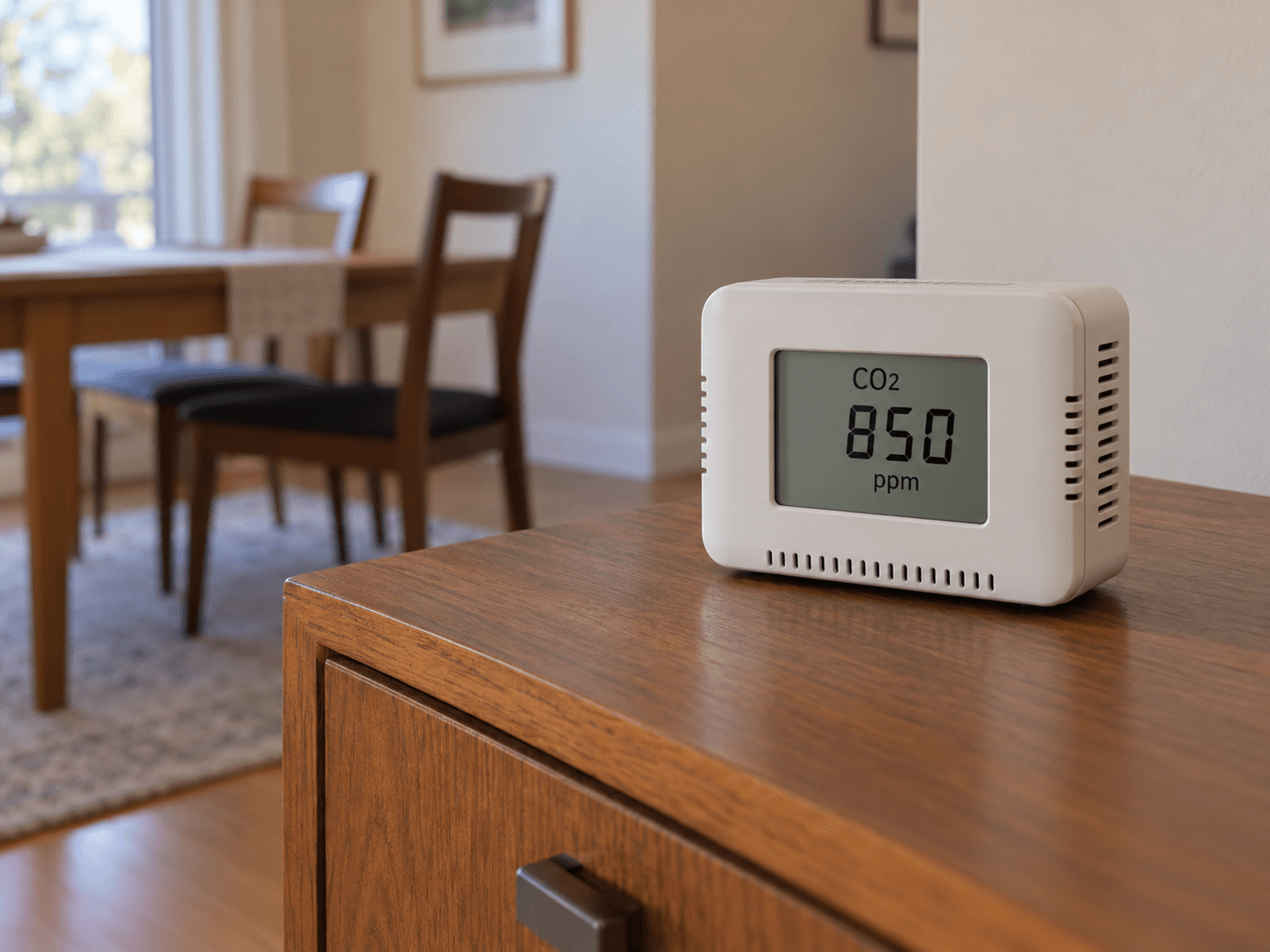
If using a CO2 monitor, follow its placement and calibration instructions and keep it away from direct breathing. Save the overnight time history with notes about occupancy and ventilation. Moving it beside a sleeper's face changes what the reading represents.
Health Canada's residential CO2 guideline is 1,000 ppm as a 24-hour average. It is not a single-reading alarm threshold. CO2 is also different from carbon monoxide; a CO2 monitor never replaces a certified CO alarm.
Persistent elevated patterns or recurring stuffiness are useful reasons to ask for the room supply and transfer paths to be checked. If people feel unwell or a safety alarm sounds, respond promptly rather than continuing an overnight experiment.
Ask the service provider to explain the operating change or physical correction and how it will be verified. Keep that answer with the ventilation settings so the arrangement remains understandable when seasons change.