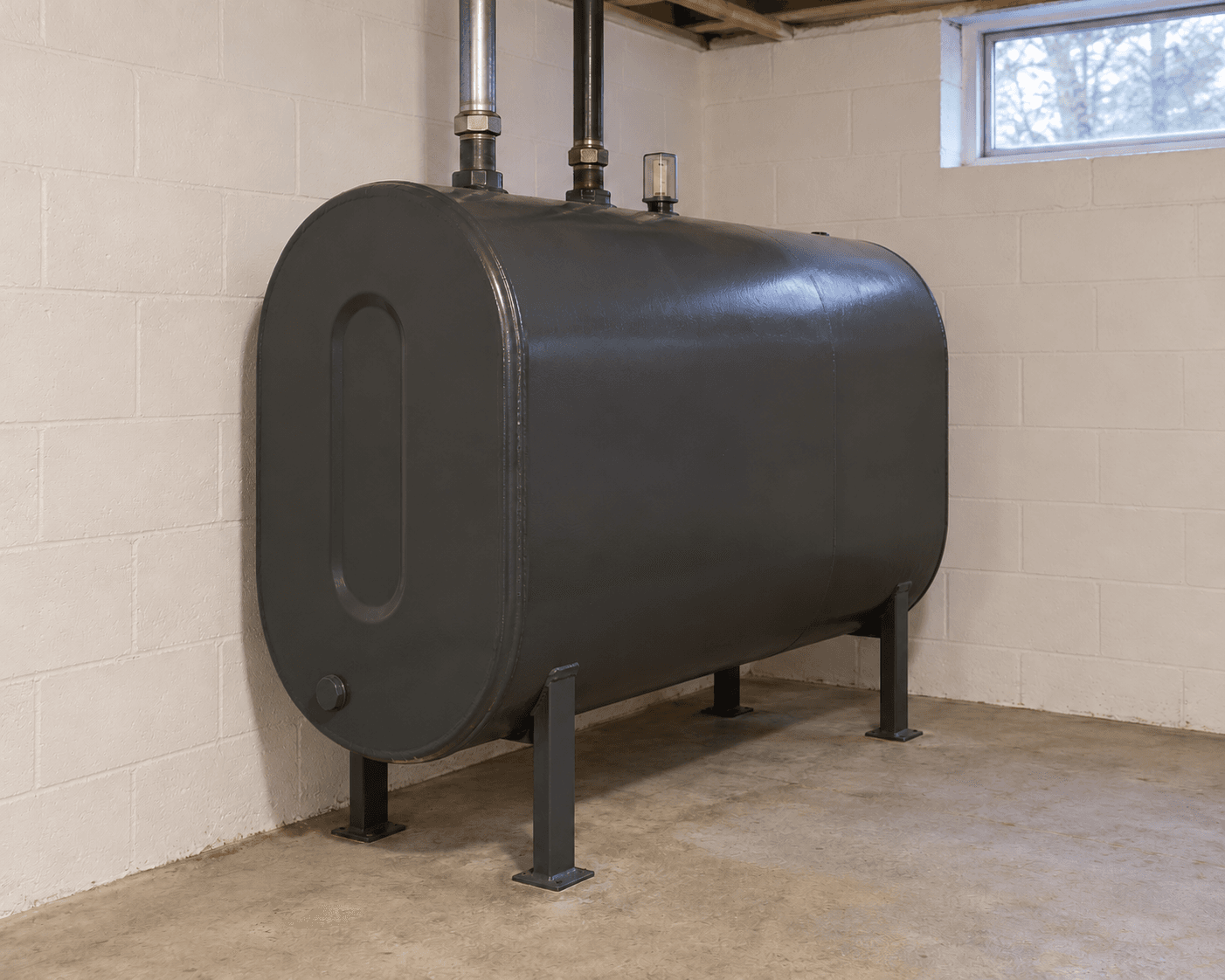
Before the next heating-oil delivery, take a look at the tank and the area around it. A new stain, a leaning support or an unexpected oil smell deserves attention. You are looking for changes to report, not trying to prove that the tank is sound.
Keep the distinction clear: a dry exterior does not reveal the condition of every surface inside a steel tank. An owner walk-around is useful between professional visits, but it does not replace the inspection or maintenance required for the actual installation.
Use your eyes, not a wrench
Source: Ausable Bayfield Maitland Valley Source Protection: fuel tank warning signs
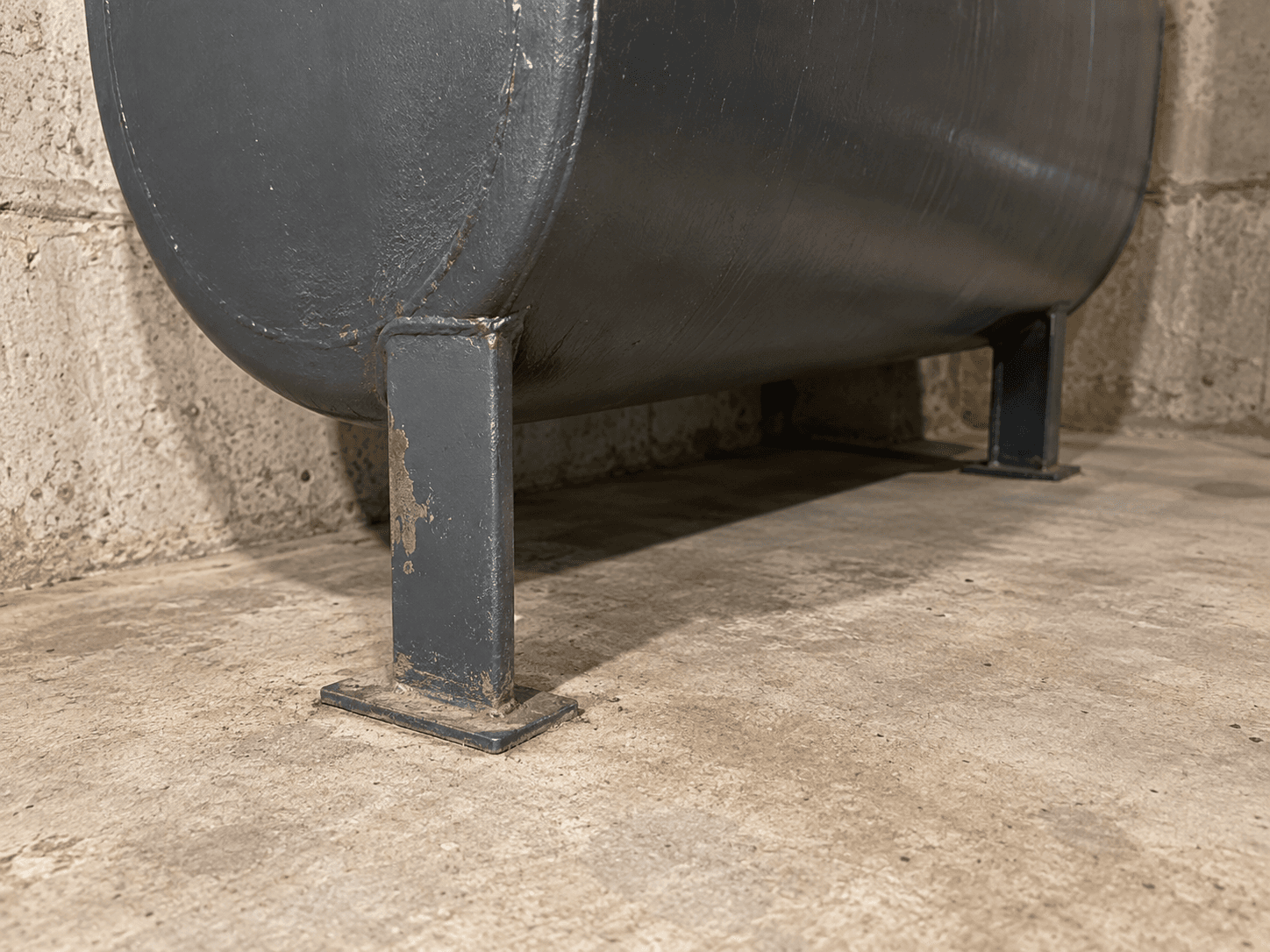
From a safe accessible position, look over the tank body, supports, visible fittings and floor or ground nearby. Ontario's source-protection guidance identifies rust, damp or weeping spots, dents, unstable legs and drips near filters or valves as reasons to contact the oil supplier or an oil-burner technician.
- Has the tank shifted, or does a support look bent, loose or poorly seated?
- Is there a new wet mark, stain or oil odour around the tank or visible fuel line?
- Has anything struck the tank or been piled against its pipes?
- Has fuel use changed unexpectedly without a clear weather or household explanation?
Do not scrape a rust patch, tighten a fitting, adjust a support or move the tank to get a better view. Take photographs without entering a spill or reaching under unstable equipment. If a side is inaccessible, tell the contractor rather than squeezing into a hazardous gap.
Make the next conversation easier
Keep the tank's identification, installation information, service reports and supplier contact together. Ask the supplier when the next inspection is due and what documentation it needs before delivery. TSSA regulates fuel-oil equipment in Ontario and describes the distributor's inspection obligations; a general homeowner checklist is not the legal inspection report.
A tank in a basement is not automatically an 'underground tank' in the regulatory sense. Buried tanks have different concerns and requirements. Tell the contractor exactly where the tank is and whether any old tank may remain on the property.
Act before another delivery
Contact the oil supplier and an appropriately qualified, TSSA-registered fuel-oil contractor promptly. Tell the supplier about the suspected problem before any further delivery. For an oil spill in Ontario, call the Spills Action Centre at 1-800-268-6060 and follow its directions; the province also identifies other reporting duties, including notification of the municipality.
Do not wash oil into a drain, soil or ditch, or attempt an improvised repair. If there is fire, immediate danger or illness, move away and call emergency services. A small-looking mark is a reason to ask for help early, before its extent or source becomes harder to establish.