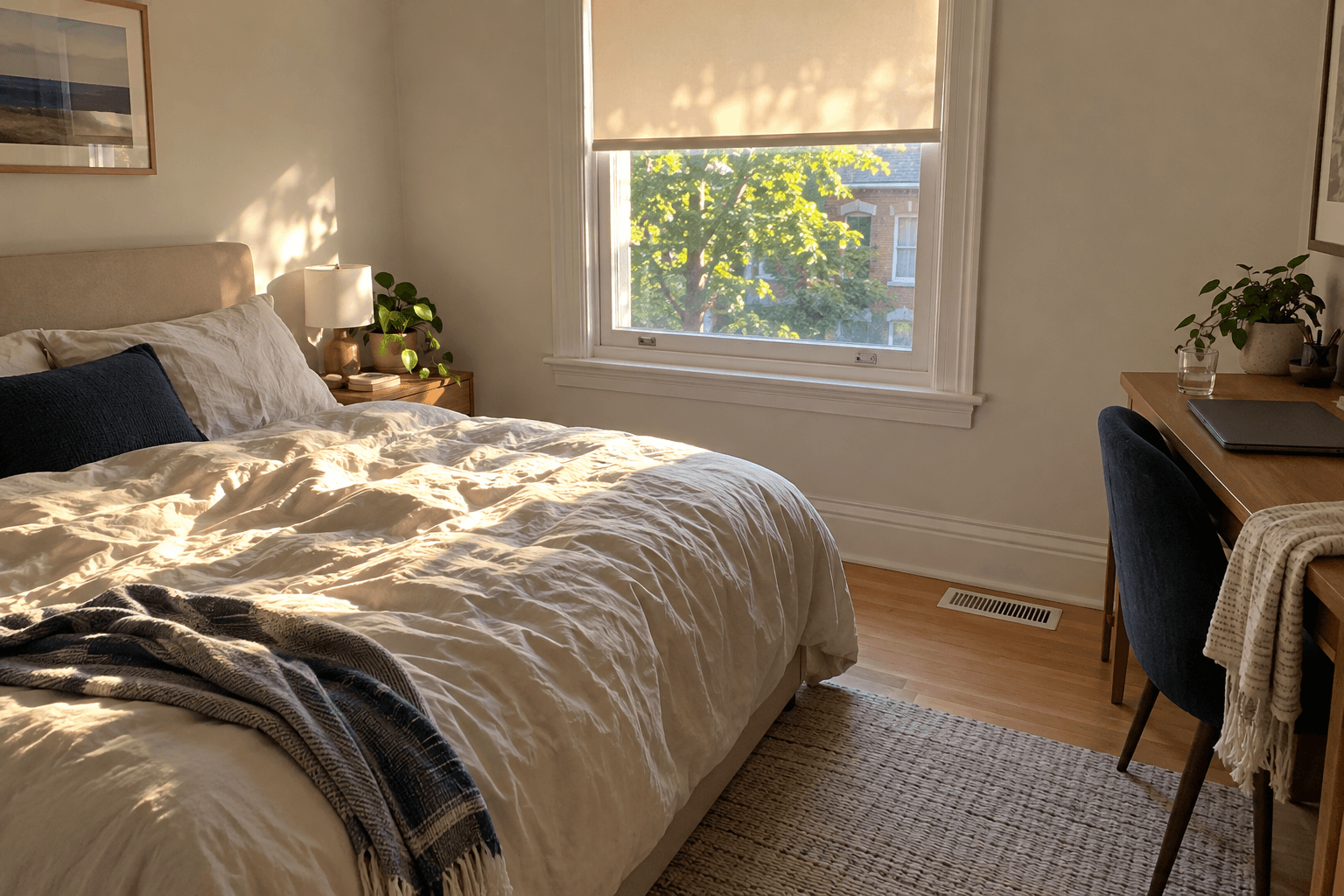
The street felt cooler after sunset, so I opened the bedroom windows. By morning the room was cool enough, but the bedding felt damp. I had checked one part of the weather and ignored the rest.
Night ventilation can be useful. It is simply not an automatic setting that belongs on every summer evening.
Look at the air you are inviting inside
Source: Natural Resources Canada: air conditioning your home
NRCan's cooling guidance includes using cooler outdoor air when conditions suit. Temperature is only one consideration: humid outdoor air can add moisture, and open windows during active cooling increase the work the system has to do.
I began checking the forecast, indoor comfort and moisture pattern before opening up. I also considered noise, security and whether a safe cross-breeze was possible. A window that cannot be left safely open is not part of a sensible overnight plan.
Cool air is not always clean air
Source: Health Canada: choosing and using a portable air cleaner
Health Canada recommends checking current air quality and advisories before ventilating through windows. During wildfire smoke or other poor-air episodes, a cool breeze may bring unwanted particles indoors. Closing windows and using appropriate filtration can be the better choice.
I did not treat the outdoor temperature as permission to ignore a smoke advisory. Nor did I leave the air conditioner running while every window was open and expect a fair comparison of its performance.
Some nights we still opened the windows. On others, we kept them closed and used cooling or a fan as appropriate. The routine became a decision based on that evening's conditions rather than a rule I defended because it had worked once.
The bedroom was quieter on the closed-window nights too, an advantage I had forgotten until the early rubbish collection arrived.