The evening before our furnace appointment, I discovered that three folding chairs and a bag of wrapping paper had moved into the route downstairs. None of them belonged there. All of them had arrived one small tidy-up at a time.
I cleared the stairs and the working area around the equipment. I put the dog in another room before the doorbell rang. These were not technical preparations, but they let the visit begin without an obstacle course.
Bring observations, not a parts order
Source: Natural Resources Canada: heating and cooling maintenance
NRCan's maintenance guidance includes checks of controls, drainage, airflow and fuel-burning components by a qualified contractor. I wanted time spent on those checks, not on searching for a manual while someone waited beside the furnace.
I gathered the model information, previous service records and the filter details. On one page I wrote the two things we had noticed: a new sound at startup and a bedroom that took longer to warm. I included when they happened and whether they were recent changes.
I did not clean internal parts or reset controls to make the equipment look ready. If there was an active fault indication, I wanted the technician to know about it.
Ask for an understandable record
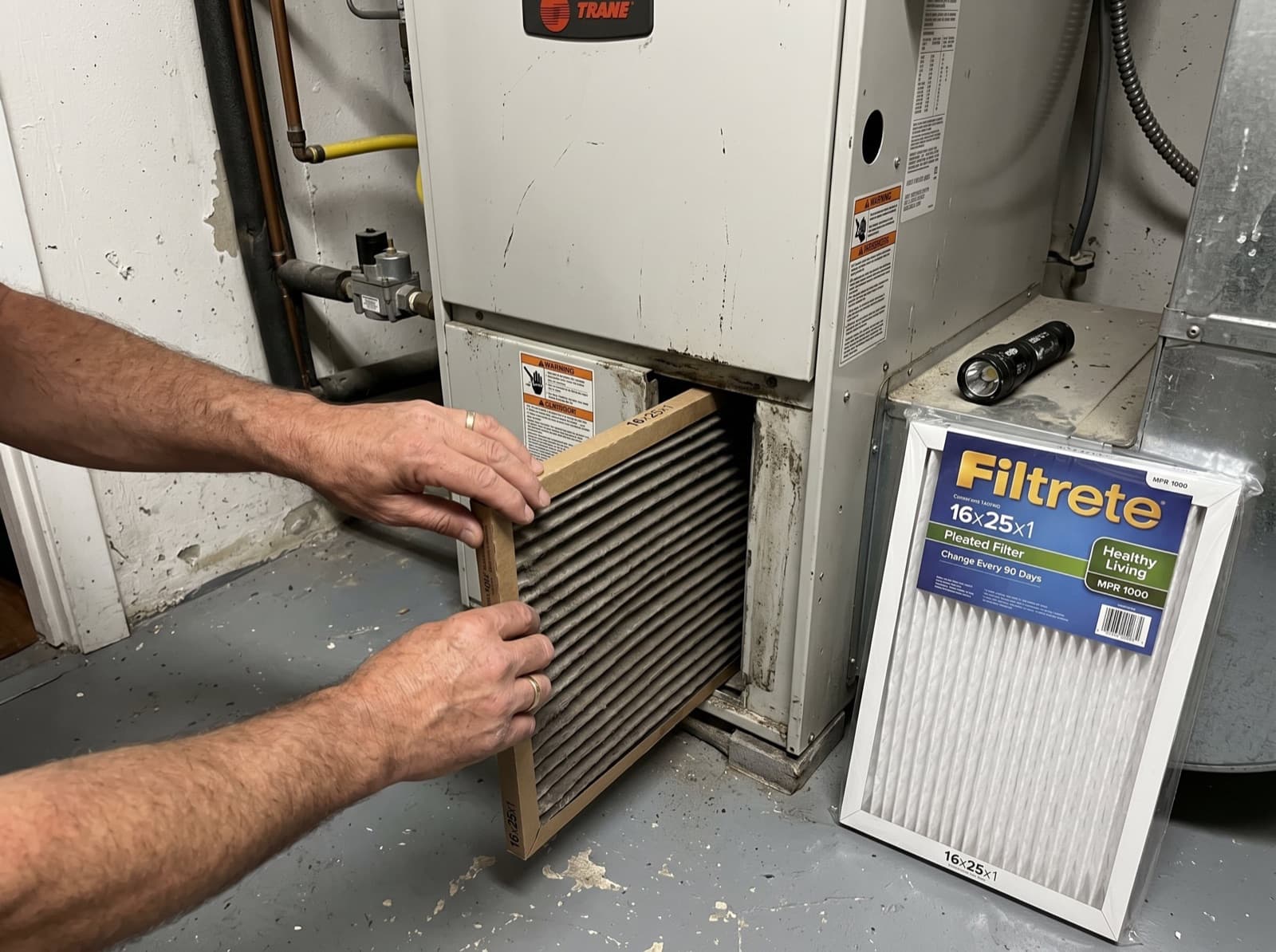
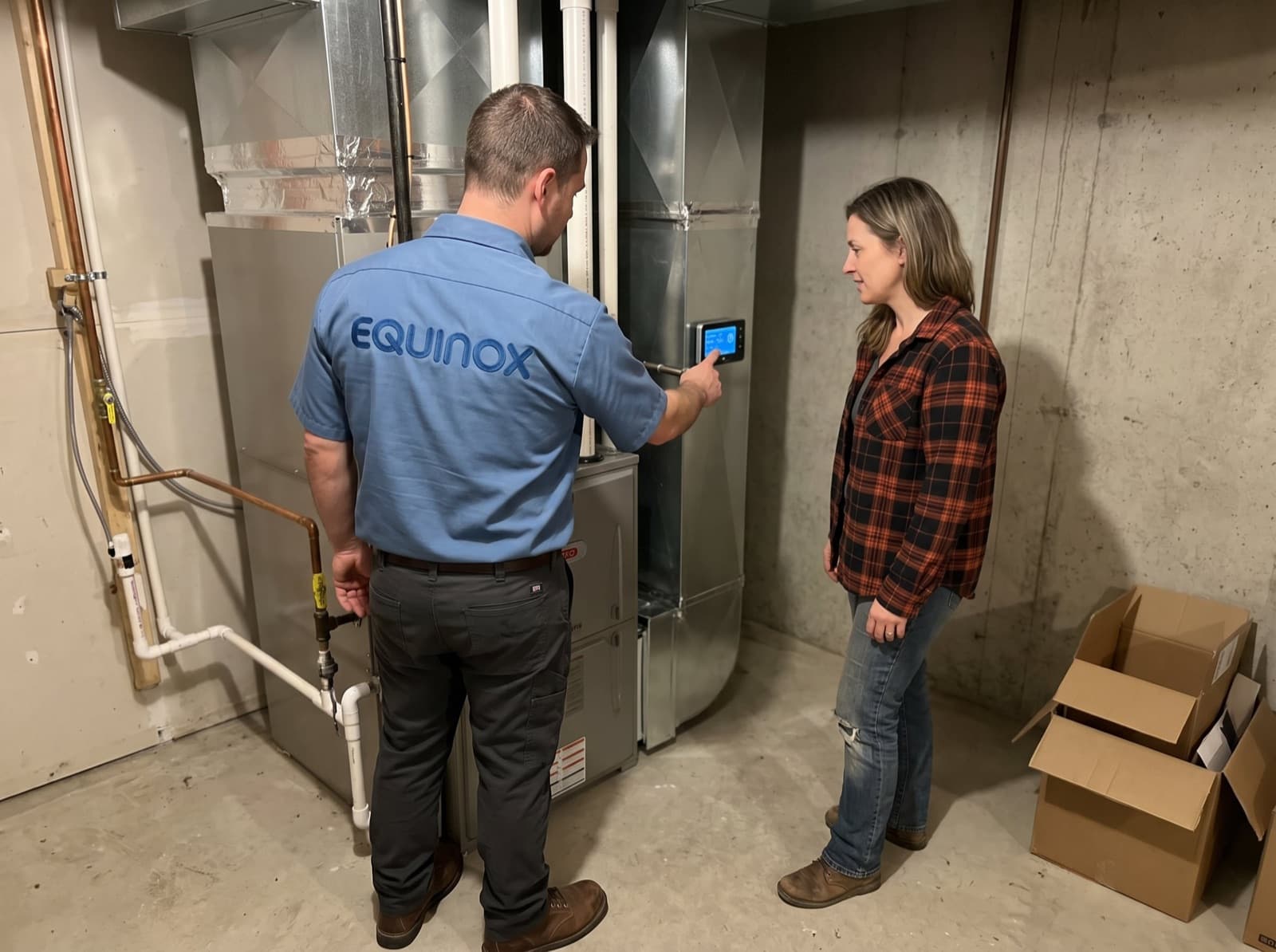
Before the visit ended, I asked what had been checked, what needed attention and which tasks were safe for us between appointments. I asked to see the correct filter access and replacement requirements for our equipment.
If work beyond the planned maintenance was recommended, I wanted the reason and scope explained before deciding. A note that merely said 'all good' would be less useful at the next visit than a clear record of findings.
The chairs stayed out of the basement afterward. That was the only part of the appointment I could honestly claim to have completed myself.