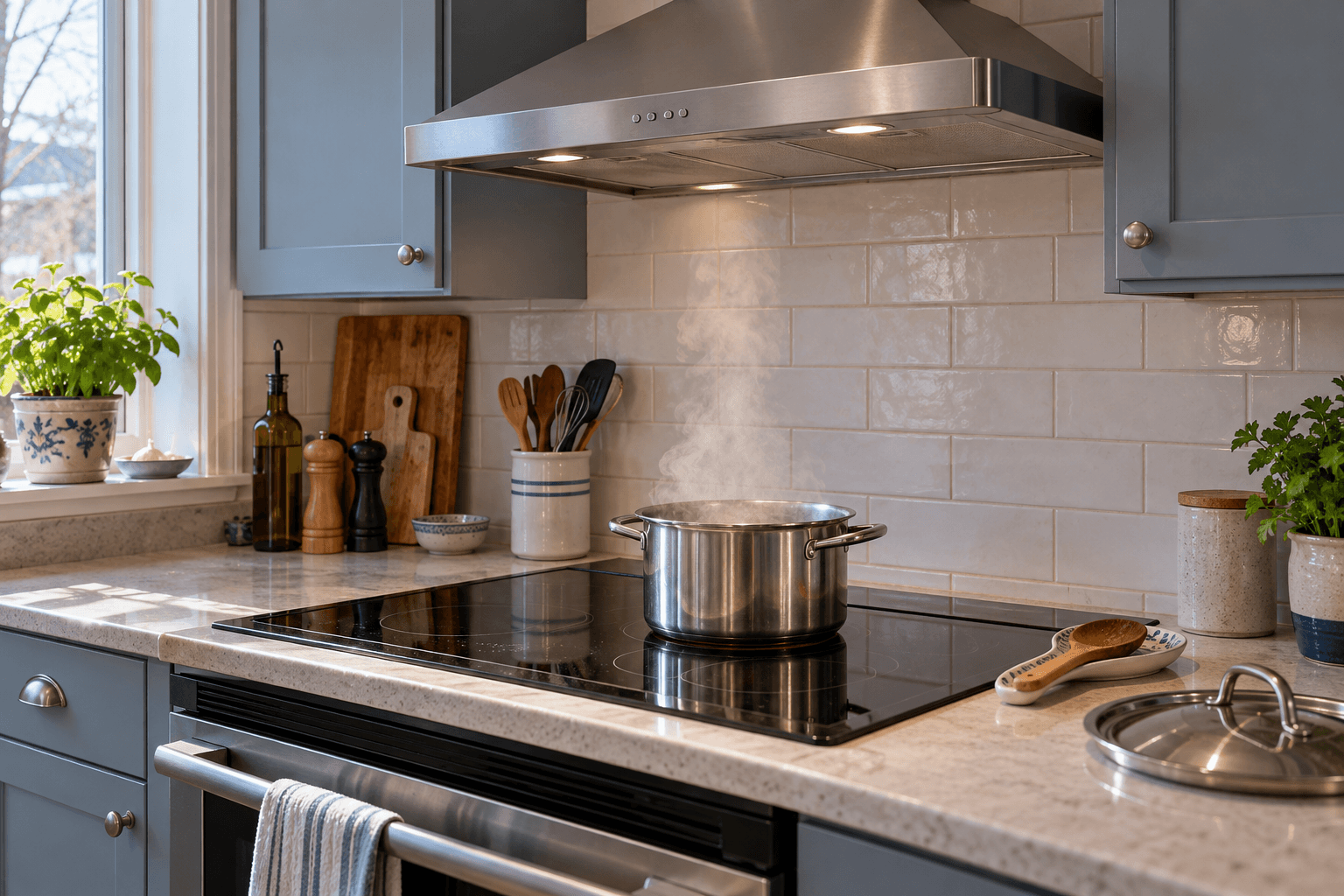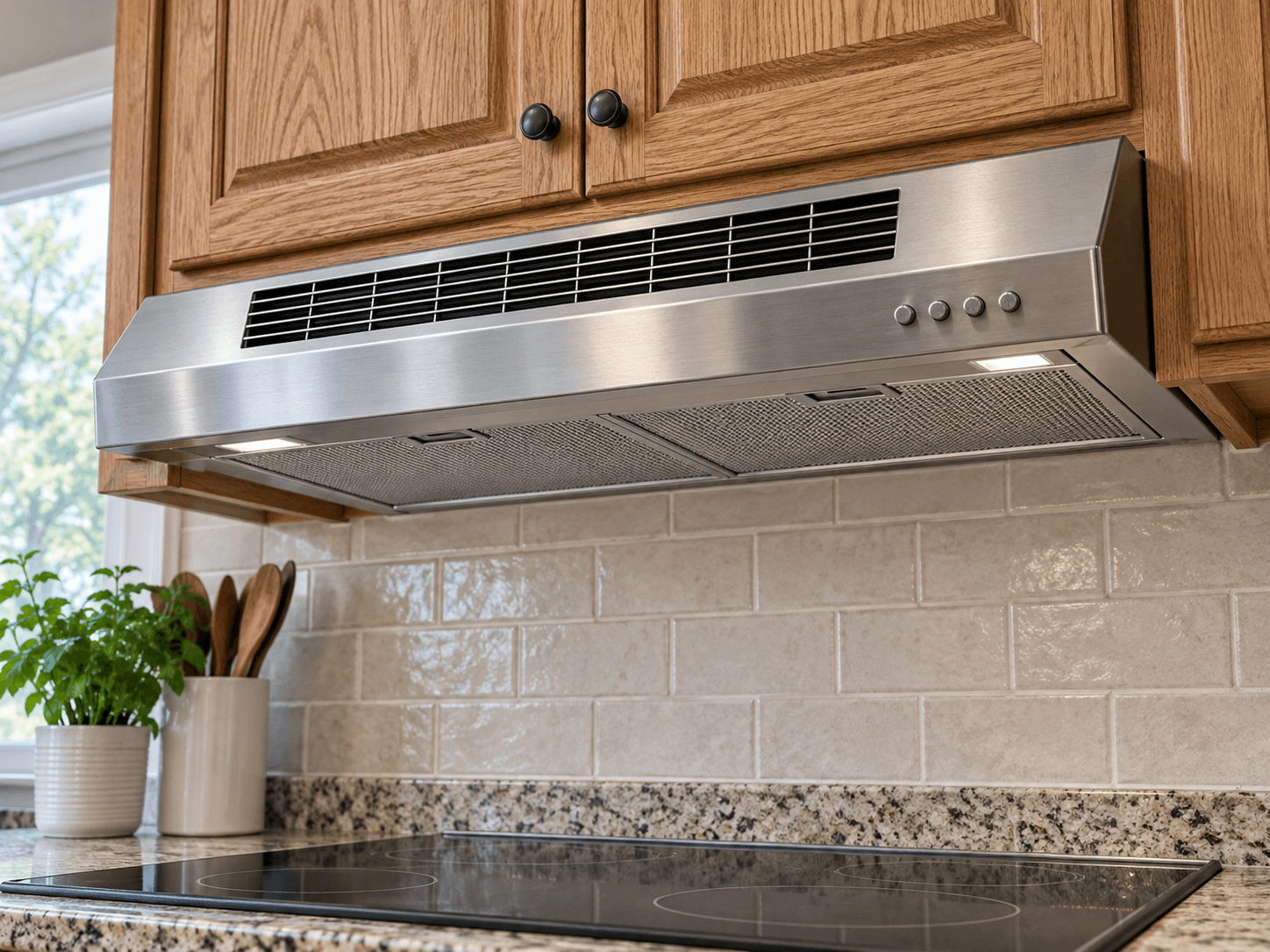

A hood upgrade is easiest to plan before the cabinets close around it. Alongside the hood and exhaust duct, ask where replacement air will enter when the fan runs. That question matters particularly when a powerful hood joins a tightly sealed house.
Air leaving the kitchen has to be replaced
Source: Health Canada: exhaust ventilation and replacement air
An outdoor-vented hood removes indoor air. If the intended supply is inadequate, replacement air can come through unintended openings. Health Canada describes how exhaust systems can depressurize a house and, in some circumstances, draw combustion gases back through a chimney or flue.
That is different from a recirculating hood, which returns air to the kitchen after filtering it. Confirm which arrangement the proposed installation actually uses. A chimney-shaped cover above the stove does not, by itself, prove there is an outdoor duct.
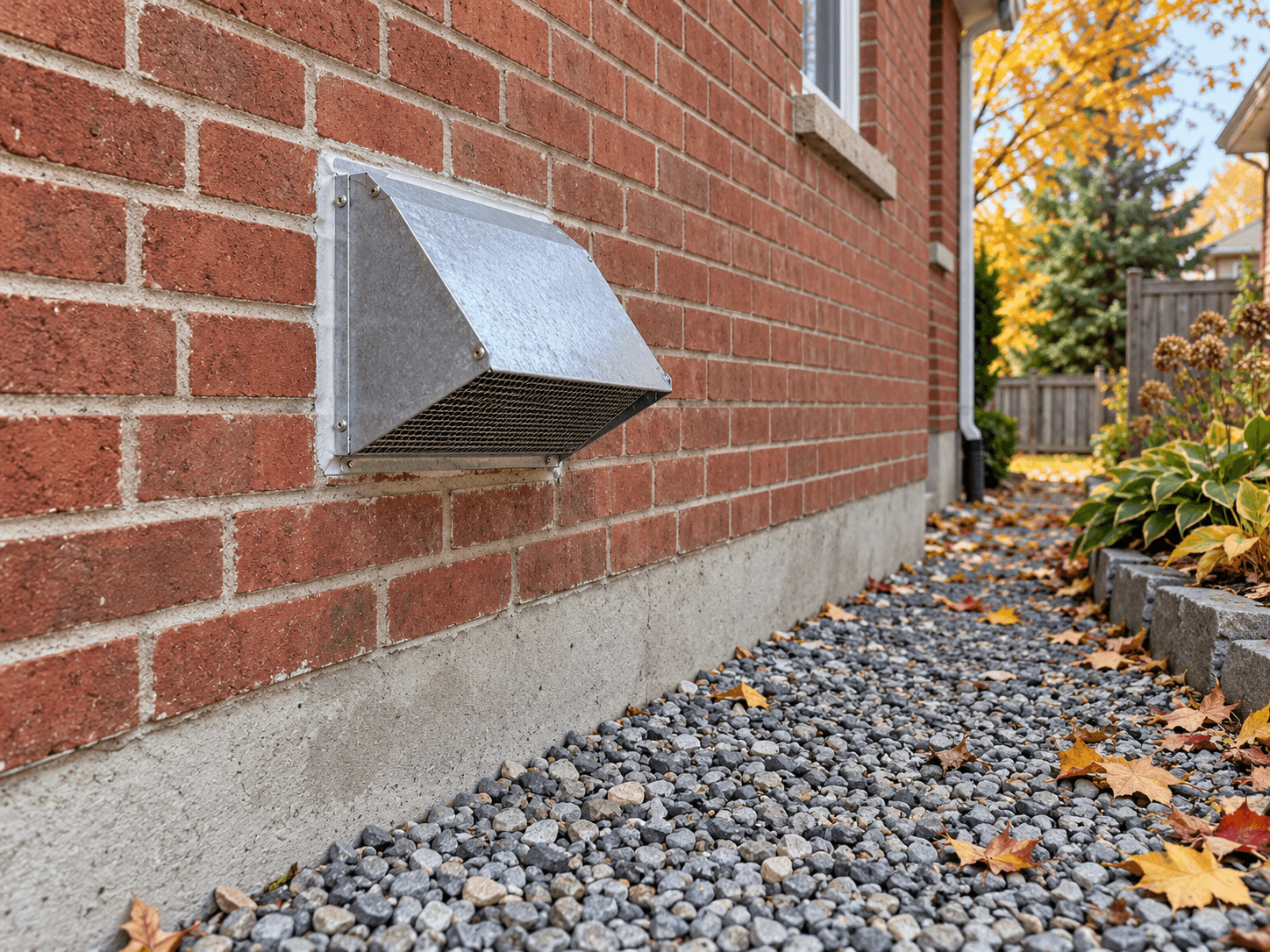
Take the hood model and proposed duct route to the ventilation designer. Include the speeds you expect to use for normal cooking. The nameplate airflow helps describe the equipment; the installed duct, elbows and termination also affect how it performs.
Describe the rest of the house
List the clothes dryer, bathroom fans and any other substantial exhaust equipment. Also identify fireplaces, wood stoves and fuel-burning furnaces or water heaters, including how they vent. NRCan identifies interactions between exhaust fans and naturally vented appliances as a combustion-spillage concern.
Mention recent air sealing, new windows or planned renovations. A kitchen quote prepared before those changes may be based on a different house. The designer needs the combined operating situation, not just the kitchen floor plan.
If a CO alarm sounds, leave immediately and call emergency services from outside. Do not run fans or light a fireplace to test whether spillage happens. A professional can assess the interaction under controlled conditions.
Put the operating details in the quote
Source: Broan-NuTone: an example of an interlocked make-up-air damper
- Where will replacement air enter, and how will it reach the kitchen?
- Does the supply operate automatically with the hood?
- How will cold incoming air be handled without an uncomfortable draft?
- What combustion-safety checks and commissioning measurements are included?
- Which local requirements and manufacturer instructions govern this installation?
Some systems use an interlocked damper that opens when the hood operates; others need a different arrangement. Broan's automatic damper is one equipment example, not a universal prescription for every Canadian house.
Treat a casually suggested open window as a question to resolve in the design. Ask how the system will work on a winter evening when that window stays shut. Have the installer explain the finished controls and leave the operating instructions with the hood manual.