Trace the function, not the cover shape
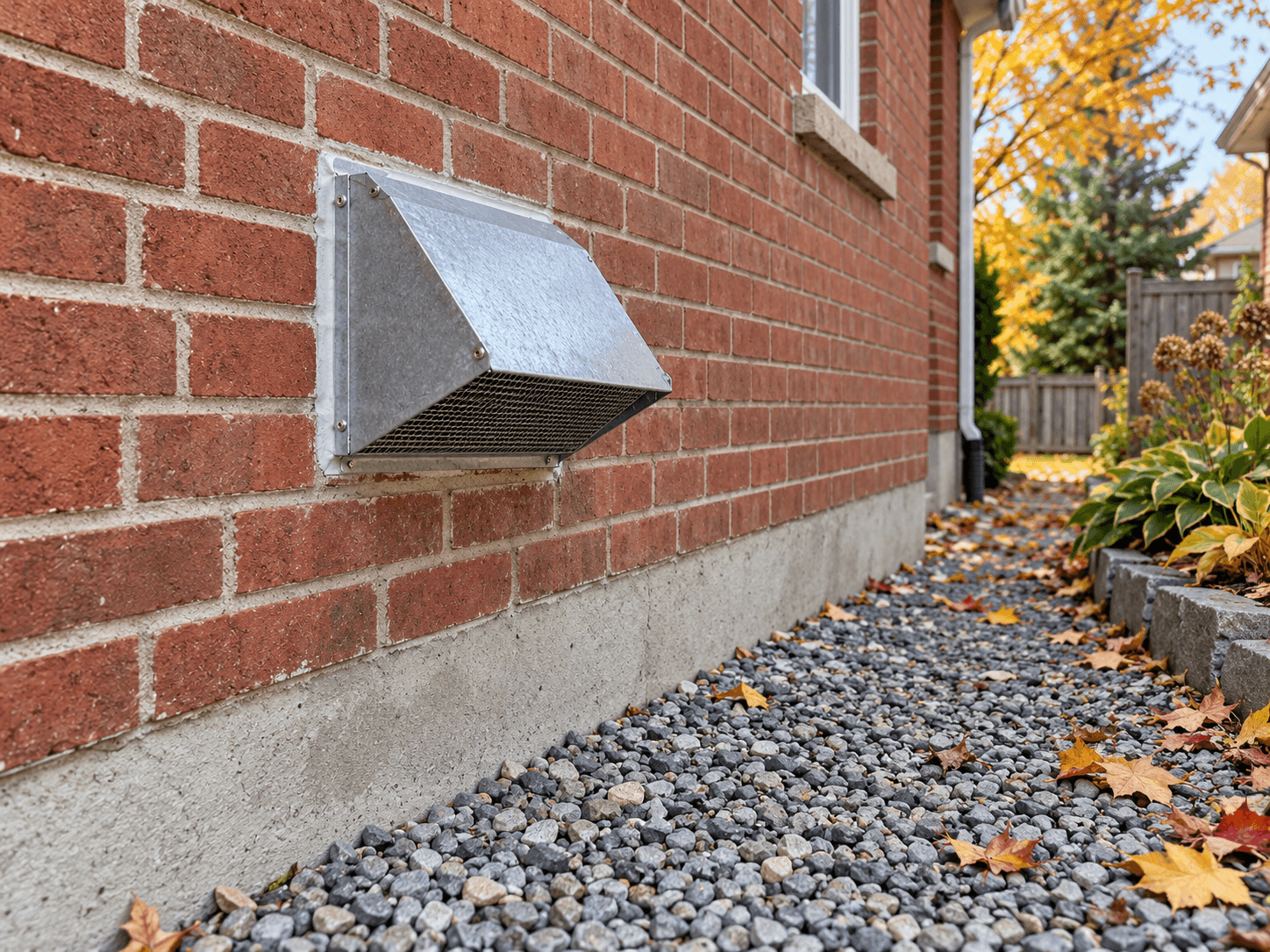
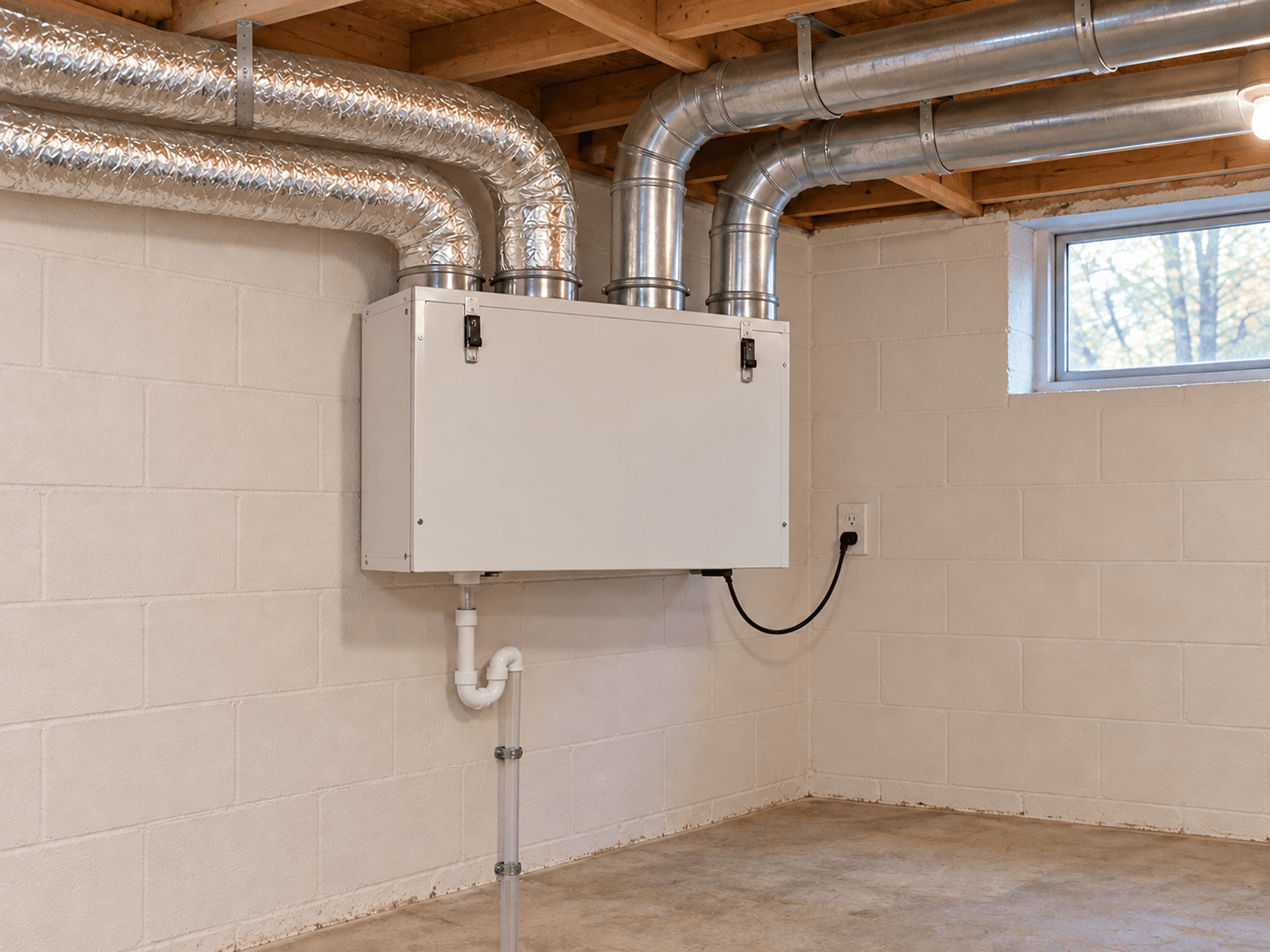
A house may have dryer exhaust, bathroom exhaust, ventilation intake and exhaust, and combustion-appliance vents. Similar weather covers can serve different purposes. Ask the installer to identify the ventilation pair, and keep a photo with the equipment record.
Where ductwork is visible, its labels and connection diagram can help confirm the route. Do not disconnect ducts, cover openings or use a flame or smoke to investigate. If the route disappears into a finished ceiling, the original installer or a ventilation contractor may need to trace it.
The applicable manual and local requirements govern placement. For example, Venmar and vanEE's Constructo/Solo guide specifies separation from exhaust outlets and other contamination sources, as well as clearance above ground. Those model-specific dimensions should not become a universal rule for every type of vent.
Review what happens around it
Health Canada's ventilation guidance identifies outdoor pollutant sources near intakes as a concern, including barbecues. Keep combustion equipment and its exhaust away from the incoming-air path. An open window nearby also deserves consideration.
- Move bins, stored materials and movable planters away from the intake's required clear space.
- Keep leaves and snow from covering the opening, using only safe ground-level access.
- Include the intake in plans for a deck, fence, driveway or outdoor cooking area.
- Report recurring exhaust odours or contamination rather than masking the smell indoors.
A seasonal change can matter even when the hood has not moved. A snowbank may rise in front of it, a vine may cover the screen, or a new fence may change the surrounding space. Take a fresh look after landscaping and exterior work.
A screen cannot correct poor placement
An intact intake screen helps keep larger debris out; it is not a complete filter for smoke or gases. Do not add fabric, a finer mesh or a homemade cover without the equipment manufacturer's approval. Extra resistance can alter airflow.
If the intake is beside an unavoidable pollution source, ask for a location and system review. Give the contractor photos, the source's operating times and the ventilation model. Moving a hood can require changes to ducts, weather sealing and system balance.
For regional wildfire smoke, use the home's smoke-day plan and current public-health advice. That is a different situation from a barbecue beside the wall, but both start with knowing where outdoor air enters.