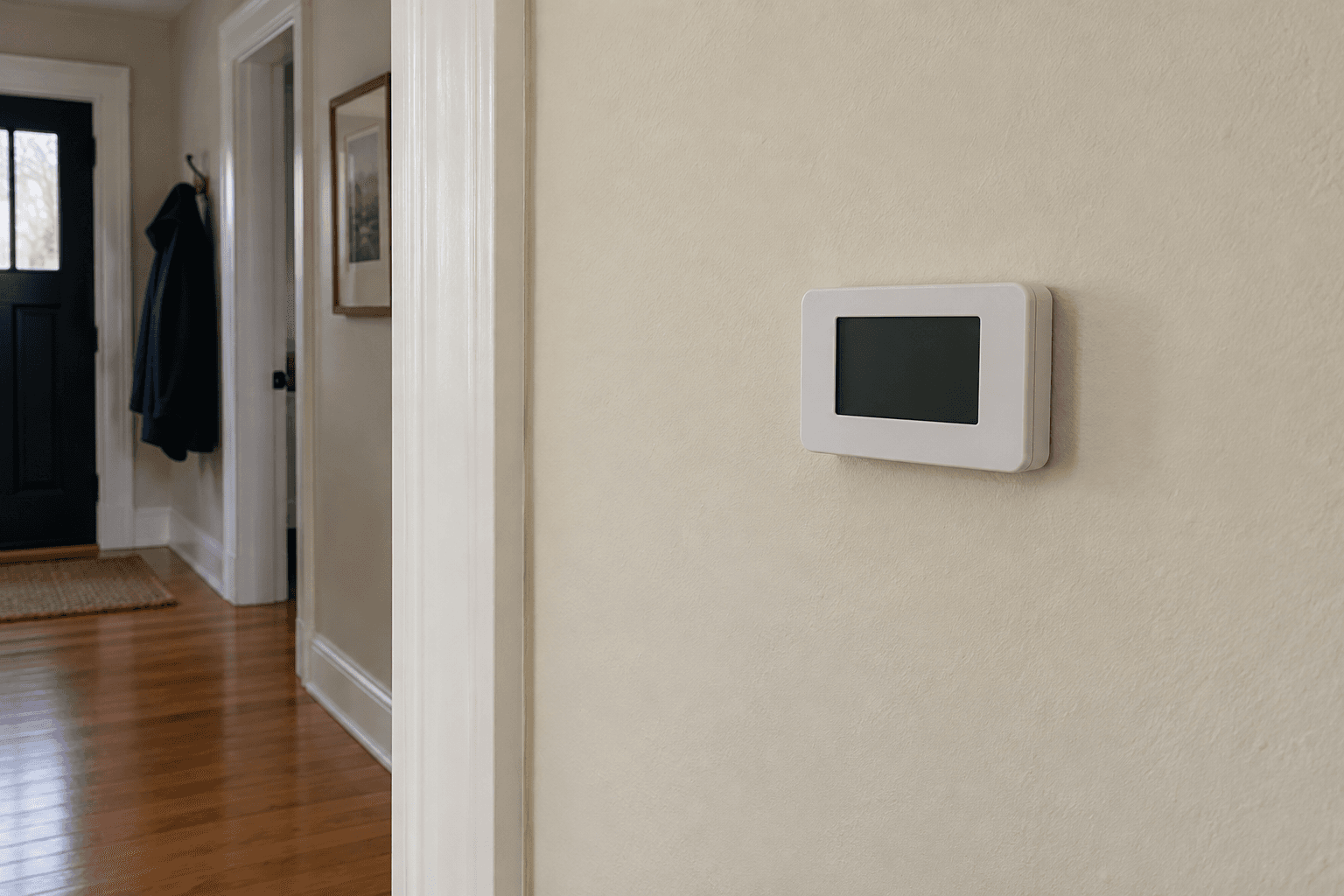
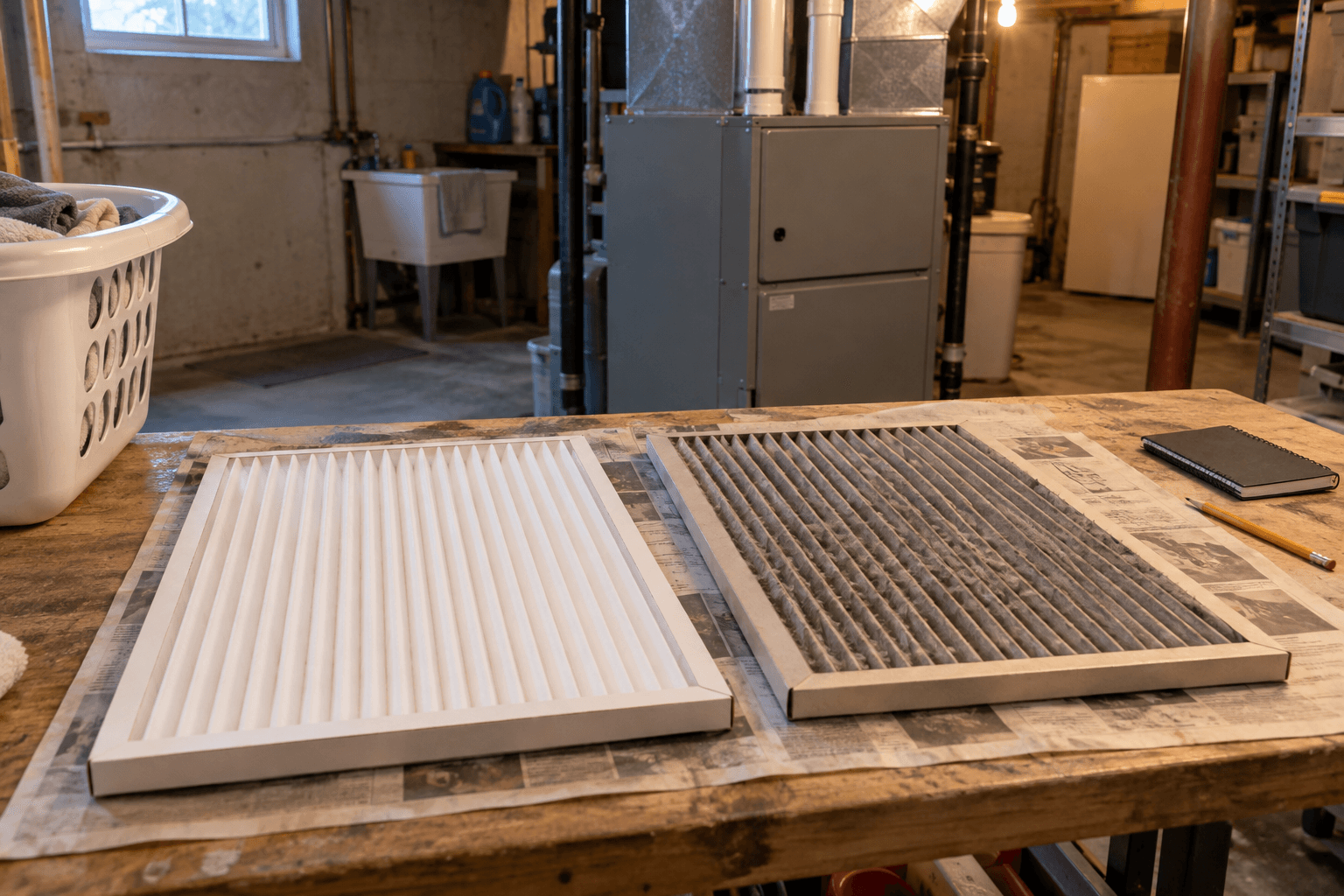
I had replaced the furnace filter faithfully and still forgotten an entire appliance. The ventilation unit hung over the laundry sink, with a service sticker from before we moved in. Its filters had never appeared on my shopping list.
I found the manual using the unit's model number. That mattered because a neighbour's instructions involved washing a core, while ours specified a different care routine. Similar-looking boxes were not enough reason to copy the procedure.
Separate routine care from service work
Source: Natural Resources Canada: heat recovery ventilator operation and care
Natural Resources Canada's HRV guide describes filter care, exterior intake and exhaust checks, condensate drainage where fitted, and professional servicing. The equipment manual determines which parts an owner may remove, how to isolate power, and which components may be cleaned or washed.
I made a small checklist from our instructions and left space for dates. I didn't add chemicals, pressure-wash a core or reach into fans. A component that cannot be cleaned by the specified method needs the manufacturer's next step, not more force.
From ground level, I could check that leaves and snow had not covered the outdoor openings. I couldn't see the whole duct route or measure balanced airflow.
What went into the household folder
- The unit and wall-control model numbers.
- Approved filter references and the manual's care intervals.
- The date of cleaning and any visible water or unusual noise.
- The technician's airflow and operating checks.
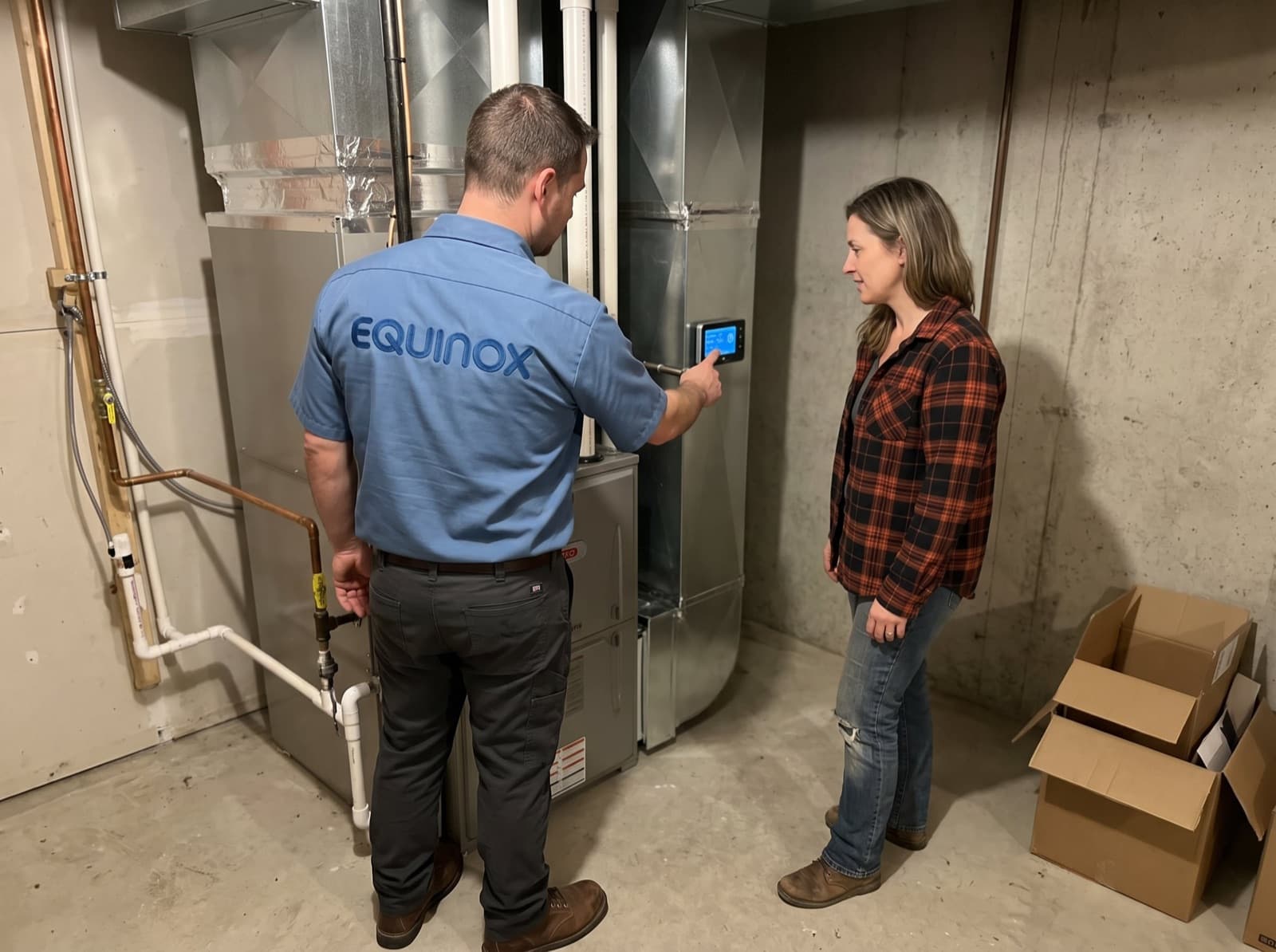
We booked service for the unknown history and asked for the drain, controls and balance to be checked. Afterward, I put the ventilation reminder beside the furnace reminder.
The reward was mostly administrative: the next maintenance visit began with a clear record. I no longer had to point vaguely at the laundry-room ceiling and say that something up there moved air.