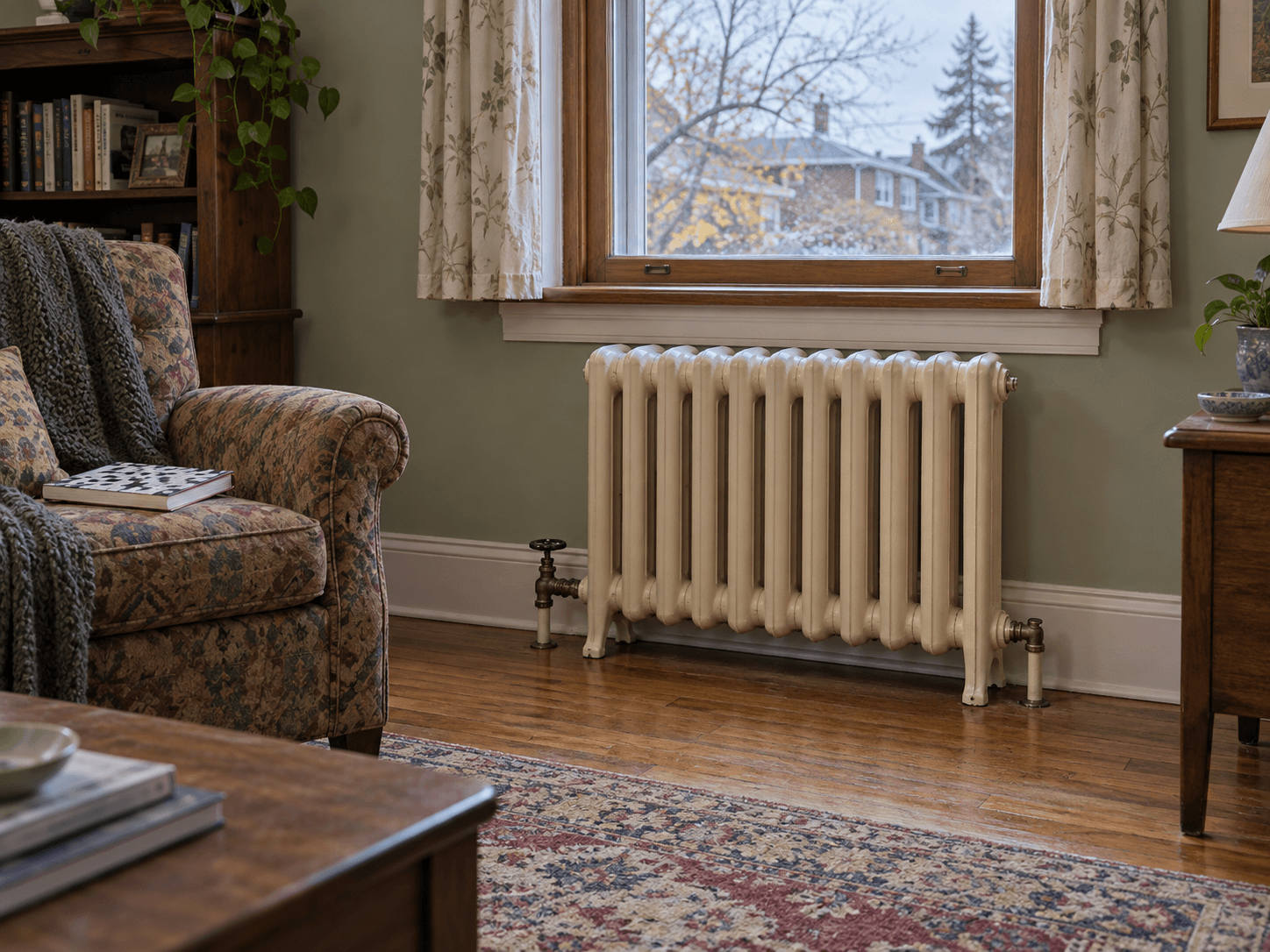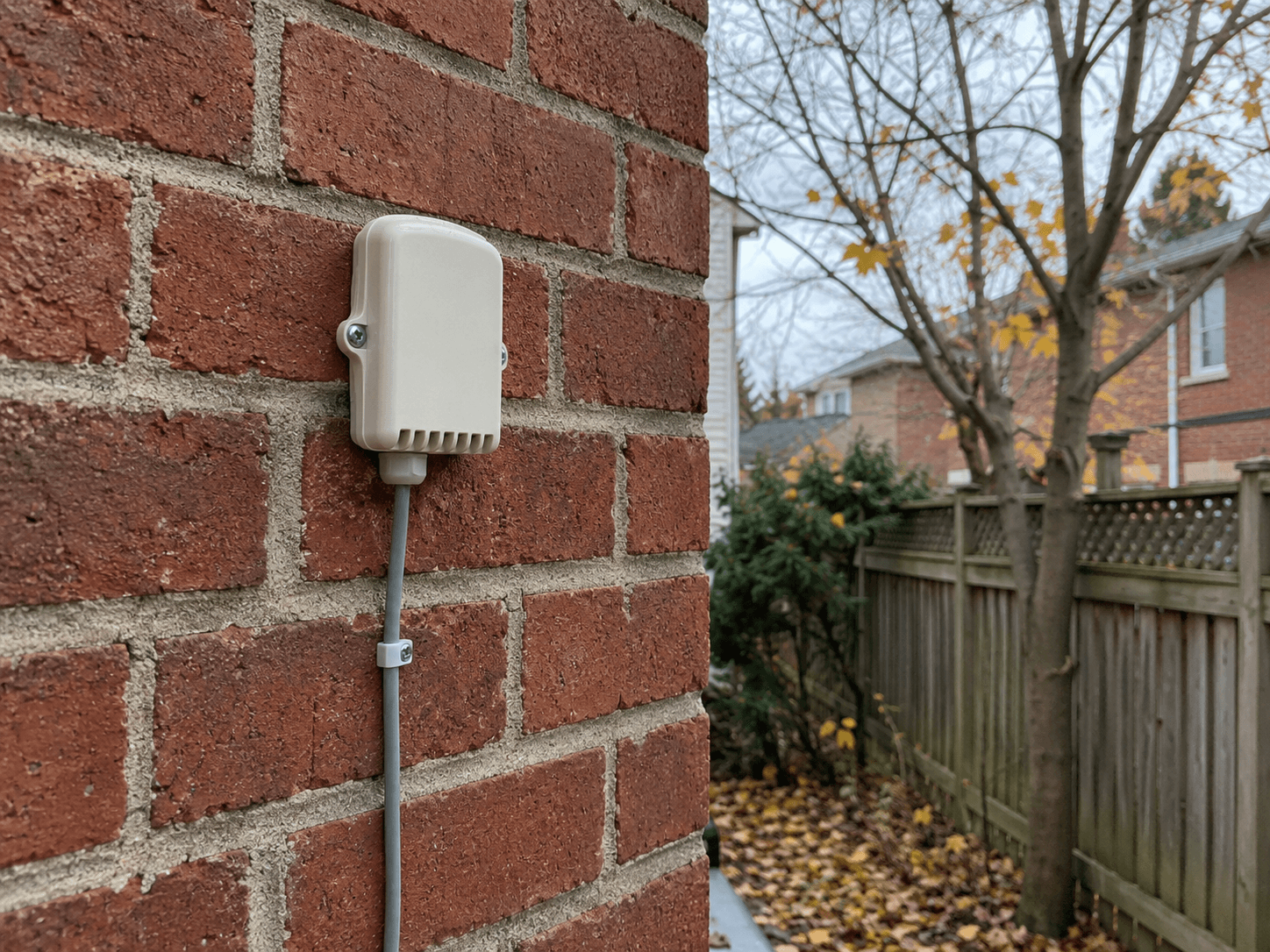
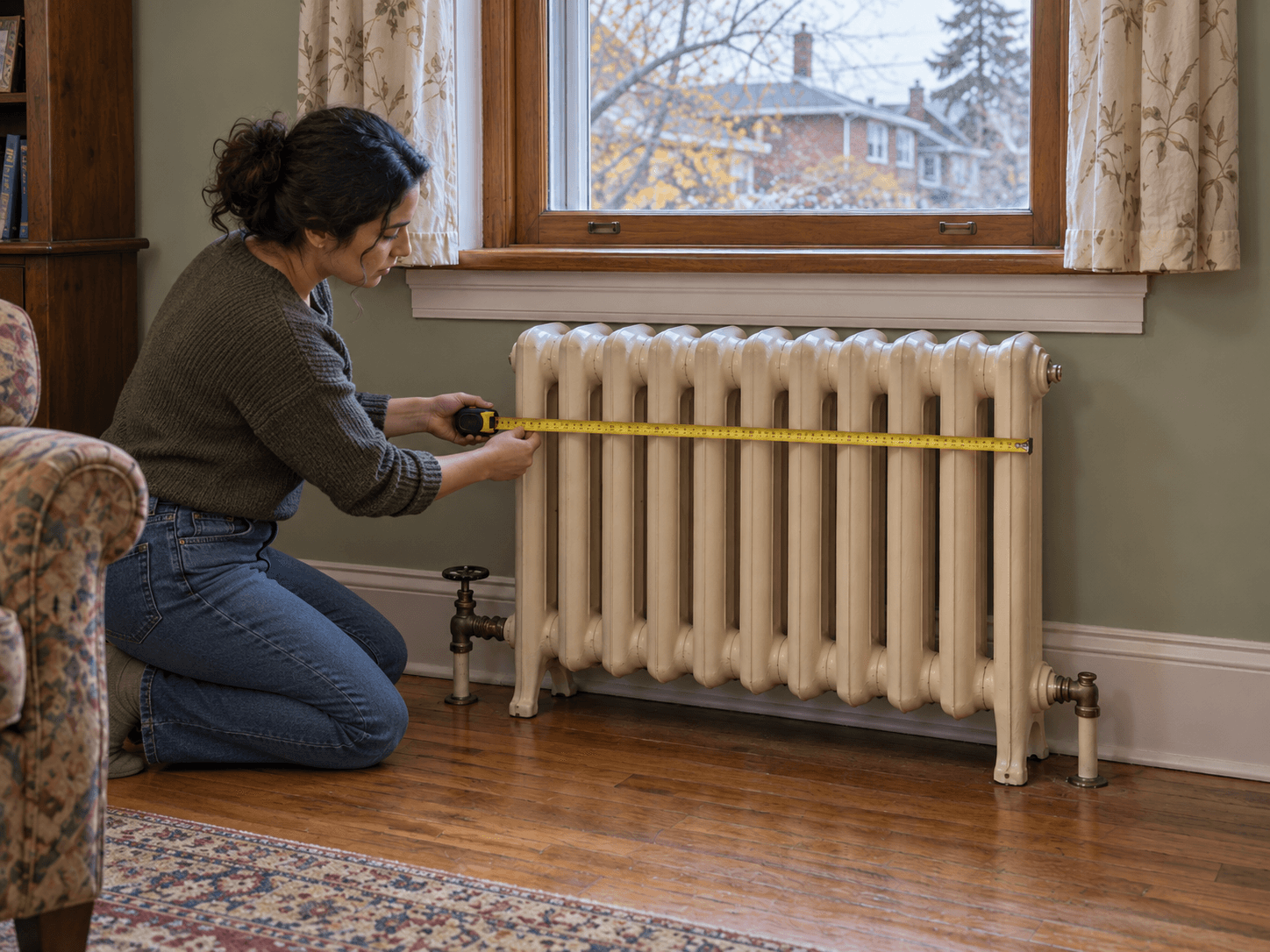
The cast-iron radiator under the front window had outlasted three sofas. I was willing to discuss replacing the boiler. I was less willing to hear that every radiator had to go before anyone had measured one.
Keeping them was not a promise I could make either. I needed to know how much heat each room required and what its radiator could deliver with the proposed system.
Ask about a water-based heat pump
An air-to-water heat pump transfers outdoor heat into a hydronic circuit. That is different from a ducted air-to-air system or a wall-mounted mini-split. A house with radiators needs a proposal that addresses its water distribution, not a quotation based only on the absence of ducts.
I first confirmed that ours were hot-water radiators. Steam equipment needs a separate assessment; a familiar cast-iron shape does not establish what runs through it.
The room and the radiator must be checked together
Radiator output changes with water temperature. Caleffi's technical guidance describes evaluating existing cast-iron emitters from their type and dimensions, then assessing their output at lower temperatures. The old boiler's ability to make them very hot did not settle that question.
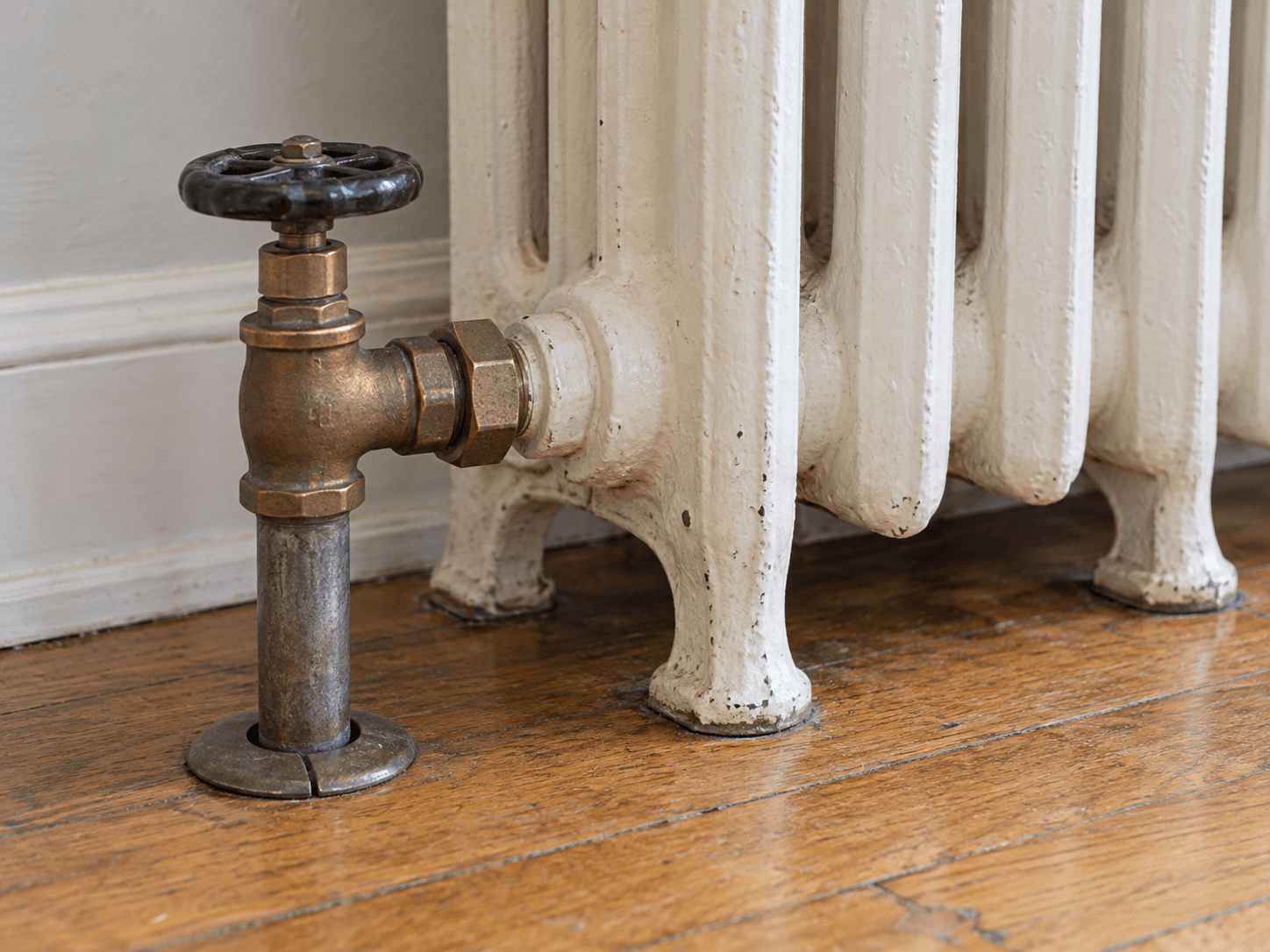
I asked for a room-by-room heat-loss calculation and an emitter schedule. For each room, I wanted to see the required heat, the assumed water temperatures and whether the existing radiator was adequate. The smallest upstairs radiator deserved its own answer.
Where there was a shortfall, the options could include reducing the room's heat loss or changing its heat emitter. That was more useful than assuming that every radiator must be replaced, or that keeping every one was free of consequences.
Keep temperature and efficiency in the same conversation
Source: Caleffi: water temperature, emitter output and heat-pump efficiency
Lower heating-water temperatures generally help heat-pump efficiency, provided the emitters can maintain comfort. I asked for the proposed unit's capacity and performance at our winter conditions and design water temperature. A headline rating at different conditions was not the comparison I needed.
- Which radiators and pipes can remain, and what work is required?
- How will controls, flow and any backup heat work together?
- Where will indoor equipment fit, and how will outdoor sections be protected from freezing?
- Does domestic hot water need separate equipment?
Cooling was another design question. I did not assume that sending chilled water through old radiators would provide ordinary air conditioning. Condensation management and suitable cooling emitters need their own plan.
I kept my tape-measure notes as a starting inventory, not a design calculation. The radiator could stay on my wish list. Whether it stayed in the room would depend on the assessment.