A new house can hand you a thermostat, six heavy radiators and a folder full of manuals for appliances that left years ago. Start by working out what heats the rooms. That one piece of information makes the rest of the maintenance list much more useful.
The word 'furnace' gets used casually for almost anything in a basement that makes heat. Before ordering a filter, booking a service or following an online reset procedure, find the actual equipment name and model. A photograph of the closed cabinet and its accessible identification label is more useful than a confident guess.
Follow the heat into a room
Source: Natural Resources Canada: Heating with Gas, hydronic systems
A forced-air furnace heats air and sends it through ducts to supply registers. A hot-water boiler heats water that circulates through pipes to radiators, finned baseboards or tubing in a floor. Those surfaces transfer heat into the room. The water normally returns to the boiler to be heated again.
In an accessible basement, a boiler will usually have several water-pipe connections and associated controls. A forced-air appliance has substantial supply and return ductwork. You can look at those external features without opening a combustion compartment, removing electrical covers or following a pipe into a crawlspace.
A radiator does not identify the whole system
Source: U.S. Boiler: radiator products for hot water and steam
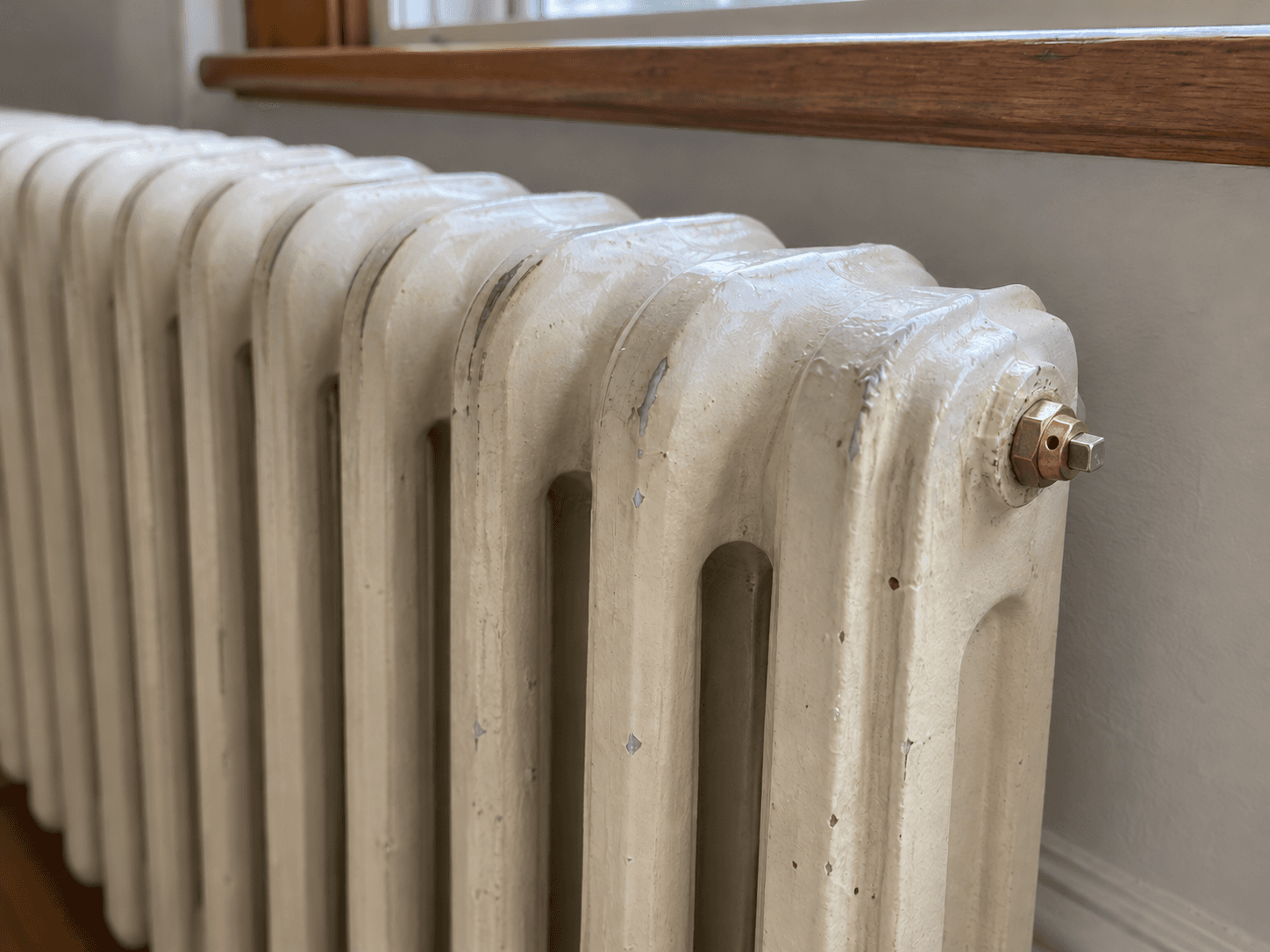
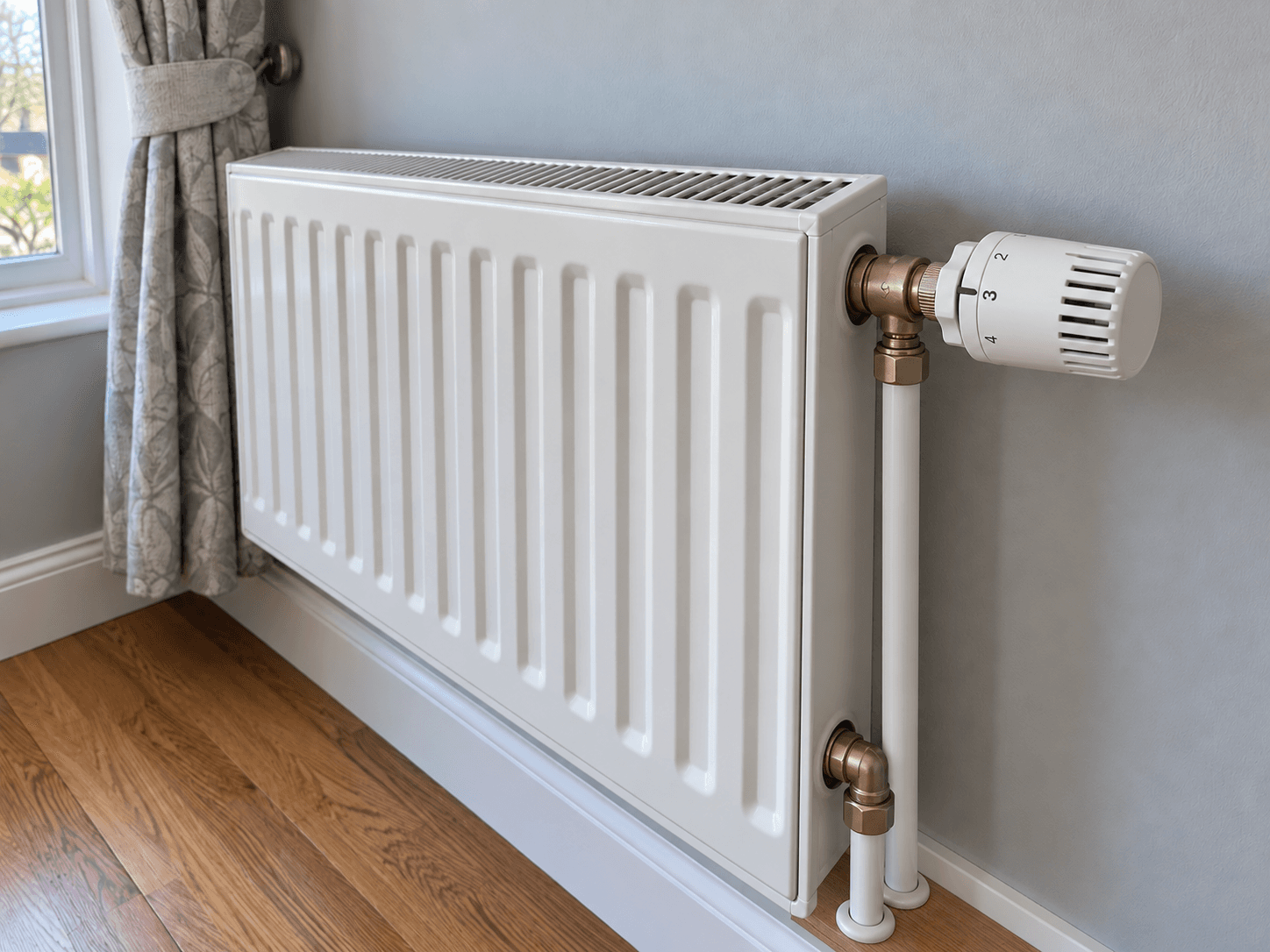
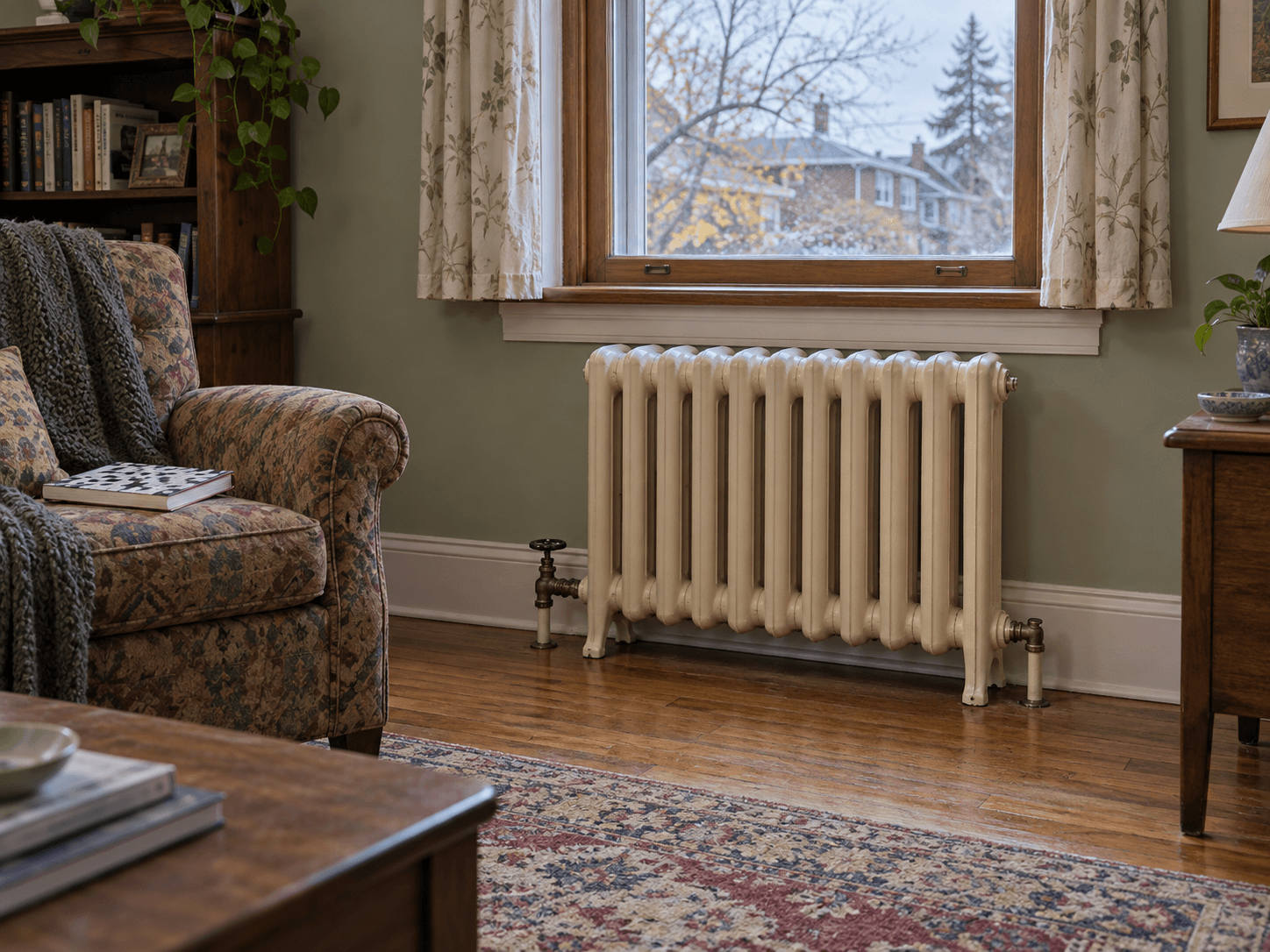
Cast-iron radiators can belong to hot-water or steam systems. Some newer heaters that look like radiators are electric. A home may also combine systems: a boiler for the original rooms, an electric bathroom floor and a ductless heat pump in an addition. Count the controls as well as the appliances.
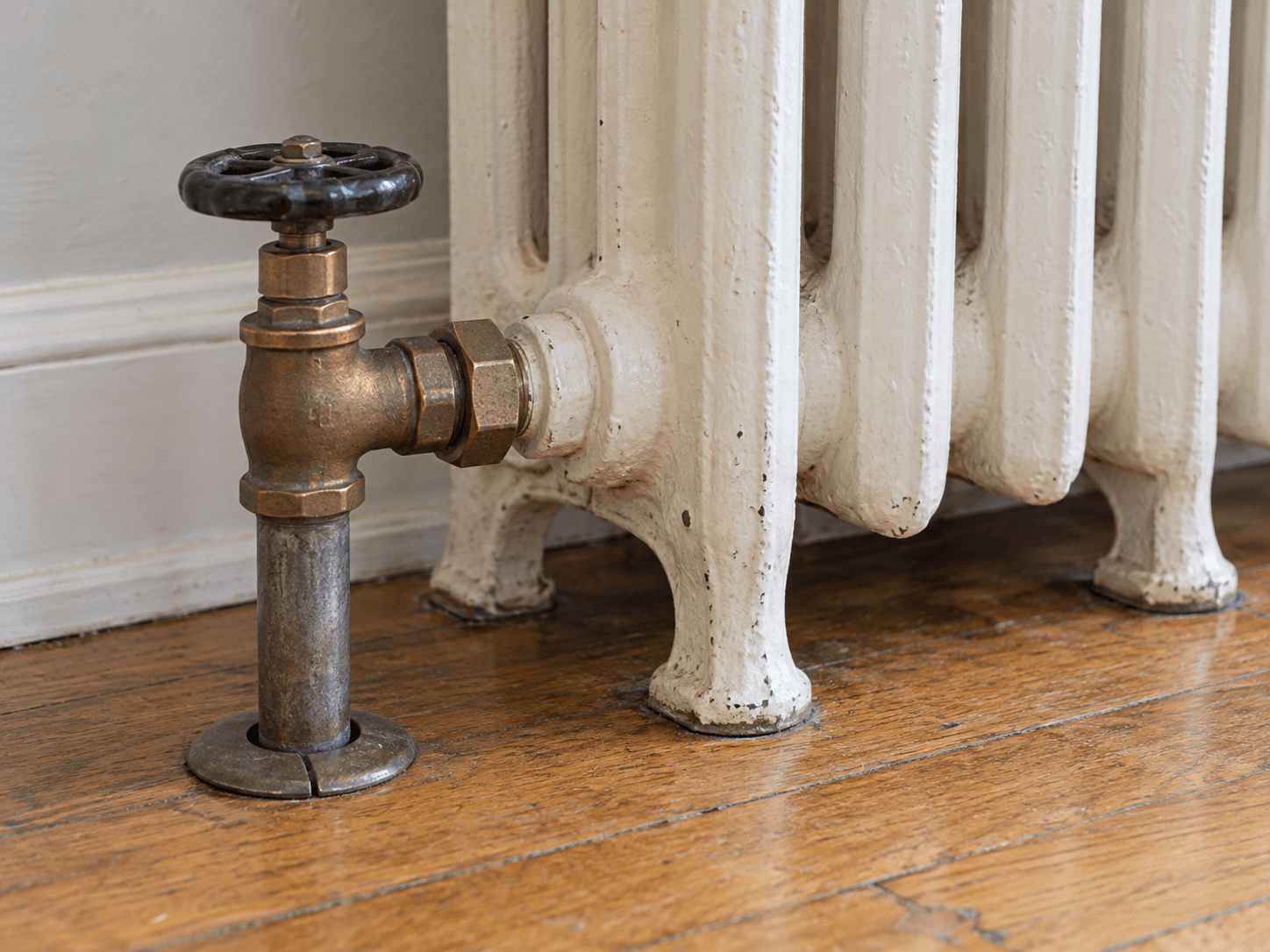
If you cannot confirm whether the system uses water or steam, have a heating professional identify it. Do that before following radiator-bleeding instructions or turning unfamiliar valves. A handwheel, air vent and large pipe union perform different jobs; resemblance is not permission to loosen one.
Build the maintenance list around what is installed
A radiator circuit does not have a furnace's disposable air filter. There may still be filters elsewhere in the house, including a separate ventilation unit or air conditioner. Ask the previous owner or contractor to show you each serviceable item and its instructions instead of assuming that one annual appointment covers everything.
- Record the boiler model, fuel and service contact, plus the date of its last documented service.
- Mark which thermostat controls which rooms. Include any local radiator controls without changing them yet.
- Ask whether the boiler also heats domestic tap water, and which seasonal settings preserve that service.
- Have the contractor explain the normal pressure indication, the shutdown procedure and symptoms that need prompt attention.
- Keep radiators accessible for cleaning and inspection; leave their valves, vents and pipe joints visible.
Keep the answers in one household equipment folder. A simple room sketch can beat six disconnected photographs: living-room radiator, bedroom radiator, bathroom floor, and the control beside each. Add the manuals for the equipment actually present.
You do not need to learn boiler servicing to own a radiator-heated home. You need a reliable map of the system, the correct owner instructions and someone qualified to handle its water, combustion and electrical parts. Then the first cold morning can be about finding your slippers rather than finding a filter slot that never existed.