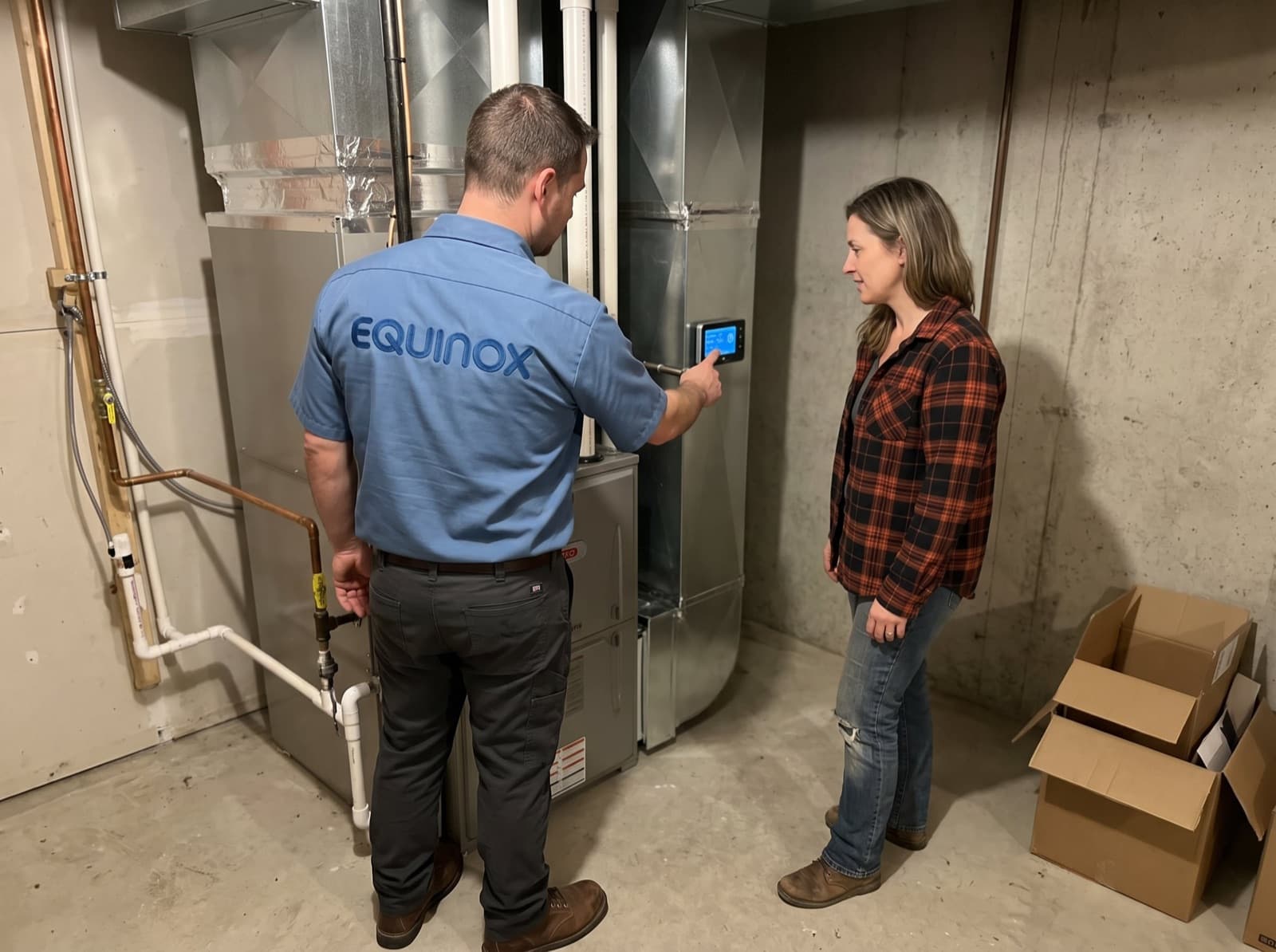

If attic insulation, air sealing and a heating-system replacement are all planned, tell each contractor about the other work. A house improved before installation may need different equipment sizing from the house assessed months earlier.
The practical goal is a coordinated sequence, with clear assumptions in the load calculation and equipment proposal.
Decide which version of the house is being sized
Source: Natural Resources Canada: air-source heat pump sizing and selection
Natural Resources Canada's heat-pump sizing guide treats the building load as part of equipment selection. Improvements that reduce heat loss can change that load and the appropriate balance between heat-pump capacity and backup heat.
Ask whether the calculation describes current construction or completed planned upgrades. If it assumes future work, identify the insulation levels, air-sealing assumptions and timing explicitly.
Avoid sizing against an optimistic renovation plan that has no schedule or funding. Equally, copying the old equipment size after substantial improvements may miss the benefit of a fresh assessment.
Questions for both contractors
- Which improvements should be completed before final sizing?
- What evidence will confirm the completed work?
- Will ventilation need assessment after air sealing?
- What happens if the renovation is delayed?
- Does any rebate program require steps before either project begins?
Comfort defects also deserve direct attention. A poorly insulated room over a garage or an inadequate return path may need a targeted repair even with new equipment.
If a failed heating system makes replacement urgent, explain that constraint. The contractor can discuss a practical selection based on the actual house and realistic planned changes, with the tradeoffs documented.
Keep the final assumptions with the installation records. They help future service or renovation decisions make sense.
Coordinating the work gives each purchase a better foundation: the building improvements reduce the demand, and the equipment is selected to serve the house you will actually have.