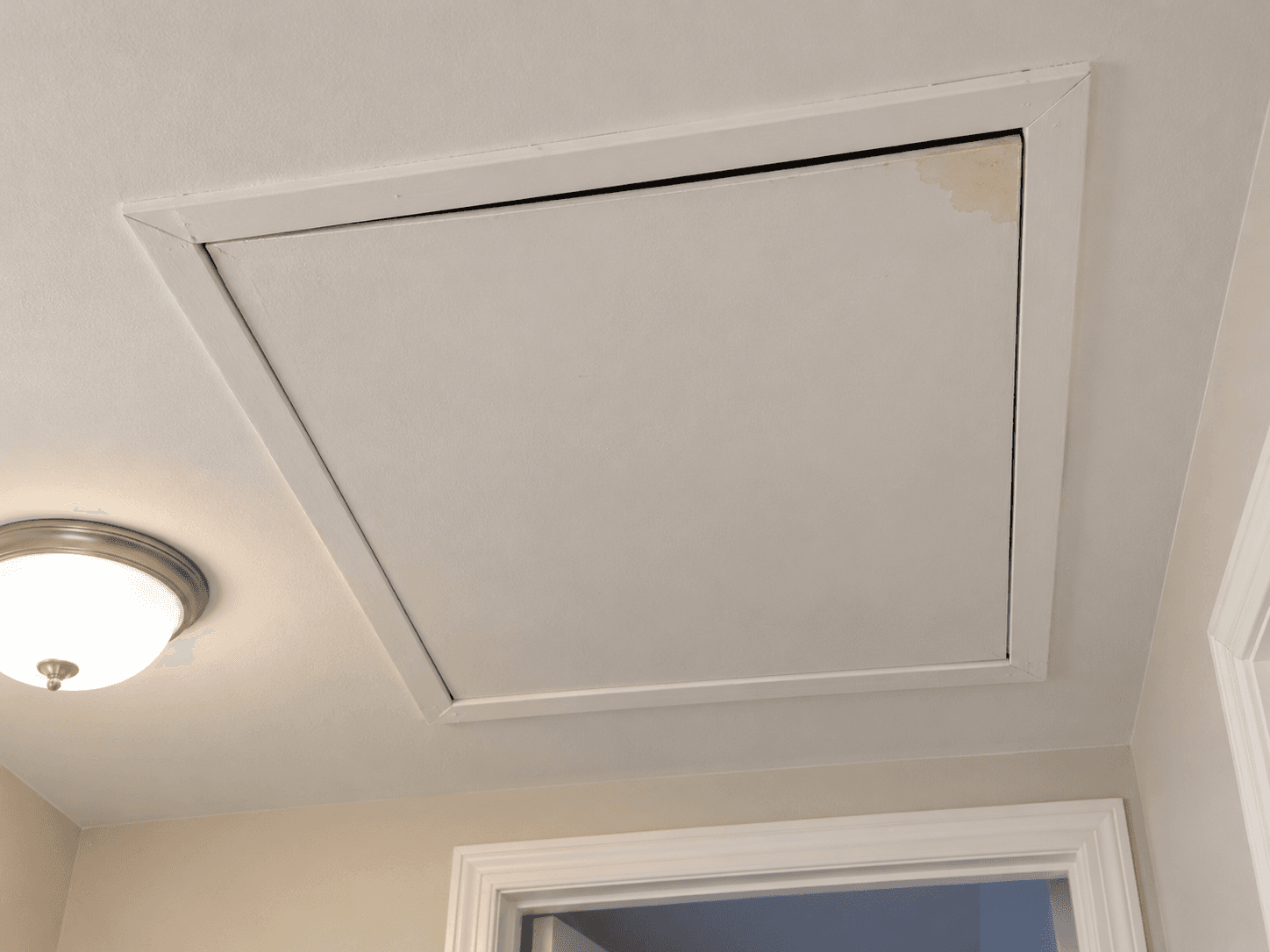
The access panel above the hallway rarely gets attention unless something has to go into the attic. Yet its edges are part of the boundary between warm indoor air and the cold roof space. A lid that sits loosely can leave a route for heat and moisture.
Think about the panel and its perimeter
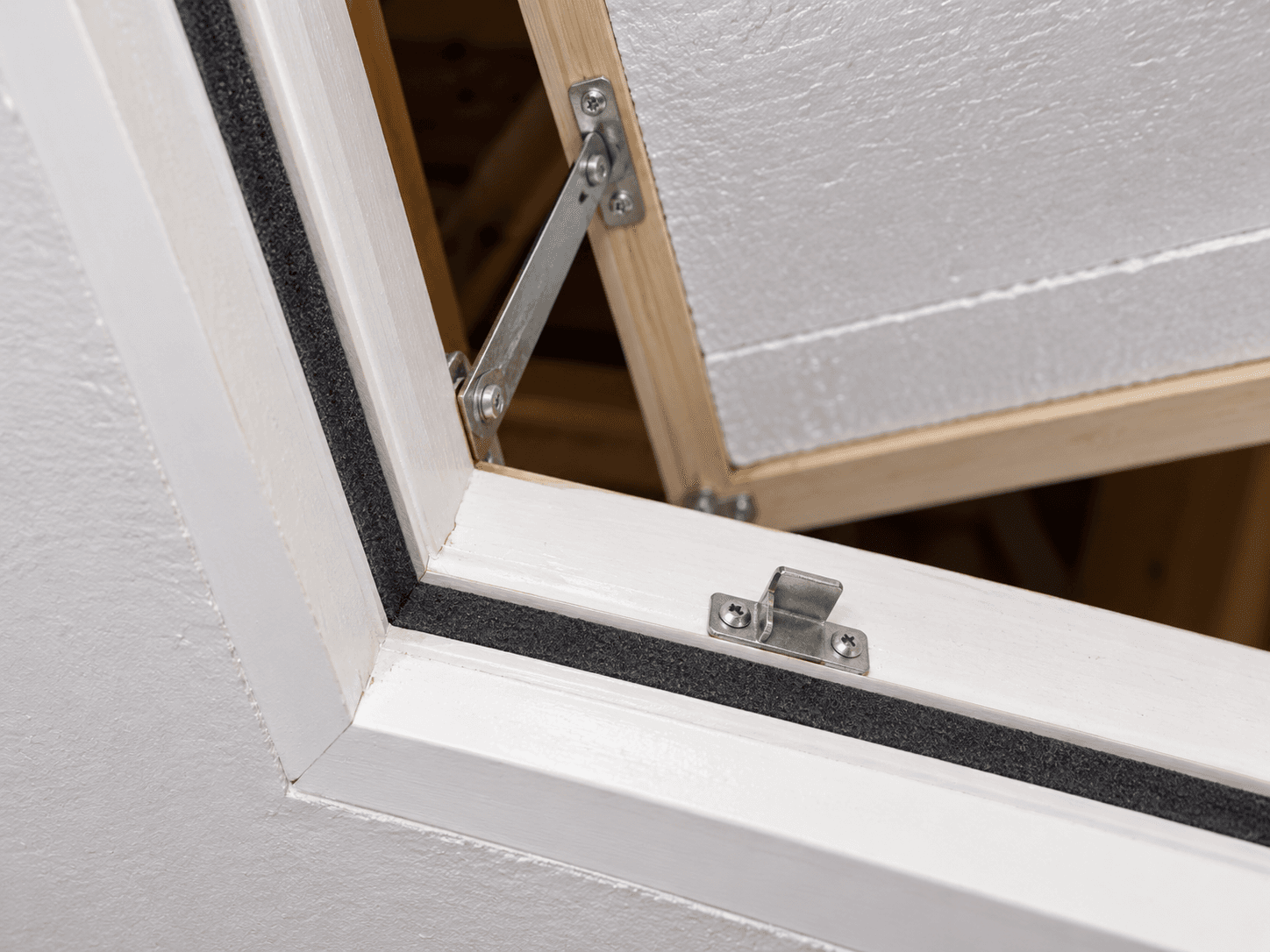
Natural Resources Canada's air-sealing guidance describes an attic hatch with a sealed frame, weatherstripping, a latch that holds it against the seal and insulation on the panel. Each part has a different job.
An insulated lid can still leak around its edge. A strip of weatherstripping will not help much if the panel does not meet it consistently. The assessment should consider the fit and closing pressure as well as the visible insulation.
From the room below, note an uneven gap, a damaged latch, staining or a panel that no longer closes normally. Keep photographs and explain when the change appeared. Do not force a warped or damaged panel into position.
A wet attic needs more than another vent
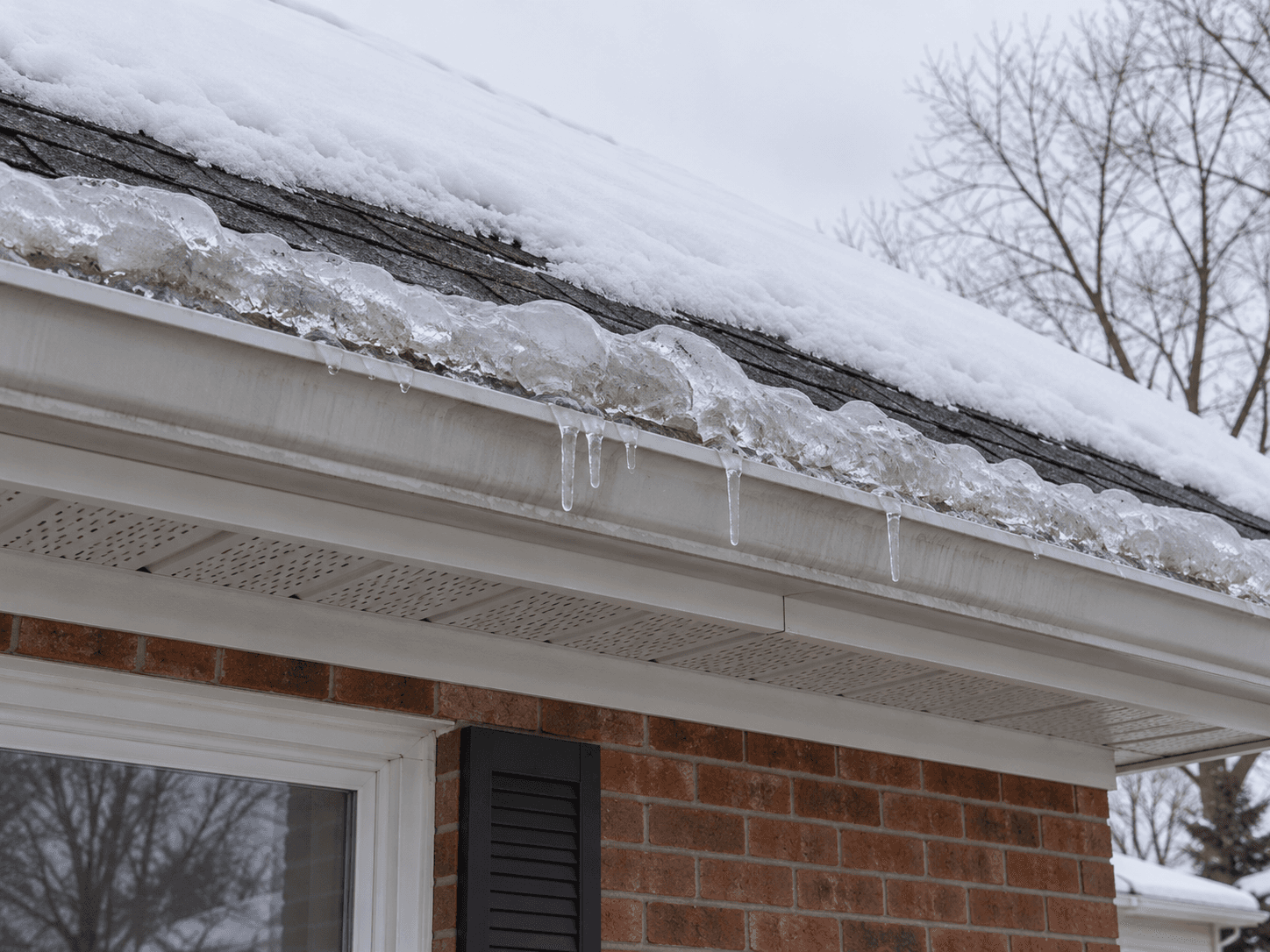
Indoor air leaking through ceiling openings can carry moisture into a colder attic. Roof leaks and other sources can also wet the space. NRCan advises finding and correcting the cause before adding insulation.
Its guidance treats ventilation as part of the roof-space arrangement, not a substitute for sealing indoor air leaks. Adding a powerful attic exhaust fan without understanding the air paths can draw more house air upward.
Ask the assessor to look at the hatch alongside other ceiling penetrations and the way exhaust ducts pass through the roof space. Staining near the hatch does not prove that it is the only source.
Prepare the information from below
- Record the room, the panel's condition and when staining or draughts occur.
- Mention recent insulation, roof, lighting or bathroom-fan work.
- Ask how fire clearances, electrical equipment and existing materials affect the work.
- Confirm that the finished hatch remains safely accessible and closes properly.
Avoid entering an unfamiliar attic or disturbing loose insulation to investigate. Safe footing, low clearance, wiring and potentially hazardous older materials require a suitable assessment. A ceiling panel is not a standing surface.
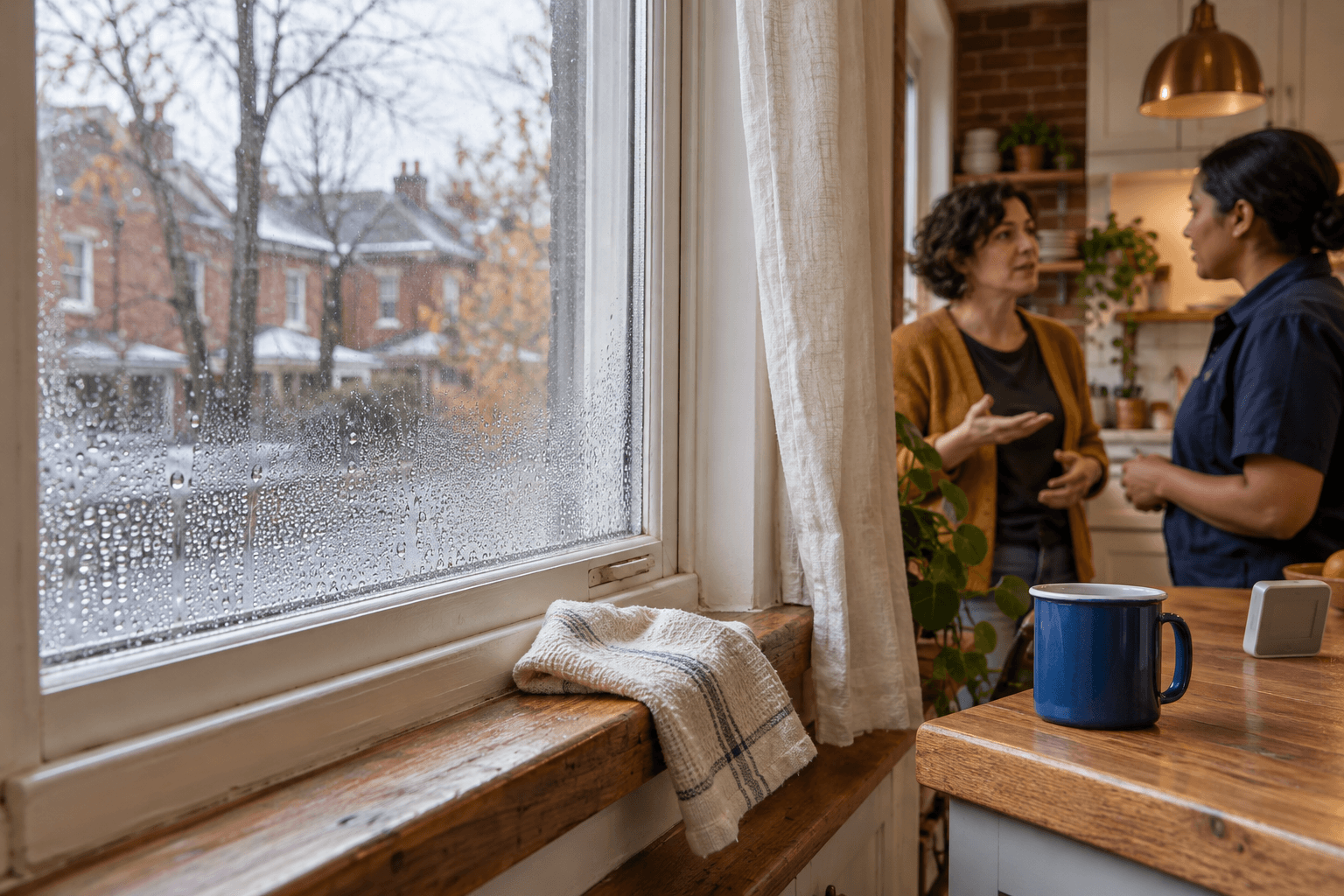
Keep indoor moisture under control while the cause is investigated, but do not treat a lower humidifier setting as a repair for a damaged boundary. The useful outcome is a dry assembly with a properly fitted, insulated and sealed access panel.