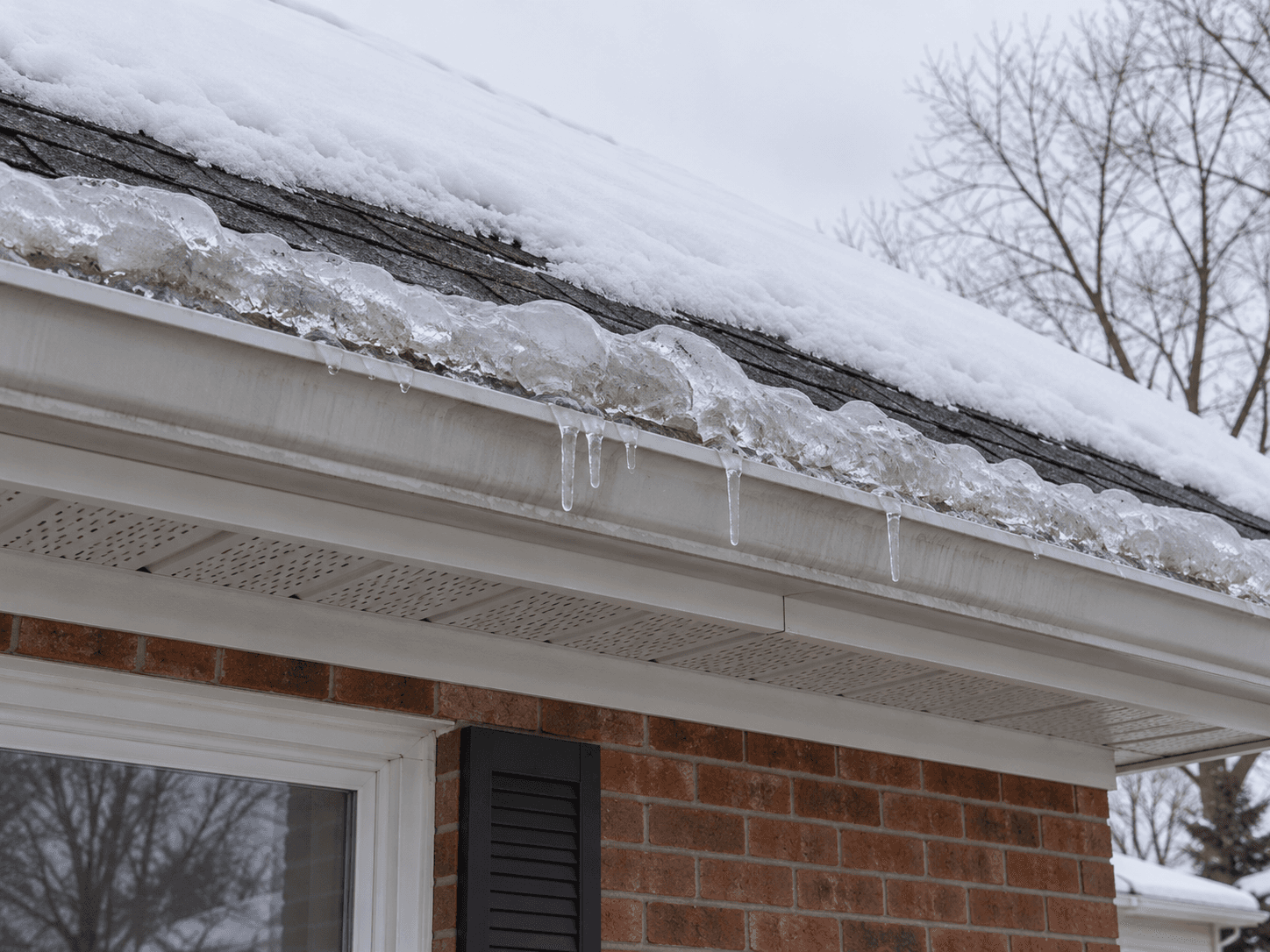
A ridge of ice at the eaves can be a roof problem with an indoor contributor. Heat escaping into an attic may melt snow higher up, while the colder overhang lets the runoff freeze again. Removing visible ice and reducing the heat reaching it are different jobs.
Follow the water's route
Source: NRCan: how ice dams form and the limits of quick fixes
Natural Resources Canada explains that snow can insulate the roof beneath it. If that roof surface becomes warm enough, the bottom of the snow layer melts. Water can then run toward a colder edge, freeze and obstruct further drainage.
Backed-up water may find a route beneath roofing. Roof shape, difficult insulation details, weather and solar exposure can also influence the pattern. A row of icicles does not, by itself, identify one defective component.
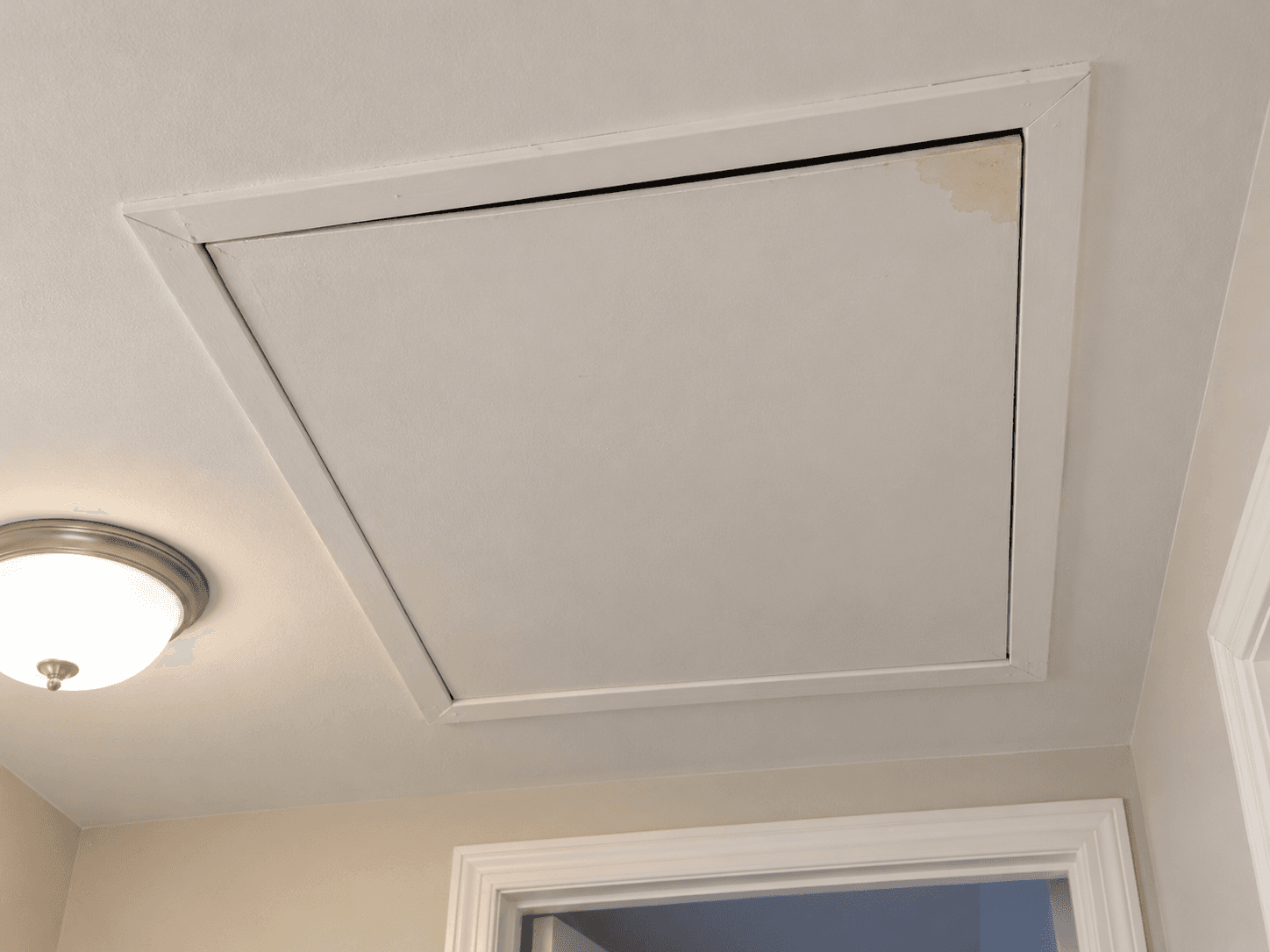
Take observations from safe ground-level locations. Photograph where snow disappears first and where ice repeatedly forms. Note what lies beneath that area: an attic hatch, a bathroom, a roof valley or a finished upper-storey room.
Ask what is warming that roof area
Source: NRCan: ceiling penetrations and attic hatch air sealing
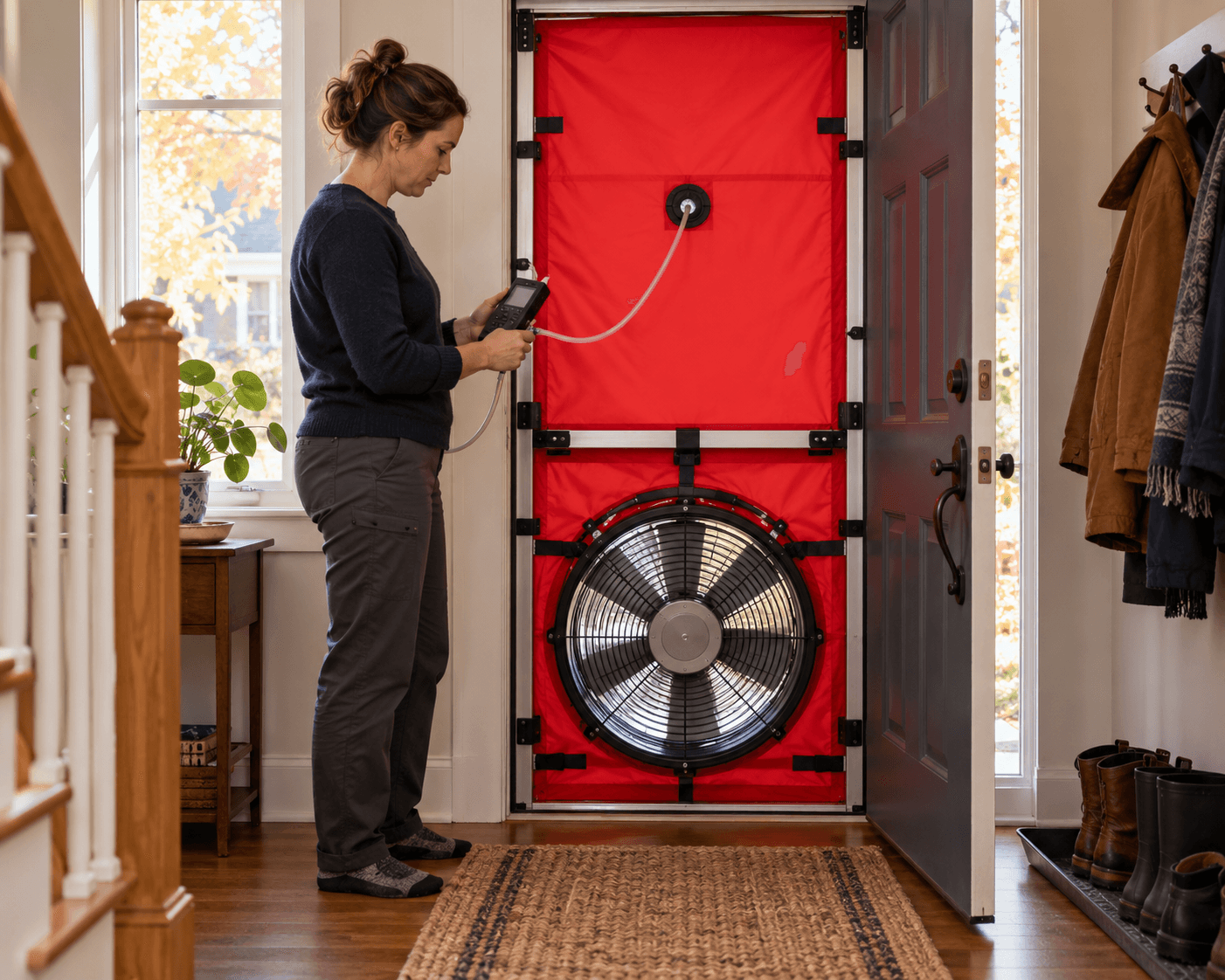
The assessment should consider indoor air leaks, insulation continuity and the intended roof ventilation. NRCan gives air sealing and insulation a central role in preventing heat-driven ice dams. Simply adding vents does not close a ceiling air leak.
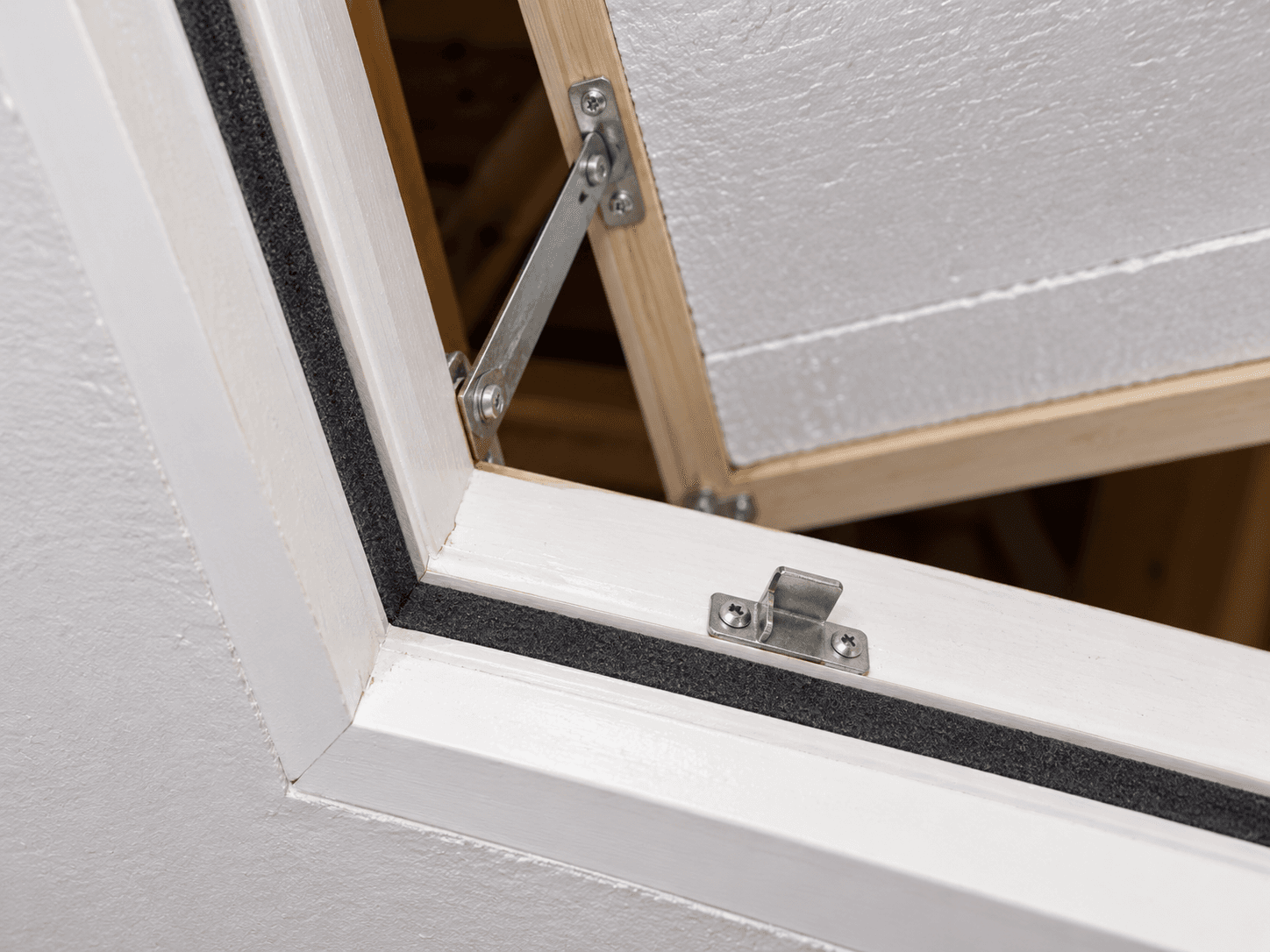
Ask whether bathroom and kitchen exhaust arrangements are intact and whether recent lighting, wiring or insulation work changed the attic. Finished attic rooms and low roof edges can need a different repair approach from an open, accessible attic.
Request a scope that explains both the immediate water-entry repair and the underlying heat or moisture work. A protective roofing membrane may limit leakage without removing the conditions that create ice.
Do not turn the inspection into a roof climb
Stay clear of falling ice and snow, and keep other people away from the affected area. Do not attack ice with an axe or improvise a roof-climbing routine. NRCan notes that removal can be unsafe and can damage roofing.
Active leakage, sagging finishes or water near electrical equipment needs prompt qualified help. Record the location from a safe place rather than entering a wet attic to follow the drip.
Heating cables and other measures have specific installation and operating requirements. Ask what a proposed measure will achieve and what problem it leaves unresolved; do not treat it as proof that the attic is correctly sealed.
After the work, compare the same roof areas under similar weather and snow conditions. Keep the repair record and watch for recurring indoor stains. One clear afternoon is not enough to judge a winter problem.