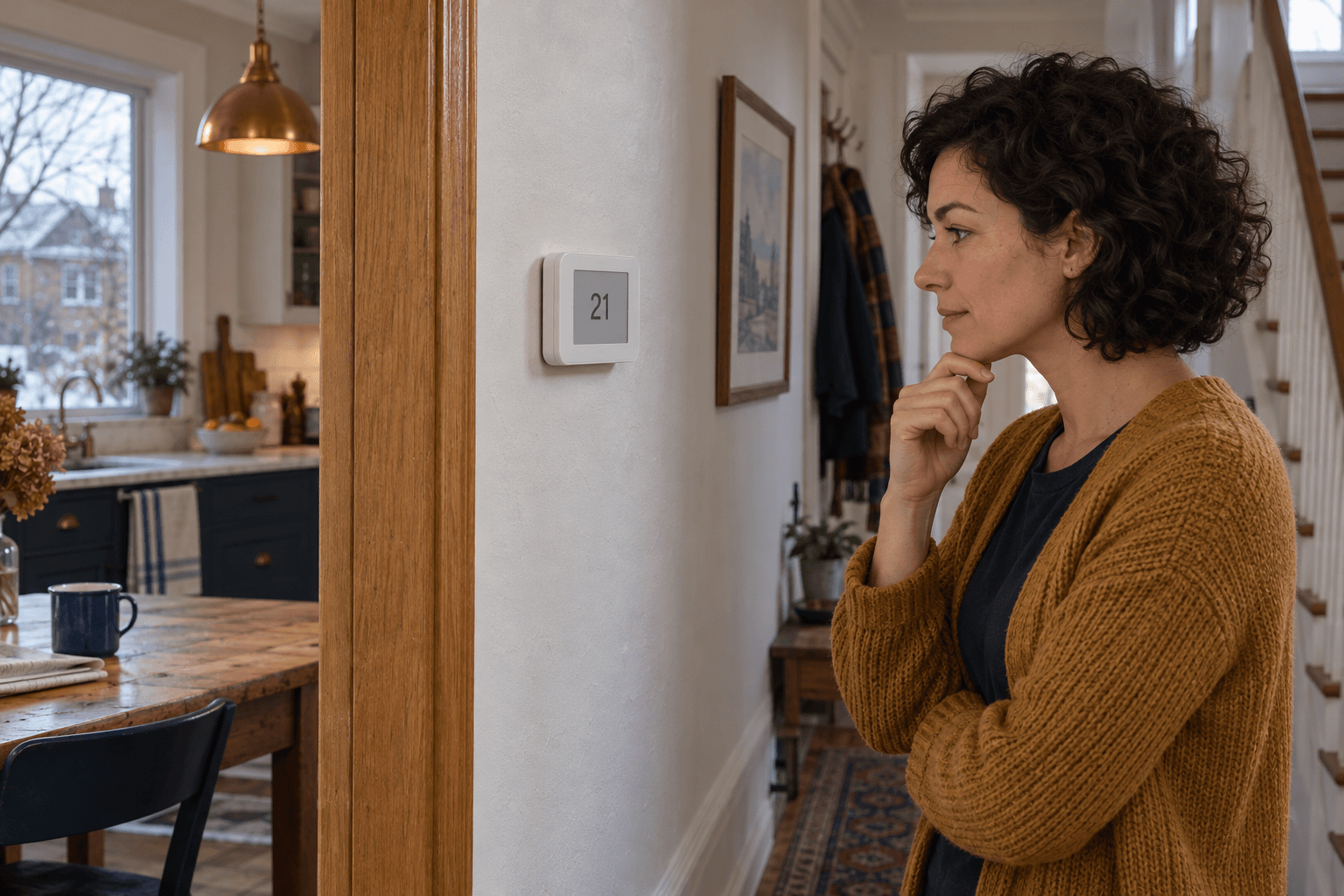
The thermostat offered Emergency Heat in a menu just as I was feeling particularly cold. It sounded decisive. I had my finger near the screen when I remembered Jo telling me that not every option was an invitation.
I put on the mustard cardigan and found the controller guide. The system was heating the house; I wanted to understand a label, not take a working heat pump out of service.
AUX and Emergency do different jobs
On many heat-pump systems, AUX indicates backup heat called automatically by the controls. Emergency Heat is a manual mode that can stop heat-pump operation and use the backup source. Carrier distinguishes the two and recommends professional help for malfunctioning equipment rather than relying on emergency mode as an everyday substitute.
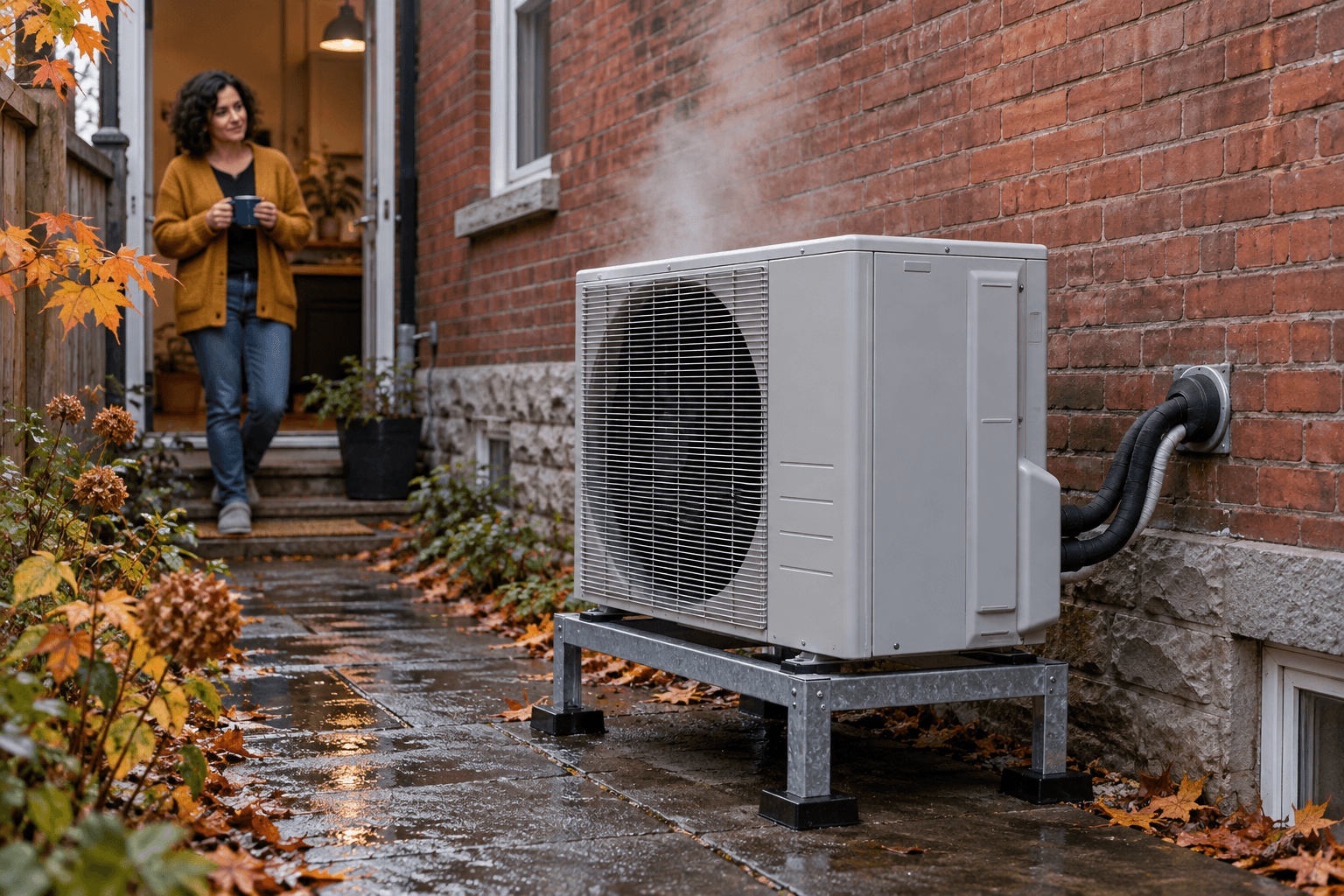
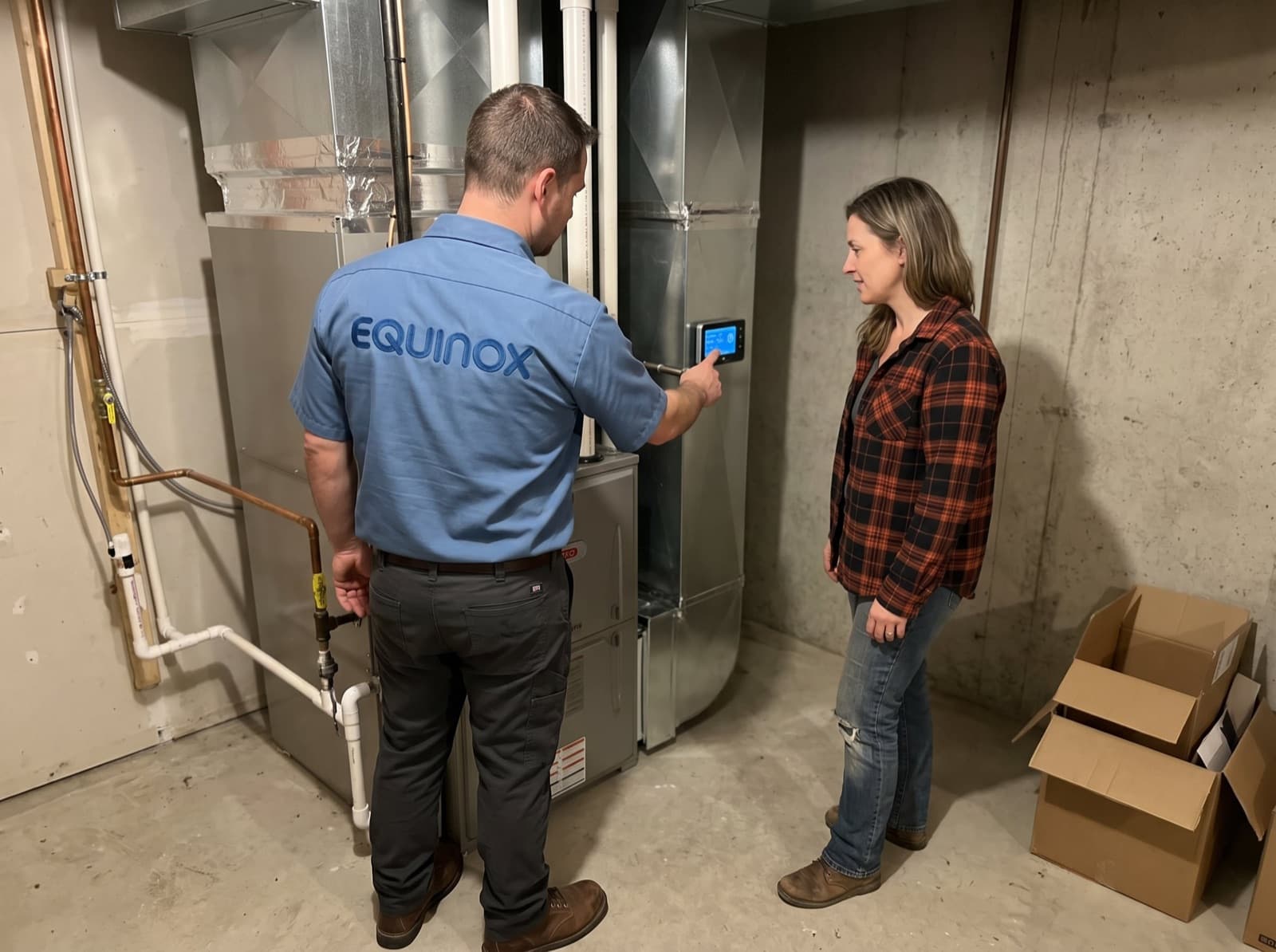
The precise arrangement depends on the system. Electric resistance backup and a dual-fuel furnace do not necessarily operate together in the same way. I asked Jo to explain our equipment, including what the display would show during defrost or a difficult recovery.
Write down the ordinary and exceptional settings
We put the normal operating mode in the house folder. Beside it went the installer's instructions for a fault and the number to call. We did not copy another household's temperature threshold or change the commissioning settings.
If backup appears unusually often, note the weather, room temperature, recent schedule changes and any fault messages. That gives the technician something to investigate without switching through every menu.
My hand stayed away from Emergency Heat that night. The extra cardigan solved my immediate impatience while the room recovered. Later, with the right explanation written down, the word on the screen stopped sounding like a more powerful version of the normal heating button.