
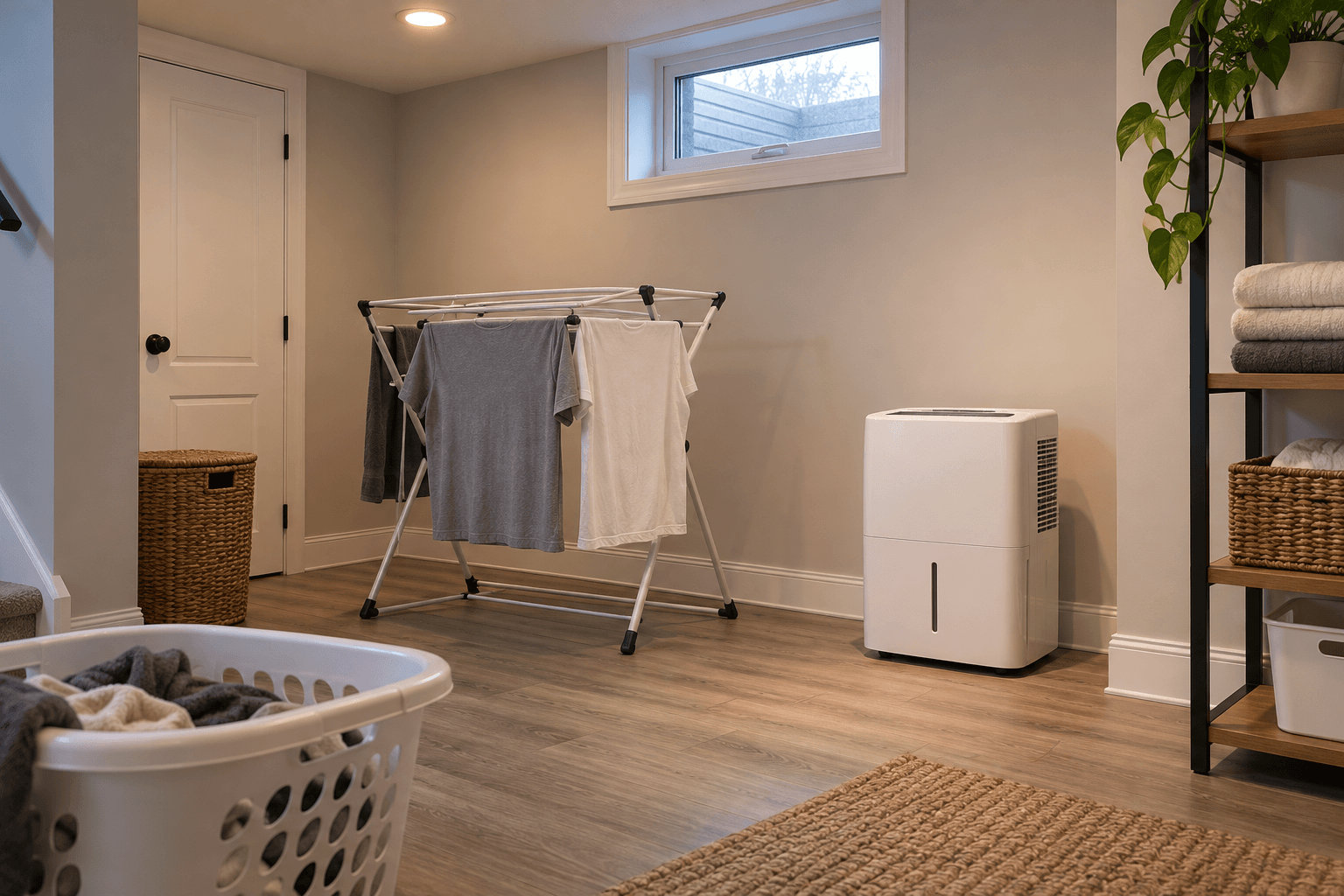
On Sunday I washed the sheets, the towels and every school shirt. By evening, three racks occupied the spare room and the window was wet. I had blamed the weather until I noticed that the untouched guest-room window was clear.
The laundry was drying exactly as intended. The question was where all that water was going after it left the fabric.
Treat drying as a moisture source
Natural Resources Canada's home-operating guidance identifies indoor laundry drying as a source of moisture. A room that copes with a few damp shirts may struggle when several loads arrive together, especially with its door closed and little ventilation.
We reduced the amount drying at once and checked room humidity rather than using the window as our only indicator. Where our routine allowed, we used the properly installed dryer instead. A conventional vented dryer must discharge outdoors; a purpose-built ventless dryer works differently and needs its own installation and care instructions.
We did not disconnect a dryer duct to recover heat indoors. That would send moisture and lint into the house and can create additional hazards, especially with a fuel-burning appliance.
Choose a place that can dry reliably
I moved the remaining rack out of the cold corner and kept it clear of heaters and air openings. We used the home's ventilation as designed. If a dehumidifier was needed, it would sit with the clearances and drainage arrangement specified in its manual.
Persistent wet walls, musty smells or dampness that continues between laundry days call for investigation. Laundry might be one contributor without being the whole explanation.
My new routine is less ambitious: one manageable load at a time, with room for air to move between garments. The shirts take up less of the house, and I can tell whether the room returns to its usual conditions afterward.