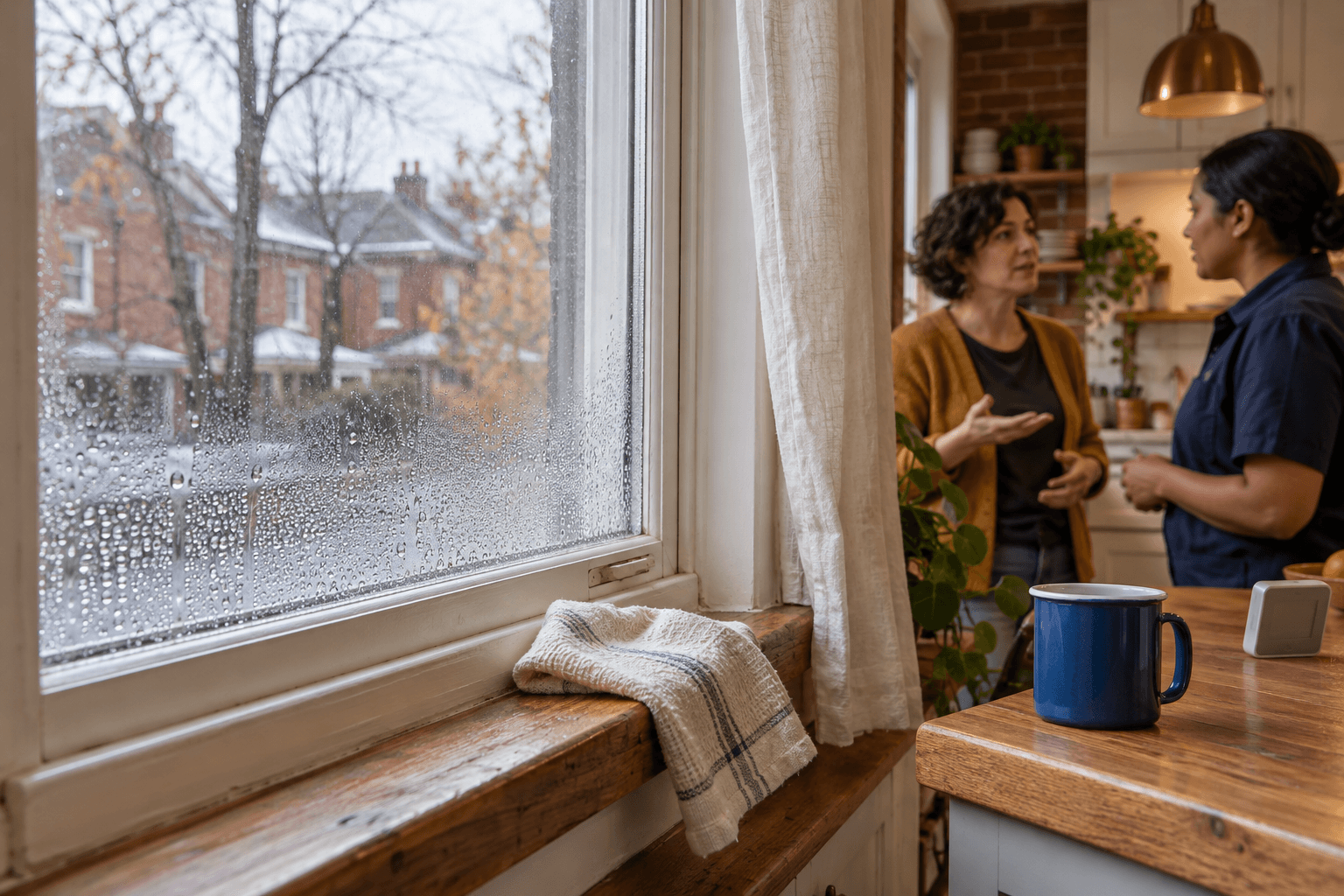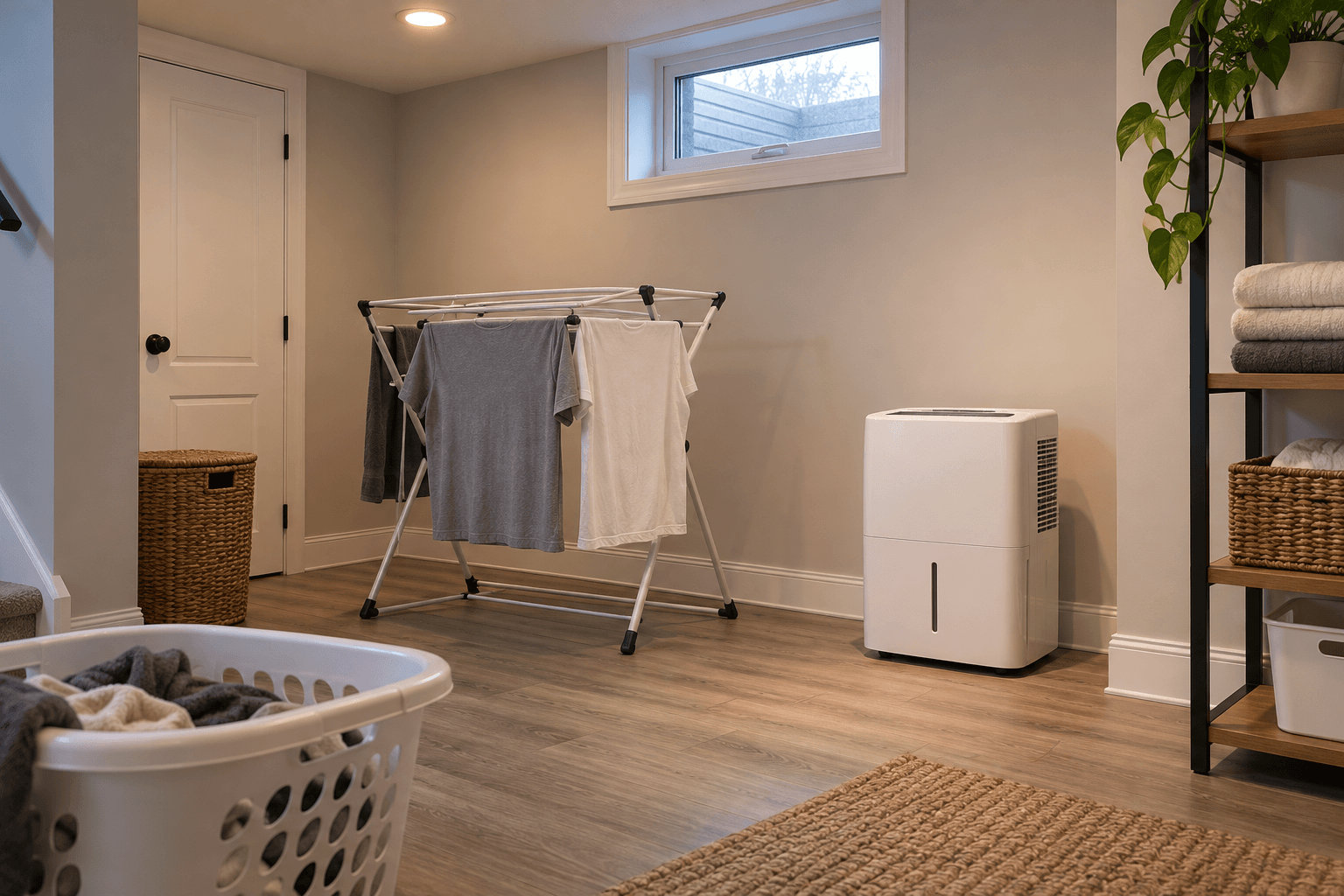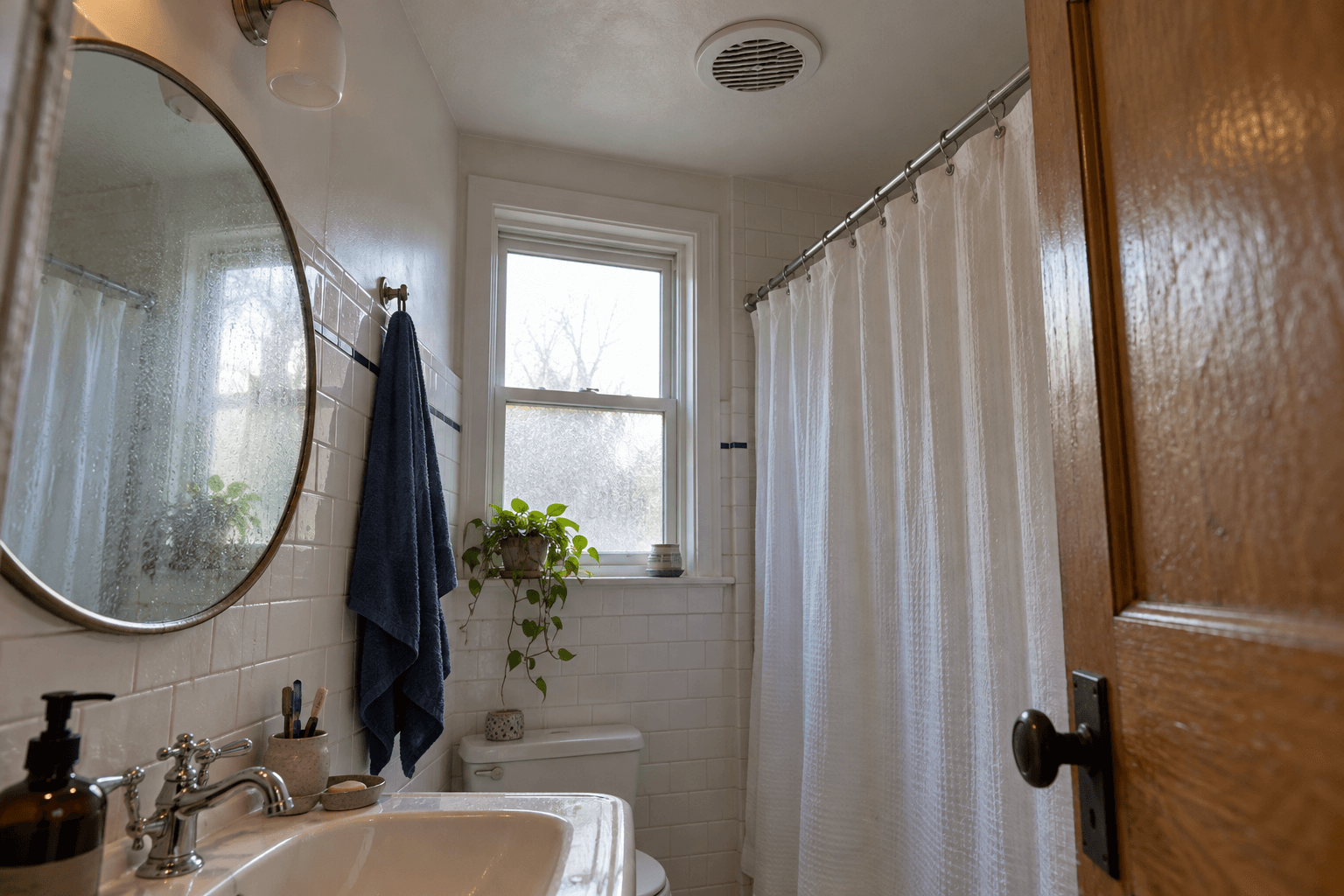
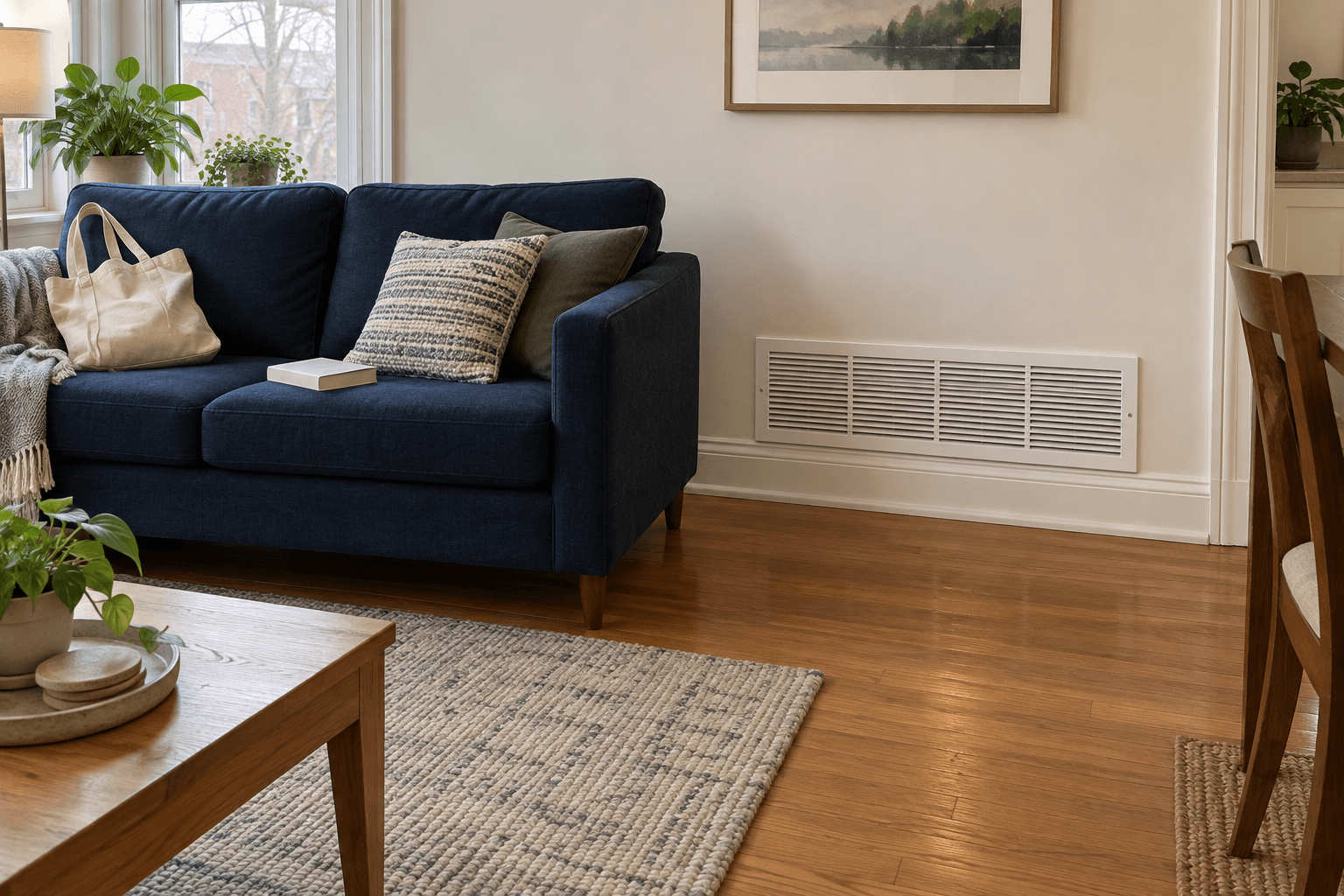
We moved the wardrobe to retrieve a missing glove and found a damp patch behind it. The rest of the bedroom felt warm. I had assumed that meant every part of the room was equally warm, including the wall we never saw.
The wardrobe had been pressed tightly into an outside corner. We moved it away, kept the area accessible and arranged to find out why the wall was wet.
Room air is only part of the picture
Condensation can form where a surface is cold enough for the moisture in nearby air to collect. Furniture against an exterior wall can reduce air and heat circulation behind it. The US EPA includes improving that circulation among its moisture-control measures.
That explanation is a possibility, not a diagnosis from a photograph. Leaks, insulation gaps and other building problems can also produce damp areas. A humidity reading in the centre of the room cannot rule those out.
I recorded room conditions, recent weather and the location of the patch. I didn't cover it with a new panel or push the wardrobe back to hide it.
Deal with the moisture source
Source: Health Canada: addressing moisture and mould indoors
Health Canada's mould guidance emphasizes correcting dampness and dealing with visible mould. Recurring, extensive or hidden growth warrants qualified assessment. We followed the guidance appropriate to the affected material and extent rather than experimenting with a stronger spray.
The assessment could then consider the wall and the room together. Would reducing moisture help? Was air circulation restricted? Did the building need repair? Those questions led to a more useful discussion than asking which paint would last longest.
The wardrobe now leaves space for inspection and circulation. I still check the corner during cold weather. Moving a piece of furniture was easy; confirming that the wall stayed dry was the part that mattered.