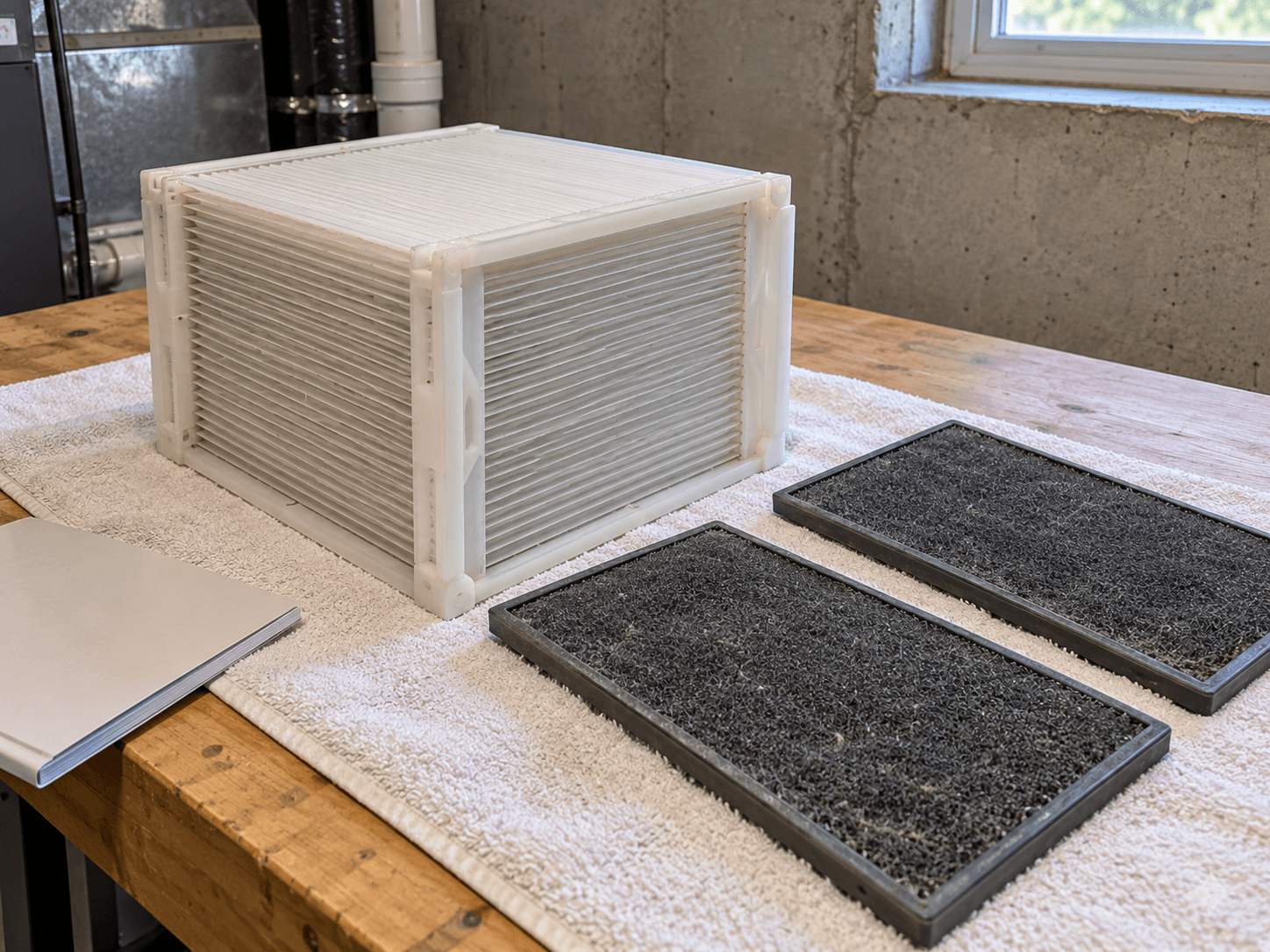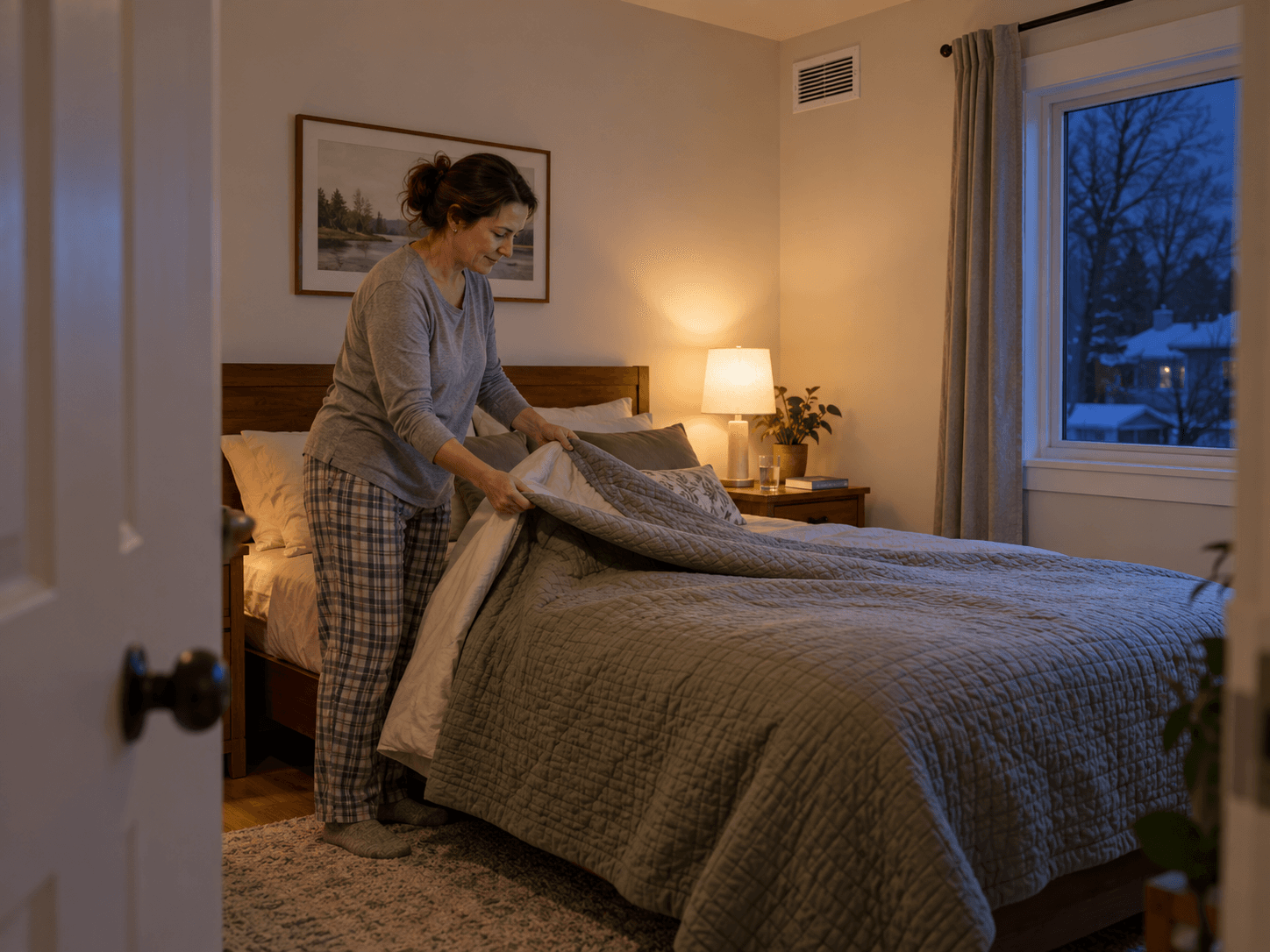

The ventilation unit runs, the controls respond and air can be felt at a grille. The commissioning record should go further: how much outdoor air is supplied, how much indoor air is exhausted, and under which operating conditions? Ask for those results before the installation paperwork is filed away.
Read the two sides together
Source: Venmar and vanEE: balancing procedure and recorded airflow, section 9
Supply and exhaust are separate airflow measurements. A balanced system is set up to meet its design requirements on both sides. The required values and acceptable tolerance depend on the equipment and installation; a number copied from another house is not a target.
Venmar and vanEE's Constructo/Solo manual directs the installer to measure both flows and leave a dated airflow label. Its procedure also specifies conditions such as fan operation and the ventilation speed. That context helps explain what a recorded result actually represents.
Ask for the units beside each reading. CFM and litres per second describe the same kind of quantity on different scales. A report with one unlabeled number, or just the word 'balanced', is difficult to interpret later.
- Unit model, installation date and person or company completing the work.
- Design airflow targets and measured supply and exhaust values, with units.
- Ventilation mode or speed and relevant furnace/air-handler operation.
- Any limitations, unresolved items and the agreed follow-up.
Automatic balancing still needs a handover
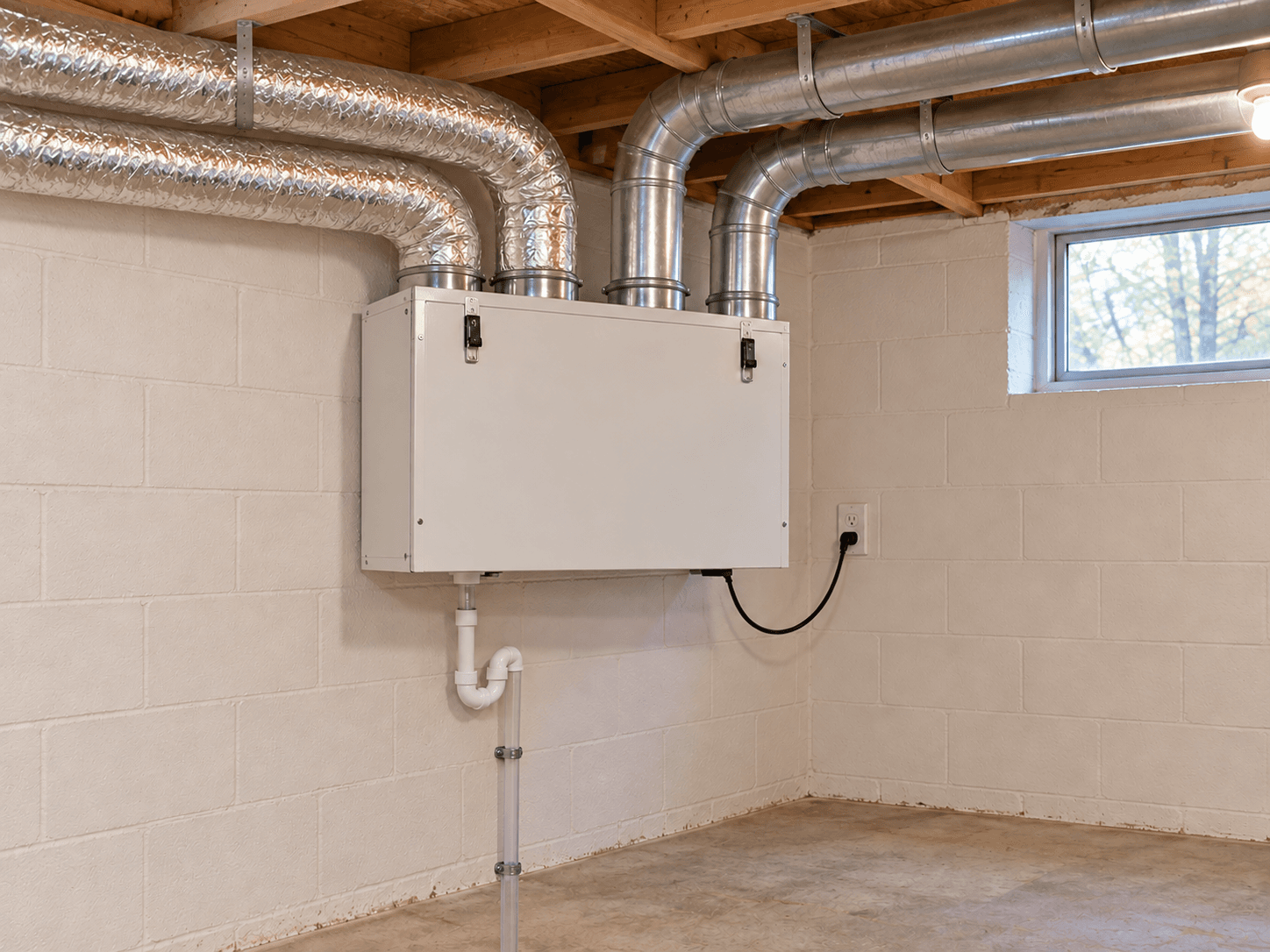
Some newer systems adjust airflow automatically. Broan's AI series, for example, uses an automatic balancing process and displays achievable supply and exhaust flows. That changes the commissioning method; it does not make the installed configuration or operating target irrelevant.
Ask the installer to explain what the system controls automatically, which settings belong to the household and which should stay with the technician. Keep the setup record or documented final values that the manufacturer provides.
Whole-unit balance and room delivery are related questions, but they are not interchangeable. If one bedroom remains stuffy, ask whether its supply path and transfer path have been checked. A satisfactory total at the unit does not describe every room.
Make later comparisons useful
Source: Natural Resources Canada: HRV operation and maintenance records
NRCan's HRV guide recommends measured airflow information and a written account of the unit's condition during professional servicing. Save those results alongside the original commissioning record.
If filters, ductwork or equipment change, ask whether airflow should be verified again. Describe the change accurately: a new filter type, a moved grille or a renovation is more useful information than 'it feels different'.
Do not turn balancing dampers or room valves at random while trying to reproduce an old figure. Have the service provider investigate restrictions and measurement conditions first. A repeatable record helps distinguish a maintenance issue from a setting or design issue.