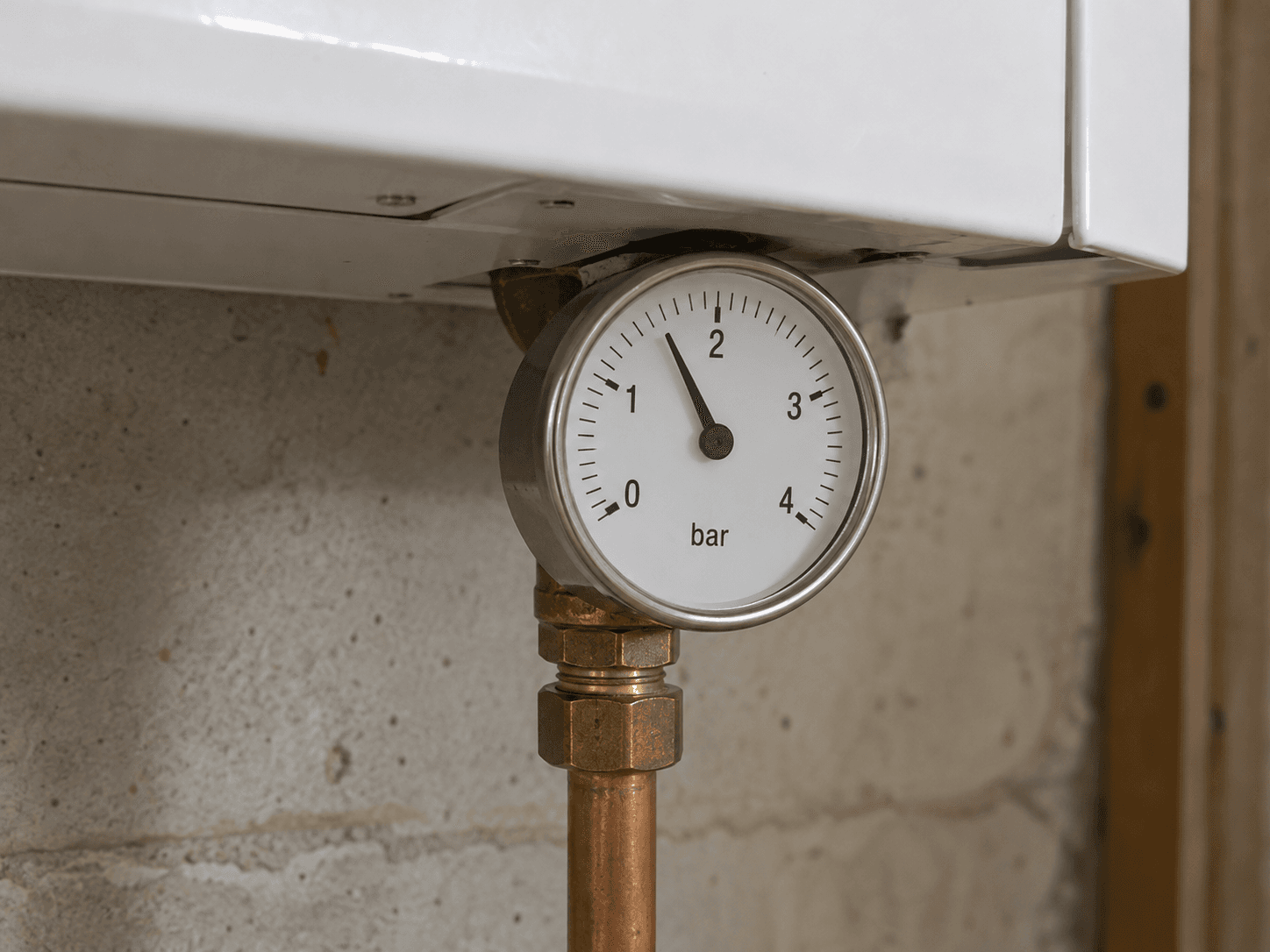
A pressure gauge is useful when you know what it measures and what the installed heating system expects. A number copied from a neighbour's boiler is a poor substitute for that information.
Find the expected range for this system
Source: Viessmann Vitodens 100-W owner instructions: checking system pressure
First confirm that you are reading the heating-water pressure. A mechanical gauge may have both temperature and pressure scales; a digital display may switch between several values. Record the units as well as the number. Bar, kilopascals and pounds per square inch are not interchangeable readings.
Ask the service contractor to note the intended cold pressure and the expected operating behaviour for your installation. The required pressure depends on the system, including its height. A coloured band or an example photograph should not replace the manufacturer's instructions and commissioning information.
Keep that note beside the correct owner manual. Include the gauge location and, for a digital display, the ordinary owner-menu steps needed to view it. You should not need to enter a service menu or remove a casing to make a routine observation.
Compare like with like
Water expands as it warms, so a reading taken during heating may differ from one taken after the system has cooled. Compare observations made in similar operating states rather than treating every movement of the needle as a new fault.
- Write down the time, pressure and units.
- Note whether the system was cold, actively heating or had just stopped.
- Record any displayed warning and which rooms were affected.
- Mention recent radiator work, air removal, a leak or a service visit.
A photograph can preserve an ambiguous reading better than a description such as 'a bit low'. Take it from a safe position with the scale readable. Leave hot surfaces, fittings and electrical covers alone.
A repeated drop needs an explanation
If the reading is outside the documented range, changes sharply or repeatedly falls, follow the owner manual's action and contact the service contractor. Visible water, a persistent discharge or a warning should be part of that report. The gauge does not identify the cause on its own.
Do not make repeated refilling a household habit. Adding water without understanding the system can hide an unresolved problem, and opening the wrong valve can create another. Have the contractor explain whether any filling procedure is intended for the owner and demonstrate it for that exact installation.
Likewise, do not bleed a radiator simply to make a high gauge reading fall, loosen a fitting to release pressure or block a relief discharge. Those actions are not substitutes for finding the fault.
The useful homeowner skill is a clear observation: the correct gauge, the units, the operating state and what changed. That gives a service visit a better starting point than a series of adjustments nobody can reconstruct.