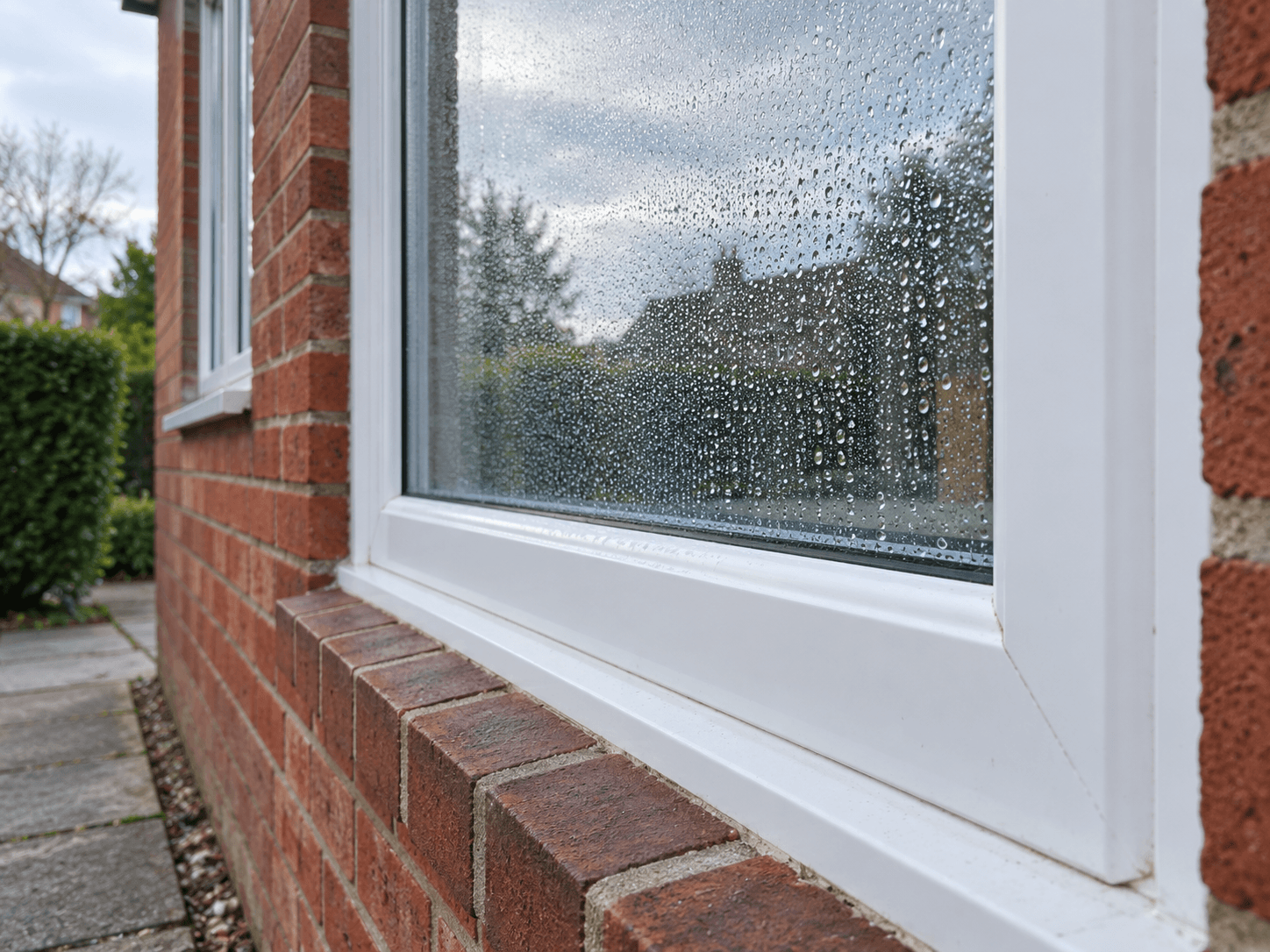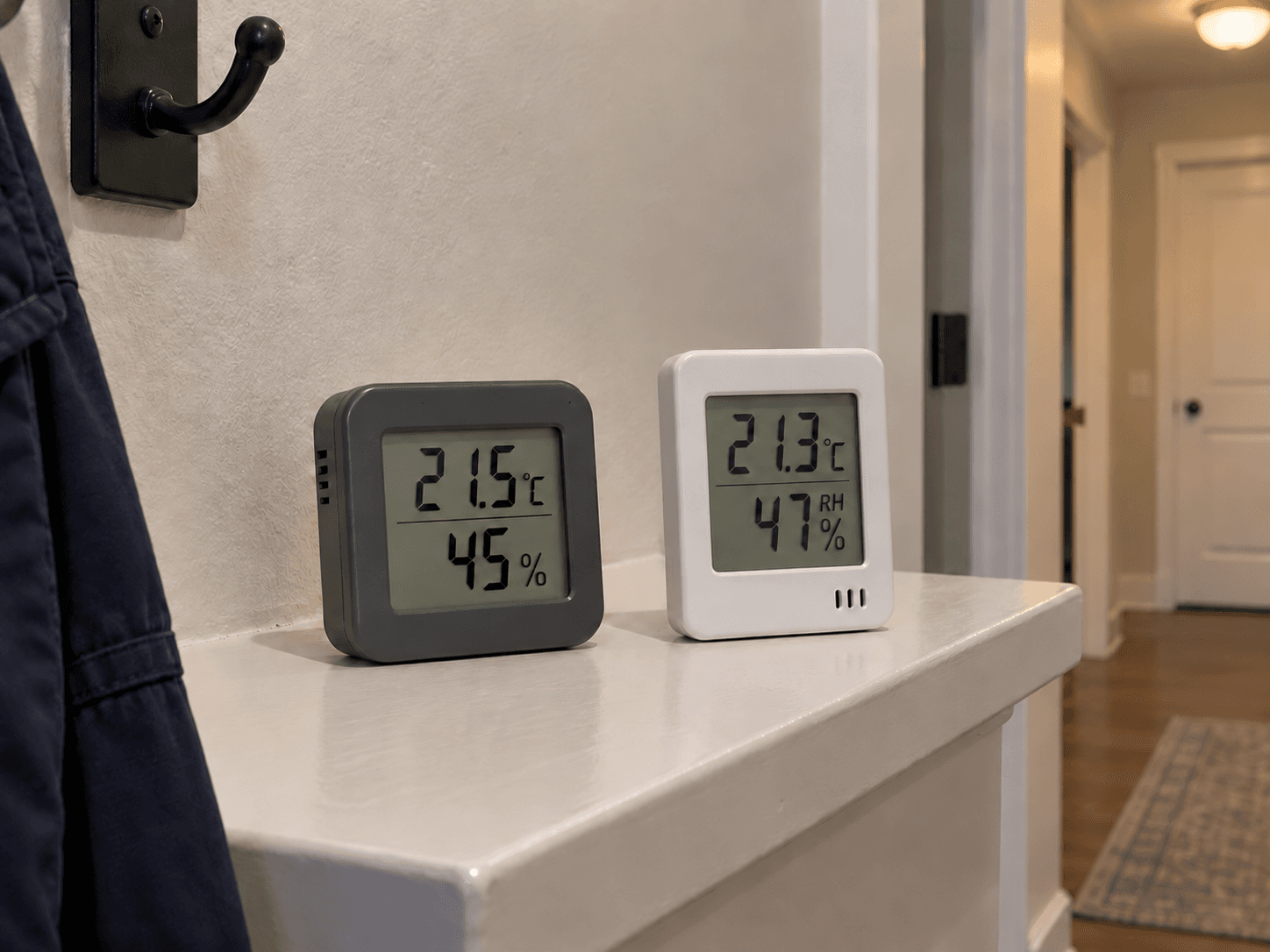
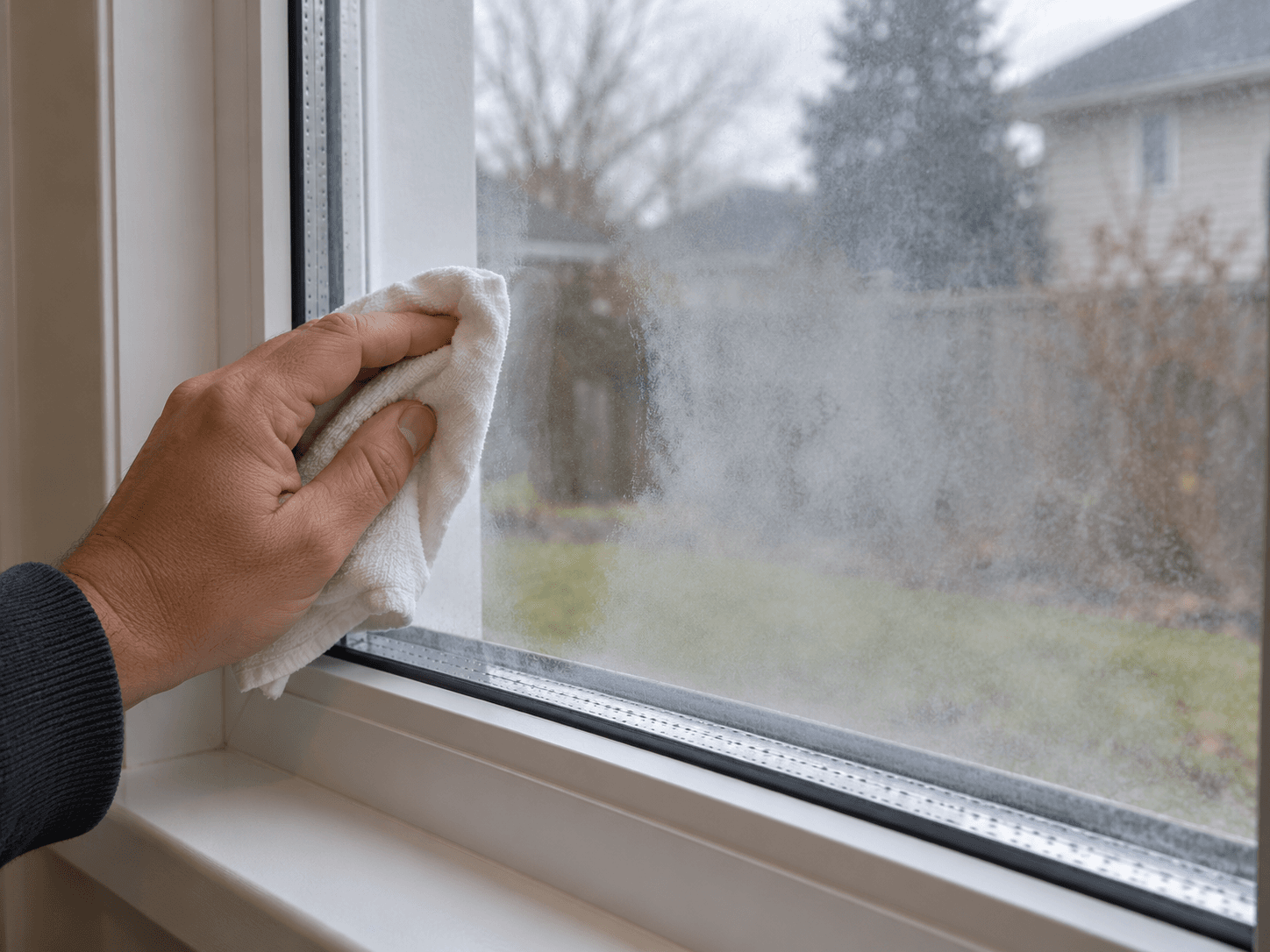
You wipe the glass, but the cloudy patch stays. Before lowering the humidifier again, find out whether that moisture is actually on a surface you can reach. Condensation inside a sealed glass unit needs a different response from water on the room side.
Check the location before choosing a remedy
From a safe position indoors, gently wipe a small area with the window maker's recommended cloth or cleaning method. If the water clears, it was on that accessible surface. Check the exterior only where it is safely reachable; do not lean out or climb to settle the question.
Moisture that remains between the sheets of a sealed double- or triple-glazed unit can indicate a failed edge seal. Natural Resources Canada identifies between-pane condensation as a reason to replace the insulating glass unit. A room dehumidifier cannot restore that seal.
Separate storm windows and secondary glazing are different assemblies. Moisture between separate windows is not automatically the same failure as moisture inside a factory-sealed unit. Tell the assessor what is installed rather than relying only on a photograph of fog.
Identify what would actually be replaced
Source: Andersen: understanding different window condensation locations
Look for the manufacturer's name and any accessible product identification. Keep the purchase or installation paperwork if you have it. Photograph the whole window, the affected pane and the surrounding frame without dismantling anything.

Ask whether the proposed work replaces the glass unit, the sash that holds it or the complete window. The answer depends on the product and condition of the surrounding parts. A fogged pane is a reason for an assessment, not an instruction to order every window in the house.
- Does the quote include removal, installation, trim work and disposal?
- Are air leaks, damaged frames or rainwater entry separate issues?
- What product-specific warranty applies, and what labour or travel costs remain?
A clear pane and a dry wall are separate checks
Record whether the haze changes with weather and whether there is water on the sill or around the frame. A stain that follows rain may need a separate leak investigation even if the sealed unit also has a problem.
Avoid drilling the glass or applying a treatment before the maker or repair provider has explained its effect on the product and warranty. Ask what performance the proposed repair restores, not just whether it temporarily improves the view.
Once you know which surface is wet, the next conversation becomes much simpler: humidity and airflow for room-side water, outdoor conditions for exterior dew, or the glazing assembly for moisture trapped inside it.