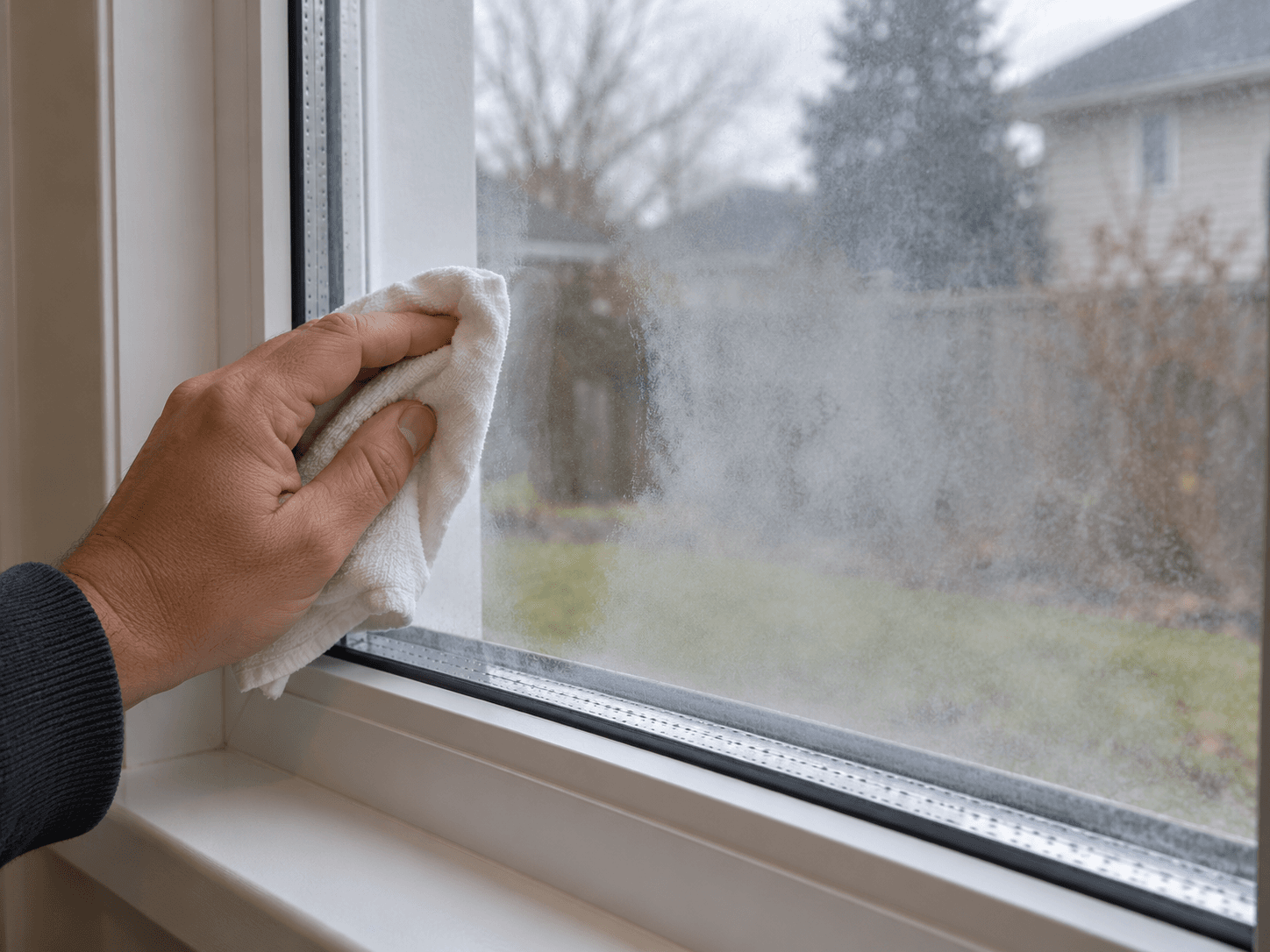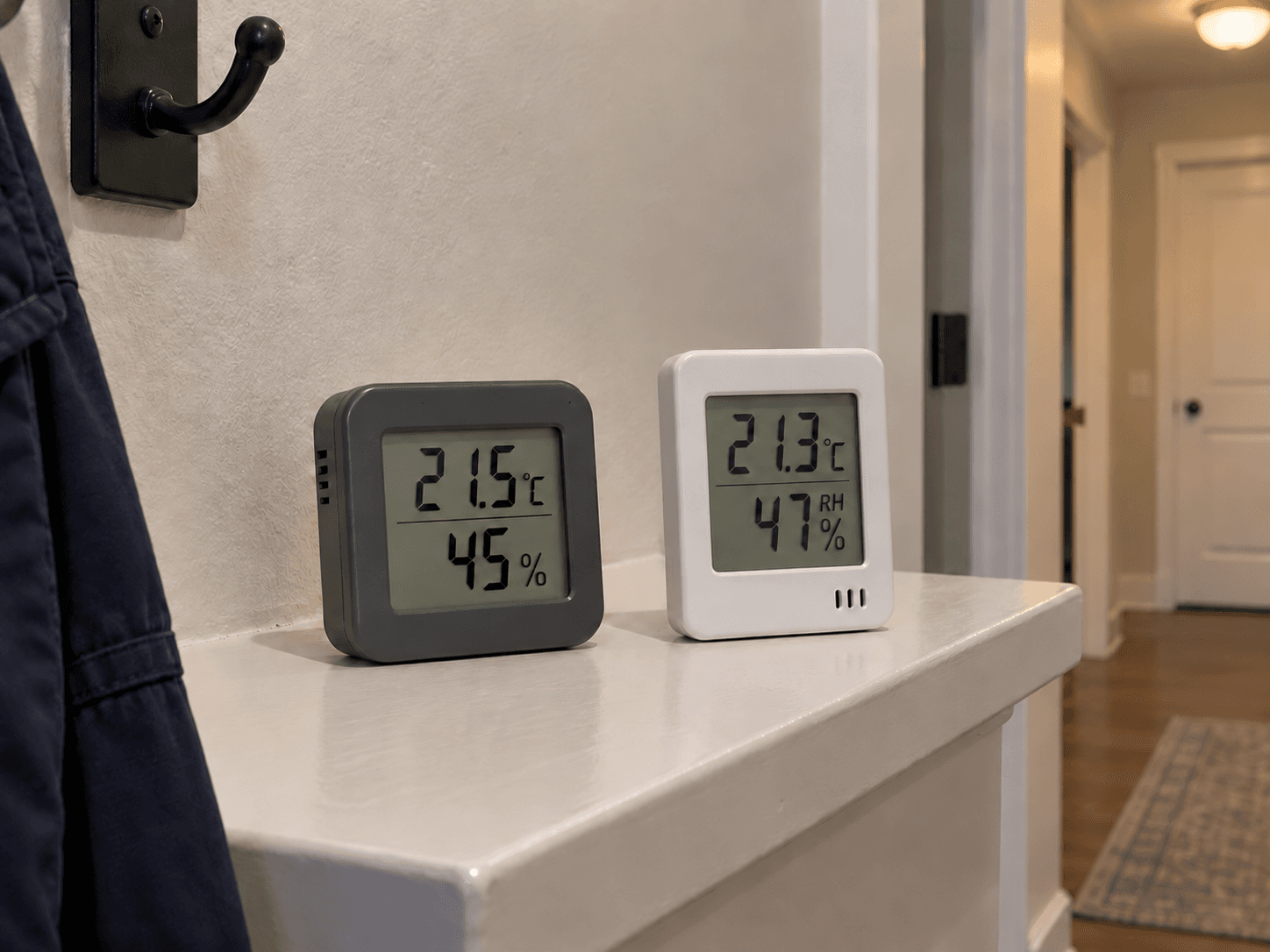
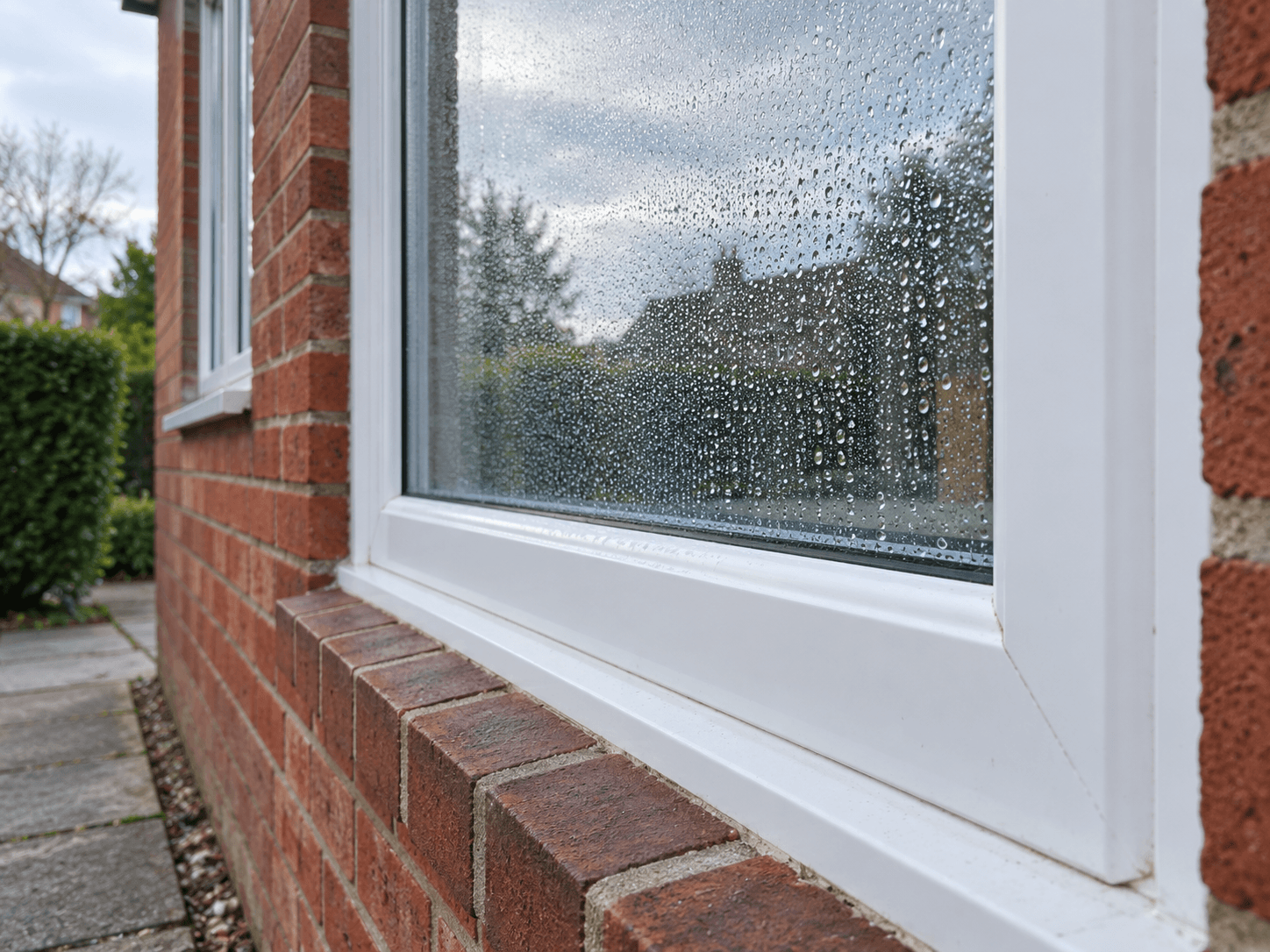
The new window looks foggy at breakfast, but the room-side glass and sill are dry. If the moisture is on the exterior surface, it may be morning dew. Turning down the indoor humidifier is unlikely to explain what happened outside.
Cool glass can collect moisture from outdoor air
Condensation forms when the outside glass surface is cold enough for water vapour in the surrounding air to collect on it. Natural Resources Canada notes that this can happen around sunrise after a cool, calm night with humid air.
An efficient insulating glass unit limits heat leaving the house. Its outside pane can therefore stay cool enough for dew under suitable conditions. Exterior condensation alone does not establish a failed seal or poor installation.
That does not make every wet-window complaint harmless. First establish the location. Moisture trapped inside a sealed unit, water on the room side and rain entering around a frame are different observations.
Timing helps distinguish dew from a leak
Source: Andersen: exterior window and patio-door condensation
Andersen describes exterior condensation that appears at particular times and usually evaporates as conditions change during the day. Different panes may behave differently because their temperatures and exposure differ.
- Note whether it appears after a cool night and clears later.
- Check whether the room-side glass, sill and adjacent wall stay dry.
- Photograph the pattern from safe ground-level access.
- Record any water entering during rain separately.
Do not climb outside to wipe a high window. A safe photograph and the timing are enough to start a conversation with the installer. Avoid treatments or coatings that the window maker has not approved.
Ask about water that behaves differently
If the haze cannot be wiped from either safely accessible surface, ask whether it is inside the sealed unit. If the frame or surrounding wall becomes wet, describe where and when that happens instead of calling every symptom condensation.
A morning patch that clears while the inside stays dry needs a different conversation from persistent trapped moisture or a rainwater stain. Identifying the surface is more useful than judging the entire window from one breakfast-time photograph.