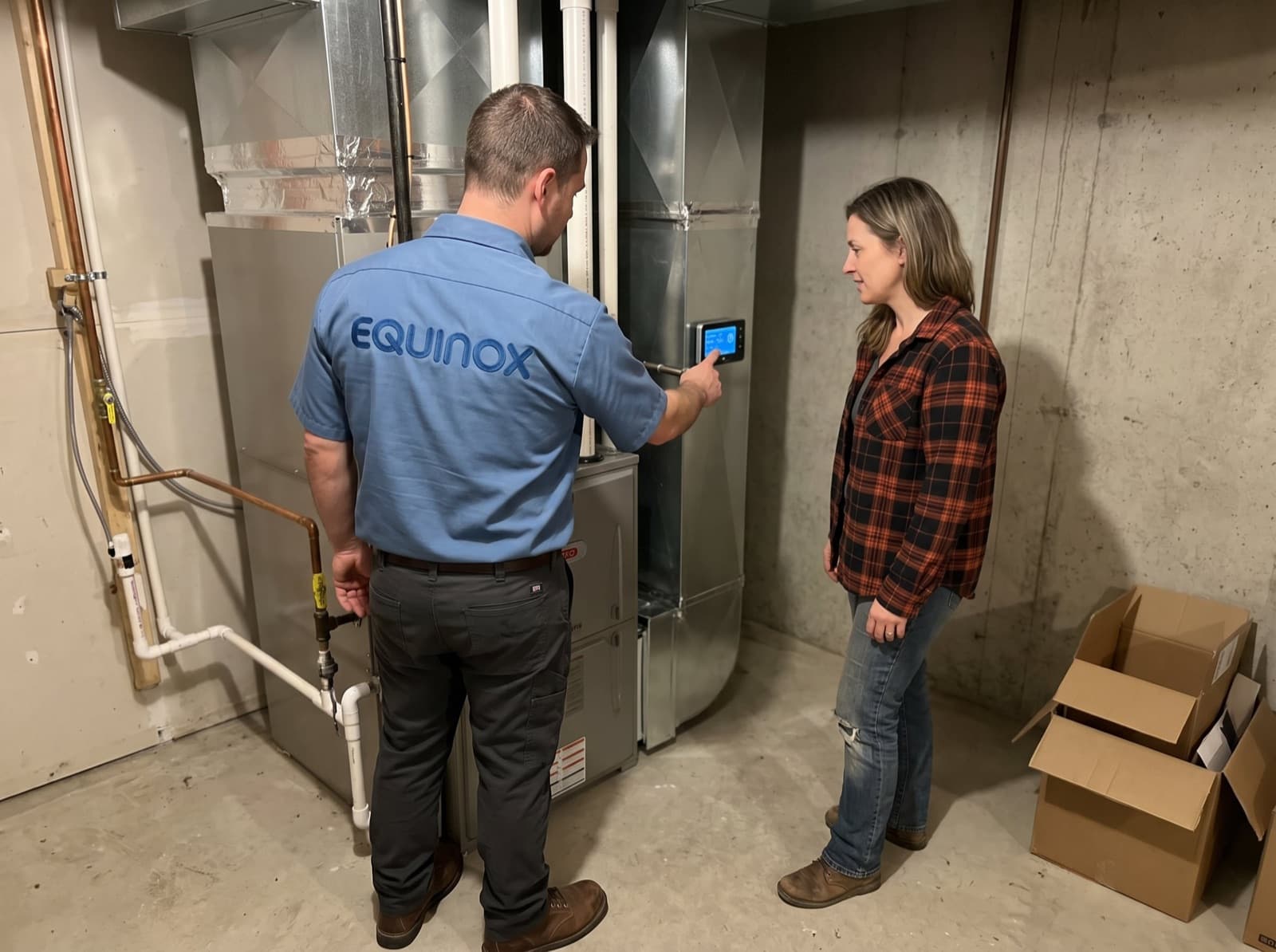

The utility room felt pleasantly warm. The room at the end of the house did not. I couldn't tell whether that was normal heat from the equipment or air escaping along a duct connection, but it seemed worth mentioning.
I resisted the urge to buy a roll of tape and start wrapping every visible joint. First I wanted to know which route served the cold room and whether leakage was actually part of the problem.
Inspect the route as well as the register
Source: US Department of Energy: sealing and insulating existing ducts
The US Department of Energy's duct guidance describes leakage and heat loss as potential contributors to comfort problems. Duct condition, location, insulation and connections can all affect what reaches the occupied room.
A weak register does not prove there is a leak. Restrictions, balancing, return paths and equipment airflow can produce similar symptoms. An assessment should distinguish them before proposing work.
I showed the technician the accessible sections and the rooms affected. I left concealed or suspect materials alone and kept the equipment area clear for inspection.
Ask what the repair will change
For any proposed sealing work, I wanted to know which sections were involved, what approved materials would be used, and how the result would be checked. If a disconnected section was found, repairing that connection mattered more than a vague whole-house promise.
We also discussed ducts outside conditioned space and whether insulation needed attention. The proposal had to describe access and restoration where finished surfaces were involved.
After work, our useful comparison was the room under similar weather and operating conditions, supported by the contractor's airflow checks. A photograph of new sealant alone would not demonstrate improved delivery.
The utility-room observation became one clue among several. It helped direct the inspection without requiring me to diagnose the system from the temperature of a room we mostly visited to do laundry.