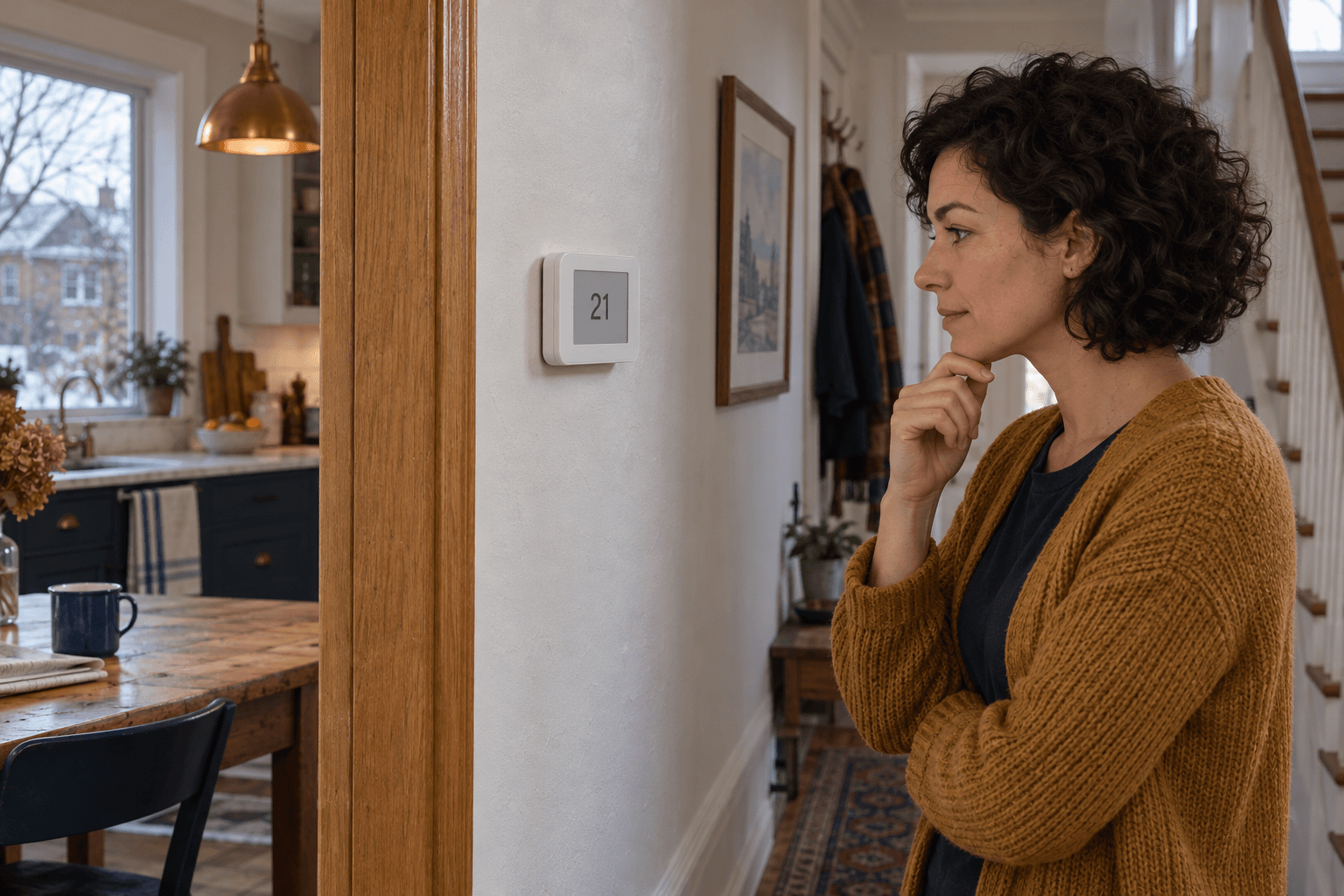
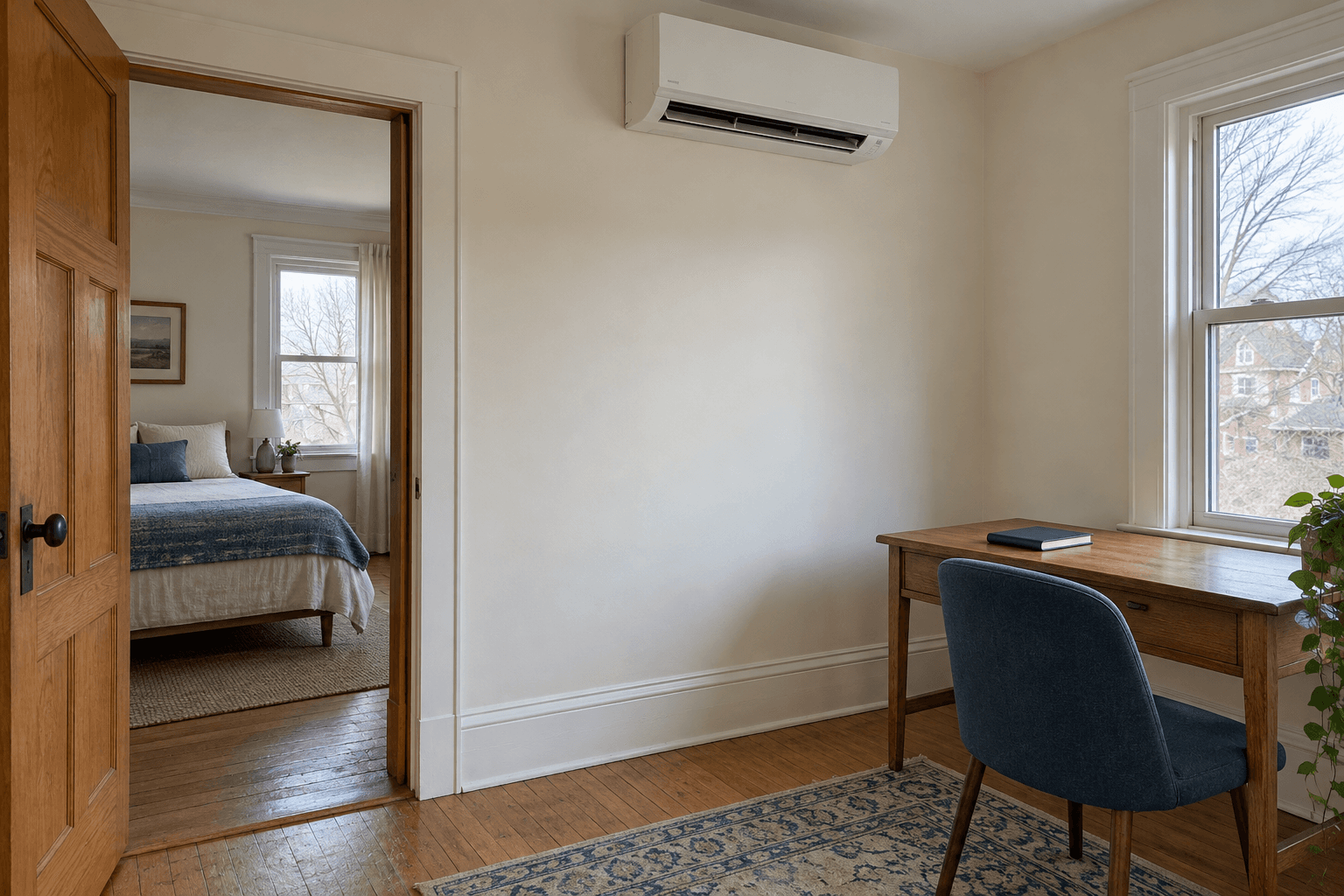
My office was warm from the afternoon sun. The shaded room across the hall was cool. I selected cooling on one remote while my partner selected heating on the other, then we both stared at the unit that seemed to be ignoring us.
We had separate remotes, so I assumed we had completely independent systems. Outside, one unit was serving both rooms. That detail turned out to matter.
Check the operating modes your system allows
Source: Daikin: heating and cooling modes in multi-split systems
Many residential multi-split systems can provide heating or cooling at a given time, rather than both simultaneously. Daikin's explanation describes separate room temperature settings within the shared operating mode. Other equipment types exist, so the model's own operating guide is the reference.
A standby indication can be a response to conflicting modes rather than a failed indoor unit. We checked our manual and brought the remotes into a compatible mode. We did not keep cycling the power or changing installer settings to make one room win.
Tell the designer about different exposures
Daikin's multi-zone overview shows how one outdoor unit can serve multiple indoor units. When comparing proposals, ask how the selected system handles rooms with different sun exposure and schedules, and what capacity is available when several rooms need conditioning together.
We also learned which remote had priority in our setup and where that information was documented. A short household note was easier than rediscovering it each spring.
That afternoon we lowered the office blind and chose a mode that made sense for the house. The equipment had not developed a personality. It had a rule we hadn't learned, and two people giving it incompatible instructions.