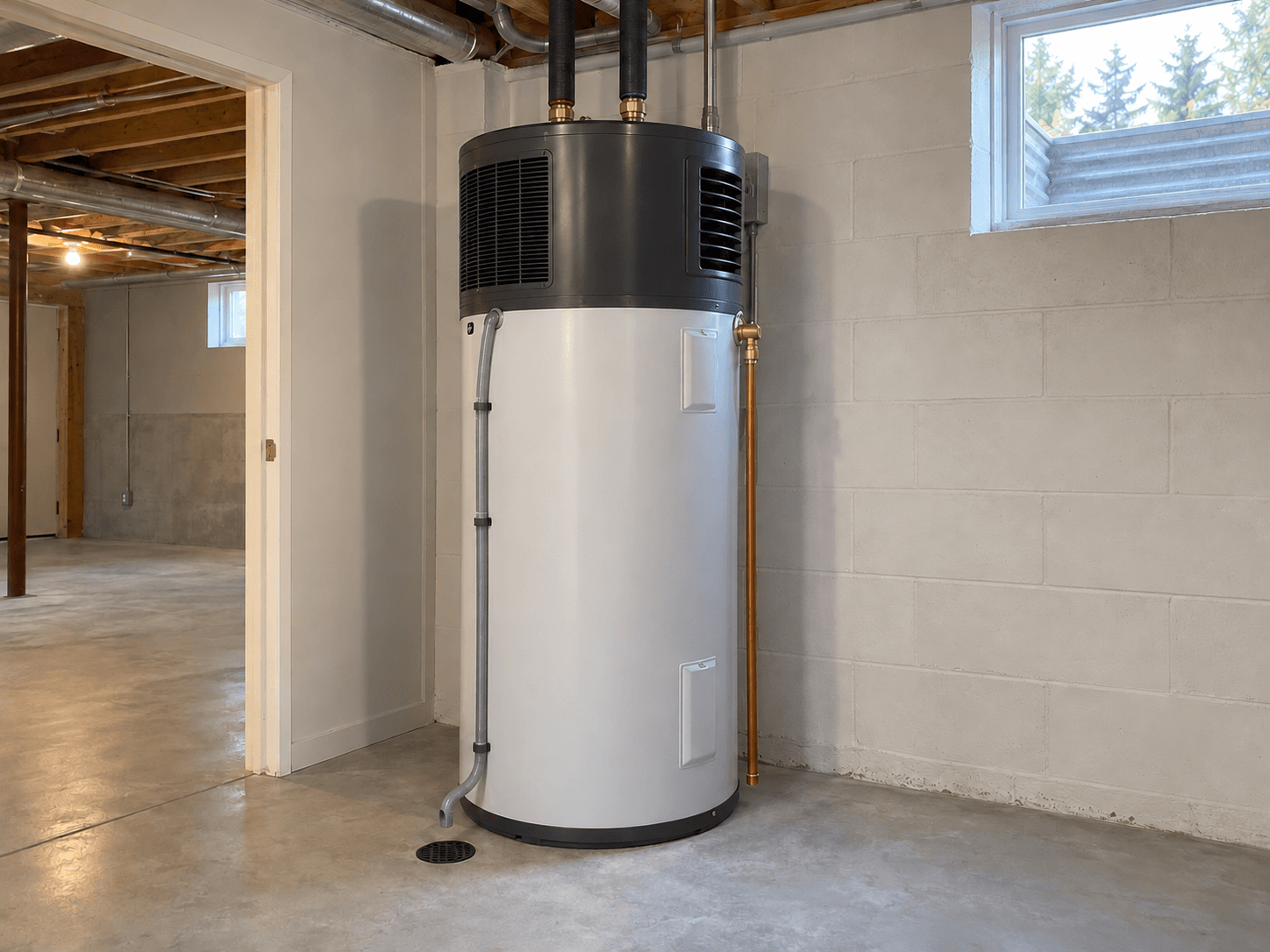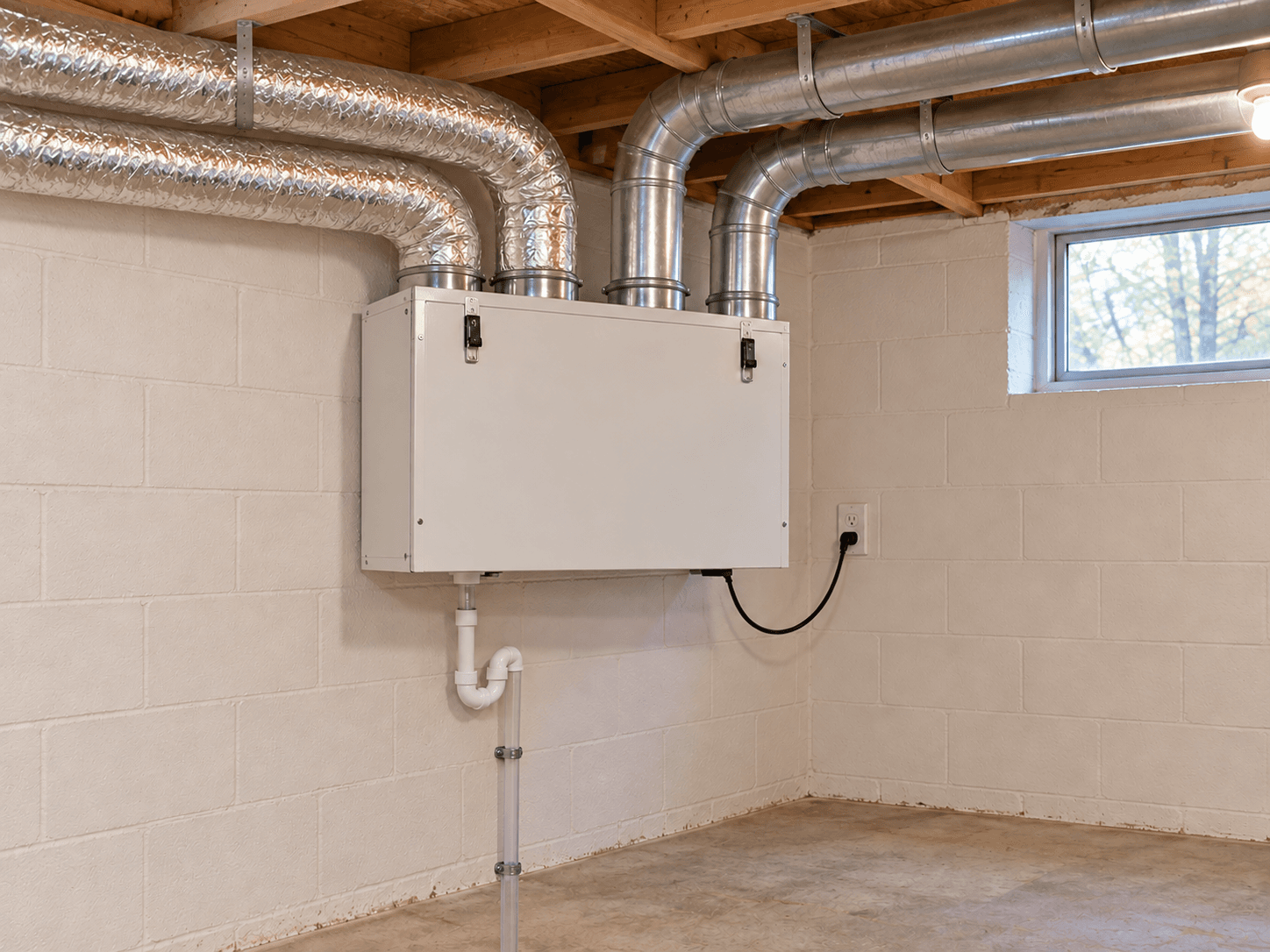
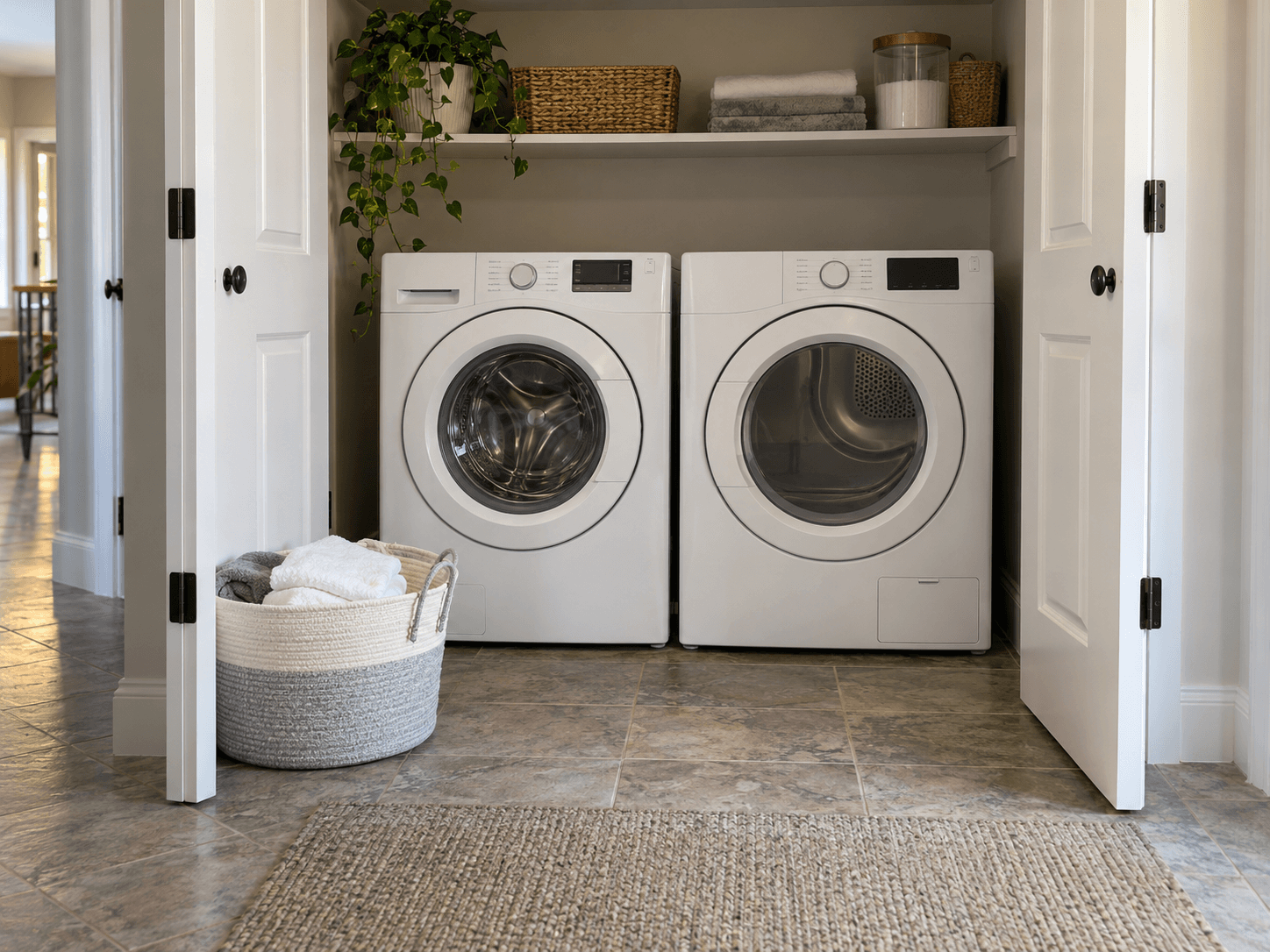
A ventless heat-pump dryer can make laundry placement more flexible because it does not need the conventional outdoor exhaust duct. It still needs a suitable electrical connection, a way to deal with collected water and the room conditions in its manual. 'No dryer vent' does not mean 'any sealed cupboard'.
The moisture leaves the clothes as liquid
A heat-pump dryer recirculates process air, removing moisture and reheating the air for further drying. Instead of sending the warm, damp stream through an outdoor duct, it collects condensate. Depending on the model and installation, water goes to a container you empty or through an approved drain connection.
Before buying, decide which arrangement fits the household. Can everyone reach and carry the container comfortably? Is a suitable drain available? Have the installer verify hose routing and connection requirements rather than assuming any nearby opening will do.
Read the installation page before ordering cabinets
Manufacturers specify clearances, room conditions and ventilation for each model. Bosch's WTW87NH1UC instructions, for example, call for an open closet door during operation and describe longer drying times outside its preferred room-temperature range. That is a useful warning against treating ventless equipment as independent of its surroundings.
Measure with the appliance door fully open and with space for a basket and a person. Include the depth of connections behind the machine, access to controls and any filter or service panel. A floor plan that fits only the closed cabinet dimensions is not yet a working laundry room.
If replacing a vented machine, have the obsolete exterior opening properly dealt with as part of the work. Do not leave a disconnected duct as an accidental outdoor air path, and do not connect the new dryer to it unless that model specifically requires such a connection.
Make the repeated jobs simple
Source: Natural Resources Canada: clothes dryer operation and maintenance
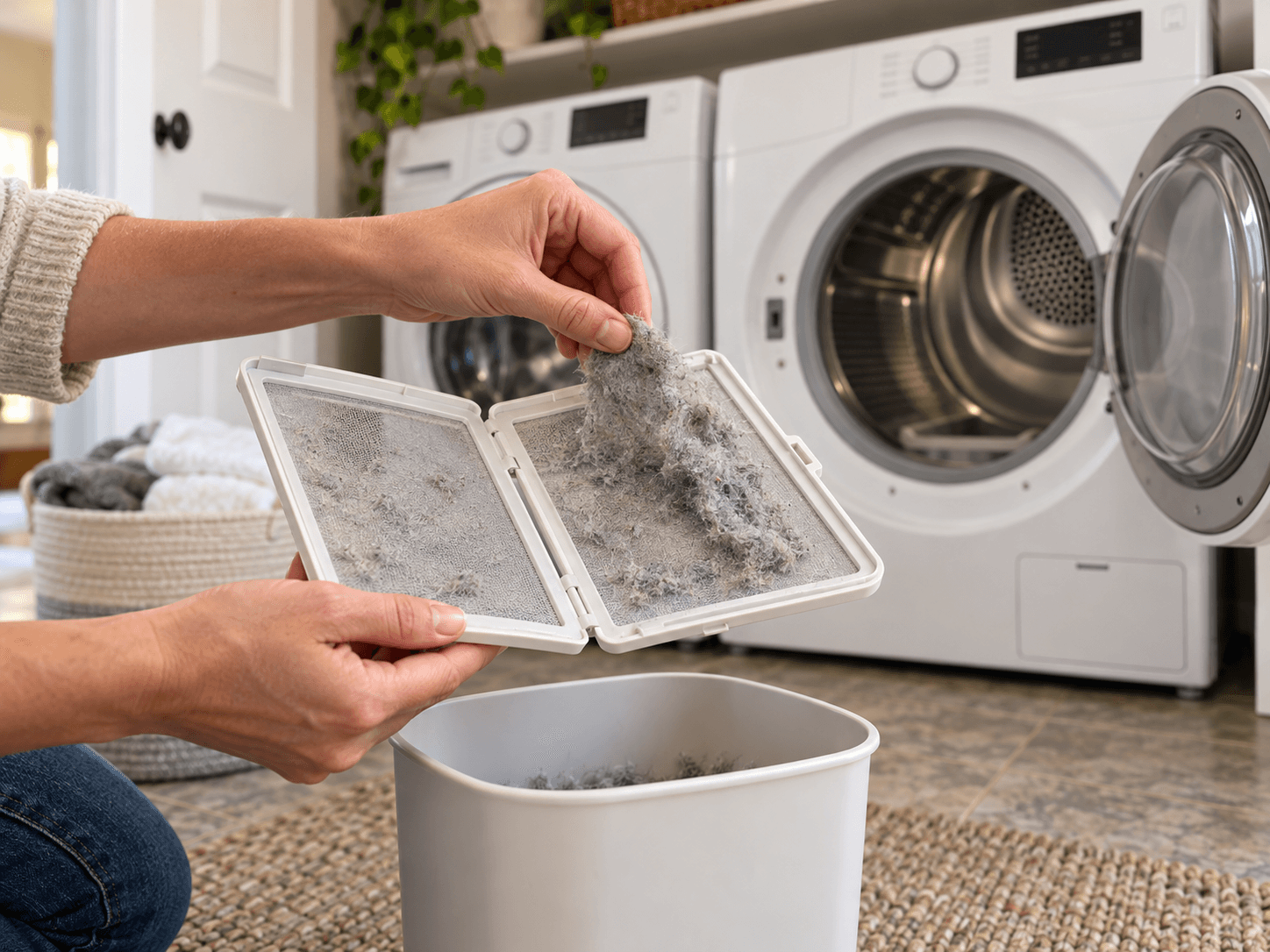
Clean the lint filters at the specified interval and keep the machine's air openings clear. NRCan emphasizes routine lint-filter care for dryer performance. Some heat-pump models also have additional filters or heat-exchanger maintenance requirements; learn those before a warning light becomes a mystery.
Use the correct load and program for the fabrics, and compare cycle expectations with the manufacturer's guidance. A thick mixed load may finish differently from a small uniform one. A longer cycle by itself does not identify a fault, but a substantial change under the same conditions is worth investigating.
If drying becomes unusually slow, check the owner-accessible filters, water container or drain indications and selected program first. Record any fault message. Leave refrigerant components, electrical covers and repairs to service personnel.
The useful result is a room where doors open, water has a proper destination and routine cleaning is easy. Those details matter long after the convenience of removing the outdoor duct has been forgotten.