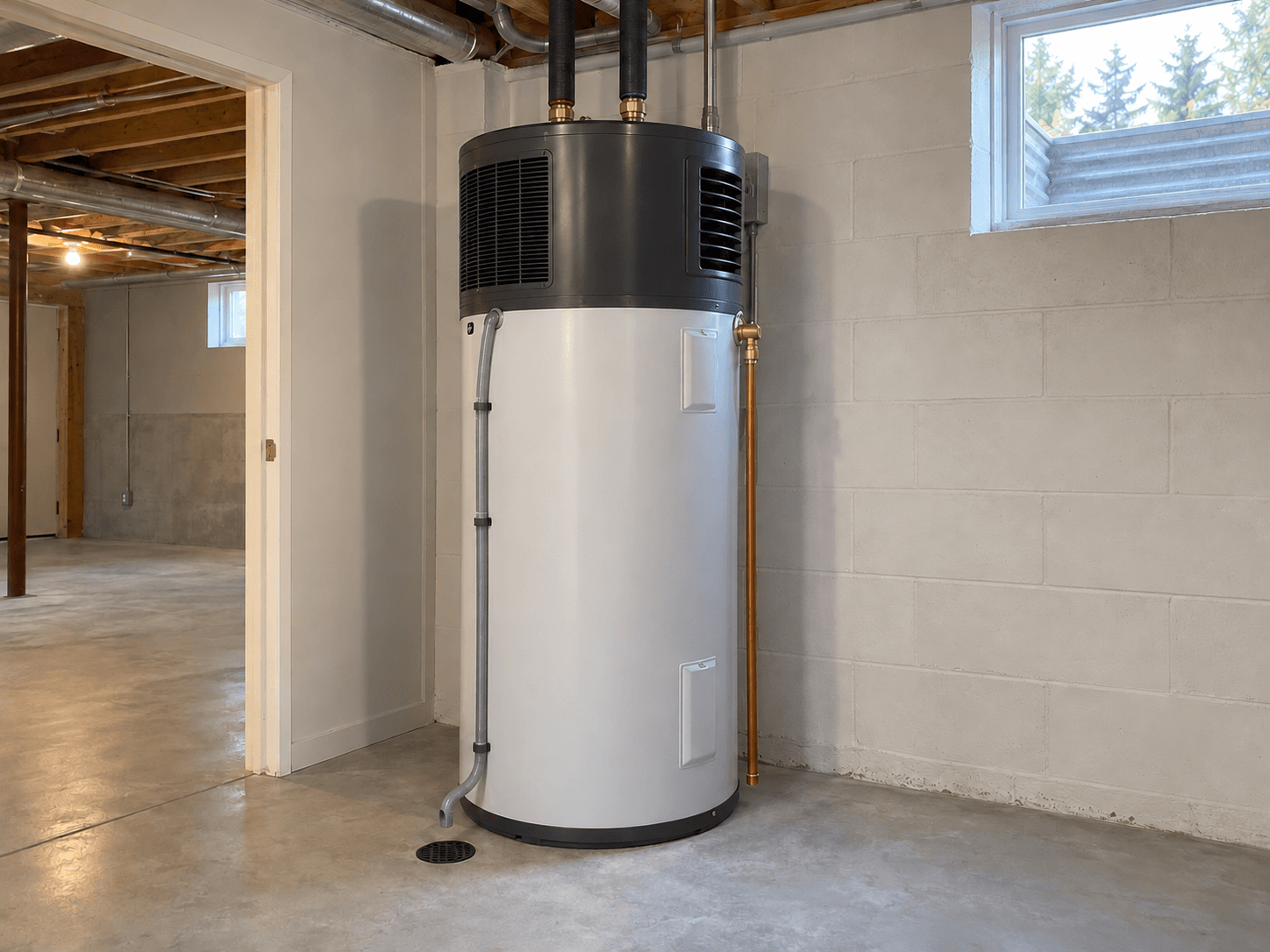
Replacing a water heater with an integrated heat-pump model involves more than finding a cylinder that fits the old footprint. The appliance moves heat from surrounding air into the stored water. That makes the room, its air supply and its connection to the rest of the house part of the purchase.
Measure the room as well as the tank
Source: ENERGY STAR: heat-pump water-heater design considerations
Ask the installer to check the selected manufacturer's required room volume, air openings, temperature range and service clearances. A tank may physically fit in a small closet while lacking the air access its heat pump needs. Approved ducting or openings can sometimes solve that, but they must be designed for the actual model and house.
ENERGY STAR's technical guidance describes air-access options and condensate drainage. Its examples are useful planning background; Canadian installation requirements and the selected product's instructions still govern the work. Do not copy a grille dimension from a different model or climate.
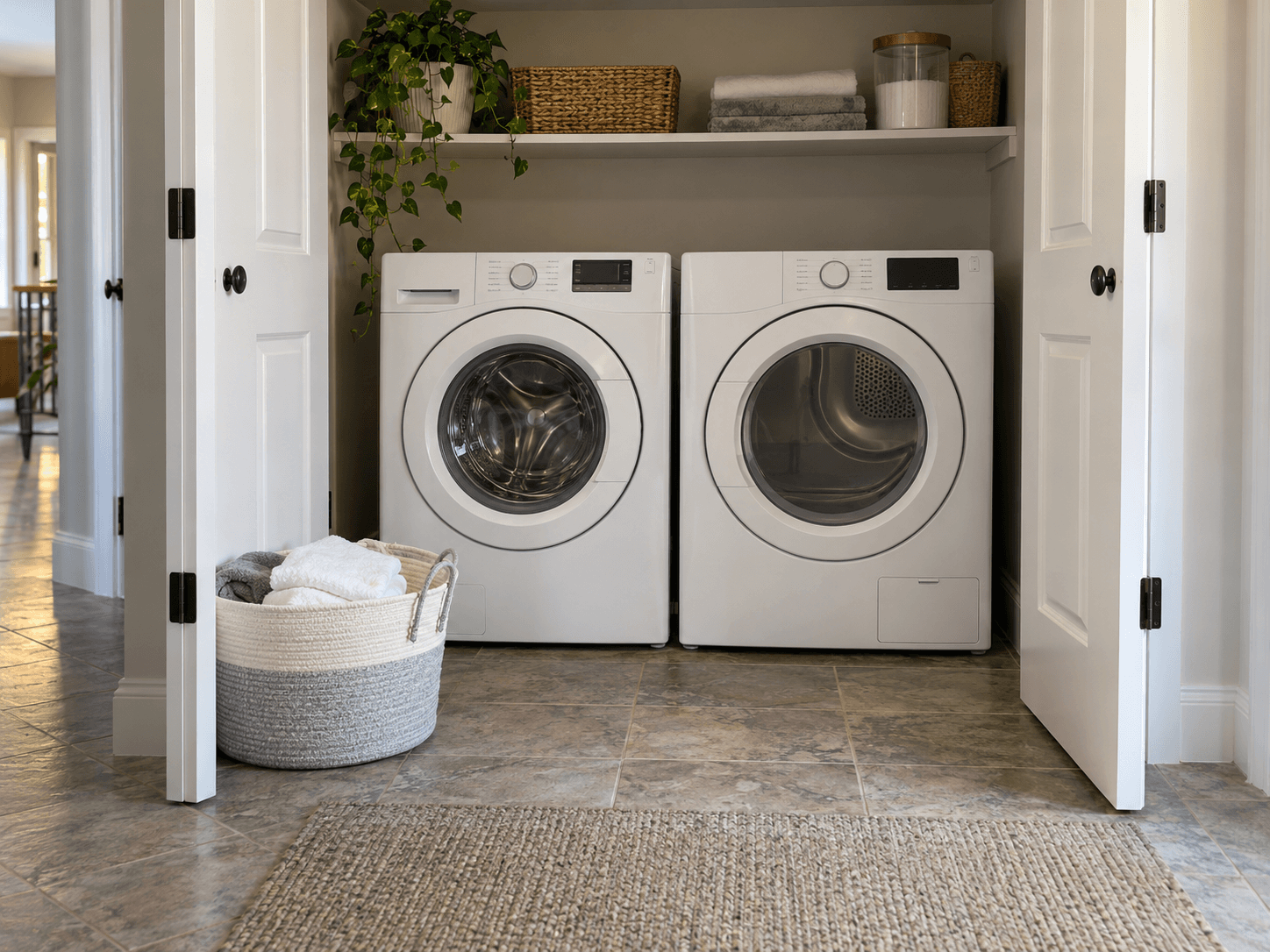
- Show the installer the room with its normal doors closed and storage in place.
- Ask where the intake air comes from and where the cooler discharge air goes.
- Identify the approved condensate destination and whether a pump is needed.
- Check ceiling height, filter access and the route for a future replacement.
Keep the condensate arrangement separate from the tank's relief-valve discharge. Both need to remain accessible and correctly installed. A bucket that somebody must remember to empty is not a complete drainage plan for an appliance intended to operate automatically.
Think about who uses the next room
Source: ENERGY STAR: heat-pump water-heater operating questions
The fan and compressor make sound, and operation cools the air nearby. A utility room beside storage may be straightforward; a thin partition beside a bedroom or a basement work desk deserves more attention. Ask about the sound rating and, where possible, hear a comparable operating unit.
The room's winter temperature matters. Taking heat from indoor air can interact with the home's space-heating load. A warm-climate garage example is not a reason to put a tank in an Ontario space that can freeze. Ask the installer to explain the expected operating modes through the year.
Check the morning routine
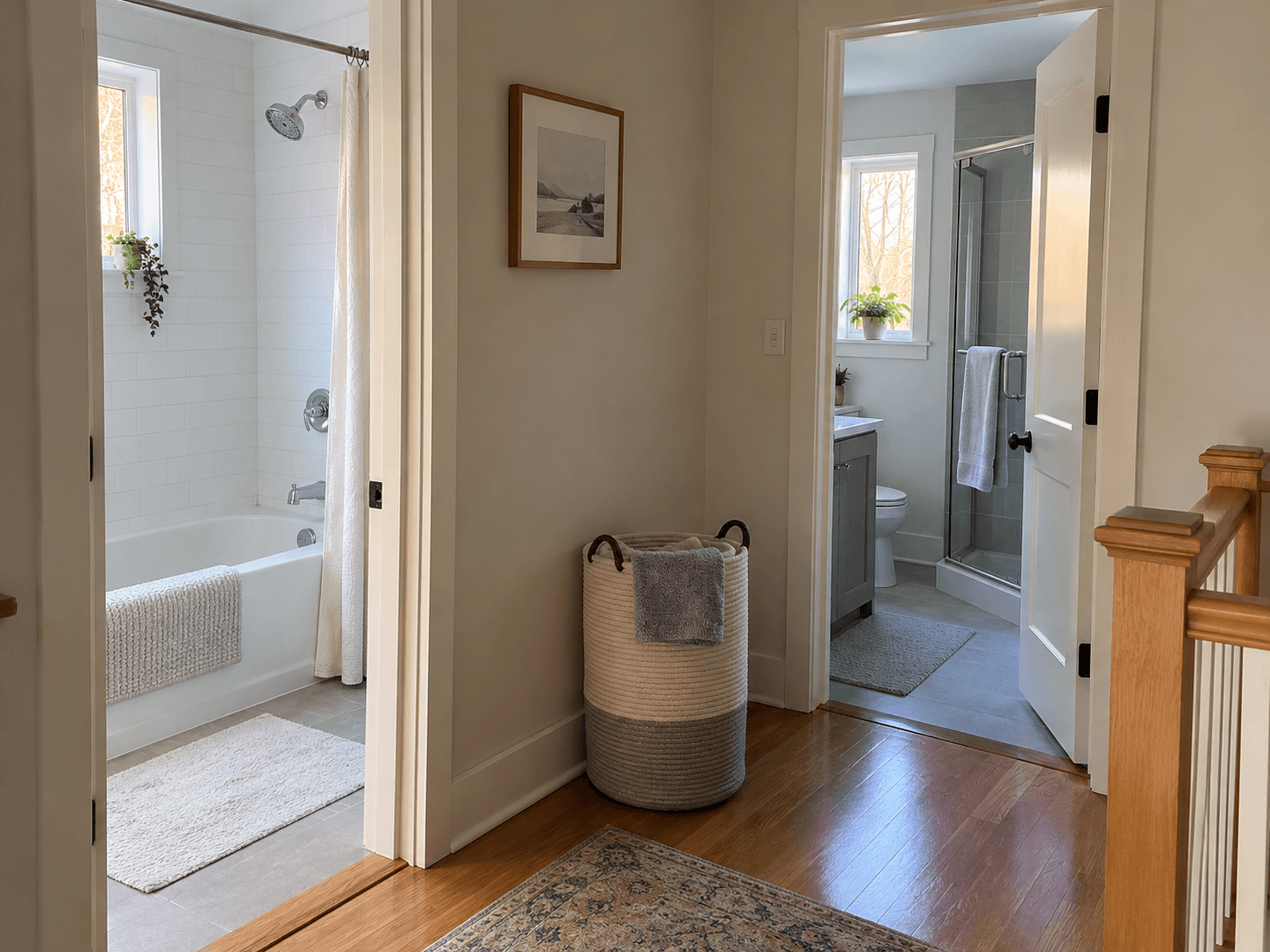
Tell the installer about simultaneous showers, large baths and back-to-back loads of hot-water use. Ask how the selected tank size, recovery and operating mode meet those demands. Extra resistance heating, where fitted, can help recovery but changes electricity use.
Request an estimate based on your existing system, household use and local energy prices. A generic saving percentage does not tell you what happens to this home's combined water-heating and space-heating bills.
Before ordering, ask for a simple written plan covering the model, room-air arrangement, electrical work, drainage, clearances and service access. It should still make sense after the shelves, laundry baskets and door are back in everyday use.