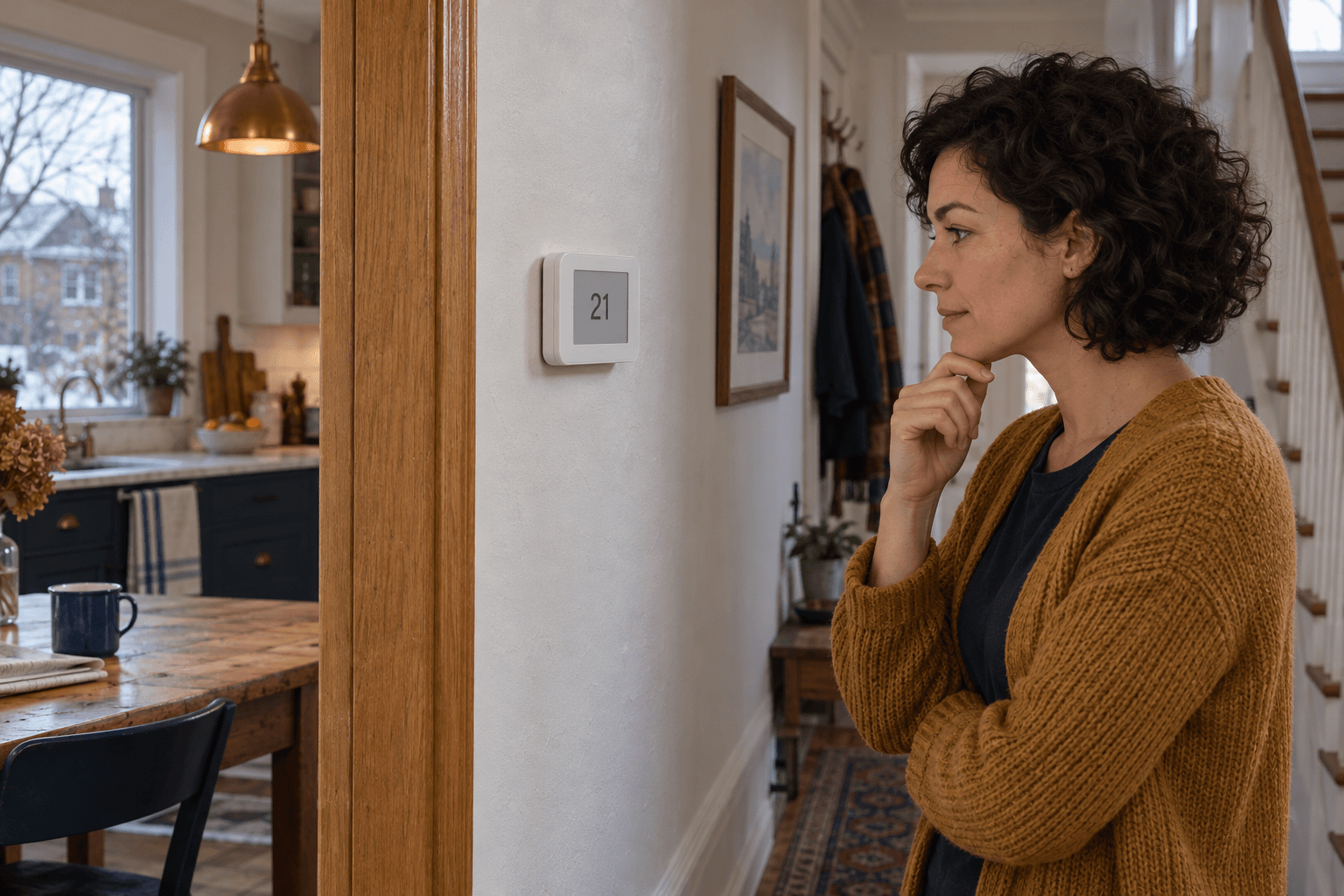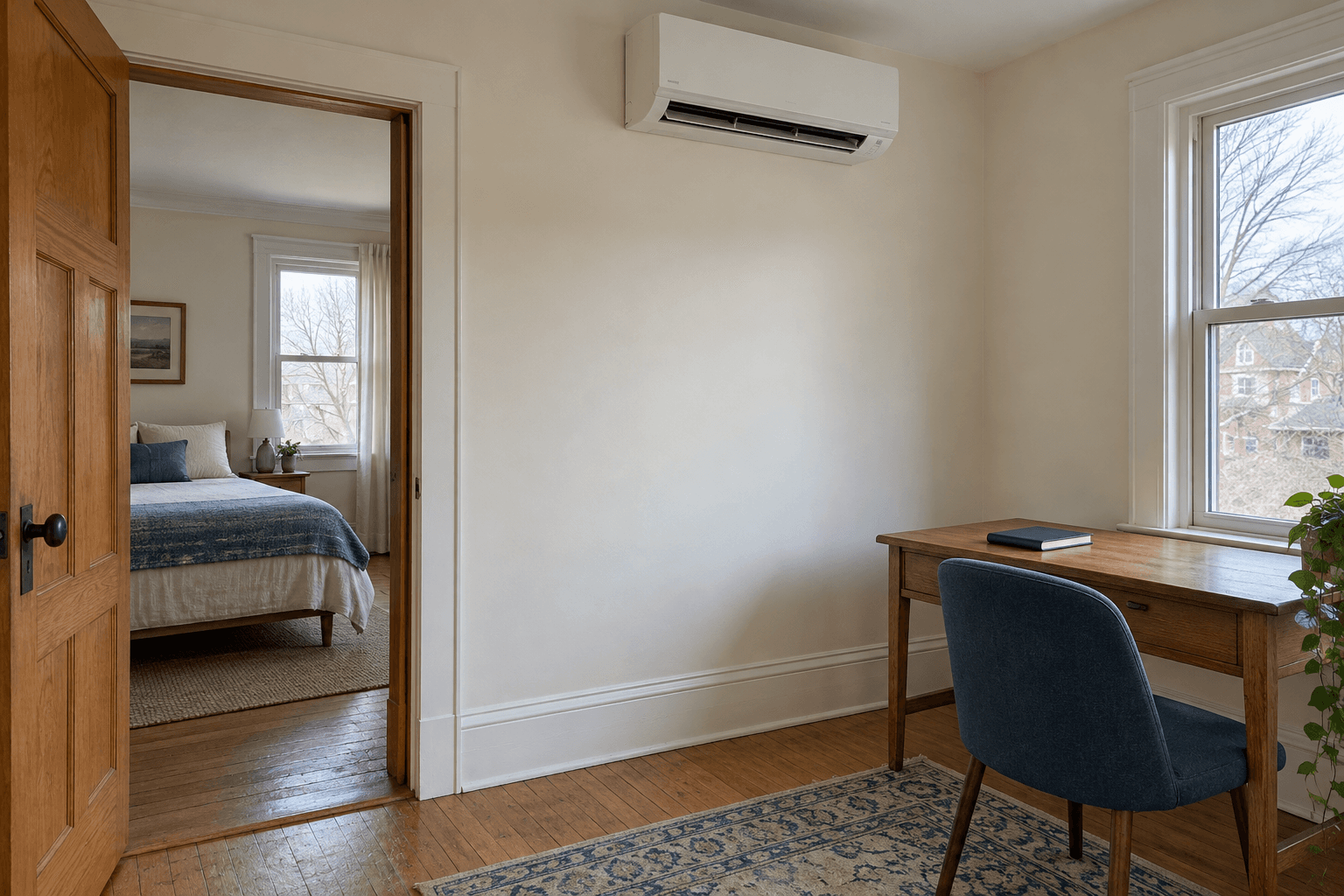
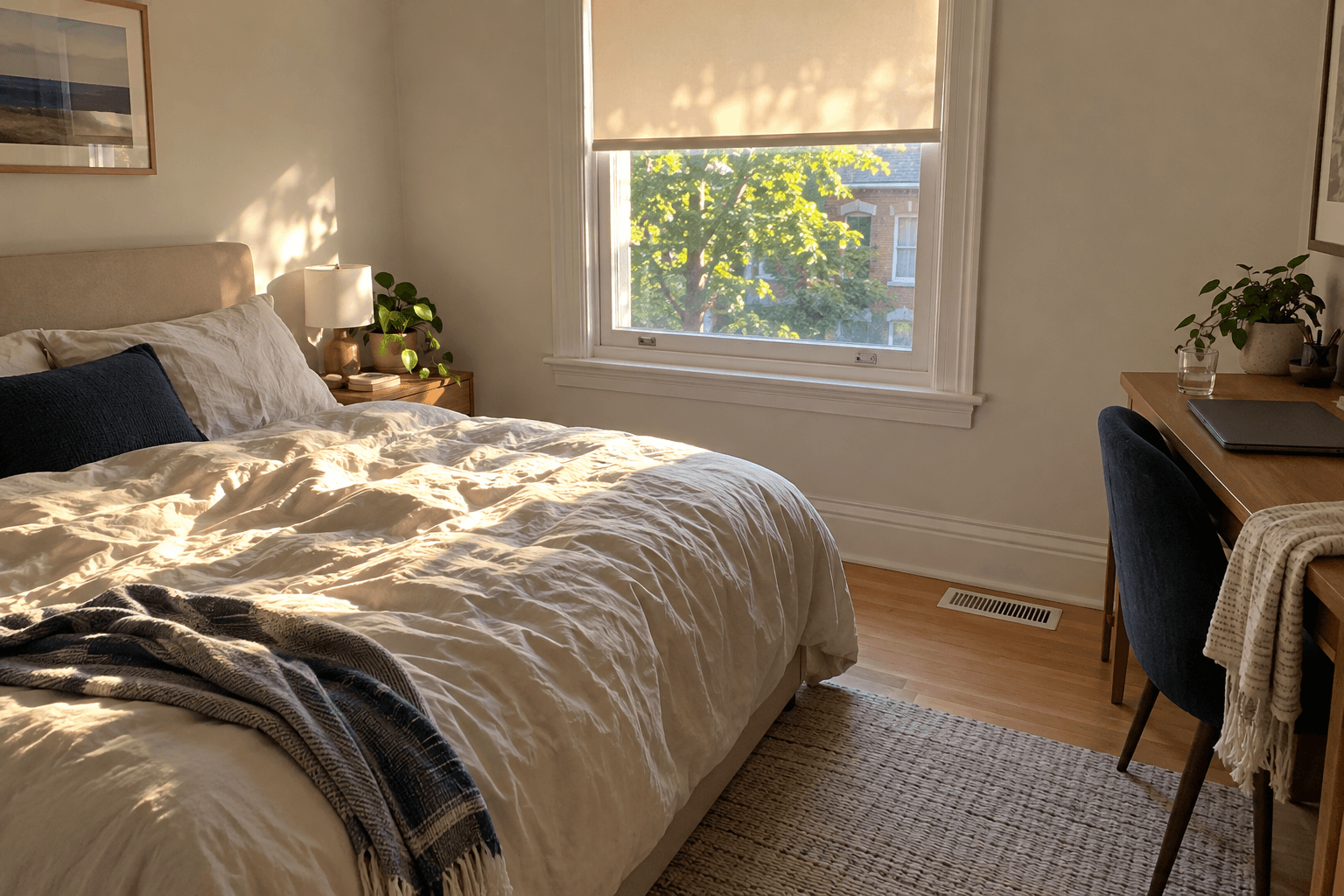
I wore a jumper while making breakfast, opened the sunny bedroom window at lunch and complained about a cold room after dinner. The heat pump's remote accumulated three different settings in one day. I could no longer remember which one was supposed to be permanent.
The weather was mild enough that the house's own habits mattered: cooking, sun through the windows, doors left open and rooms we stopped using in the evening.
Read the mode before changing the temperature
Source: Natural Resources Canada: heating and cooling with a heat pump
NRCan describes different thermostat arrangements for ducted and ductless heat pumps. A control may offer heating, cooling, automatic changeover, fan-only operation or other model-specific functions. Those labels are not interchangeable.
I checked the active mode and schedule first. Then I chose a comfortable plan that suited our controller, instead of chasing each room's brief change with a new command. On a multi-split system, I also checked whether different indoor units were asking for conflicting modes.
Give an ordinary adjustment a fair observation
I lowered the blind before the afternoon sun reached the desk. I closed windows when using heating or cooling, unless we were deliberately ventilating under suitable outdoor conditions. I noted the rooms and times that remained uncomfortable.
I left installer thresholds alone. If the system repeatedly switched in an unexpected way or failed to maintain the requested conditions, the notes would support a control review. More menu changes would only make the sequence harder to explain.
By the end of the week I could describe a pattern instead of a collection of complaints. The house still needed different things at breakfast and lunch. I had simply stopped giving the equipment contradictory instructions every time I changed my mind about a jumper.